
WKRP Montrose Colorado and The Western Slope.
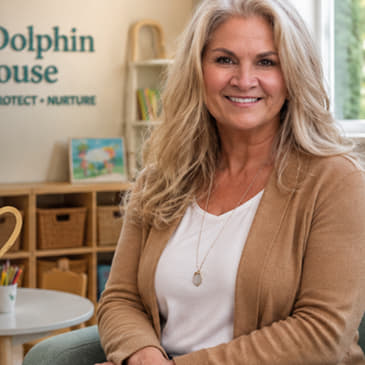
Welcome to another episode of WKRP Montrose, broadcasting live from the ClearNetworx Studio in downtown Montrose, Colorado! In this episode, hosts Dennis and Rob sit down with Michelle Gottlieb, the Executive Director of the Dolphin House Child Advocacy Center.Serving the seventh judicial district—including Montrose, Delta, Ouray, San Miguel, Gunnison, and Hinsdale counties—the Dolphin House is a crucial 501(c)(3) nonprofit dedicated to supporting victims of child sexual and physical abuse. Michelle shares the heartwarming story behind the "Dolphin House" name and discusses how their residential, craftsman-bungalow facility provides a safe, trauma-informed environment where children can feel heard, believed, and secure.Discover how the Dolphin House collaborates with law enforcement, medical professionals, and child welfare advocates to provide forensic interviews, victim advocacy, and medical exams. Michelle also highlights the vital role the local community plays through donations, the Montrose Giving Club, and seasonal school supply drives. Finally, learn how you can transition from a bystander to an "upstander" by knowing how to report suspected abuse to the Colorado Child Abuse and Neglect Hotline.In This Episode, You’ll Learn:The origin story of the Dolphin House name and their mission in Western Colorado.How a non-clinical, welcoming environment helps reduce additional trauma for children.The roles of forensic interviewers, victim service coordinators, and medical specialists.The reality of child abuse statistics in rural communities and the importance of active reporting.How the Dolphin House supports staff resiliency and prevents professional burnout.Ways the local community can get involved through volunteering and donations.Connect with the Dolphin House:Website: https://www.dolphinhousecol.orgLocation: 735 South First Street, Montrose, COColorado Child Abuse Hotline: 1-844-CO-4-KIDS (1-844-264-5437)🎙️ Subscribe for more conversations about Montrose, Colorado, and life on the Western Slope.Get Montrose stories, events & local news in your inbox — free. https://wkrpmontrose.com/subscribeThank you to our Underwriters for Making WKRP Montrose Possible:Clearnetworx - https://linkly.link/2akEONuVista Credit Union - https://linkly.link/2akEVFlower Motor - https://linkly.link/2eIUOAtlasta Solar Center - https://linkly.link/2hsWSColorado Outdoors - https://coloradooutdoors.co/rivers-edge/0:00 A Local Radio Station Podcast0:42 The Mystery Guest Revealed2:14 Building Community at Colorado Outdoors3:28 Meeting Michelle Gotautle9:40 Inside the Dolphin House17:55 The Legend of the Dolphin Pod30:54 The Montrose Giving Club42:50 Dealing with Vicarious Trauma#MontroseCO #WKRPMontrose #DolphinHouse #MontroseColorado #CommunitySpotlight
[00:00:00] Welcome to WKRP Montrose, a radio station masquerading as a podcast about Montrose, Colorado and the Western Slope. Recording live from the Clear Network studio in downtown Montrose, Colorado. Hey everybody, welcome to another episode of WKRP Montrose in the visitor center downtown in the Clear Networks. You just did the intro once. Just leave it go one time. It's now like a muscle reaction.
[00:00:26] I thought it was a trademark of the podcast that we had to do the intro twice. Oh, you're going back a little bit. It's been a long time since I've messed up and had to do a show twice. I'm talking about the technical thing at the beginning that I don't understand. Oh, well no, I did it before you guys came in this morning. I prepped everything this morning so I didn't have to wait. We must have a special guest today. You're coming in and prepping stuff? All right.
[00:00:56] Listen. You know what you don't need to prep? Here we go. What's that? I don't know. Oh, you're trying to do my job. Trying to do one of his rubbish intros. Do it. Yeah. What do you not have to prep with, Rob? Let's hear it. No, I need you to guess. Okay. Let's see. You don't have to prep with your internet. You don't have to worry or be concerned. Yeah. You just turn it on and it's there. That depends. What do you mean? Well, if you don't have Clear Networks, you might have regular issues. You might have to reset your router and do all this kind of stuff to try to make it work. If you have Clear Networks, that obviously is not an issue.
[00:01:26] Never happens. No. I don't think I've ever once had to come in here and reset the router with Clear Networks. I don't know why. No. That's kind of a regular thing. That wouldn't even be their fault. It's like the equipment, but they must choose good equipment. Something like that. Yeah. The internet's fast. It's great. I can look up. I'm looking to help you buy a new car. So I was car shopping for you the other day. You know where I was car shopping at? I have no idea. You don't know? No. I was looking at Flower Motor. They got some cars. I've heard good things about those cars. All good cars. I think you need an electric car. I do, yeah.
[00:01:56] An all-electric. A Solterra. That's what I said in the last episode. I don't know how I would finance it, though. Yeah? New Vista. Oh, right. Yeah, that's a good idea. Credit Union. That's where you got to go. Where you're more than just an account number. You're part of a community. And community's going to be a good part of this conversation that we've got with the guests that we have. You know where there's some good community? No idea. Tell me. Absolutely. Down at Colorado Outdoors. That's a big community growing out there. There's a lot of things happening really fast.
[00:02:26] A lot of great things happening down there. You know what they need down there? I don't. You know what? I think we're getting pretty good at this. It happens pretty good back and forth. Tell me what they need. They need some solar panels down there. I don't think they have enough solar panels down there. The only issue I would have is I wouldn't know where to get those solar panels. Well, there's only one place to get them. And where is that? At last to solar. Of course. Did we satisfy all of the checks that you've got on your desk over there?
[00:02:54] You tell us if you're satisfied with that. All right. Well, listen. Listen, the funny part in the way we'll relate this to our guest today is it takes a community to make this show happen. To tolerate it, obviously. Yeah, to tolerate it, to watch it, to come and be a part of it. We know as well that people tolerate us because of the guests. They want to get to know the guests. So, yeah. So, yeah. You've got to put up with it. But it's a relatively small price to pay, I think. Yeah. To hear some of these really amazing stories. And today is no different.
[00:03:24] We've got another great story with another great guest. Let's welcome to the show Michelle Gottlieb. Did I get your last name correct? You did. Okay. Rob, I think Rob lives for this moment in the show every week. I go out of my way to try and find guests who have horrendous last names. You want to see if you can butcher it? Yeah. You can butcher it, yeah. And we've had guests with very cultural names. And I think, is that correct? You're laughing. It's just an odd way to put it.
[00:03:54] Well, I'm trying to be not politically correct, but correct in saying it. But anyway, the point is he likes to try to see if he can embarrass me by picking people that I can't pronounce their last names. It's a hard one. It works sometimes. Is it German? It is German. So, I traded a perfectly normal maiden name for a really hard to spell and pronounce. What was the maiden name? Elliot. Oh, okay. Yeah. That's always an interesting, I don't want to get too off topic, but do you think, it
[00:04:24] seems, it's kind of old fashioned, right? I think, to take the man's name. I think it's becoming more and more popular for women to not do that. Yes. I actually, and this was 33 years ago, planned to hyphenate. Ah, there you go. Did not go over well with my in-laws. Oh, really? Right. So, I dropped my official middle name and took my maiden name as my middle name and went ahead and took my husband's name. Instead of hyphenating. Yeah. Nicole hyphenated. Yeah.
[00:04:53] I feel like, I'm probably one of the few people that was like, you know what? She's got the cooler last name. I should have gone with her last name. You'd have been Dennis Stone. That would have been awesome, right? Oh, that would be awesome. You'd have had to have been a private detective, though. Yeah, that's true. Yeah, I would have had to change careers. That's right. I mean, it's off topic, but I do think it's a very old fashioned thing these days and I think more people are deciding not to do that. Why do things continue as a tradition? Is it simply because it's a tradition? Or it- People decide not to change. That's it.
[00:05:22] I think it's just, it's the familiarity. Yeah? I think so. The people just are like- Yeah, it's like it's always been done, so we'll do this. See, I knew you were going to say that. That is one of my pet peeves. Yeah. I hate the phrase, this is the way that we've always done it. It is awful, isn't it? It really is. Because it's just a case of, I can't be bothered. To change it, we're just going to do it the way it's always been done. There's no innovation has ever been made by somebody who says, yeah, it's the way we always do it. All right, so we need to get to know you a little bit better.
[00:05:52] We'll talk about your job in just a moment. Okay. Do I have this right? Are you from Monta Vista? I am. So you didn't go far, you didn't leave far from home. You didn't fly far from the nest. I didn't. Have you lived anywhere else before you came to Montrose? I lived in Durango. Okay. I actually graduated from Fort Lewis. Okay. So I lived in Durango. Great school. Yeah, it was, that was good times. And then. Party on the hill. Yes. And then I actually returned to Monta Vista.
[00:06:21] I had a teaching degree. So I had returned to Monta Vista to do my student teaching. And that's where I met my husband. And hadn't intended to stay in the valley. But met him. We married and actually lived in Alamosa for about five years before we came here. So he was, he, his family lived here. He's originally from New York. But his family had moved here in the 80s. And so he grew up in Montrose pretty much.
[00:06:49] So can I ask a quick question though? Because Alamosa, even today, it's a little quiet. What was it like back then? Um, I, it's actually allegedly grown since I was there. It was always pretty quiet. I mean, I, I consider myself really lucky. I was raised in a very Mayberry-esque way, if you will. Talk about tradition. And, um, so yeah, it was always pretty quiet. I'm not sure. Am I not thinking of the right geography here?
[00:07:19] Is, is Alamosa not where Adams state? Adams state. Well, what do they call it now? Um, yeah, it's. I guess it's. Yeah. It's easy to compare. My point is there's a college there. There's a college there. So there should be some activity. I would assume there's some nightlife. I mean, I will say growing up in Monta Vista, Alamosa was the big city. Yeah. And so that was. It's all relative, right? Yeah. So that was where, you know, we went to the big city. Yeah. Um, but no, I would say it's still pretty, pretty small town.
[00:07:47] I think I, you know, it's easy to compare it to maybe Salida that's over there, which is obviously a lot busier. The last time I was in Alamosa, that's all I was. Yeah. Honestly, Salida was, was quite a bit smaller when I was, when I was younger. Um, Salida has grown quite a bit and I think in a really nice way. Yeah. Well, we're not here to promote other Colorado towns. That's true. They're not as cool as Montrose. That's true. So what brought you to Montrose eventually? Uh, so my husband's family actually owns the True Value in Alamosa.
[00:08:17] And so we came here, um, so that my husband could help with the family business. And, um, he was also in law enforcement. So he actually worked for the Alamosa Police Department until his retirement in 2020. And then he immediately decided that wasn't for him and went into, uh, it now works at the fire department there and is, um, becoming a paramedic. So retirement's not, talk about a tradition that, that I think people like aspire to or fall into.
[00:08:47] And then you get there and you're like, Oh, this isn't what I think the idea is better than the reality for a lot of people. We've had several people on recently who have failed miserably at retirement. Yeah. I think you, I think it's a learned thing for sure. I'm looking forward to learning it someday. Well, I tell people all the time, I'll never retire. I'll just get more, I'll get better control of my schedule. Like as I go down the road, that's when, that's when I aspire to. You'll start playing more golf.
[00:09:17] Well, I play plenty of golf right now. That's true. Not well either, but your life balance will change a bit. Yeah. Um, well, speaking of golf, because that's a big part, that's your big fundraiser. That is. That just already happened. So we just missed it. Okay. So how am I, before we go there? Oh, we didn't need to talk about the organization. For what? You're the executive director. We'll segue by you saying, when you look forward to retiring, what are you going to be retiring from? Yes. So I am the executive director of the Dolphin House Child Advocacy Center.
[00:09:46] So that is, um, a nonprofit organization that serves the needs of victims of child sexual and physical abuse throughout the seventh judicial district. So you've got that nailed and telling it, but I think the one thing that, that people miss and part of it's visual is the facility that you're in. And the purpose of it, I think, especially since you're dealing with children, um, you're in a house. We are. Downtown. Mm-hmm.
[00:10:16] And the facility does not look like a police station. It does not look like a hospital. Right. Um, so when you're bringing a younger person in who's gone through some sort of trauma, it's actually trying to lessen the additional trauma that they have to have. Yes. In going through any type of questioning or investigation or anything else like that. Very intentional. Yeah. It's very intentional.
[00:10:39] Um, in addition to the house looking very residential and not clinical, we also do certain things that make it feel even more welcoming. We are really well known for our chocolate chip cookies. So we bake cookies before every interview. Um, it makes the house smell very warm, very welcoming. And, um, essentially when your goal is to not re-traumatize a child, you want to make sure
[00:11:08] that you're creating an environment where they come in, they feel safe, they feel welcome, they feel very, very secure. And as you may guess, children who come to us, come to us from a point of trauma and can have some real anxiety around coming to the house. And without fail, by the time they're finished with their appointment at the house, we, they don't really want to leave. They enjoy the play area. They enjoy the cookies.
[00:11:38] They enjoy the staff. They feel very, very welcomed there. And so that's the goal. The goal is to make sure that they come, they're comfortable, they feel safe. Their safety is our priority. I think a lot of people will know the Dolphin House just by, you know, from passing by it because it is residential. So where, where is it? So we're located at 735 South First Street. So we're just down the street. Um, we're a couple blocks, well, block and a half from the police department and, um, but
[00:12:07] off the beaten path enough that it's, it feels very residential. Yeah. I think a lot of people will know it by in passing. It's lovely. It's a, a, a craftsman bungalow that was built in 1920. Um, so it's, it's seen a lot of life, but it's, it, it fits our needs. I, I, it just dawned on me as you describe that, that it's, you know, because of the
[00:12:32] scenario or the trauma that they've gone through, the experience that they're getting is the one that they should have gotten. It's the, it's, it's the, you know, being able to trust an adult. Again, in a situation, being able to understand that somebody cares for them, um, that they, that this is the, this is the way that you deserve to be treated. Um, really didn't, really didn't dawn on me until just now that you were saying that it's like, okay. And most importantly, they need to feel believed. They need to feel heard.
[00:13:01] Um, historically an issue with allegations of child abuse is that children are not believed. Right. They're, they're told, Oh, you know, you're making that up or you're imagining that, or that didn't happen. And our priority is we hear you. We believe you. And we want to know what happens so that we can help you. Yeah. That's unfortunate that, that again, talk about, I don't even want to call it a tradition,
[00:13:31] but talk about a behavior that's repeated that we should. Generational. Yeah. And, and that's what perpetuates abuse. It's generationally perpetuated if it isn't identified and dealt with. And oftentimes it's not. So as beautiful as our community is though, and as wonderful as it is, we, we unfortunately have a lot of it going on. We do. Well, let me say a lot of it.
[00:13:57] When I've heard the numbers, it shocks me because I don't, it's hard. Again, it's hard to believe that it's that, you know, nobody wants to believe that that's happening in your community. Nobody wants to think that your neighbors are potentially other people you go to the grocery store with. It's, it's people you would be very surprised by, of course. And, um, there's no one who can, who can say with absolute definity that they've never known someone who, who perpetuated abuse on a child.
[00:14:26] You may not know that they have done it. You may not know, you know them, you may not know you're sitting next to them, you know, but statistically speaking, there's zero possibility that there's not somebody that you, you know, in your life that hasn't done that. Can you give us some numbers to really hit it home to people? So statistically speaking for, um, for across the nation, you know, you're looking at, at tens of thousands of reports every year in the seventh judicial district.
[00:14:55] We see approximately 350 children a year. Um, and that's, you know, that can ebb and flow depending on the year. Um, because we serve the entire seventh judicial district and that's Montrose, Delta, Uray, San Miguel, Gunnison and Hinsdale counties. Obviously we have a lot of, of geography that we cover. So 350 is, is seems like a high number, but when you take into account the population of
[00:15:22] children that reside in these communities, um, it's, it's well within the, the statistical norm across the United States. So we're not, we're not above where other, other communities of our sizes would necessarily be. Um, I think where we're very fortunate is we have a very active reporting population. So in a lot of communities where there are a lot of children and not a lot of, of allegations of child abuse, that's not because it's not happening. That's because it's not being reported.
[00:15:51] We work really, really hard to educate our communities on the importance of reporting and on how to report and on, on knowing when to report and really try to, to drive home that factor. We can't, we can't help if we don't know. But that's just a, I mean, you say it's, you know, statistically, it's not a lot in terms of the public. It's one a day. At least one a day. I mean, yeah. So that, that's a lot. It's, it's a lot.
[00:16:17] Um, so at the Dolphin House, the services that we provide in, in order to come through the Dolphin House, children are referred by law enforcement and child welfare. So we are nationally accredited. We are accredited under the National Children's Alliance. So we have to meet a set of 10 really super rigorous standards and we reaccredit every five years. We actually just passed reaccreditation, um, this, this past spring. So for us, um, and I just lost my train of thought completely. No, no.
[00:16:45] We, well, I think the part of it and I started it. So let me say, maybe say it a little bit different is I said, I was, you know, shocked about the numbers that are here. And again, if you, if we try to tie it, not telling you the counties, cause a lot of times you guys don't know where the counties actually span, but you're essentially talking from, you know, uh, Norwood or Nucla to gun, you know, to Gunnison, to Lake city, to Telluride,
[00:17:10] you know, and back like that's a, that is a very large area with, with a significant number of people. However, back to Rob's point that we were kind of discussing is one a day. I mean, none a day is what it would hopefully be. Right. So even when you hear that we're not an anomaly necessarily in the numbers to hear 300 cases in a year, right. You would think that, and here's, I guess what happens is if it doesn't make the news,
[00:17:39] then it didn't happen. Right. Right. And that's not the reality. That's not the reality. Um, I wanted to say something though, because you, you told us a story beforehand and I wanted to get to it just so that we don't miss it or forget it. But this, the name Dolphin House came from a really interesting story. It did. And I wondered if you share it really quickly. So our, our, our actual title is the seventh judicial district child advocacy center. That's a mouthful. It's a mouthful. That's a hard one to do in your elevator pitch when you're trying to get donors.
[00:18:08] Um, we do business as the Dolphin House and the reason for that started really very early on in the history of the Dolphin House. So the Dolphin House was established as a, a 501c3 nonprofit in 2005, opened their doors in 2005 as the seventh judicial district child advocacy center. Um, during that first very early period of time, I'd say within the first six months of opening the doors, there was a therapist who was working with a family, um, who had come
[00:18:37] through the Dolphin House. And one of the, the, the children had made a statement about how this experience essentially defined her for the rest of her life. She would never be healed from this. This would always be something that, that happened to her that, um, really would color everything. And the therapist said, you know, I really want to think about it this way. As she said, in, in nature, bottlenosed dolphins swim in, in what's called a pod. She said, it's not a family.
[00:19:07] It's, it's a community. They're, they swim together. They're together all the time. When a, a juvenile dolphin, a calf is injured, the entire pod takes turns lifting that calf to the surface to breathe because obviously dolphins are mammals and require oxygen. So the entire time that this calf is in the healing process, this pod is taking turns, lifting that calf up and resubmerging, lifting them up until they're fully healed and can swim on their own.
[00:19:37] And the therapist said, I like to think of us as your pod. That's what we're going to do for you. We're going to hold you up until you're healed, until you no longer believe this story about yourself. And the director at the time overheard this and said, that's, that's what we need to be. That's what we should do business as we're going to be the Dolphin House. So that's how the Dolphin House then was born. So, and that's the question we get asked all the time. Even the kids are like, where are the dolphins? But now every, every kiddo that comes through the house gets their choice of a stuffed dolphin.
[00:20:07] We have a fantastic, lovely woman in the community, Sandy Longmore, who sews stuffed dolphins for us. And every single kiddo gets to choose a dolphin and also a blanket. So we have community members who donate blankets to us. We have quilters, we have knitters. We have, we have service groups in the schools who tie the flannel blankets. And so every kid who comes through gets to choose a blanket as well as a comfort item to take home with them.
[00:20:35] So yeah, that's how the Dolphin House was born though. That's a great story. I mean, what I love about that story is I do feel like that does fit the mentality of mantras. I think when something's wrong here, people, people do step in and do want to help and do want to raise people up until they can stand on their own again. Absolutely. And we see that, you know, as a nonprofit, obviously our entire organization is run on
[00:21:03] donations, fundraisers and grants. So state and federal grants that I'll write for. But our communities that we serve are the catalyst for the majority of our donations. And the community is amazing. Montrose comes just together for us as far as the blankets, as far as the dolphins, as far as when we have school supply drives. At Christmas time, we have so many Montrose families who come and say, we want to help any
[00:21:33] of your families that need help. So truthfully, we couldn't run the Dolphin House without the community support. And yet you have a fairly significant staff over there. So I do. It's myself. I also have... Whether they're volunteers or not. I mean, I guess it's what I'm going to say. Right. So paid staff. Yep. They're depending on funding and kind of staffing. I run between four and five employees in the house.
[00:22:02] So we're... And that doesn't include any of the forensic interviewers or the nurses or the people that are part of it? So we staff a forensic interviewer coordinator. Her name is Jenny Franklin. And I always have to shout out because you will never meet somebody who is more dedicated to justice for children than Jenny. So she is... She does the lion's share of our interviews. I think she's sitting at somewhere in her career now. And she's been at the Dolphin House for almost seven years.
[00:22:31] She's just somewhere in the ballpark of about 1,600 forensic interviews. So she does the lion's share of them. But then she also coordinates our volunteer and contracted forensic interviewers. So we will train specific people in the protocol for forensic interviewing for specific skill sets. So we have Spanish-speaking interviewers.
[00:22:56] We have interviewers who have experience in protocol working with the intellectually and developmentally delayed population because we also serve that population. We serve 0 to 18, but then we also serve the IDD population. So we have forensic interviewers who have taken additional training in specifically how to speak to adults in that capacity. So Jenny oversees all of those forensic interviewers.
[00:23:24] She makes sure that they are up to date to our standard, again, under the National Children's Alliance, in how much continuing education they have, how much peer review they do, what their certification... And it's not a certification. It's a specialization. If somebody tells you I'm a certified forensic interviewer, no, you're not. You have had specialized training, and that's amazing. So it's 54 hours in order to become a forensic interviewer for the Dolphin House.
[00:23:52] Our interviewers go through 54 hours, and that's a minimum. I would say with all the additional specialties, Jenny's probably well over 300 hours of training and then continuing education. So that's for the forensic interviewing portion of the program. For our victims advocacy portion, we have a victim services coordinator. Her name is Shelly Robillard, and she's amazing. She is the first contact with the families.
[00:24:20] So when the families come in, she's the one who is doing intake paperwork with our families and then also explaining to them what their rights are as a victim. So we go over the VRA, the Victims' Rights Act, Colorado Victims' Rights Act with them in tandem with law enforcement. We're going to help with advocates because we want them to know what their rights are. Yeah. And also how to fill out a crime victims' compensation fund because a lot of our victims don't realize that they could be eligible for some compensation in certain areas.
[00:24:50] It's a lot. In particular, like after the fact, helping pay for counseling. Absolutely. Yeah, yeah. Absolutely. And making those referrals. We connect them to mental health professionals that we work with in the community. And so then one of our favorite people in the house is Karen Pittman. She's our office manager, but she serves in a really difficult position. She is the line of sight for these kiddos when they're in the house.
[00:25:18] So under standard, we have to maintain line of sight at all times with the children who are in the house. So Karen is the one who is making sure that they have snacks, making sure that they're playing appropriately with their toys, making sure that sibling sets are playing appropriately and nobody's beating up on each other because you know siblings. And so I think she has the hardest job in the house, if I'm being honest. And everybody, I always laugh because I always say, I have the easiest job. As the director, I have the easiest job.
[00:25:48] I just have to go find some money. I got to make sure people know who we are and what we do. And I got to make sure I hire completely epic people, which I do. So I have the easiest job in the house. That's awesome. Yeah. The nurses, since you mentioned the nurses, because that's really, really important. In addition to providing forensic interviews and then ongoing advocacy for our families, we also coordinate the forensic medical exams that need to happen in the case of either physical or sexual abuse, including when evidence needs to be collected.
[00:26:18] So we work with pediatricians who are specifically trained in evaluation and treatment of child abuse here in our community, as well as an amazing nurse practitioner. So Greg and Jennifer Sushan are our pediatric specialist and our nurse practitioner who volunteer their time to do those exams for us. And then we also work hand-in-hand with the SANE nurses, so that sexual assault nurse examiner. So at the hospital.
[00:26:48] And they do the majority of our exams on our adolescent population. Our pediatric population, we tend to do those exams at the house because, again, child-friendly. And it's less clinical, but it's also sterile and an environment where they can get an exam and feel that their physical well-being is being absolutely determined because that's very important. Yeah.
[00:27:13] Let's go back to you because I think we skipped in the process of not wanting to promote other communities. We skipped kind of how did you get – what was your background and what led you to want to be involved in something like this? So I always knew that I wanted to work with children, and I thought that education was going to be that for me. So I went to school, got a teaching degree, did that for a little while, had my own family, and, you know, life changes,
[00:27:42] and ended up over here working in advocacy with youth through Hilltop Family Resource Center. And then when the director position opened at the Dolphin House, thought that that would be a nice way for me to stretch myself. It was a stretch. It was a stretch? Yeah. Okay. Well, I actually took the job February 3rd, 2020. Okay. Right during COVID. Yeah, the world shut down. Yeah, the world shut down. That must have been a challenge to then –
[00:28:09] That was a challenge because at that point we were considered essential. So you have to figure out – I had to figure out how am I going to keep my clients safe? How am I going to keep my staff safe? How am I going to keep all my partners safe? So we work with a rather large multidisciplinary team of law enforcement, child welfare, the medical and mental health communities, and the DA's office, the prosecuting attorneys at the DA's office, and other advocates, law enforcement.
[00:28:35] And so how was I going to keep everybody safe but make sure that we could always be there to do those interviews? They had to happen. So that was – it was interesting. Right. It was interesting. Because people say, you know, like Dennis said, like, you know, the world shut down a little bit. But it doesn't for everyone. Right. That, you know, these unfortunate – these cases still happen. Yes. And unfortunately, they were happening now in isolation.
[00:29:02] So now you had children who were on lockdown with their abusers. Right. So they're not going to school. So mandatory reporters are not having eyeballs on these kids at this point. So we never did slow down. We maintained around that 300, 350 mark for that year. We never did slow down.
[00:29:26] But what we knew was coming and what did come for the following two years, I would say, was an uptick in that delayed disclosure. So now you have kiddos who were experiencing these horrific things while on lockdown. And unfortunately, what happens in these cases is when a child is especially sexually abused, behaviors happen. So things – you can't put the genie back in the bottle.
[00:29:53] So now you have kids who have been exposed to things that they have no business at that age being exposed to. Right. So now they're perpetuating these behaviors on other children. So you have – you have to interview backwards to try to get to ground zero of who was the adult. Right, right, right. That started this. Who's – yeah, who pushed the ball down the hill. Yeah. For sure. Yeah.
[00:30:16] So that was – you know, so the next few years was playing catch up with that and trying to make sure that those children were – received services. I think that was a big part of COVID that I don't think that people really – I still don't think we understand fully the effects of just like, you know, kids are meant to go to school. Kids are meant to be in a social circle. Yeah. And what that can do even if there's not abuse at home. Yeah. Like the isolation and everything. Yeah. It was a very weird time. I'm super grateful that we're not there anymore. Same.
[00:30:46] That we're essentially back to normal. I wanted to bring up – I thought you're part of a – or you participate in a group that I don't know that a lot of people know about in Montrose. And it's called the Montrose Giving Club. Yes. But it is one of the coolest things that I've ever heard of. I've never gone. Oh, it's – well, it's women. That's what I was about to say. Yeah. I think it's not – I'm not invited. But can you explain what it is?
[00:31:16] Yes. Because I think this is a really cool thing that happens – how often does it happen too? It happens fairly regularly. It's quarterly. Okay. Yep. It's quarterly. And it's this group of amazing women who all come together and pull some resources. Now, a group doesn't do it justice, I don't think. It does not. It's tremendous. I couldn't – I can't speak to how many women are officially involved. I've heard that your meetings – those meetings roughly at least have 50 to 60 –
[00:31:46] Maybe sometimes 100 women in it. It's impressive. It's standing room only. You make sure you get there early if you want to sit at a table. And it's great because what they do is – we pay dues. And so the dues go into a pot. And quarterly, there are – what happens is you go to the meeting and you write down the nonprofit of your choice that you feel would be – should benefit from the dues that are collected that quarter. I think is how that works.
[00:32:15] And from that basket, they pull three. And each of those nonprofits, whoever put the name in the basket, they have three minutes, I think it is, to give the pitch of why their nonprofit deserves to win the pot for that quarter. And so we have been the recipients of that. Three years ago, we were the recipients of that, and that was fantastic. But I go every quarter.
[00:32:45] So once you win, you have to wait three years before you can start putting your name in again. Never have I missed in that three years, even though we can't put our own name in because I'm so excited to learn what the nonprofits in our area do. And there are a lot of nonprofits in our area. And it's just really great to be able to see the fantastic things that are happening and what the community is doing and be able to say, okay, I really feel like this particular nonprofit deserves this.
[00:33:13] It's really hard, though, because sometimes you'll get three that you're just like torn. And for us, it can be really, really hard because we work with so many of these nonprofits. So when three of our partnering agencies, if you will, get chosen, it can be really difficult. So do you have to vote on one then? You do. Yeah, the whole group votes. Is it a public vote? No, it's... Right. That would be difficult. Yeah, it's anonymous. Yeah. But is it once a quarter? Once a quarter. Look at Rob trying to create conflict. Yeah, we meet again in August.
[00:33:40] No, it would be awful to be a public vote. To have to raise your hand. Yeah, yeah, yeah. Well, yeah, no, I would not want to do that. No, no, no. No. And obviously, like I said in my position, I would be stuck. I'd be like, everybody. Yeah, yeah, right. Everybody needs it. But yeah. It sounds like a great thing. It's awesome. How do women get involved if they want to show up and be a part of it? You know, that's a great question. The way that I got involved, well, literally, I told you, I started on February 3rd, and the meeting was the following night.
[00:34:09] And I was like, well, this is the first thing I'm doing as the director of the Dolphin House. How cool is that? And I went. It was great, and I loved it. And that's how I got involved. I think it's kind of word of mouth. It's invitation. It's this is a really great thing. And then if you'll pay your dues, you can go. We are allowed to take a guest. So I can take people that I think might be interested in it. I can take them, and they can learn about it and see how it works. They can't vote. They don't get a vote that night. But they get to watch.
[00:34:35] But they get to watch and learn about the three nonprofits that are pulled for presentations. And so it's a really good educational piece for people who are new to the area. Women who are new to the area who don't necessarily know a lot of people or know a lot about the nonprofits can come and learn more. And then if they choose to become a member, pay some dues and show up. So I'm going to ask you to promote one other not your entity type of thing, but something that could benefit the Dolphin House. Yes.
[00:35:03] Because I think this is something cool that I don't know that everybody knows about. There's a bookstore on Main Street. Am I going to get the name right? Probably not. You're going to help me? No. Is it Mauve? No. In Mauve. It's in Mauve. Okay. And it's Curiouser Books. Curiouser Books. Thank you. Yes. And what I thought was really cool about this is you can donate books. And then the books that you donate, you can designate what nonprofit. Yes. Is that correct? I believe so. I believe.
[00:35:31] And I think they have four or five nonprofits currently that you can donate to. And then I think they change it periodically. Yeah. I thought it would be cool. I'd mention this to you. I would like to get Curiouser Books to do. They do a book club. Yeah. And I would like to get our viewership to be able to be a part of that book club kind of like virtually. Yeah. And potentially buy some more books from Curiouser Books. I love that.
[00:35:58] And be able to talk about some great stories because apparently there's a really good book that my wife just discovered. And I don't know the name of it. So you guys can get mad at me and leave comments. I'm going to text her right now. But essentially it's a part fictional, part nonfiction story about there used to be a town at the bottom of Blue Mesa Lake. Oh, Stepanero. Yeah. Yeah. So apparently there's a book that's really good about that story. And it's come up in a couple of different conversations randomly.
[00:36:28] Like there's a guy that had a peach orchard that was at the bottom of that lake. That essentially those trees went and started one of the orchards in Paonia or Palisade. Palisade. So anyway, just an idea that I thought might be cool. So if you guys think that's interesting, please don't leave a comment or go to Curiouser Books and buy a book and become part of the book club. Well, yeah. And support a nonprofit while you're at it.
[00:36:55] They do a fantastic book fair every once in a while at the association where you can go and you can have a little snacky and a drink and you can peruse their books. Love that. Yeah. Yeah. All right. Well, I want to ask. Go ahead. I wanted to ask, I mean, how can people get involved with the Dolphin House? What can people do to help you? What do you need most? You know, honestly, what we need, it's seasonal. So we need school supplies because a lot of our families financially, they're struggling.
[00:37:26] Sometimes what we see is we see children who are removed from their abusive households. And so they go into a foster situation or a kin placement. And oftentimes those foster parents or kin placements weren't planning to have, you know, children in their households again. So they need school supplies. They need gift cards for clothing. They need that. So financial donations are always hugely important. And then volunteers for our fundraisers.
[00:37:53] So you mentioned the golf tournament, which we do annually. In the past, we had had a barn dance. We've transitioned from the barn dance and are now looking at a brand new fundraiser that we're going to be rolling out for April, 2027. And information about that will start to leak very soon. It's very exciting. So we can't get it like right now? We can't get an exclusive? Very exciting.
[00:38:17] This is going to be an evening that unlike anything that happens in Montrose currently. Okay. So I think it's going to be very exciting and a lot of fun and also really carry the message of how important it is to talk about child abuse and not sweep that under the rug. Because it's uncomfortable. It is uncomfortable. I was going to ask you, actually, you talked about mandatory reporters. We're talking about teachers and people like that, right? Yeah, teachers, doctors. But what about the general public?
[00:38:47] Of the 350 cases that you have, I mean, how important is it that the community are vigilant about things? It's so important. And just because you aren't a mandatory reporter, in my opinion, if you're a human, you're a mandatory reporter. If you see it. So if you see it or you suspect it or a kid says something to you about it. You're obligated. You are obligated as a human and a compassionate individual to make that report. And making reports can seem intimidating. It's not.
[00:39:17] Child welfare has a hotline. And it's 800, I'm not going to, four kids. I believe 1-800-4-kids. We'll make sure we get that. Yeah. And so essentially, you can report through a hotline. On that hotline, you're not going to be anonymous, but you're protected. Right. So they're not going to know that you've made that report. But you could also go, I'm sure you could just walk into the police department. Absolutely. Go to law enforcement and you make that report.
[00:39:43] And no harm ever came from reporting something that you truly believe is happening. I think the problem I'm imagining that, let's say that you see something, you think you see something or you think you know something. And then, and again, correct me if I'm wrong. I wonder if people think to themselves, yeah, but what if I'm wrong? What if I tear a family apart? Of course. And I'm wrong. But that is better than the alternative, right? And it really is.
[00:40:10] And here's the thing, if you're wrong, that is something that the investigators figure out very quickly. Right. Very quickly. But maybe you were wrong, but there was something else. And now this family has a resource. Right. And so maybe it's being helpful in that way. So I just, I think that if you suspect something, and very seldom in my experience, and it might just be me, but very seldom are gut feelings wrong. Right.
[00:40:34] And so if you have a gut feeling about something that makes you uncomfortable, if you see something that makes you uncomfortable, there's definitely, there's a reason that you feel uncomfortable. Right. So my wife also is in the nonprofit sector as well. And one of the things that I learned through the education that she's putting out there is the term, be an upstander, not a bystander. Exactly. So make sure that you stand up and you say something.
[00:41:01] The number, I think, if you're referring to the Colorado Child Abuse and Neglect Hotline, Yes. 844-CO4-KIDS is the number. 844-CO4, the number 4, KIDS is the number. It is uncomfortable. I mean, I've called the police department for various reasons, just because even if you're driving down the street and you see something like that, somebody's going to get hurt.
[00:41:26] You know, I think it's, I would imagine it's fairly common for people to just quote unquote mind their own business. Yeah. And that doesn't help anybody. No. You know, I will say the beauty of smaller communities like this, it doesn't happen as much as like larger cities and urban areas where there really does tend to be more tunnel vision, I think. And you mind your own business and you focus on what's different. Smaller communities tend to have that more. It's our community.
[00:41:56] It is. Ownership. It is. And the kids in this community belong to this community. So we want them to be safe. We want them to be okay. So I do think that that is a benefit of living in smaller communities and rural areas as you do see it more now. That being said, that also can play into cultural things that make it more protected in certain in certain pockets. Yeah. Yeah. And so, again, if you're an outsider of that and you see something and you're uncomfortable, making that report can be the difference for those kids. Absolutely.
[00:42:25] I wanted to, just for briefly, I wanted to flip the conversation a little bit. So we've spoken to Blaine at the police department about the issues that police officers have when they go through, they see or are involved in traumatic events. So how do you and your staff deal with this constant work that you do that is inherently traumatic? It is.
[00:42:52] And so vicarious trauma is, that's something that all first responders really bump up against. It is what it is. So we're very fortunate because among the 10 standards that we have to adhere to through the National Children's Alliance, there is an actual standard around resiliency. And so I have to build into my operations a resiliency plan that actually works for my employees. So we provide mental health services.
[00:43:20] If my employees want traditional therapy, we're going to pay for that. That extends to our multidisciplinary partners. So Montrose Police Department being one of our partners, if one of their detectives working one of our cases requires some counseling services, we can provide that in addition to what the police department provides, which is fantastic also. But for my staff, our resiliency plan is around what actually works for you for self-care.
[00:43:50] Because self-care is very different for everyone. And not everyone looks at traditional therapy as that's my self-care. For my staff, it can be art therapy. It can be frequent massages. It can be yoga classes. We as a staff took two summers in a row, did a golf clinic at the bridges called Wild Women Wednesdays. It was awesome. And we did that as a staff. And it was a staff building and it was also a resiliency.
[00:44:19] But I'm very lucky because the dollars that I've had specifically granted to us for that purpose are very flexible. So I get to have a lot of fun with how I provide for my staff for resiliency. Right. Other departments, I'm sure it looks very different. I think there's a lot of people that don't realize. This is something that comes up with my wife and her profession and what she does a lot.
[00:44:44] Is, you know, when you do think about self-help and you do tend to go, all the messaging tends to go to therapy. But a lot of times, in therapy, you're mentally kind of like manipulating that conversation. Like how much do you share? What do you want to come out?
[00:45:04] One of the things I think is really interesting is massage or, you know, working out or any type of physical manipulation to your body. Your body then, I think, sometimes somehow forgets kind of like where it's at and things start to come out that you didn't intend to come out. Yeah. Or there's a release of some of that tension. Have you heard of the book The Body Keeps the Score? No. So it's true. Trauma lives in your body.
[00:45:33] And trauma changes your neural pathways and it changes your neurophysical reaction to things. So it lives within you. You have trauma. You think you work past it. You're fine. But then something triggers. And when you get triggered, it's almost always a physical response. It's a panic attack or it's, you know, elevated heart rate or it is you forget to breathe.
[00:46:00] You get the, you know, you get the chills or you get that buzzing sensation. So the body keeps the score. Anytime you are traumatized, it stays within your body. And so anything that we can do that's physical that helps to release that. We also have a vibration plate at the Dolphin House that we use because it's really good for that.
[00:46:22] It drains your lymphatic system, but it also can kind of help reset your, and there's an actual clinical term for it. Then I'm completely not grasping. I've done the one where you, where you hold, like you hold them and they vibrate either side. And so it's supposed to stimulate. Yeah. EMDR. Okay. Yeah. That, that was pretty, that worked for me. Yeah. It was kind of crazy. Have you ever done anything like that? Yeah. I think, I think you need to do something like that.
[00:46:50] We need to put you on like a vibration plate or something like that. Bring it in. Bring your hands in. Let's see what happens. Well, they weren't mine. I was going to therapy and that was something that the therapist had me do because I am, I. It recalibrates. So what you're trying to do is you're trying to reestablish neural pathways. And so, and there has to do with something with using bilateral stimulation. Yeah. We're a video. You probably can't be doing that. I can't. I use my hands all the time. You need to be. I think you need to be recalibrated more frequently.
[00:47:19] I talk with my hands all the time. Like that's just what I do. But it is, it's about recalibration. And so really anything you can do physically is, is going to benefit you from a mental health and emotional health standpoint. I mean, it's obviously then, I mean, it's a, it's an easy leap to go from if you and your staff are not functioning, you know, firing on all cylinders, so to speak, you can't really effectively help. Be the best. Yeah. It's, it's very important.
[00:47:49] And also burnout in, in this profession is really, really high. Right. For good reason. I mean, um, specifically my forensic interviewers, because they're the ones who are actually in the room having the conversation with kiddos and they're hearing these things that you should never hear. Right. Come out of a child. Right. Um, and so that, that is absolutely traumatizing and you can desensitize yourself in the moment to get the job done and to do it, do it really well. Right.
[00:48:18] But if you don't debrief that and you don't, you don't unload that, you're taking that home. And my thing, I will not allow my staff to take that home. They have families. Right. Um, and my, my whole perspective at the house is that, um, our families have to be healthy in order for us to help other families become healthy. So I can't have my staff taking, taking these things home. So we need to make sure that we're addressing it in the moment. And that means debriefing.
[00:48:45] If it's a really difficult interview, that means sometimes we are just closing ourselves off in a room and we're just profanity is, is a big, big proponent of profanity until, you know, in that room, in that, that space. And then we're done and we can set it aside. And really you have to work through that because we're not going to take that. We're not going to take that home now. Right. Obviously you're, you're still, you're still taking it home.
[00:49:11] Every, every case leaves, um, just that little brick. So we watch really closely for that. I'm watching for burnout. I'm watching for when, when my staff really needs to take some time. And even if that's some extended time, like, um, we'll have, we'll have a case come through the house that will be so, um, draining on all of us that I've said, listen, we're not here tomorrow. I'll let the partners know we're not here tomorrow. If anybody needs to get ahold of us, we're on call 24 seven. I have somebody on call 24 seven.
[00:49:41] And so somebody they're going to find us. They know, they know where we live. I mean, let's be honest, it's a small community. They know where we live. They know how to find us. Um, so it's like, we're just, we just aren't going to be here tomorrow. We're all going to just stay home and do what we need to do. Take a moment in order to be okay. I feel like not to make light of the situation, but I will. I feel like that's a business that needs to happen here is one of the, the smash rooms, the break rooms.
[00:50:07] I know violence isn't the offer, but I feel like there's, there's a, there's space for that. The rage room. The rage room. That's what it is. We've talked about that. I was like, we just need to get one of those like shipping containers and put it in the backyard at the Dolphin House. And we can just go in there and we can just rage at it. And come back out feeling refreshed. All right, let's get on with that day. Put on a helmet and some goggles and let's just go in there. If you get one, I'm coming to use it after we record podcasts. Oh, absolutely. I was going to say the same thing. Too late. You beat me to it.
[00:50:34] I want to say quickly before we, before we finish though, dolphinhousecolorado.org is the website, right? Yes. So if people want to be involved, donate, do anything, that's where they'll be able to find all the information. Absolutely. They can find information about our, whatever events we have coming up. We have a monthly blog post that goes up that talks about different, different things having to do with, with what we do and where to donate if they want to donate, volunteer
[00:51:02] opportunities and job postings anytime. I want to ask too though, is, is stopping by the Dolphin House something that you would rather people not do? So the, the issue is it's very important to us that we maintain confidentiality for our families. So when we have families in the house, there, there is a sign on the front door that says interview in progress and it asks that they ring the doorbell. And so then we can assert, you know, ascertain what they're there for. And if we, if they're interested in touring the house, I'm happy to schedule a tour.
[00:51:32] Obviously the families will always take precedence and we never know moment to moment if we're going to have a family in the house. That's kind of the nature of our business. But if we schedule a tour, we make sure we get a good contact number. So if we need to say, Hey, I'm sorry, we have a family and we can reschedule. But I love doing tours of the house because people just don't really know until they come through it. And then they're like, this is amazing. And there's a lot of misconceptions. People assume, you know, kids stay there or they live there because house is in the title.
[00:51:59] And so it's always really eyeopening for them to go through it and be like, wow. So this is what happens. Like my office shares space with our medical suite. So they'll come in and they'll be like, what is that? And I'm like, so this is what we call a coposcope. It's a super high, high quality camera that takes photos that will stand up in court. And it's like, wow, who would have known? So generally speaking though, you know, call ahead. Call ahead. And ask questions.
[00:52:25] But I think some people, some people prefer, you know, especially in our community, people walk their dogs on these streets. You might, people might just think, oh, I'm just going to stop in and ask some questions, but just be aware that there are times when you're not going to be able to speak to anybody because of the nature of what you do. Yes. Well, thank you so much, Michelle, for being on the show, for coming and joining us, telling us your story, sharing the story of the Dolphin House. We appreciate it.
[00:52:53] I wish it was a job that you didn't have, but I'm glad that you do. And I'm glad that you are making the difference. So it has to be done. Yeah. Well, let's leave on a, on a happier note. Is there, we haven't done this in a while. So it, what's your, what's your favorite go-to spot in Montrose to just kick back and
[00:53:21] relax and enjoy some you time? Some me time. Yeah. The Montrose Day Spa. Yeah? Yeah. Okay. Yeah. I have a membership. Love it. Right. Yeah. Is that the one, where is that at? So it's out in, so the South of town. Uh-huh. Over by, let's see what all's in there. I think Divine Fish Market. Okay. Yeah. Yeah. And I can't remember the name of it. There's like Anytime Fitness in the top floor up there. Yeah. What is the name of that?
[00:53:50] I don't know what the name of that building is. Particular complex. I can't remember. Just next to, well now it's next to Goodwill. It used to be. Right across the street from Goodwill. Yeah. Yeah. No, that's my favorite. I like to go and, and yeah, I liked it so much. I did. I got a membership. Really? Yeah. Yeah. What it was, so. That's my self-care. So what does that mean? Yeah. Can you go there whenever you like now and get. So membership has its perks. So I get like a certain number of treatments. Right. You know, each year. And then there are membership perks every once in a while.
[00:54:19] This last one, I got a free service. And then when I went, I left with this fantastic goodie bag full of samples from one of the lines that they carry there for. Are we talking pedicure, manicure? Everything. Massages. Massages. Massages. They do spray tans. They do. They paint your toes. They do all the things. Facials. Massages. It's, yeah, it's pretty amazing. Awesome. Yeah. All right. Well, shout out to Montrose Day Spa. Yeah. New friend of the show. I don't know. Are they? They could be.
[00:54:49] Come and tell us all about it. All right. Absolutely. So, lastly, then we'll ask you, is there anybody that you want to challenge to come sit in the seat that we don't know about, that Montrose should know more about? Someone you might not know about. That is a great question. You know, it's getting harder. Or just somebody who you think has a story or can tell a good story or somebody who the community should know a little bit more about. Who does great work. Have you ever had Phoebe Benzinger? No. No. All right.
[00:55:17] And that name has come up a couple of different names. So, Phoebe is a board member. She's my vice president on my board. Okay. And she is amazing. She was instrumental in the Women's Giving Club. So, she is a founder of the Women's Giving Club. And she does a lot of other things. I know there are other boards that she's sat on before and that she may sit on now. But really, if you want to know anything about the community, Phoebe pretty much knows. I also heard Phoebe's got a big personality. Phoebe is amazing. She really is.
[00:55:47] But she's got a lot of good energy. She is the best energy. She is the... She's witty. She is... She's just... She's just good people. It's getting harder to answer that question. I wanted to show this little... You can't really see it. Well, yeah, you can. You can see a little bit. But these are all the names of all the people that have been on the show. Oh, wow. And so... Every week for two years. We're doing this for a while. We're doing this for a while. We're up to 120 maybe.
[00:56:15] Each time that we ask that question now with somebody in the seat, it gets a little bit harder to say, oh, okay. Especially because those people that are... People like Phoebe, it's not the first time her name has come up. And we ask other people and say, well, yeah, eight people have said that. Or we've had that person on already. I mean, we've got a lot of people here. But not that many that are kind of willing to come and do this. So it is getting a little more difficult. But it's a good challenge to have. And I think Phoebe will. I really do. I think she will. I was trying to get...
[00:56:45] She's friends with Sue Hanson. Yes. And I was trying to get them together to come on the show. The two of them together are hilarious, I will say. So they run the show at the Women's Giving Club. And honestly, they are a hoot together. And they're friends, you know, and they know each other really well. And they just riff off each other very, very well. So Sue... I've approached Sue recently. And so Sue, if you watch this, just so that I can respect our conversation. You know, she's stepping down from her position as the commissioner.
[00:57:13] And she had promised her husband that she would retire. I want to... Good luck with that. I want to say that's going to be like when my husband retires. Yeah. I want to... I told her at the time, she said, she's got stuff to do. And I said, you need to go do that stuff. Yeah. Clear at the garage. Do whatever's on that list. When you're done with it, I want Sue to come back and be a part of WKRP. I think she would be fantastic to have her own show on. Yeah. Oh, yeah. She would. Oh, she would be amazing.
[00:57:43] Yeah. Yeah. So, all right. Well, hey, everybody. That's been another episode of WKRP Montrose. Michelle, again, thank you for joining us. Thank you. I hope you had a good time. I had a great time. We had a good time getting to know you better. Thank you. You guys make sure that you go and check out... What was the ad? The links will be in the YouTube description. But check out the... DolphinhasColorado.org. Check out the website. Make sure that you donate. Listen, all of us should be around this time towards the second half of the year starting
[00:58:10] to think about how we can give back a little bit in the community. And the Dolphin House would be a great way for you to do that. And just remember, we're all mandatory reporters. Absolutely. Upstanders. Don't be a bystander. That's right. Be an upstander. That's right. All right, everybody. It's been another episode. We love talking to you. We'll talk to you soon. Thank you.