
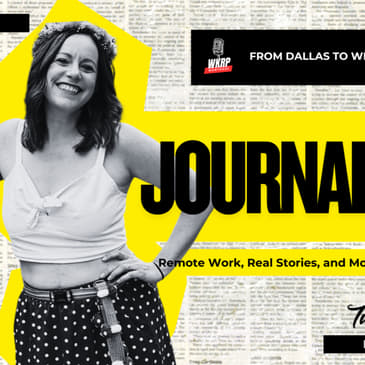
In this episode of WKRP Montrose, Dennis and Rob are joined by journalist Tiney Ricciardi for a lively and wide-ranging conversation that blends personal stories with life on the Western Slope. Broadcasting from the Clear Networks studio in downtown Montrose, the episode opens with the usual humor and sponsor shoutouts before diving into Tiney's background and how she found her way to the community.
Tiney shares her journey from growing up in Texas to working in journalism at the Dallas Morning News and later the Denver Post. She talks about adapting to the shift toward digital media, navigating the challenges of the industry, and how the pandemic ultimately gave her the opportunity to work remotely and relocate to Western Colorado.
What started as a practical move turned into putting down roots in Montrose, where she now enjoys a slower pace of life, homeownership, and building a future in the community.
The conversation also takes a more personal turn, as Tiney recounts her unconventional proposal story, her marriage, and her perspective on modern relationships and traditions. Along the way, the hosts explore topics like remote work, housing challenges during the pandemic, and what makes Montrose an appealing place to settle long-term.
In addition to her journalism work, Tiney discusses her involvement in the local community, including helping organize Montrose Pride. The episode highlights the importance of storytelling, community connection, and creating spaces where people can come together.It’s a fun, candid, and insightful episode that mixes humor with meaningful conversation—offering listeners a closer look at one of the voices helping tell the stories of Montrose today.
Thank you to our Underwriters for Making WKRP Montrose Possible:
Clearnetworx - https://linkly.link/2akEO
NuVista Credit Union - https://linkly.link/2akEV
Flower Motor - https://linkly.link/2eIUO
[00:00:00] Welcome to WKRP Montrose, a radio station masquerading as a podcast about Montrose, Colorado and the Western Slope. Recording live from the Clear Network Studio in downtown Montrose, Colorado. Alright everybody, welcome to another episode of WKRP. Rob and I are in the studio. It is blazing in the Clear Networks studio here in the Montrose Visitor Center.
[00:00:25] I mean, you know how hard it is? It is no, how hot is it? It's 22 degrees Celsius outside. I don't know why that is in your antiquated... 73 degrees Fahrenheit. And I'm wearing a hoodie. You want to know why? Why? Because I don't have a Clear Networks t-shirt and I like to represent the people... Well, yeah, but that would be like a muumuu. If I had that t-shirt on it would look like a muumuu. It probably would look like a muumuu. So, anyway, I... You're a petite person.
[00:00:52] I... I... I am wearing this and I am suffering through this 22 degree heat because I fully respect Clear Networks and how they support us. Do you... do you respect... that's the thing that you respect. You respect that they support us. Financially. What else do you respect? Yeah. Hang on a minute. Just one minute. I'm having a TikTok debate with somebody and my football team just beat his football team and I have to laugh mercilessly at this. By football you mean soccer. Yeah, sorry. I just... Soccer. Nobody... Football you confuse people.
[00:01:20] So, anyway, I made a prediction last week that my team would smash his team and they indeed did. So, anyway. And you're... are you going to disclose who that person is? I don't know. Just some douche. I don't know who it is. You don't know who it is? You don't know people on social media. You criticize and make fun of people you've never met. Do you not know this? I mean, I don't do that. So, apparently I don't know. Well, it's his fault for supporting Galatasaray. Well, here's the thing. First of all, thank you to Clear Networks, fastest internet on the western slope. If you don't have Clear Networks, I'm sorry. You're probably watching this with a lot of stutter and lag. Yeah.
[00:01:50] So, I apologize for that. I don't. I don't feel sorry for you. You can switch. It's possible. That's true. You should switch. Who else will we thank? New Vista, obviously. We're... Yeah. You are more than just an account number. There you go. And why are you more than just an account number? They have tons of programs to help you from everything from buying your car, buying your first house, starting your business, starting your first savings account if you're much younger. So, or if you're a parent of somebody that wants to help with fiscal responsibility, you
[00:02:17] should be clicking on the link on WKRP.com. WKRPmontros.com. They will help you buy your first car. Where should they buy that car from? They should buy that car from Flower Motor. Right. The Flower Motor Group, whether it's a Subaru or a Dodge or a Jeep, they got you covered, man. Ram. And they got some Ram. Is that not Dodge? Dodge is Ram. Ram is Dodge. And they've obviously got other vehicles too. So, the Flower Motor Company are friends of the show kind of thing. So, we appreciate their support too.
[00:02:46] The reason why you're going to notice that we have a lot more sponsors is you're going to start noticing a lot more content. Yeah. You're going to see some new faces on WKRP real soon. So, make sure that you click subscribe. Make sure that you like these videos. More importantly, we'd like to see a little bit more engagement from you guys. You do a lot of commenting on the socials, the social medias. We'd like to see you be brave enough to put some of those comments right here on the YouTube channel. Comment right down below. Comment that you don't like Rob's, you know, beard choice.
[00:03:15] Maybe he should shave. How dare you talk about beard? Oh, I said beard, but yeah, beard correctly. Absolutely. So, yeah. Well, we do have a libation sponsor tonight. Well, we're on the shameless sponsoring. Pomona have, as always, very generously given us some beer to share with our guest. And we have the cap, the classic American Pilsner today. So, thanks to Pomona. All right. Well, we do. We're having the cap too, because everybody knows you're one of those IPA guys. You're going to click. You're going to do the thing. Yeah. Hang on. Okay. That was weak.
[00:03:45] And, and, and. Very weak. And. That was better. You don't have, yeah. You don't have the, you don't have the mic turned correctly. Yeah. Anyway. But there's your ASMR moment brought to you by Pomona brewing. Sponsored by. Okay. All right. Our guests. And I know that you hate that we spent that much time, but hey, listen, there's more people watching the show. So more people interested in making sure that we create this fine content. But our guests today, do you, I, you know what? You're going to do this for once in your life.
[00:04:13] Well, I'm going to do it because Dennis always gets names wrong. I do get names wrong. And he's got that big fat tongue and he gets it all wrong. So. I got, I got the first part right. Well, yeah, because it's teeny. Right. Right. So teeny who? Hi, teeny. I might make this mistake, but I don't think I will. Yeah. I think because it's spelled R I C C. Stop wasting. Stop wasting time. Stop looking for help. Shut up. It's Ricciardi. It's Ricciardi. Oh, no, no, no, no, no, no, no. It was what? It's what? Ricciardi. That's what I said. He got it wrong. Yeah, that's what I said. Thank you ladies and gentlemen.
[00:04:42] That's another episode of WKRP. Teeny will come back to you next week. All right. All right. Get on with it. No, no, no. That's fantastic. If those of you who watch the show know that Rob routinely likes me to introduce the guests in hopes that I get their names wrong, which I almost always do. Well, I have a one that people get wrong a lot. Yes. Do you even bother wasting the time trying to correct them these days? Like I my last name people get wrong a lot. It doesn't feel like a name that they should get wrong a lot, but I'm getting over like
[00:05:12] I just don't care. Like, yeah, I used to do responsibility to correct people. I used to get really upset when people would say tiny instead of teeny, but you know, phonetically it looks that way. It's short for Christine. So it's not pronounced that way, but phonetically it would be tiny if there were not the Chris preceding it. So I kind of just got over it. And, uh, you know, as I started to come up, you know, in the media scene, I started to realize people who called me tiny knew me from the internet. People who called me tiny knew me in person.
[00:05:41] So it was like a really great differentiator. And then the last name is, you know, a mouthful as well. So no, I don't get offended anymore. On the last name at all. Even like, is there is so is that is that an Italian heritage? What is it? Okay. Yeah. And all Italian. What's what's the background? What's the 23 and me in the background? My father's Italian and my mother's German. Basically, that's my heritage. Okay. A little bit of native American sprinkled in there. Yeah. I'm German Italian. Are you?
[00:06:10] He has the same problem with his name. People call him Dennis if they met him and Denise from from somewhere. That almost always happens at the coffee shops. I don't know why specifically, but at the coffee shops, it truly is like people. Well, they don't call me Denise Rob. They spell my name. Yeah. And I don't understand why. Sometimes if I'm feeling spicy, I'll just give teeny at the counter. Yeah.
[00:06:34] And then I've gotten all sorts of hilarious pronunciations like teensy, tenay, really good stuff. That reminds me of the what is have you seen the key and peel there? Yeah, they're doing it where they do the teacher, the substitute teacher. Any. A-A-Rom. A-A-Rom. No, that's that's the one. It's a funny sketch. I love it. So, so, so, tenay.
[00:07:01] So, we had a little chat beforehand, but give us give us the the one on one. You grew up. Not here. In Texas. Yes. Near where Dennis allegedly went to high school. Yeah. Give us the give us the quick. How did you get from there to mantras? However that. Sure. I actually moved around a lot as a kid because my dad used to work for BIC like lighters, shavers, pens, that kind of thing. So, I was born in California. My little brother was born in Michigan. My little sister was born in Florida.
[00:07:28] But for the majority of my youth, I lived in a suburb of Dallas, Texas called South Lake, which is next door to Grapevine. Yes, it is. And went to high school there, graduated, ended up going to college in Dallas, working for the Dallas Morning News for seven years. And then I had met who was my boyfriend at the time. We were both in North Texas. He eventually moved up to Telluride and started a restaurant. And so I was working my way up here to the Western Slope when I got an opportunity to move to Denver and be on the staff at the Denver Post.
[00:07:58] So did that. And then the pandemic happened and made my way west. All right. Now, now I'm really. Hold on. The restaurant. Because we earlier I was saying, I feel like we have met before. Nicole and I moved from Dallas to Telluride to take a job up in Telluride. What was the restaurant that. It's called the Wood Ear. OK. Yeah. All right. That's on the mountain, though, isn't it? No, it's on Main Street. OK. It's on Colorado Avenue on the sunny side. On the sunny side. You had two choices.
[00:08:26] It was either downtown or on the mountain and you chose the wrong one. Well, no. But you can still pretend you knew it. It's fine. No, I'm not. I. OK. He's. Dennis is ham fisted like I'm like wood ear. Do you know. Do you. I'm just curious. You guys can leave a comment. Do you. Do you also get tired of his like incessant like just need to be. I knew that and you didn't. The type of thing. Well, so here's the thing. Like you may have met before, but we know each other.
[00:08:55] So I'm going to use that to my advantage here. Is that something. Is that something that that you're a journalist essentially. Mm hmm. Rob likes to think that he's a journalist. I have. I'm guessing you have more published pieces of work than Rob. I would hope she does. Yeah. Potentially. Yeah. Sure you do. Do you feel the same need to do what Rob does. No. He. We don't act like this is something that he just since you guys know each other. You can vouch for me. This is not something he just does in the studio. This is not an act. This is how he acts to everybody.
[00:09:25] My approach is I do a lot more active listening than talking. That's a great skill. It really is. I was just I was just out at the bar last night and some guy ended up telling me his whole life story. I just met him and I was like, cool. I'm glad that I made you feel comfortable enough to share all of that deep trauma. Very nice to meet you. I feel like freaking people out and going, can I get this? I forgot to mention that I work for a newspaper and can I get this? Can I get this disclosure? Sometimes I slip in and I'm like, is that off the record or on the record?
[00:09:54] Everything is on the record. FYI. So. So I just want to revisit Dallas a minute. So you are a hockey fan, correct? Absolutely. Tonight, I heard that your Dallas stars are going to get annihilated by the Colorado Avalanche. I don't think that that's accurate. Oh, OK. But they are playing a game. Oh, OK. I considered wearing my jersey. It's a 96 Miko Rantanen jersey with the Dallas stars logo on it. Oh. Very first ice hockey game I ever went to was the Dallas stars in Dallas. It was a fun experience. Do you need to explain to him why the 96 jersey is relevant?
[00:10:25] Oh, Miko Rantanen used to play for the Colorado Avalanche. He was a legacy player like Derek Jeter was for the Yankees and the Avs decided to cut him because they didn't think he was worth the money. I don't know. I mean, the Avs have done pretty well since then. Hey, Rob. Top of the NHL as we speak. Yeah. Well, I'm pretty sure that they lost in the first round of playoffs to the Dallas stars last year. Oh. I was talking about the past, you Dallas star. Oh. Oh. After the Miko trade. All right. What about you, Mr. Bumped Around the South? Stars or Avalanche?
[00:10:54] Definitely the stars. Yeah. Yeah. Move on. I mean, why? Why do we need to see this is Rob and I had this conversation. I like rivalry. It's fun. The second the second that he feels like he's done with the conversation. Yeah, it's move on. Yeah. But if he wants to keep talking to you anyway, we're having a we're having a marital spout right here on the on the on the show. Let's get back to you. So Dallas Morning News to Denver Post to the Denver Post. I grew up, you know, a digital native.
[00:11:23] I went to journalism school and, you know, back then in 2009, it was like your homework assignment is create a Twitter. And, you know, that was like the cutting edge of digital journalism at that time. And somehow I ended up working for newspapers, did not see myself doing that. But it turns out they kind of pay the best. Yeah. So. That's still the case. Um. No comment. No comment. There we go. It's a tough industry now. It sure is.
[00:11:49] The Denver Post has been through some some horrid times in the last few years. Um, the Montrose Daily Press, I'm sure, kind of suffered a little bit because, you know, we are moving increasingly to being like all digital. But yeah. How did you manage to? Did you need to persuade your boss that you wanted to essentially be a remote worker for the Denver Post? Yeah. Um, so I started in January 2020. So my first day was, you know, right at the turn of the new year.
[00:12:18] And a couple months later, we were all remote unexpectedly because of the pandemic. Um, so I was living in Arvada for about 18 months. I think my lease was. And by November 2020, I had proposed to my boyfriend. And so I knew I was moving my way out west. And I went to my boss and said, hey, I love my job. And I think I do a great job. I proved I can work remote. And I think that it would be silly of you guys to fire me.
[00:12:47] Um, and here are the data points that back me up. So. All right. Is it cool if I go out there? Yeah. And, uh, they were like, they agreed with me. So lesson kids. That's how you do it. That's how you, that's how you go and ask for something that you want. Yeah. You just slip something in there real quick. You didn't, you proposed to your, is it now husband? Yes. Okay. You said that almost like I proposed, like we're going out to the western slope, but you proposed him. Tell me how that went down.
[00:13:15] I proposed for him to marry me. Um, well, he and I had always been long distance. And so the pandemic for all the bad things that happened was really great for us because we got to spend more time together cohabitating than we ever had previously in, you know, we had been together seven or eight years. Um, and so I basically realized, okay, I could do this. I could live in a house with you and sleep in the same bed as you.
[00:13:45] And so I decided to put a ring on it. Yeah. You weren't going to let them get away. No. And so I basically just like bought a hundred dollar dress online and I got these custom whiskey rocks engraved that said, Maddie, will you marry me? Um, and gave him a glass of whiskey and basically said, I love you. I think there's a pandemic and I think you need health insurance and let's get married. Read the rocks. Yeah. Is that how I went down? Did you hand him the glass with the risky? And wait. And wait.
[00:14:12] Well, so I did this thing where I was like, I'm just going to speak from the heart. And that was a terrible idea. Um, because then he like turned to me and I was like, I have something to say. And it was like, I love you. And I think you need health insurance. Let's do this. And then I handed him the whiskey and he looked at it and he was like, did you just propose to me? And I said, yeah. And he was like, yes. So that was cool. That's fantastic. That's unique. Good one.
[00:14:39] I guarantee you there are men out there that are like, that was, is that easy? I could have done that. That was an option. Honestly, I want to give it up because proposing is way harder than it sounds. And people expect a big to do, a photographer in the bushes. And like, it is, it's a lot of work and courage that it takes to do that. The thing is, no matter what, no matter how long you've been with somebody, no matter how you feel, there's, there's often, I mean, our brains often work against us, right?
[00:15:07] So there's, there's, there's always the potential that they might say no. And even if that's not the case, there's still that, there can always be that nagging doubt because I guess that's why it's, it's such a nerve wracking thing to do because when it works out, it's amazing. But there are plenty of people out there who have proposed to people. And the answer has been, Ooh, I like you, but not in that way. Oh, you know? Yeah. Well, that happens. So that's a bad one. So, well, congratulations. That worked out. How long have you been married now?
[00:15:37] It'll be five years in just a couple of days. Oh, awesome. Well, congratulations. Thank you very much. Happy anniversary. Appreciate it. I had a time. And, uh, can we, can we say the betrothed name on, did we say it already? She said it. Maddie. Oh, Maddie. Okay. But so, all right. But quick question. I mean, obviously with you proposing that's not orthodox, right? So, and it sounds like you didn't take Maddie's name. I have not. No.
[00:16:05] And you know, I mean, I'm not, I mean, I think it's a, it's a, no, it's an old tradition, but I mean, it's still a tradition. I wonder if there's any particular reason you didn't or. Honestly, I just didn't even think about it. We didn't even talk about it and I still don't know how to do it. And you know, a lot of women in journalism, especially like, even if they get married, their byline stays the same. Right. And so, you know, we don't have kids. We're not planning to have kids. I feel like maybe if that were part of the equation, it might be a bigger deal.
[00:16:33] Um, but no, we, we actually didn't even talk about it. And so we, I proposed and then a couple months later we eloped. And so it was kind of this just spontaneous thing, which is not, I'm not really known for being spontaneous. Yeah. So it was kind of the spontaneous thing born out of the pandemic. And, um, yeah, it didn't even cross my mind and now I don't know how to do it. I hear it's kind of a hassle. So also as, as a, um, I was going to call you a creator. That's a horrible term. I'm sorry.
[00:16:59] As a, but as a journalist, as a digital journalist, primarily your name is, is everything, you know, you, you can, you can be found or your articles can be found. And so changing your name would have an additional implication. I think that some people may not have. So yeah. Like I said, uh, like my old boss, she got married while I was working under her and her byline is still her maiden name, even though her legal name is changed. Yeah. I'm surprised that Rob didn't have the, uh, the moment of, do you know why this is a thing or why it was ever a thing?
[00:17:28] So what's the history of why people took other people's last names? Well, when men thought women were property, presumably you're saying, presumably I'm sure that I thought this was your moment to shine with the, you know, intellectual ideas that people don't know and the things that you're proud that, you know, that other people don't know. All right. You have got me all wrong. Let's, um, let, yeah, let's bring it, let's bring it full. Um, modern day, like today. And let's talk about your life in Montrose. Sure. Well, what brought you to Montrose?
[00:17:54] Well, what was the, what was the, you had the freedom you've, we, we kind of stopped and cut off cause I brought us back to the proposal, but you said you, you talked to your boss, you brought receipts. You said, I want to be remote, but then how did that get you here to Montrose? Well, did you go to tell your right? Cause imagine or tell you, right. Sorry. So when I moved to the Western slope, we actually relocated. We located my husband, Maddie was living in Telluride for many, many years. He started the restaurant in 2018. Um, as you guys know, the housing market went kind of crazy during the pandemic.
[00:18:23] And so there was a dearth of rental places. There was a dearth of homes for sale. And so he was living in Telluride. I really quit there briefly. We rented a home in Ridgeway. We were going to buy that home from the owner, but then it was 2021. So the market went crazy. And by the time we were ready to buy, it had increased out of our price range. And so we began looking in Montrose and we bought a house in Montrose. So it was a practical thing. It was, and I wouldn't take it back at all.
[00:18:52] We have a beautiful home on three acres. We have a garden. We have mountain views. It's incredible. I, it was the first house and probably only house I'll ever purchase. And so it really feels nice to lay roots and invest in our property, build things, grow things. I'm really like, that's been like the joy of being in Montrose. Do you have a garden? Yes. It's house. How big is the garden? You've got three acres. You've got some room to put some. We have not.
[00:19:17] So we have some like two acres of field that are, um, ditch irrigated, fed, uh, flood irrigated, but we have 10 garden beds that we started last year as our personal garden, figure out the climate, figure out the temperatures, figure out what grows well. And then we'll figure out something to do with the fields. Yeah. I mean, we had this conversation not that long ago when we met up, but you said it's probably the first and only house that you'll ever own.
[00:19:42] So it sounds like you don't have any thoughts or plans of ever leaving this area. No, I would say. Why would you? Right? Exactly. Why would you? Yeah. Just, and presumably Maddie loves it here. Yes. What is Maddie? You said he had a restaurant until you have no has. Oh, currently. Okay. So the woodier and yeah, wait, that's on. That's where the, um, that's right next to where the coffee cowboy used to be. Is that where it's at? It's right by butcher and baker. Okay. Yeah.
[00:20:11] Right now, but right next to where the coffee cowboy. So butcher closer away from the mountain. Yes. Okay. Yeah. Yeah. I know where, see, I know where it is. So tell us just a little bit. Well, I mean, Dennis, I think was alluded to what does Maddie do at the, at woodier? Like he's either the chef or he runs the restaurant as the GM or. Yeah. He's the operator. So he's culinary director. He is the guy who signs all the paychecks. He's HR.
[00:20:37] Uh, he has a management team on the ground in Telluride, but yeah, he's the owner operator. Right. There you go. I mean, that's a lot of responsibility. Um, how, how has the restaurant fared recently given, you know, the strike and all that kind of stuff? It was pretty, January was pretty tenuous. Um, you know, a lot of hard decisions had to be made about staffing and you know, there was a lot of hand wringing for several weeks. Um, but you know, things picked up February, March, so. Made it through essentially. So yeah.
[00:21:07] All right. All good. And people are coming. Things are, things are happening. They're coming, whether the snows up, well, we got some snow up there. So yeah, little bit. Yeah. Skiing is happening. There's only a couple of weeks left of the season and then it'll be off season, but we'll come back with a bang in the summer. Absolutely. Was he excited about the ski joining event that just happened last weekend or was that kind of like disruptive to the idea of a restaurant having all those people on main street and the, the horses and the skiing and all that and the jumps. I think he enjoyed it. I really enjoyed it. Did you go watch it? Oh yeah. Yeah. It was kind of crazy.
[00:21:36] Did you, what happened to the, there was a kid that, did you see this? Uh, a kid that was a small kid that was competing in the child that was competing in the event and he wiped out, ate it. Oh no, I didn't see that. I, cause there's more than one day, right? It was, I think it was like two days. It was two days. So first day he ate it, wiped out. Dad had to come out and get him off the run and everything. He was, he was okay. Okay. Second day came back and crushed it. Oh, great. Came back. So it was a cool story.
[00:22:03] There was like, if you guys want, you can, I'm sure you can find it online. Yeah. Maybe we'll link to it in the description. Anyway. That's going back to. Yeah. Yeah. So working for Denver post as a remote, but you've got something else going on in Montrose that you want us to know about. And what is that? So in addition to being a reporter out here and telling local stories, um, I'm one of the organizers of Montrose pride, which is about to celebrate its third annual festival this
[00:22:31] summer and, uh, bring the community together vendors, drag. Can we just talk for a minute before we talk about the event specifically about it's the third annual, I don't know if people realize this maybe, but that's, I feel like that's a big deal for Montrose. Like I love Montrose. We have a good mix of, of, of different kinds of people here. But when I got here 10 years ago, I don't, I didn't know that in seven years we would have a pride event here.
[00:23:00] Um, people can read into that however they like, but how significant is it that this not only happened, but it continued. And now this is year three. Yeah. I actually think it's phenomenal. Um, it started obviously two years ago. Um, and the first event more than 700 people came out. I mean, we don't live in a very populated area to hear that hundreds of people came out for an inaugural event to celebrate pride. To me, that says that there was a huge need in the community and that people were looking
[00:23:29] for something like that. So last year, more than 950 people came this year. We're expecting over a thousand. And I think the cool thing about Montrose and the Western slope in general is like, we're all one community, right? Montrose pride happens in June. Grand junction pride happens in September. You're a pride happens in August so that every single person in the community can go support every single one of those events and people come from all over.
[00:23:57] Like I know people from who came from Paonia last year, people who came from Durango. So it's really great. And it gives the opportunity or the community an opportunity to commune, not just in June, not just during pride month, but all year long. Did you then, um, have you coordinated with the organizers of the other events to say, can we try not to do this on the same weekend or? I don't, I have not personally. And I don't think that it was like super decided that way. I think it just kind of happened that way.
[00:24:24] So I know grand junction changed theirs because of the weather in June. Grand junction is so hot drag queen makeup all over the place. Um, so they wanted to do theirs a little later just in hopes it's a little cooler. So it's worked out though. So that people can have the opportunity to go and support those events in other communities. Absolutely. All right. Tell us a little bit more about the event. What is the schedule of the events? How does it, how does it go down? I know that we've, we've had, uh, one of the, uh, bands that performed at your, uh, previous events.
[00:24:53] They changed names. They used to be called Verity and the rarities. Right. Okay. They're now called, uh, erotic almond, I believe. We're going to have them back on the show, uh, excited about their changes that they've got, but so there's performances at the amphitheater. Yes. But that's not the only part of the events for the day. Correct. And just while we're talking about it, you know, we also have a pride art show at MCA that runs, uh, you know, the entire month of June. So that's sort of like one of the big kickoffs.
[00:25:23] Um, but as far as pride, it's an afternoon event, three to 6 PM starts out with live music in between. There's going to be great drag from all over the state of Colorado. And we even have a queen coming from New Mexico this year, which is super exciting. And then we have a fantastic headlining band that we actually haven't told anyone about yet. So if you guys want the little exclusive, we are ready to drop. We want, we always want the exclusive. Drop away. Oh, wait. That's better.
[00:25:50] Um, we are welcoming a band called hand Turkey from Denver. And Turkey. I already love them. Can we get, hold on. Let me see if I can get this happen. All right. Okay. Congratulations. You know what's really funny? If you Google hand Turkey with no other context, it just comes up with paintings of the kids and turkeys. I love that. I think that's what they're named for, but they're like a seven piece funk jam band. They are incredible.
[00:26:18] Um, and so we're super excited to have like their high energy, their vibe. And then this year we're also, uh, doing an after party at the association where we will have a DJ. We will have more drag, possibly some other entertainers, um, just to keep the party rolling. I think festivals three to six after party goes eight to midnight. So it's just going to be a big gay old day. Fantastic. Gay old day. Hand Turkey band, um, on Instagram, if you want to look them up, but, uh, that is definitely going to be fun. Where are they based? Do you know?
[00:26:48] And how did you manage, how did you get them to come down? I mean, I mean, I know how you get bands to come to a place, but I mean, they have tour dates on there. They're a touring band. Sure. I believe that they had, um, tried to connect, uh, maybe they had connected with Dave Bowman, um, to try and come through Montrose at some point. And I don't think it worked out with the Montrose summer music series. And so he sort of passed us their name. We checked out their music. We loved their vibe. And so we were like, yeah, let's make this happen. Let's make it happen. Right on. Hand Turkey band.
[00:27:18] I love it. I love that name. It's so good. All right. So, well, first of all, just, just before we, we don't want to forget what are the dates? Oh yeah. June 6th, 2026. Okay. So it's always going to be the first Saturday in June. Okay. We're trying to carve that out. And, um, while we're on the subject, I actually lead sponsorship and fundraising, which is completely out of my wheelhouse. So I've been learning a ton of new skills, which is great. Um, but we're still looking for sponsors if you want to be involved.
[00:27:45] And, you know, I think this is a really unique event for people who want to get their brand in front of people who use their money and vote with their dollar with companies that align with their values. Right. Um, that's sort of like really unique about the LGBTQ plus community. Um, and besides that, they're always just a good time. Yeah. And what does sponsorship, what does sponsorship look like? What does that, what does that mean for somebody that wants to participate? Yeah.
[00:28:12] I mean, we have a variety of opportunities anywhere from like it's 50 bucks to set up a booth all the way up to 2,500 bucks. If you want shout out in the newsletter, um, you know, prime placement on our banners at our festival, that kind of thing. So it's, it's mostly marketing opportunities, um, and a chance to support something and make mattress, uh, more inclusive and diverse community. So what is some of the, what are some of the vendors or boosts that you think would be like good fits to come out there? Like the particular, like clothing or sure.
[00:28:41] You know, what type of retail or something along those lines would be great. Chow down is always a great partner for us. We also partner with a lot of health organizations, Hilltop family resources, a good partner of ours. CDPHE came out last year, got everybody updated on their vaccines. We've had, um, you know, Fabula is one of our sponsors. So if you want to sell something like that, uh, Hispanic affairs project, the library, really
[00:29:08] anyone who wants to help us build the mantras that we want to see where every individual is valued and uplifted. Love that. Love that. Absolutely. No, I'm just, I'm just looking at the website. Um, so that's where you go. If you want to be a sponsor, there is, do you want to see what the URL is? There is a, there is a, this could be you section there for a, for a big lead sponsor. So, okay. Um, yeah, it's Montrose C O right. Pride dot O R G. Yep.
[00:29:36] Um, and you can get all of that information and you, and, and Instagram and stuff. You can connect with you guys. Yeah. And you can email me. It's teeny T I N E Y at Montrose co pride. Dot org. So any questions that you have, any money you want to spend, just to tell us a little bit. I mean, it sounds like it'll be super fun, but why is it important? It's a big question. Hmm.
[00:30:02] I think it's important because always, but especially right now, there is a lot of hate in the United States and there's a lot of really negative talk. There's a lot of putting people down and the LGBTQ plus community has been marginalized for a very long time. Um, you know, until the modern era, they've been put down. They've had to be in the shadows.
[00:30:37] Um, and really celebrating those differences. You know, it's like who wants to just be, you know, a monoculture who wants to be exactly the same as everyone. And really, you know, it also speaks to, we've come so far. It's like kind of mind blowing to think that it was only like 11 years ago that gay individuals got the right to marry. Right. And it feels like we've come so far, but there are still places, especially in my home state where you can be denied housing.
[00:31:05] You can be denied a job. You can be denied care because of your gender expression or your sexuality. And I think it's just important to bring people together, celebrate unity and celebrate love. Right. So when you say, when you say there's a lot of hatred out there, I mean, a lot of hatred is breed bred out of fear. You know, people are afraid of something either that they don't understand or that doesn't feel
[00:31:33] familiar to them or they've been told or taught that they need to be afraid of. Um, how does that transition into like, what is it that you hope that people understand so that they're not afraid or that they're not scared or they can be supportive of something maybe they don't understand? Yeah. I think it just goes back to being open minded and being receptive and hearing people out and also having respect for one another.
[00:32:01] You know, like pronouns can have become such a hot button issue, but I, as a journalist, ask every single person who I interview their age, where they live and their preferred pronouns, because you know what? I have misgendered someone in a story before, and that's really disrespectful. And I don't think that anybody wants to be misgendered. Um, and I think it's just a level of respect and going back to like, there's so much that we can learn from each other too.
[00:32:26] If you just have an open mind and you listen instead of putting judgment on things, you know, I, we talked about how I proposed to my husband. And you know why that is? Because I have a lot of really strong lesbian role models in my life who proposed to their partners. Right. And I was part of that process. It demystified it for me. It empowered me. I just think that there's so much that we can learn by focusing on what makes us different and also celebrating that.
[00:32:53] I think that, I think, do you think that, I guess I'm going to get more direct in the question and what I was going to ask. I think a lot of what you hear and see specifically in the news is people, people concerned that there's an agenda behind the LGBTQ. I don't want to even call it a movement. You know, it's, it's, it is a, uh, it's an identification, as you said, right?
[00:33:22] It's, it's a part of who they are, who you are, who they are. Um, but people believe that there's some way that that's going to infringe on them. Yeah. And in friends are on their beliefs or their thoughts. And that's just not the case. Yeah. First and foremost, but like, how do, how do we dispel that? Or what is the pride, you know, event help to try to not only just support people, but help people understand those things that you read are not necessarily part of what goes on in these types of events. Yeah.
[00:33:50] Like there's nobody trying to transition your child or convince, convert or convince. The drag queens aren't reading books at libraries because they're preying on children. And I don't mean to say that to dismiss anybody in their thoughts, but I'm saying there's just a lack of connection and communication, which hopefully these events bring an opportunity to do. Yeah. And I think the one powerful thing about the festival that helps do that is art, right? Music's art. Drag is art.
[00:34:18] Being able to see that and how it connects audiences and how it brings joy to people. Right. Um, as far as the agenda, I don't really know how to answer that question. It's something that you just need to be exposed to, to demystify your own beliefs. Right. Like we all have the right to religion and we have the right to not religion. You know, I'm not particularly a religious person. And so just respecting people's boundaries. Again, I think it comes back to respect and maybe because I'm a journalist, I'm naturally
[00:34:48] curious, but I think if everybody just approached the experience with a little more curiosity and open-mindedness, again, I think you could just learn something and it can be transformative. Absolutely. I think the people who typically protest the loudest are the ones who are less exposed, like the less exposure you have to something, the more you, you, you don't understand. And I think a lot of people refuse to understand it.
[00:35:13] They don't want to be demystified because some people have been radicalized for want of a better term. And, you know, they, there are some people out there who don't want to be shown that it isn't what they have been taught to, to believe because people don't like to be, um, they don't like to have their beliefs challenged. Everybody thinks they're right about everything. Right. You know?
[00:35:40] And I think that that's one way, like it's, this is just occurring to me now, but as a journalist, I'm forced to go into communities and learn about new things. Right. And I find them so fascinating. Like this is, um, maybe a dumb example, but earlier this year I had to write a story about rodeo clowns and I was assigned this story. And my first reaction was like, rodeo clowns are still a thing. Right. And so they very much are.
[00:36:06] And there's a very unique history and there's a very interesting, um, evolution of the rodeo clown where it's, they used to do everything. Now they split and they do very specific jobs. And that was one of the most fun stories I can remember writing in the last five years because I tapped into an entire culture that I had no idea about. Rodeo is very like intense and like colorful and, um, specific and people who are in rodeo speak that language.
[00:36:33] And so as a newcomer coming in, I was just like wide eyed, bushy tailed, like, wow, this is also cool. And I had to ask them to define words that I'd never heard of before. And so I think it's, it's kind of like that where if you don't have a curiosity or you have no interest to learn, then you're probably not going to. Right. And I think there is a certain segment of, um, society where you maybe don't, they're not open to being educated about something.
[00:37:01] And so, you know, perhaps you don't focus on that segment. You know, there are, there are people who are, well, who are maybe more, I don't want to use the term open-minded, but I guess I will. Um, you know, there's, there's a certain amount of, uh, certain parts of society we go and you're not going to be open to this. So that's fine. You just, you do your thing. We'll do it. But there's a lot of middle ground where people are open. And the LGBTQ plus community specifically, if you're willing to sit down and have a conversation, anyone is willing to do that. Yeah.
[00:37:31] Is there, I, I, I personally think that was a great example for you to bring up. Is there something that you. Well, men were men wearing makeup. Well, I mean, yeah, that's it's not that simple. It's not that simple. You know what? Here's the funny thing. I guarantee. I mean, if you spoke to like several rodeo clowns, they don't just slap any old stuff on. I'm sure they've got their preferred brands and they've got preferred things that they use to get the desired effect. I don't know. And they sit in the mirror and they try it out and they do different personas.
[00:38:00] Um, I recently got into burlesque and I was doing this as I was talking to all these rodeo clowns, they really gave me a lot of inspiration because you have to create a character. What do they do? What's the stick? How, what reaction do you want from the audience? Right. Well, that's what I was going to ask you. Is there something, was there a preconceived notion that you had going into it that then as you learned about it, you were educated and taught something about rodeo clowns? Yeah.
[00:38:29] I mean, I thought that that was an antiquated thing. I thought that that like died with circus culture, you know, back in the day. Um, I didn't realize that, you know, people were still literally putting their lives on the line with all of the technology we have available today. There are still jobs in the rodeo that you can, you, they have to be done manually. And one of them is distracting, very angry animals and putting your life on the line. I was going to say, I think one of the things that just because obviously we talked about the Texas connection and rodeo is a big thing in Texas.
[00:38:58] One of the things that I thought was really interesting is, you know, a, their, their job is to help protect the riders. Right. But it's as much to protect the animal too, in those situations sometimes just to try to get them to the other side of the arena, get them out once the event is over. Um, that was one of the things I didn't expect. Cause I know a lot of people get up in arms about, you know, bull riding, bronc riding, you know, uh, steer wrestling and everything. Animal welfare. Animal welfare. Yeah. And it's legit.
[00:39:25] It's a legitimate concern, but I mean, that's not. So that's something that I didn't realize is that as much for the athlete that is, you know, riding or competing with the animal that rodeo clowns are there to also usher and trying to take care of the animals. They don't get hurt as well. Can you tell us though? I mean, do you know about the origin? Why, why the climb persona? Yeah. It sort of evolved out of like the circus. There were like very, a lot of similarities like the touring.
[00:39:51] And so they kind of just adopted that because there was, um, a need to entertain the audience in between rodeo events. Um, so that's what the clown would primarily do. And then, um, once the Brahma bowl was introduced, I think it was around the 1920s and thirties, that animal specifically upped the level of danger for riders. And so rodeo clowns became the distraction. Right. But then you have sort of in the eighties and nineties, this divergence in the rodeo
[00:40:21] clown role where most men, men who are do this now are either rodeo clowns and entertain the audience or they are bullfighters and they protect the riders that used to be the same job. And then bullfighting, um, there was one guy, I wish I could remember his name. If I looked at my story, I could, but he was not funny. Um, there were, you know, announcers that would make fun of how not funny he was, but he was so good at fighting bulls that he got the jobs anyway.
[00:40:49] And he basically was the one that helped bullfighting become its own job. On the, I mean, they're mic'd up now at the events and stuff like that. And they're required to kind of integrate, interact with the crowd and everything else as well. I've always wondered what it would be like to be in the barrel. Oh, like the barrel, man. Yeah. That would scare me, but I also think it would be exhilarating. And I think we can make that happen. Yeah. I think I, I guess I'm volunteering for the next monstrous rodeo. Well, they stick me in the barrel.
[00:41:18] I remember they actually had a, I guess a rodeo club, but at the ski drawing event in Ridgeway a few years ago, I don't know if he's there every year, but, um, it was fun. Um, and they, you, if you are that clown and you are there to entertain us that you gotta be, you gotta be pretty witty. Yeah. You kind of gotta be on top of things. Otherwise, you know, somebody is gonna. I mean, what's stopping people from pulling out their phone to scroll? You know what I mean? Exactly. Yeah. That must be a, that must be a tough gig now, especially because you know, you have
[00:41:46] to, you have to keep people's attention more now than you ever have before. Yeah. But, and I'll tell you what, I grew up like near the Fort Worth stockyards for the majority of my life. I never embraced rodeo culture or even Western culture until I moved here. Wow. Yeah. That's kind of, kind of funny. It is. I think it's funny. I'm literally wearing a bolo tie right now. Like when you embraced it, you've really embraced it. You know, I just didn't feel close to that part of Dallas and Fort Worth.
[00:42:15] It didn't feel authentic to me, but come to learn through my rodeo reporting for Fort Worth stockyards is, you know, one of the. Like the epicenter. Kind of. Yeah. You were right there and it took you to come all the way to, to, to Western Colorado. I took it for granted. Yeah. I think that's a misconception that a lot of people have though, that, that, that Texas is that kind of Western culture. It's really not like you have to go. I mean, at least not in the. Yeah. You have to seek it out and you know, markets like Dallas.
[00:42:42] Well, Fort, Fort Worth is different because it is the Bass brothers and it is the stockyards and everything else. But I think people like go to Dallas and think they're going to get off the plane and see people walking around and like cowboy hats and cowboy boots. And it's just not the thing. Like the Cowboys. I was closest to the football team. Right. Yeah. Well, and they're not really Cowboys. Yeah. It's, it's hard. It's hard out here for a Cowboys. By the way, by the way, for somebody who went to high school near you and all that stuff, he's a Steelers fan. Yeah. I hate the Cowboys. I can't stand the Cowboys. Interesting. Yeah.
[00:43:11] And as somebody who is loyal to Colorado, I think both of your teams are rubbish. Yeah. What a loyal. Thank you. You're right about the Cowboys. You're stretching. You're stretching that word loyal. I don't know. I, listen, if the avalanche have a losing season and let's just, you know, hope that that doesn't happen. Why would you say something like that? Rob will be the first one off of the bandwagon. I can guarantee you that. That's definitely not. Okay. So coming back around, we got to start wrapping things up. Sure. Really already. You guys are so fun.
[00:43:42] 40, 40 minutes goes by a lot faster than you think it does. What, as a journalist, what do you think the next big story of Montrose is going to be? Whoa. That's a deep question. Yeah. Hmm. Hmm. What do you hope it will be? If you got to write the future story of Montrose, what do you hope it would be? We can't answer that question. I was going to say, we didn't discuss this. That's a big question to drop right at the end. Yeah.
[00:44:09] I definitely think as the more that I get in tune and in touch with the agriculture community, I foresee seismic shifts in the industry. One thing that I've learned through, you know, I went and saw sheep get sheared, which was so cool. I had never seen anything like that before. Um, been out to farms or church, all these things. The average age of a farmer in Colorado is 56 years old. Right.
[00:44:35] And there are not a lot of the new generation coming in to work the family farm. No. Um, there are some examples, um, particularly when I was recently talking about like flower farms, there were a lot of multi-generational farmers that I was talking to. Um, but it's, it's a hard job. It's getting harder with climate change and the lack of water out here in the West. And a lot of, um, the farmers are trying to send their kids to college, get a different
[00:45:05] job. Right. And so I think that there's going to be a very big shift in what the agriculture industry here looks like. Um, well, and what takes its place is the other question, right? I was trying to think of a way to say that if you retire as a farmer, which they notoriously don't do until, well, never, I think they tend to, um, you know, drop in the field kind of thing, but there's no, that with a smirk. Well, I mean, you know, these guys don't know how to quit. Right.
[00:45:33] But then they don't have their kids and stuff by that point have done other things. So the real, I mean, I guess a somewhat alarming question is what does that land just get sold off and then developers come in and suddenly we're losing a lot of agricultural land and the entire history or the makeup of this place, it changes fundamentally. I think history has already shown that that is the case of what's going to happen. I think that the developments like a lot of the, the, you know, the farming land that
[00:45:59] was here, or I should say that, that differently, a lot of the new housing developments are on form former farming land. So that, that is happening. That is changing. Well, the thing is something that could, you know, how do we, well, there's a fine line too, because of course, I mean, we, we all know people in Montreal who've been here a long time and they say, I remember when the end of town was, uh, you know, down by the end of the end of exactly like that with that accent. But they're in there like, there was no Walmart.
[00:46:29] It was all fields around all that stuff. Right. And you go, yeah, I know there's a certain amount of development that is necessary, but there is a line. I don't know where that is, but you can't lose all of that ag land, especially around the country because somebody grows the stuff that we eat and raises the animals and all that stuff. That's what I was going to say. I think Colorado is really unique and people are really interested in where their food comes from and keeping the supply chain local, whether it's grains for flour, grains for beer, melons
[00:46:58] for the farm stand. Like the first time I went to the Montrose, um, farmer's market, I was just trying to make like small talk with one of the women and I was like, Oh, where's your farm? You know, I'm come from Dallas where the Dallas farmer's market's massive and none of the farmers are from Dallas. Right. And she looks at me and she goes, Oh, it's like three miles that way. And I was like, my jaw hit the floor. I was like, this food is from here. Like that was mind blowing to me. Right. And so Colorado is unique in that way.
[00:47:24] So I do wonder what happens when our small farms no longer exist because people, there's a demand for that product. Yeah. I think they go, the farmer's market goes, and I feel like it's a, it's a slippery slope. So I think that, um, I think hopefully there's some, there are examples of how to make it work, right? Big B's out in, um, Paonia, I think is a good example. Well, you're going to have to get a little bit creative. You have to bring in the agro tourism. Yeah. Consumer facing side of your business. Yeah.
[00:47:52] I mean, I think Billy goat hot farm is doing an amazing job with that. Exactly. Yep. So I think to me, that is the answer that hopefully we're going to be able to save, you know, regional farming. It's going to have to be that the, that somebody works together with this land and understands you're going to have to be a little creative. What's an evolution. I mean, I mean, you could be an apple farmer. There's more money in apple juice or apple jelly than there is an apples, you know, and
[00:48:18] Apple cider, you get rid of a, you, you clear a patch of land and people can camp there. And I mean, some people are going to do that. Some won't, but Billy go Billy goat are a great example because they have, um, regular events there. I'm now the weather's changing. They'll be back. I'm sure. And they have a festival. Big bees is the same. It's an evolution. Some farms won't make it because like I said, there'll be no one to take over, but maybe that's the story. Well, I'm definitely watching. All I got to say is, uh, I asked a question.
[00:48:46] You mocked me and you had a great answer. Thank you very much. I appreciate it. I have to mock you. Well, I'm just saying it wasn't that crazy of a question to ask and you did a great job. But I mock you when you ask it just on the off chance that it is a silly question. Yeah, but it wasn't. I know you got away with it. It was fantastic. Good job. Yeah. Okay. Well, is there, uh, I wanted to talk about you podcasting. Oh, sure. But do we want to talk about it? You don't have a podcast anymore, but you use the podcast.
[00:49:14] Honestly, if you guys want to start a podcast, I'm all game. I was about to say, do you want to announce that you're going to join the WKRP crew and start your own podcast on the channel? We'll do a beer and weed podcast. I have... Did he just say beer and weed? Yeah. Oh, can we say that? This is an area of specialty. It sure is. For tuning. We're not talking about weed in your gardens either. No. Well, my garden has weed, but... There you go. We'll get drunk and make a podcast and taste loads of beers, which is what you used to do.
[00:49:44] And it was a fantastic podcast. Thank you. It is still out there. Is it? Great. I mean, nothing dies on the internet these days. Well, I did stop paying for the hosting service. Oh, okay. Well... Maybe it's behind it. Because I was like, I don't know that this is worth $150 a year for the six people who listen to it. Maybe it's behind a paywall, but it's out there somewhere. We can find you more than six listeners to watch and listen to. Yeah. It was called Grapes and Grain. And my girlfriend and I, she was studying to get her sommelier certification and I was studying
[00:50:12] to get my beer judge certification and sitting around my dining room table drinking and studying a lot of nights. And we were like, maybe we should record this so we could like listen back to the facts later. Yeah. And it ended up being an amazing journey. It's kind of fun. I like us bringing grapes and grains back. I could see that going a bunch of different directions. Done. Done. Are we getting a commitment? Is that another exclusive that we just got here? Sure. Let me see the contract. Just kidding. I can promise you the salary is not what you expect. It's not.
[00:50:42] All right, everybody. That's been another episode of WKRP. Teeny, thank you for joining us. Thank you for having me. Did I get it right? Yes. Okay. I didn't want to screw it up at the very end there. You didn't. I didn't. But you're kind of making a weird thing about it. Now it is weird. It's a little odd. All right, everybody. Thanks for joining us. We'll talk to you soon.