
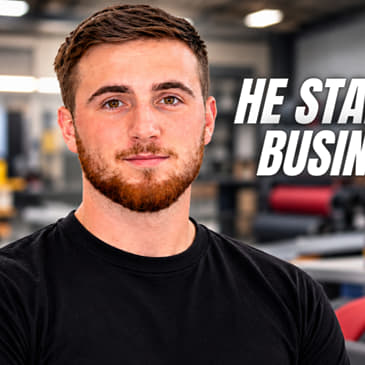
From a Garage to a Growing Business: Erik Koons of Koons Kustoms Upholstery | WKRP Montrose
What does it take to build a business from the ground up—and turn a skilled trade into something bigger?
This week on WKRP Montrose, Dennis and Rob sit down with Erik Koons of Koons Kustoms Upholstery, a Montrose-based upholstery business specializing in cars, boats, aircraft, and commercial projects.
Erik started his business at just 19 years old, working out of his father’s garage. He shares the challenges of those early days, the lessons that came with building a business from zero, and the milestones that helped Coons Customs grow into the operation it is today.
The conversation also explores Erik’s vision for bringing more structure, consistency, and efficiency to the upholstery industry, along with his approach to hiring, developing a strong team, and building connections with other local business owners.
IN THIS EPISODE
* How Erik started Coons Customs at 19 in his father’s garage
* The challenges and uncertainty of the first six to nine months in business
* Moving into a shop on Main Street and hiring his first employee
* His goal of creating better standards and processes in the upholstery industry
* What he looks for when recruiting and interviewing potential employees
* Why mentorship and relationships with other local business owners matter
* Keeping young talent in Montrose and creating opportunities in the community
* The mindset behind building something from nothing: everyone starts at zero
From the first difficult months to bigger plans for the future, Erik’s story is a look at the hard work, persistence, and vision behind building a local business.
🎙️ Watch the full conversation on YouTube and get to know Erik Koons of Koons Kustoms Upholstery.
Subscribe to WKRP Montrose:
https://wkrpmontrose.com/subscribe
This WKRP Montrose episode was brought to you by:
* Clearnetworx – https://linkly.link/2akEO
* NuVista Credit Union – https://linkly.link/2akEV
* Flower Motor – https://linkly.link/2eIUO
* Atlasta Solar Center – https://linkly.link/2hs
#WKRPMontrose #MontroseCO #KoonsKustoms #ErikKoons #LocalBusiness #SmallBusiness #Entrepreneurship #WesternSlope
[00:00:02] Welcome to WKRP Montrose, a radio station masquerading as a podcast about Montrose Colorado and the Western Slope. Recording live from the Clear Network studio in downtown Montrose, Colorado. Hey everybody, welcome to another episode of WKRP Montrose. Rob, go ahead. Well, we talked about this before. No, get it out. No, the thing that you go ahead and get it out. Oh, the fact that your crappy Steelers lost to the Cleveland Browns.
[00:00:33] The whole team's in disarray, right? Because my quarterback is yelling at my... You've got your quarterback yelling at the coach. Listen, that's... How unbelievably unprofessional. I hope that translates into the team falling apart completely. I think when you get older, you're entitled to have moments of wanting to like, you know... Respect. And I was told reliably that Aaron Rodgers doesn't really care about winning Super Bowls. He just wants MVPs. Like, he's a real piece of work. Wait a second. Wait a second. Where did you reliably get that comment? From a Steelers...
[00:01:02] A bigger Steelers fan than you, my friend. I don't think that exists. He's a... From all... By all accounts, he seems to care more about himself than the team. Okay, now that you've had your moment to gloat... Embarrassing. It won't be the same next week. So, don't worry about it. Well, with a bit of luck... I mean, I don't want him to stop being the quarterback. Right. Because you want... Because I think it's going to destroy the team. Right. But he should. They should just bench him. That would be hilarious. Because he's only on a one-year deal, right? He's only on a one-year deal. No. They should bench him. That would be a great thing. Outrageous behavior.
[00:01:31] They have two younger quarterbacks that might do a better job. Put them in, coach. Yeah. All right. Well, listen. You know why you're able to sit there and find all these wonderful stats so quickly? Tell me why. Because you have great internet connection. I do. Do you know where you get your internet connection from? Turkey Drop is our internet connection. That's correct. That's the name. Why would you tell people what our SSID is? No, that's just the name of it. We named it. Okay. Yeah.
[00:01:59] If anyone out there knows why we called it Turkey Drop, don't message us. Leave a comment. Don't message us. Yeah. Call 970-316-3162. But be thankful to Clear Networks because we have blazing fast internet. The fastest internet on the Western Slope. Yeah. If you need to get any business done for real, you need to have Clear Networks. Yep. Basically. All right. Who's next? Who's next? Yeah. Well, I tell you what.
[00:02:25] Our guest today, if you're buying a vehicle from Flower Motor, the interior is probably already perfect. Yeah. But you might have your own preference. But why not get it customized? Right. But first, you got to have the vehicle. Right. A lot of great vehicles. Actually, if you're looking for a restore project, Montrose Auto Connection, they've got a lot of great reliable vehicles out there that you could customize. Be great. Get a great price on it. Customize it. Have it be all yours. So here's the other thing. Yeah.
[00:02:54] I normally segue very smoothly into financing that vehicle. Right. Right. And where would you do that? I mean, New Vista is the only place to get it. Of course, the only problem is, and we say this quietly, the car dealerships quite like it when you finance it. That's true with them. They don't really want you going elsewhere. That's true. But you know, you can go to New Vista for other things. Home loans and- Well, you know what else you could get from them? You'd get a loan to put solar on your house. There you go. Because there's a lot of days of sun out here. Yeah. You know who's a great place to get your solar from? I have no idea. Tell me. Zero idea? No.
[00:03:24] I mean, he's your buddy. I thought you guys were just like two peas in a pie, you and Matt. This is a little game we play. This is a little game you play. Oh, it's new. It's at last to solar. Yeah. Well, New Vista is going to help you pay for it. Yep. And if you haven't seen, there's going to be some segments coming from at last to talking about- Solar minutes? No, what did you call it? The solar- No, Matt came up with it. What is it? I don't remember. You're going to have to watch. Look at our shorts. You'll see them coming up on that. All right.
[00:03:53] We've got a great guest today. Yeah. We also have a new sponsor coming. Do we? We do, but it's not done done yet. It's close to being done without being done. Yeah. Dun, dun, dun. We'll mention them when- We'll tell you. And a new studio coming up here real soon. All super exciting stuff. Okay. Guest today. Mm-hmm. We've decided that we wanted to start really paying attention. We've got some really great talent in Montrose. Right. Building their own businesses from scratch.
[00:04:22] Well, and we've talked about it before how Montrose does an okay job, but we want people to stay in our community. Yeah. I mean, I think it's great for young people to leave and see what they're missing and go and see the world. But we do have a lot of young people here, and they are finding that there are opportunities to start their own businesses. Avery Buston, obviously, was- Yeah. Go watch his episode. Friend of the show. Tim Hines. He's not really young, though. Tim's at no. No, he's not young. He's not young. He's a grizzled old mechanic at this point. He's a friend of our guest, though. Yeah.
[00:04:50] But we do have young people. And we want to try and increasingly have more of them on to share their stories, to inspire others. And just so we can figure out why they're here, how their business works and survives in Montrose. You had this brilliant idea of calling the segment 30 Under 30. I don't think that was my brilliant idea. Yeah. I think you stole it from somebody. Definitely. Yeah. But the idea is that we have multiple young business owners that would be under the age of 30.
[00:05:18] That seem to be, actually, a lot of them seem to be doing really well. Yeah. Like some of the top ranked in the state. So? Probably like our guest. Maybe we should ask him about his business. This isn't enough talking from us. Eric Coons, thanks for joining us. Thanks for being on the show. Coons Customs. Yes, sir. Now, you're not a native of Montrose. You're an import. I'm an import. We imported you. I got imported from a place second worst to California. Oh, really? Boulder. Boulder, Colorado.
[00:05:48] Boulder, Colorado. Boo on the front range. Yeah, we're not big fans of it. It's like the Disneyland version of Colorado. This is real Colorado. They call it the Boulder bubble for a reason. Oh, yeah? I mean, you don't need to leave the bubble. They've got everything in the bubble of Boulder. Everything. Everything. Except for Montrose. Except for Montrose. And affordable house prices. And affordable house prices. Yeah. So there's some of those things. It contributes. So you grew up in Boulder? Were born in Boulder? Born and raised in Boulder. All right. I was there for 18 years.
[00:06:16] And then a month after I turned 18, I moved to Wyoming for a couple years. Went to a trade school up there. And then the week I moved down here. Straight from Wyoming, I started the business. Out of your dad's garage? Out of my dad's garage. Knowing nobody but your dad down here? Yeah. You didn't like, this wasn't like, hey, me and a couple of my buddies. We're going to do some guys from this tech school that I just graduated from. We're going to go. No, you by yourself, dad's garage. Yep. Going to start a business. Yep.
[00:06:45] And my dad moved here only a year before I did. And so it was my dad, my stepmom, my brother and my sister. And so they had only been here for a year before me. And so I didn't know anybody. So it was definitely new. Had you visited during that year from Wyoming? I think I visited twice for like two days total. So was that- Coming to see the family though, right? Yeah. Like when they first moved in, it kind of helped. So was that enough time to get an idea of Montrose?
[00:07:12] Or did you move here because, you know, there are practical elements with family being here and things like that? Yeah. I think I kind of got an idea of Montrose in the sense of like, I saw that it was really pretty here. And I was like, I love the view of the mountains. Because in Boulder, as much as we love to trash park Boulder, it's beautiful there. Yeah. They've got the Flatirons. You've got a bunch of places you can go to very quickly. We have the San Juans. Yeah, exactly. Right? So it's- And to get to the Flatirons, right?
[00:07:40] You can drive up the Flatirons from Boulder pretty quickly, comparably to like getting to San Juans. But you grew up with that. So you were used to that. So you kind of, yeah, you looked at Montrose and thought, well, it's also got those kinds of elements too. Yeah. It was very comfortable. It's comfortable. It's cozy. It's a lot of good people here. Like a lot of good people here. And I mean, and family is a big deal. Yeah. Right? You know, not only to be close to them, but I don't know. You tell us when you came and started the business, well, like you said, you were in the garage first.
[00:08:08] So you kind of had, you had that off that space built in with the family being here. So there was a, it was convenient as well. It was. And that was a big part too, because I had originally looked at like Coeur d'Alene, Idaho and like, I was like, I'm going to move anywhere. Right. You know, I was like anywhere but home, right? Anywhere but back to Boulder. And so I was looking into it and I didn't have much money and I was like, I want to start a business, but I don't know how I'm going to do this with no money. So then my dad offered to let me start it out of his garage.
[00:08:35] Um, so that, I mean, that was a huge, huge benefit for sure. Small garage, but it was all I needed at first. Was there any other thought into starting the business out here other than dad's going to help out a little bit by at least, you know, let me, letting me use the garage. Meaning like I wanted to ask this question much later in the interview, but the, how important is it for your type of business to be located next to like a community like Telluride, especially
[00:09:05] because when you talk about, and I don't just mean, you know, the value or the wealth there, but, and maybe we should tell people exactly what your, your, your business is. Um, but essentially, well, let's, let's say that what is your business real quick? And this will make sense how I tie it all together. Okay. Yeah. So Coons customs, we do all things interior for cars, boats, and planes, and then we do commercial upholstery. So medical centers, restaurants, things like that sort. I've done a couple more custom, custom projects.
[00:09:32] I did like an outdoor kitchen cover and Telluride. We did a wedding venue enclosure and grand junction, but we primarily focus on like interiors for cars and boats. That's like the biggest focus. So that includes daily driver seat repairs, which is a huge part of what we do. And then we do a lot of restoration. So right now we've got like a Mark four Supra, Toyota Supra in our shop. We've done a lot of work for a company called profits, resurrection land cruisers. We do a lot of custom upholstery for them.
[00:10:01] So we kind of fit, fit the middle to high market of upholstery. So now, if I ask my question now, how important is it to be in a community where let's say, you know, it's got a very active classic car club. It's, you know, close to a place that has a lot of, you know, expenditures or extra income to do extra things. It has people flying in on private planes.
[00:10:27] It has people, you know, we have two great, the reservoir just down the street in Ridgeway and, you know, it doesn't take much to get out to Blue Mesa or although, have you seen Blue Mesa? Oh my goodness. If you didn't think that there was a water shortage issue, drive to Blue Mesa. But yeah, I mean, we've got these great places to go boating. So pretty much got all the things that you said covered around here. But did you think about that? Did you think about that before you came?
[00:10:55] I wish I would say yes. But I mean, I was, when I started it, I was 19. So like I, I did like a SWOT analysis, you know, build a business plan kind of thing. I had no idea what I was doing. You know, I had never had a business before or anything like that. So it was, it was a huge, like kind of shock of like figuring everything out. To be honest, part of it, I think was just luck. Like I didn't realize there was such an active community of, of like classic cars here.
[00:11:22] I didn't realize that Telluride being so close would make such an impact. So honestly, part of it was kind of luck in that sense. As I've been in it now for three years, last, last Thursday was three years. I was about to say, you just had a third year anniversary. Yeah. Congratulations. Thank you. Thank you. So it was, it was a big learning curve for sure. But Montrose is just a phenomenal place. The whole Western slope, but the heart of Montrose is just, it's incredible.
[00:11:49] Really great people and great thriving communities, it seems like. Well, that takes me back to something that you said I heard in an interview, or maybe it's like you're, you're pretty active in social media, or at least you were at some point. You were doing some like motivational moments on your social media, which were great. And one of them was everyone starts at zero. And I think it's important for people to hear, because I think that by the time we get to have this story with you, right?
[00:12:15] Three years in, you're kind of, you're moving past that point of the expected failure for small businesses. Like you're, you're now in your third year. Things should be good. You have employees. You're doing a steady amount of work. Well, we get to see that three years later, but where you started, everybody starts at zero. Why, why did you bring that up? Why is that so important that you felt like you should share that with everybody else? That's a great question. Well, I grew up in Boulder and there's a lot of people, not everyone, but there's a lot of
[00:12:45] people in Boulder. They start with a lot of headstarts. I guess you could say like a big, big foot forward. Not that I didn't have any help. Like, of course I've had my dad that led me in his garage and I had other people and things that were able to help me. Um, but I, I think it's really important. Like the only thing that we have is our reactions to life, you know, and our perspective creates our reality. And so I think it's super important that people realize that like your life and your outcome is determined by you.
[00:13:13] And we don't, we like, you have to play the cards you're dealt. Like you don't get to choose the cards you're dealt, but you have to play the ones you're dealt. You can't just complain about the ones you got dealt and do nothing about it. And so I have met a lot of people in my life and especially people my age who are really sitting in this, oh, the housing is so expensive and this is so bad. And this is like, yeah, so what are you going to do? So what are you going to do about it? And it bothers me because there's a lot of people that will just complain and do nothing
[00:13:41] about it and it's like, I get it's hard, but do something like doing nothing is going to make it even worse than where you're at right now. And so I get excited talking about it, but it's, it's, uh, I have a lot of friends and they're just like, not everybody has to be a business owner, especially young people, right? Like you don't have to be a business owner. You don't have to be an entrepreneur. You don't have to like become a professional athlete, but it's like, what are you doing with your life to become the best at what you want to pursue? Yeah.
[00:14:09] Like one of my closest friends works for the County and he is a hardworking guy and he's pursuing the life that he wants and he's doing phenomenal. And it's like, may not be as glamorous as a job of somebody working on hypercars, like my other friend who lives in Miami, but it's like, but he is like living such a loving and fulfilling life that it's like, dude, like you're doing it. You're chasing after things. You're making a difference in like going after something. Well, it's, I mean, owning a business isn't for everyone.
[00:14:38] Um, I mean, we, we were discussing earlier that, you know, there are a lot of plus points to owning your own business, being in control of your own destiny and things like that. But, um, you also have to do the hiring and the firing. And, you know, if the janitor doesn't show up, you have to pick the broom up. Like you have to do it all. And that isn't for everybody. So, but you know, we've talked about for three years, you, you seem to be doing really well.
[00:15:04] We discussed that, um, you would move premises once, but can you give us an example of how things sometimes don't go right? Like in the last three years, what give us a couple of examples of why being your own business owner sometimes isn't that great. Yeah, that's, that's a good one. Um, I mean, being a business owner is definitely, it's like any other career. Like, I think you have to choose the career and there's some things you like about it.
[00:15:30] There's some things you don't like about it, but it's like, does pursuing this career lead me to like who I want to be in the future? Like, does the, if you look at somebody who's been doing it for 20 years, like, is that the type of life that I want? Um, and for me, when I look at it, like I want to be that type of person, like I'd say examples is like hard conversations, like learning how to have hard conversations. I haven't, I think I've had one person work for me. Um, that was younger than me. The rest of them have all been older than me by a significant margin. My first employee was 65.
[00:16:00] Um, and so like learning how to do that, learning how to have those conversations. Um, I have been a business owner for longer than I've ever had a job. Right. Um, the longest I had a job was an apprentice at an auto repair shop before I went to trade school. And there I showed up after the morning meetings cause they didn't need me there for that. And I left early cause they didn't need me to stay late. And so I wasn't, I didn't understand like how business worked. Um, and so a huge learning curve has just been like, what's expected?
[00:16:28] Like, what does tardiness look like? Like realistically, like everybody can say, oh, he's tardy, but like, what does that mean? Cause maybe it's having a bad day. Do you allow it for seasons? Do you have a conversation after the first time they're late or do you have a right? How do you hold standards? Standards are what your business is built on. If you have low standards, you're not going to have a great business. If you have higher standards, different type of business. So a lot of the difficult things have been more internally of pushing through, realizing
[00:16:58] like the only way I can learn this stuff is by pursuing it and figuring it out as I go. Right. Doing it yourself. Like you have to have it. The culture has to start with you. Yeah. It can't, so it kind of becomes a result of you and those people are going to follow what you're doing. Yeah. So you have to be the, you have to be the one that they're looking to, to see that happen. You, you had a comment and this is a little bit of a variation of the question he just asked, but I really wanted to ask it.
[00:17:24] You, you made a statement that said fear is the killer of dreams. Yeah. And I, I thought that fear is the reason things don't get started. Yeah. In the first place. Is there, is there a situation that fear killed a dream of yours or, or kept it from ever happening? Wow. And if, if it doesn't come to mind, the one that I was thinking of is you wanted to be part of a race team. Yeah.
[00:17:53] Was, was fear what kept you from doing that? Hmm. That's, that's a good question. Um, I think to an extent, yes, I think we all deal with fear in different ways. I think part of it was maybe I was scared that I couldn't cut it and couldn't be good enough or couldn't talk to the right person and that the destiny wouldn't line out the way or whatever. Um, but I think, I think part of it was just like the race team, for example, like I, I
[00:18:23] know that I wanted to do that, but then I had to like, look at like, if I just go work on the cars, I'm not really learning how to drive the cars per se. Maybe I get, maybe, and maybe I'm wrong, right? Maybe there was more exposure to it, but I think I saw like the fear of being a failure is big, right? For anybody. Um, like, I don't want to fail this. Like, do I have what it takes? I think most guys ask themselves that question of like, am, am I enough? Do I have what it takes?
[00:18:49] Um, and so like getting into business ownership, the first G six to nine months were super, super, super difficult for me. Um, cause like, I didn't know anybody here just started a business. Like my first week here, when I started the business, I was driving around to all the auto repair shops, all the auto body shops, talking to everybody. I could, the dealerships, um, being like handing out cards and being like, I just moved from a different state. Like, how do I want to show up here? Right. It's an opportunity to recreate yourself in a way.
[00:19:18] So it's like, how do I want to show up? Who do I want to be? Um, and so it was, I had so much fear of not knowing what I was doing. Um, that I got sick probably two to three times a week. Um, when I first started the business for the first six to nine months where I was like sick to my stomach, I couldn't move on the couch type of thing. Um, and so that was, that was very difficult. I had talked about shutting down the business in the first year, quite a few times, talked with my friends, all of my friends, mind you from the trade school, all went to go work at custom
[00:19:47] hot rod shops. Right. And I started a business and I didn't even like upholstery at first. It was the only thing I had enough money to start. And I had a vision for what I could turn it into. Um, well, so let's, let's talk about then those first six to nine months. Yeah. Um, things maybe not going as the way you'd hoped. And there was maybe talk of quitting and doing something else, but what, what turned, when was that? Oh, was it the first client you got or what was that moment where you thought, no, this is going to work?
[00:20:18] I think once it was a slow process. It was not overnight. It was definitely when I, when I hired my first employee, that definitely made an impact because I felt some responsibility of like, I need to make sure they get paid. Um, and the also, he was also very encouraging as well. Um, and then once I got into a building on main street, when we moved out of my dad's garage, that was a big, like, okay, this is an actual business now. Right.
[00:20:47] Um, and that, that helped me like not walking from the, uh, the living room. Yeah. I didn't have a bedroom. I was sleeping on a cot in the living room. Right. Okay. So it was, yeah. Sandwiched between the couch and the wall. Well, it's interesting though, that, that the safety net of, you know, the garage was removed. You had presumably more bills to pay because you were in a place. Yeah. But conversely that kind of solidified it for you and you're like, well, it's a real business now.
[00:21:17] And if I don't step up, then A will be out and I won't be able to pay my employee. Um, when was that? How long did it take to transition from the garage to the spot that you used to have, um, on main street, um, kind of opposite, um, kind of like crash burger next to. Right across from horsefly. Horsefly. Yeah. So how long did it take to go from garage to, to. Yeah. I think it took nine months. Okay. Nine months. And, uh, it was funny cause when I first started, I was like, I'll be in a shop in six months or less. No problem.
[00:21:46] Maybe even three months. Right. And then when that six month market, instead of getting in a shop, I hired an employee, which helped. Um, but it's weird having an employee work with you at your dad's garage at 19 years old. Well, a bit of a, a bit of a leap of faith from them too, to believe in what you were doing and saying, okay, I can see where this could go type of thing. Um, you said, you also said, I want to make sure I get this right.
[00:22:11] Staying in your zone, staying in your zone of competence is a detriment to people. So what is, you know, why is that? Like you, I guess the way that you were saying it is like, if you only do what you know you can do, then you're never going to find like where you can go type of thing is that's kind of the way I interpreted it. Yes. Yeah. Well, I think, yeah, that is learning, right? Like when you go to school, you're being taught things.
[00:22:39] It's uncomfortable cause you don't know what you're being taught. And so it's that process of learning of refining. Now schools have just kind of standardized it to make it normal, if you will. But I think a lot of people get out of school and then stop their learning, um, or change it heavily in a negative way. Um, and I think like if, if you're constantly only doing the things, you know how to do, like you're, you're not going to grow. Like if you're, if you're sick and you're like, why am I always sick? But you're eating McDonald's every single day.
[00:23:09] It's like, well, gee, I wonder why. So you, he's taking that personally. I was looking at you. Oh, there's, there's more junk food, you know, wrappers on your desk than there are in mind. Right. But yeah, if you don't, if you don't change your behavior, you don't try to learn more. Exactly. Well, so, so tell us then when you first started to shop, we, you were doing upholstery. Um, so how has that in the last three years, what have you added, um, in terms of services
[00:23:34] that you had to go out and learn a new skill for, to be able to offer those services? Yeah. So I'd say the level of custom work that we've done has amplified because I've had to do a lot of jobs. And so a lot of times, uh, especially when I was starting out, like I learned the trade for three months at a trade school, had a, or had two other classes, which took six months and then started the business. So I hadn't even practiced the trade in six months prior to starting the business.
[00:24:05] So I was green as all green can be. Um, but I had a couple of books that the school gave me. And so I was just like, whatever comes at me, I'm going to figure it out. And so I had a bunch of jobs come in and I just would take way longer than somebody who's been experienced would take to do it. But I'd figure it out and learn how to do it the right way. Um, and then by hiring people as well, you know, these guys have all had years more experience than me typically, a couple of them haven't, but, um, I've also been like, Hey, how do
[00:24:34] you go about this? And they're like, Oh, I usually do it this way. I'm like, Oh, interesting. I would have done it this way. Um, and so over time, like I just, when people come up with something, I just kind of take the time and tackle it properly. Um, and now we're at the point where if somebody comes to me with something custom, I'm like, Hey, I can kind of build you a rough estimate. Based on what I'm guessing right now, but it'll be a time and materials type of thing. There's gotta be some confidence there in knowing and being able to tell people, Hey, I'm not, I'm not sure what the answer is. Yeah.
[00:25:01] Um, but I will figure it out and it, and it will happen and it will be a good work. You said there's two types of businesses, repetition, or there's two ways to go about business, repetition or iteration. And I thought that was really interesting. Cause I think a lot of people just feel like, Hey, I'm doing a lot of work. I do the same thing. I work hard every day. I'm, you know, I'm at the same place where I'm supposed to be doing the same thing. But iteration is what really drives a business to do better.
[00:25:31] So iteration to Rob's point is not, you don't necessarily always have to learn a new skill to be learning or continuing to grow. But what's an example of like how you got more efficient at maybe some of your work to be able to do or do it better than where you started? Because you said, uh, and let's, let's give a shout out to your school, WyoTech. Yep. Cause they did a, you're like on all of their marketing materials as far as I can see.
[00:25:56] Like if you, if you Google WyoTech, it's like Kuhn's customs is the, you're like prize student that came out of the school. They do. They do. They're good. They're good people. Yeah. But, um, no, I mean, iteration is, is huge. I think it's, it's exactly what you said though. And it's not learning a totally new skill, right? It's, it's iterating, constantly improving upon the skill you already have. Like the Japanese word for it, I believe is Kaizen, which is like a consistent improvement. Did you know that Rob? Yeah. Okay. And so I'm going to say yes anyway.
[00:26:27] But I think that's, that's a good way to look at it because, you know, even in upholstery, right, it's the, I'm not necessarily learning a new trade, right? I'm not learning drywall. I'm still learning upholstery, but it's okay. Every time I do it, what iteration requires is pain in the moment. And I think that's what a lot of people ignore because they don't want that pain in the moment.
[00:26:51] So it's like, for example, if I'm, if I'm sewing a seat cover and I'm just sewing the seat cover the exact same way every single time. And I noticed that, man, it takes me, let's say two hours to sew this seat cover. And if every single time I just accept that it takes two hours and I'm just like, all right, it's going to take me two hours. And I just go ahead and do it versus where mine's, my mind's normally at is like, gosh, there's got to be a way to take 20 minutes off this. Maybe there's a way to take it.
[00:27:17] Is there any way, let's think in order of magnitude, I could take an hour off of this an hour and a half where it only takes me 30 minutes. Like what would have to be true? Because it assumes a yes. What would have to be true for this to be done in 30 minutes, not two hours. And so like, but that requires pain in the moment. Cause then you're like, but it's still taking me two hours right now. And I know there's a way or, you know. Right. Cause I know how to effectively do it this way, but to learn something new is actually might take me longer. Yeah.
[00:27:46] That's, that's something that I think is really interesting. I've talked to the people in the camera. I've worked with a lot of businesses. I've coached a lot of businesses and people think, Oh, when I get my first hire, that's going to take so much responsibility off of my shoulders. And the reality is when you hire your first person or when you hire anybody respectively down the line, it's adding to your time. Like you've got to bring this person on, bring them up to speed on what you do, how you want
[00:28:14] it done, what your expectations are. And then they have to invest their time to, to get to that point and bring their own thing to it. So I think a lot of people just have these assumptions that either learning something or doing something there is that pain. I like that, that pain factor that has to come in first. Well, then you've got as a business owner, I mean, your business is fairly niche. Yeah. But like in the restaurant industry, you know, there's, I think it's fairly common that you
[00:28:43] bring somebody in and you train them and train them and teach them and show them how to do things. And then they're free to leave and go somewhere else. So you've always got that. It's short term pain for maybe longterm gain. It's always a risk. If they stay. Yeah. And I guess, again, that's one of the pitfalls of owning your own company and being the boss is that that happens. And then you just have to get on with it and find somebody else and start again. Yeah.
[00:29:09] Well, a lot of it comes down to like realize, at least for myself, like realizing like I'm not good enough yet. Right. And so it's like with hiring people, like I've, I think I've hired close to a dozen people now, but then I've had to let a lot of people go, whether it was just bad actors or not the right person for the right time of the season of the business. Um, or they moved to a different state or something like that. Right. Um, but like I've, I've hired people from, um, moved here from Florida.
[00:29:37] Uh, I've had people move here from Ohio. People move here from Nebraska. People move here from Iowa just to come work for me. Um, because it's realizing like finding the right type of person because it is a very niche industry, you know, trying to find that type of person versus if you're a retail store, just need somebody to be a cashier or something like that. It's not that that's wrong. It's just a different type of industry, different type of person you're looking for.
[00:30:01] Well, I think it's, it's also one of the big problems is, um, you can train people, but you've got to keep them. And it's not just the job at that point, right? It's that the whole work environment. Um, so I mean, what have you learned? How do you, how do you treat employees? What do you, what are the lessons you think you've learned about how to keep an employee happy so that they stay and they want to stay? Yeah, that's a good question. I'm constantly learning this one because I, it's a, it's a constant, uh,
[00:30:31] thing that I'm learning. And it depends on the person it's, you know, like, uh, I'm about to hire somebody who's coming straight out of the trade school. Um, and so they're younger and so they're going to be treated a little bit differently than the other guy I've got who's 37. Right. Um, and so different generations get, they prefer being talked to in different ways. And so like constantly learning that management style is different. I mean, I am a huge advocate of like, I will extend trust. Trust.
[00:31:01] And then until you show me that you can't, uh, hold my trust until you show me that you don't deserve my trust, then I will rescind it. But like at first I will extend it and be like, Hey, this is what we do. Um, I have high expectations, but I take care of people and give people the benefit of the doubt. Absolutely. And I think that's huge. Like people want to have the benefit of the doubt. They want to be heard. They want their ideas to be explored. And, um, like being able to give the opportunity to people to like, Hey, your opinion actually matters. Like I'm willing to listen to it.
[00:31:30] I might not do anything about it, but like, I'm willing to listen to it. Um, because that's what it takes. Like, I don't understand why a lot of people will try building a company and they just, they're very dictatorial of like, you must do this, go, go do this, go do that. Um, and it's, to me, it's antithetical to like what a company should be because it's a company is just an organization of people that are pushing towards one vision or mission.
[00:31:55] And so it's like, if not everybody in that organization and granted it changes depending on like their level in the business. Right. But like, if not everybody's going that direction or bought into it, then it's kind of for vain in a way or that the service won't be as good and the reputation is going to suffer. And it's like a big trickling effect, but saying that's easy doing it is the hard part. Yeah. Well, and then you like the recruitment part of this whole thing, right?
[00:32:21] Is before you even have these people as employees, you gotta, you gotta try your best to kind of vet them as much as you can because, you know, having two, three, four, 12 employees and a couple of them not pulling their weight, um, creates all kinds of disharmony, you know, in a workplace. So you have, you have your work cut out for you even before you've started training them and offer them a job just by virtue of having to find who you think are probably the right people. Yeah.
[00:32:51] And, and to add to that, we, we do working interviews. So like, I'm a huge advocate, especially in the trade that we're in where it's very niched and like the quality of work you do is very important. Yeah. Um, like we have people, so all the people I've hired from out of state, I've had come out here for a minimum of like two days if they're out of state to like a full week or two weeks. Um, and when they're out here for like a full week or two weeks, I'm able to work with them. You know, I usually do jobs with them or just hand them a job sometimes and be like, all right, handle this. Like, you, this is how we do it.
[00:33:21] Go for it. And then I try not to micromanage, kind of watch how they, how many questions are they going to ask? Are they smart questions? You know, it's like, are they just nervous right now? But you really get to see like, who is this person? But even with working with them for a week, so, um, that has, for me has been the best way to vet people so far. Um, maybe there's a better way out there, but so far it's been, that's been the most beneficial way. So you, you're in a unique situation. Like you said, you're an implant into, into Montrose.
[00:33:50] Um, you're, you just mentioned you're now going out to the school that you went to, to try to recruit employees to come join your business. What is that, what does your recruitment pitch look like to come to Montrose? Uh, I usually talk about how it's beautiful here. And I talk about how it says, stay here, play everywhere as a mantra. Um, and then I usually like to show some pictures of the San Juans and talk about all the four by four in trails and all the mountain biking.
[00:34:21] Um, and I talk about Telluride cause I'm like, Hey, you know, I got to go up to Telluride for this festival thing. And look at these pictures, look how cool this was. Um, cause it is cool. And I think a lot of people, especially when you talk to people from like Iowa or Nebraska, you know, anywhere that it's flatlanders, flatlanders, right. Uh, or even Eastern Colorado, far East Colorado. So, um, how does it, but what percentage then of your pitch is the lifestyle versus the job? Where does that line cross between, cause you could have the best lifestyle in the world
[00:34:51] here, but if you don't enjoy your job, it's not going to work out and vice versa. Most of my pitches about the job. Yeah. Most of it. Yeah. I talk about mantras briefly. I go into some detail, but I talk about it briefly for, for the most part. Yeah. I mainly talk about like, what is the type of work that we're doing? Because I mean, trying to find people to do upholstery in the United States is very difficult. Right. Like every time I make posts and Facebook groups and stuff, I get people from the Philippines
[00:35:17] and, and it's like, it's a little too difficult to work on those visas and stuff like that. So, um, expensive too. It is. Yeah. And there's no, uh, there's no standard in the industry at all. So that's, that's honestly, that's my segue kind of to what my business is trying to build as the standard for the industry. Um, but you don't know until you get somebody with like in the shop whether, because they, it's not like they can say, well, here's my resume and here's this certification. Yeah. So that makes it difficult. Sometimes they can show pictures of the work. Right.
[00:35:47] Um, and that can help, but a lot of it's, you know, when I'm, when I'm pitching to people, it's like, Hey, this is the type of work that we do. And this is kind of what a day to day looks like in our shop. Right. And that gives people an idea of like, Oh, like it's more easy going, but like, we still are pushed to get things done and get them done. Right. So. You, you just said you're trying to create, bring standards to an industry. You actually said, and I think it's in one of the pitches for, uh, WyoTech.
[00:36:17] You said it's a dying industry, that the upholstery industry was a dying industry and you want to revive it. Two questions then one, why would you pick a dying industry to go be a part of what, what benefit or, you know, positive side did you see on that? And two, how, how do you plan to revive it? Yeah. Good question. So why did I pick it? Uh, great question. Um, I don't know. I think, uh, to me, I just see like the need to bees of like, I still believe the fundamental
[00:36:45] truths of the business are still there. So like people are still going to need upholstery. Right. That's just like medical centers are still going to need their dental chairs re-covered. Right. Uh, those things wear out over time. They're going to need done restaurant booth. Those are going to wear out. They're going to need replaced. Car seats are going to wear out. They're going to need replaced. And there's no standard for providing that solution to customers. Everybody, like pretty much every upholstery shop you go to is a custom shop. That's what they're going to say.
[00:37:13] And it's just not a good way to do things because they're having to charge a price that makes the non-custom people unhappy. Right. But then the custom people are getting more than what they're paying for. If that makes sense. So like, okay. They're not charging enough to do custom work and actually be profitable. And so because of that, they're charging low enough to get all a majority of their customers, which is not custom people. Right. And so it's like, it creates this, everybody's trying to be everything to everyone. Right.
[00:37:39] And that's what I have been doing the last couple of years because, because there's no model, because there's no standards trying to be like, how does this work? Like they're trying to be everything to everyone and people make some ways to try to make it work for them. And it's like, this is not going to work. But I see the need to believe of like, people need upholstery and there's, there's not a good, consistent, reliable way to get that everywhere right now. So you can't, so just to dumb that down a little bit is you can't have an expectation going
[00:38:07] anywhere to a upholstery shop of like a standard seat recovering is $300 or something like that. Totally different. It's going to be bid out different by every shop that you go to. Every shop. Then to compare that and the quality is going to look different. Then, and then to compare that to a custom is like, Hey, I'd like to get this custom fabric inlaid on this seat and redone. That's a custom job. That should be a different, that should be quoted out as kind of a one-off basis type of thing. A hundred percent. Okay. A hundred percent.
[00:38:35] And the way that it's done right now is exactly that, but they do that for like every job. Right. Now, some of them might build small menus or something, but the way that I'm trying to standardize it is creating a, how do I put this? Like a simple pricing book essentially where I could have not even as somebody who knows the trade, but anybody could go through the software. I built my own software for the company that can go through the software and just estimate
[00:39:02] it themselves, which means that we're going to be doing less custom work, but will appeal more for lack of better words to the masses. Um, and so I want to be able to create locations that are doing that. And then to add to that, the production quality is so different because everybody, if everybody has to be a craftsman to be able to produce the upholstery, like you have to be a craftsman. I think people don't understand that's the general rule of expansion. If you can't standardize something, you can't expand it because you can't build it outside
[00:39:31] of what you personally can do. And when the quality is so inconsistent, I'm not going to say any names, but there's people on the Western slope that just the quality is, you can say names. It's, they're not going to bother me. Yeah. Well, I'd rather not. You might not want to say them for your own sake. Yeah. I don't want to say them. But like adrenaline vans or someone like what is his standards of a business? Yeah. Tim is a great guy. Saw him at the gym this morning, but no, you're right though. It's, it's that, I mean, it's the, um, it's the fast food model. Yeah. Right.
[00:39:59] I mean, we don't necessarily love fast food. The idea though, is that you go into any McDonald's in the country or any Starbucks in the country, it's the same. And whether that's high or low quality or not, but consistency is critical. I think in, in all areas, like especially if you are running your own business, if you're not consistent with opening hours, for example, and we've had issues in Montrose in the past with that consistency or lack thereof kills businesses. Yeah.
[00:40:27] How we, and for those of you who don't know, adrenaline vans, one of the top van, you know, custom van shops in the world. Yeah. You know, um, we just have to give Tim shit cause he's a, yeah, we should have, we should have been more specific. His, his standards and hairstyles are probably as abysmal as you can get. He doesn't even have a good mullet. Yeah. Yeah. If you're going to do it, do it right. Tim. Um, so how, but joking aside, how important is it to have people like Tim Austin, people
[00:40:56] that are your contemporaries in the area trying to also set new standards for the industries that they're in, how important is it for you guys to, to occasionally catch up or just be in the vicinity of each other? Cause I ran into you and Tim having lunch the other day. And as I walked away after I rudely interrupted your lunch, I thought, well, I wonder what, I wonder what that conversation looks like. You know, I wonder what, what's going on with them that they're, that they're discussing. Man, uh, guys like Tim are great because he's, he's just all in, you know, and I'm all
[00:41:25] in and so it's like being able to have conversations where a lot of guys are worried to talk about their numbers or worried to talk about the issues they're dealing with in their business or whatever. So guys like Tim, like we can sit down and just be, be like, yo, this is what I'm going through. This is what I'm going through. Um, like, I don't know how to deal with this. I don't know how to deal with this or look what I just figured out or I just built this or did that. And so, uh, being able to have those conversations where it just feels like a natural conversation and you're being honest and you're helping each other.
[00:41:52] And, uh, sometimes you just need to like relate with somebody that, okay, you're dealing with that kind of stuff too. Like, yeah, good to know I'm not the only one. Right. Yeah. Um, so those kinds of conversations are, are, are super important. I think, especially for like young entrepreneurs like myself, like if you don't have, like I've got a few mentors in my life, um, one incredibly grateful for. Um, and because of those guys, like I'm able to be like, oh, this is normal. Like this is just something I have to go through. Yeah. Um, and so that's been huge.
[00:42:20] Well, I think it's also important that, um, you don't have to necessarily be in the same industry or even an adjacent industry to have common ground, right? If you're a business owner, you could probably sit down with any other business owner in Montrose and find something that you have in common, a problem that you've encountered. Um, and I think sitting down with those businesses, maybe that's something that needs to happen more. Um, because finding that common ground and listening to people who have solved problems that you're
[00:42:49] encountering, uh, can only be beneficial, right? Yeah. So quick question. Uh, I'm trying to think how to word this. I'm just going to back up. The, is it a rising tide with you guys to have everybody like, you know, Austin's business is adjacent to yours. Tim's business is adjacent to yours. There might be some crossover in some of those and customers and things like that.
[00:43:19] But the more that, the more that we have those services, you did a post recently talking about Ford has like some 500 plus or 5,000 plus jobs that they can't fill because people don't have these skills anymore. Um, how important is it to have all of you kind of in these adjacent businesses for you independently to be successful? Independently? I mean, I mean, because if there's, if, if, if you're recruiting people from my tech or whatever,
[00:43:48] then, you know, there's the possibility that more people are looking at this place for those types of jobs. Tim's trying to grow his business. That helps for him. That's my thought. But yeah, well, I mean, I like, I think it's beneficial. Like I recommended to Tim, like, Hey dude, go up to wire tech. Like there's a lot of very talented people up there that come out of that school. That would be great for what he's doing, what he's hiring for. Um, and so like things like that are great, uh, required. Like, I don't know. My stance is kind of like, if you're going to win, you're going to win.
[00:44:18] And if you find an excuse to not win, like that's on you. And I just, I just say that. Cause like, it's too easy to say like, well, I don't, I failed because I don't have the right community or I failed because I don't have this. And it's like, why would I give my power to anything outside of what I can control? It's like, if the only thing I have in this world is what, how, like what my actions and my reactions to things, like, why would I want to give my power to anything else? And I'm not, I'm not saying this from a stance of being perfect. I'm saying this as somebody who's constantly learning. It is like, okay.
[00:44:47] I like in the past, I've been like, gosh, it's so hard to find people. I'm having to hire people from outside the state. Like I can't find anybody in the state of Colorado to come work for me. Like, why is this so difficult? And so I would just get hard on myself and I was like, oh, it's, you know, the business, the whole industry is just bad and blah, blah, blah. And I was like, I'd have to catch myself and be like, no, like what's in my control. Okay. I can post more on Facebook. I can post more ads. I can make targeted Facebook ads specifically for trimmers in the United States who want to move. Like I can figure that out.
[00:45:15] I'm just not good enough yet, but that takes recognizing that I'm not good enough yet, which is difficult to get to. So, all right. Since you said the things that are in your power, I always love challenging people. You recently met somebody that, that was, that's in your industry at the Telluride Classic Cars. You met David, Dave Kindig, David Kindig, who is bitching rides. His company's out of Utah. If you hadn't seen his show.
[00:45:42] So, when are we going to get a bitching rides, pimp my ride version of, I think, I feel like that's a good collaboration between. Avery. Yeah. Avery, you and Tim. Yeah. Yeah. You could, yeah. That could be cool. I think it could be really cool. I feel like challenge has been thrown down, Tim. Tim, since you're the elder statesman, you should be leading this one up. He, I feel like he has a Mercedes that he's trying to get rid of. That would be just perfect to be a pimp my ride. Yeah. We'll film it.
[00:46:12] Yeah. Yeah. Absolutely. We'll facilitate that. All right. So, normally we close up the show either asking you, we haven't done this actually in a while, either asking you to look at the camera and challenge somebody else to come be in the seat so that we can get to know him better. Oh, okay. So, I'll give you a second to think about that. But while I do that, which favorite place to eat in Montrose? Oh, hands down, Chang's Thai. Really? So good. Okay. I don't know why I said really. I like to eat there. But you were very quick off the market. Yeah.
[00:46:42] You knew your favorite. Yeah. What's your favorite dish in Chang's? I like the Philadelphia roll, but usually when I go there, I get a lot of food. Okay. So, I have to limit myself on how often I go there. But I'll get the crab rangoons, the shrimp, the fresh shrimp rolls, or the fresh spring rolls with shrimp in them. I'll get the barbecue pork bun sometimes. And then I'll usually get the Philadelphia roll with extra wasabi and then mango sticky rice and then like two Thai iced teas. All right. That's a lot of food. You know what?
[00:47:12] While we're on that, just for a brief second here, we do have other Asian restaurants in town. And this is a kind of a shameless plug on our part. Have you tried Missou? Missou. I have been once. The new place here. And Chef Uma's Thai food over at Colorado Outdoors is also fantastic. She used to run one of the Thai food trucks in town. But now there's a restaurant space over at Colorado Outdoors. And we neglected to mention that Colorado Outdoors.
[00:47:41] That's why I'm doing it now. All right. You're pointing at the hat there too. Yeah. But yeah. Thank you, Colorado Outdoors. Yes. Colorado Outdoors. And the Typhoon Group with Persimmon and Missou. Yeah. I like them all actually for different reasons. I like Chang's as well. They have some good stuff. I like Panda Palace too. There's a time and a place for that kind of Chinese food. So since you're of age, just recently, the last two years, do you want to join us? We've started to put this thing together.
[00:48:09] Once a month, we're going to do a cocktail hour and invite everybody out where the first round is on Rob. Oh, that sounds fun. Yeah. I'm not drinking. You're not drinking. Good. I've got a business goal. Good for you. Can you share the goal? For me, it's doing a million dollars. Okay. So once I hit a million dollars, I'm allowing myself to drink. Then I'll probably just move it to five or 10. All right. Just keep moving the goal. Seeing as you're not drinking, you should come to our house. Seeing as it's on me. You don't have to drink. We can make you a mocktail. We can do something.
[00:48:40] Yeah. Over at Persimmon, we'll have details of that to come. But before we also go, I want to discuss briefly that you recently got married. I did. Congratulations. She's incredible. Yeah. Are we going to say her name? No? Her name is Emily. Emily. She's incredible. She's beautiful. From Montrose? Probably the hardest. She's born and raised in Montrose. One of the most hardworking people I've ever met. Do you want to mention who she works for? She works for Premium Auto Solutions for Avery Buston. Yeah.
[00:49:09] So we're bringing this thing full circle. Yeah. Keeping it in the family. So there you go. All right. Well, Eric, man, it was great to meet you. Thank you guys. Thanks for coming on the show. We appreciate having you. I hope you'll come back. Yeah. Yeah. When you hit the goal. When you hit that million dollars in revenue. Yeah. We'll have a little celebration. Is it... I'm going to ask this question in closing. How nerve-wracking is it? Because on your way to that goal, you've got six-figure cars in your shop. Yeah. Is that...
[00:49:38] When was the first time you got one of those? And is that like, I got to change my insurance now or something like... I double-checked. I had insurance. You know? I was like, all right. We're still... We're good. Not that you had insurance. You had the insurance that would cover it, right? Yeah. Yeah. Yeah. Of course we have insurance. But I was like, oh boy, I hope this is covered. Right. No, I mean, it's kind of surreal, but this sounds bad. But like, we see a lot of expensive cars all the time. And so, it's kind of accustomed to it. Yeah.
[00:50:06] And then I also hear like one of my best friends, my best friend, he lives in Miami and he works on hypercars every day, all day. What is a hypercar? Like Bugattis, McLarens, Lamborghinis. So, three, four, $500,000. At minimum. I mean, he's worked on F40s, which are multi-million dollar cars. So, like he's... When I hear his stories, I'm like, ah, you know, I'll figure it out. Yeah. Right? And we're very careful. Well, how do we get you to work on... Ralph Lauren's got a...
[00:50:36] What is the... Oh, Ralph Lauren? He's got an McLaren. Oh, he's got a massive collection. We're actually doing a job for Ralph Lauren's ranch right now. Okay. But it's not a car, unfortunately. It's something in the house, some furniture? Yeah. It's like an ottoman for a wedding venue. Okay. But it's not cheap. Cars and the door is insane. Foot in the door. Foot in the door. Yeah. His foot in the door. Yeah. Cars and planes, and he's got them all. So, yeah, you get your foot in the door with an ottoman, and then next stop is...
[00:51:05] You get a foot in the door with an ottoman. His fleet of luxury vehicles, yeah. That's what you get... Yeah. No pun intended. Yeah. All right, everybody. That's been another episode of WKRP. We will talk to you soon. We will talk to you soon. We will talk to you soon.