
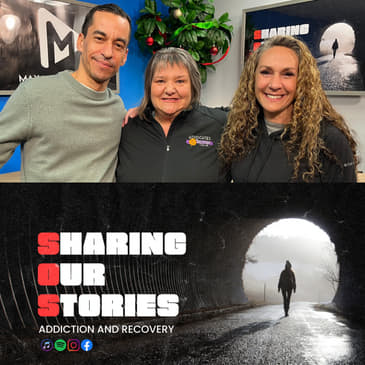
Today our guest is Tonya Wheeler.
See Privacy Policy at https://art19.com/privacy and California Privacy Notice at https://art19.com/privacy#do-not-sell-my-info.
[00:00:00] The views, thoughts, and opinions expressed in the following program belong solely to the host and guest and do not necessarily reflect those of this radio station.
[00:00:08] Our parent company, advertisers, or affiliates. Welcome to sharing our stories.
[00:00:12] We share stories of support for individuals in recovery from substance misuse and mental health related issues.
[00:00:18] There are numerous pathways to recovery, and each week we welcome powerful leaders and role models who have struggled in drug and or suffering addiction, you can see that there's hope for you and that yes, we do recover. So welcome to the program. Thank you for being here. Nani, happy new year. Happy New Year, Slim. I didn't even think about it. It's our first program of 2024. So happy new year. Happy new year to you. Happy new year to everybody. Yeah. Did you have a amazing new year?
[00:01:40] Tanya, did you have an amazing new year?
[00:01:42] You know what?
[00:01:43] I got him getting old.
[00:01:45] I stayed home.
[00:01:46] I was in bed about 10 tasty. That's delicious. Okay. Come on, season baby. Yeah. So I know how you flirt. It's made you ready. Seasoned, huh? That's absolutely great.
[00:03:01] Absolutely.
[00:03:01] Yeah.
[00:03:02] I like that seasoned.
[00:03:04] You know, I heard had a lot of changes, you know, over the past year in my life, just more in my personal life and stuff. And so like, by an interview, place to live, yeah. You know, doing a lot of really cool stuff with my family and with my friends. And so it just sort of made sense.
[00:04:20] You know, you're a really big name
[00:04:23] in recovery in the state of Colorado.
[00:04:25] Oh, I appreciate that.
[00:04:25] A lot of people know you.
[00:04:27] You have helped a bunch of 12 step meanings that's all I knew you know and so for the first almost ten years of my recovery that's that was my thing that's all there was and when I moved out to Colorado and I began to learn about things for example
[00:05:45] I was working as a drug and alcohol counselor then and I learned that you can't shame people because they're not doing it the way you did it. Oh, that's so cool. Or tell them that they're gonna fail. Right. They're not doing it my way. You're gonna fail. And you let people make their own mistakes and have their own issues and to show them in lots of different ways to help them get back up. Yeah.
[00:07:00] And so, you know, when we opened. There was drinking in my family. I didn't know anything about addiction but what happened for me is the first time I ever got drunk I blacked out and I thought that was normal. My entire 10 years of drinking I thought that that was normal. And that was your first time you ever drank blacked out? Yes I hear people talk about that I drank for this many
[00:08:23] years and then I crossed this invisible line and nights. My life was about where I was going to get the next fix. And so, um, when I came into it- I just switched just. Uh, it's just, it's insane, you know?
[00:09:40] And I, um, I wouldn't have, I didn't know this back then, but I guess I've always been
[00:09:45] kind of a go-big or stay-home kind of person. my first little girl when I was 16, my second one at 19. And although. And that's the first one you're an alcoholic and the second one you're an alcoholic on meth. Yes, yes. And I knew enough, I mean, I have a daughter that's gonna turn, oh she's gonna kill me if she sees this, it's gonna turn 40 this year.
[00:11:02] And she was five when I came into recovery
[00:11:06] and her little sister was one, you know? My first thing was, okay, cool, I'll quit. I'll quit using methamphetamine, but I'm not going to quit drinking. I'm not going to quit smoking pot. It took about almost another year and a half before I put those things down, because I needed the experience of they were making my life just as unmanageable as the methamphetamine.
[00:12:20] Yeah, to prove it to yourself.
[00:12:21] I did. I did.
[00:12:22] So with all the ages that they were
[00:13:42] My youngest was probably with you. They weren't at that point
[00:14:50] make me not a very good mom, yeah, 100%. But addiction has such a grip on us. And it doesn't let go until we fight it off as we all know, right? And so, yeah, it was the priority of
[00:14:57] everything. So I didn't have my kids and I weighed out of that mess. And then, but the other thing was the drug test came back and I didn't have any meth in my system and they said to me if you don't have meth in your system, we'll take you home. And so, you know, I'm on the phone. Come get me. She's too tough on the women she works with. And I went straight to her and said, here's what's going on. And I'm going to die. And I let it all go that day. And it was a struggle. It was really hard.
[00:17:40] But I had a lot of people around me.
[00:17:41] And around advocates for recovery,
[00:17:45] we talk about that the with much like detoxing. Yes. And I've never been good at relationships just so you don't know.
[00:19:00] I've always said my pickers broke, 30.
[00:19:03] I think that's everybody at this table.
[00:19:04] Yeah.
[00:19:05] You're good.
[00:19:06] You're good.
[00:19:07] We're not good this, right? And they would have seeped back into your life. Well, and you know, I've always said, if you want to see how you're doing in your own life, take a look at who you hang out with. That's great. It'll tell you every time. Everybody came in here once and said, you are the sum of the five people you surround yourself with. And I always remember that. Yeah.
[00:20:20] Yeah.
[00:20:21] So I began to learn that.
[00:20:22] I began to learn the importance of having these new friends
[00:20:27] and new relationships. Wow. Wow. That's a lot. That's a lot. Yeah. That's a lot. Yeah. Because one of the things we know about recovery is that we, sure, we put down the drugs and alcohol, but then it's all that other stuff, right? So I had not been in their lives. I had not been, oh, my mommy, right? And that trusting relationship.
[00:21:41] And so to build that back took time. And so, you know, man, those early days were tough. Tell me about them. I remember not being able to sleep when I first stopped using meth. I would sleep for an hour or two.
[00:23:02] I would have the most horrific nightmares.
[00:23:05] Sometimes about using drugs, and the husband at the time. And I just, you know, a lot of the healing, like the brain healing, because there are things I don't remember. There are things that, you know, some of that, especially that first year that went through.
[00:24:20] And the crazy part is I have this picture of me
[00:24:24] going into treatment and I still have it
[00:24:26] where I weighed less than 100 pounds And I just know that it was only by the skin of my teeth that I had just enough willingness To say okay. I'll try doing this somebody else's way So when you found that woman and she started giving you those suggestions and doing that work It was it was tough work. Yeah
[00:27:00] You mean this is my fault. This is not my fault And to me, I really think that recovery is a lot about opposite action, opposite from what I used to do, you know? So I think we're creatures of habit and I think that eventually that's what becomes the habit. So needing to get into this place where I no longer focus just on how horrible I was
[00:27:04] and to begin to be able to transition some of that over 28, 32, 32, 32, 32, 32, 32, 32, 32, 32, 32, 32, 32, 32, 32, 32, 32, 32, 32, 32, 32, 32, 32, 32, 32, 32, 32, 32, 32, 32, 32, 32, 32, 32, 32, 32, 32, 32, 32, 32, 32, 32, 32, 32, 32, 32, 32, 32, 32, 32, 32, 32, 32, 32, 32, 32, 32, 32, 32, 32, 32, 32, 32, 32, 32, 32, 32, 32, 32, 32, 32, 32, 32, 32, 32, 32, 32, 32, 32, 32, 32, 32, 32, 32, 32, 32, 32, 32, 32, 32, 32, 32, 32, 32, 32, 32, 32, 32, 32, 32, 32, 32, 32, 32, 32, 32, 32, 32, 32, 32, 32, 32, 32, 32, 32, 32, 32, 32, 32, 32, 32, 32, 32, 32, 32, 32, 32, 32, 32, 32, 32, 32, 32, 32, 32, 32, 32, 32, 32, 32, 32, 32, 32, 32, 32, 32, 32, 32, 32, 32, 32, 32, 32, 32, 32, 32, 32, 32, 32, 32, 32, 32, 32, 32, 32, 32, 32, 32, 32, 32, 32, 32, 32, 32, 32, 32, 32, 32, 32, 32, 32, 32, 32, 32, 32, 32, 32, 32, 32, 32, 32, 32, 32, 32, 32, 32, 32, 32, 32, 32, 32, 32, 32, 32, 32, 32, 32, 32, in my life, you know, birth of grandchildren and my mother passing away, and actually that dealer that I was with and I was married to, he has died.
[00:29:41] And he is my youngest daughter's father
[00:29:44] and being able that place from a place where I was so afraid of God I wouldn't even say that word when I first came in the recovery. Having all of my family getting to be a part of that and now my dad who just there when I'm supposed to be there, going to Texas once a month. Well, you also do this for thousands of people over the last 20 years in Denver here with advocates for recovery Colorado. Yeah. Okay, for the people that don't know,
[00:32:21] a lot of people in recovery all have heard this,
[00:32:23] but if you have never heard of it,
[00:32:24] tell people about what advocates. And I never understood that. That's just not true. It's just not true. It's a misunderstanding of the traditions out of the 12 step. And I respect anybody who feels that way. I understand.
[00:33:40] Because I can do whatever they need.
[00:33:41] You do it your way.
[00:33:42] You do it your way.
[00:33:43] But for me, I'm on the mountain top screaming.
[00:33:45] And hey.
[00:33:45] Me too.
[00:33:46] Me too. I got it right. But how do you do that? That's one of the many things that you guys offer is the ability to learn how to be a counselor. What are some of the things you guys do? Well, early on, I got asked to speak a lot. Back in the early 2000s, when we started, the methamphetamine thing was the deal.. And what I've learned over all these years was I was the important voice. You know, there's a doctor out in Montrose, I love him to death. And we used to do conferences together. And he's got all that book knowledge. And he's one of those people that really, however it happened, he could understand addiction as if he had lived there, but he had not.
[00:36:24] And he used to say in those conferences. However, now it has really moved international because there are rallies for recovery in the UK. Oh, that's awesome. And in Brazil, like I know a guy that went out to Brazil and taught them how to do that. So we sort of dropped that word national and it's just recovery month. And we've done that
[00:37:43] since 2001 was our first rally. So that's advocacy you know this year in September 2024 there will be a voter registration table at the rally because we need to have our voice heard. Not to tell people who to vote for you do that part on your own but we believe that our voice is not important so learning how to empower
[00:39:02] people and bring that to the surface that people don't know how to they don't know where to look for a job if they have a felony or where can I get diapers and formula or where can I where's recovery friendly like our coaches where they're all all of them in the state not just ours but they're all educated on if you don't
[00:40:24] know what the resource is you know somebody to call to say hey that's always and our depressants, please do all that stuff. But we come together and support each other in a very open forum. We've had family members and people that I remember for a long time. We had this one young lady who would show up and she was like, I don't have any addictions, but I'm in a mental health diagnosis.
[00:41:40] And I'm in recovery from that.
[00:41:41] She would be like, I just love y'all.
[00:41:44] I just want to hang out with y'all.
[00:41:46] I've been there, I love you guys too.
[00:41:47] It's a lot I forget about that. So anyway, we're launching a coed drumming circle. Oh, nice.
[00:43:00] So we're bringing the guys in.
[00:43:02] And yeah, it is incredible.
[00:43:05] Just incredible. last year on July 4th we had over a hundred people show up. We threw hot dogs and hamburgers on the grill and we all giggled and laughed and we actually had a live band of some guys summer in recovery but they came and set up and played live music at our place. And we all hung out and gigg Clear Creek County. That's the side of the door. What's the phone number? 720-389-63. Why did you do that to me? You look up the number. You look up the number. You can, you can call advocates for recovery. Absolutely. You want to learn how to get into the field of helping other people in recovery, call advocates for recovery. You have a kid that's suffering an addiction, call advocates for recovery. And you know what? We actually have a family support specialist. So was there a bit, quite a bit, and now I haven't been there in a while. I'm totally guilty. Well, we're going to change that. Yeah, I'm going to be there. Because I'm going to take this class to learn about being a peer-recoated coach. Yeah. I like that for you, Slim. I think I do. I think it would be amazing. No, I do.
[00:48:20] You know, some people want to do that full-time,
[00:48:22] and some people are like, I just want to find out about it.
[00:48:25] It just helps me to be able to help others. there and that one's gonna be in person and virtual but he also has done some that are all virtual I personally don't like to train virtual I can't do anything virtually weird I'm virtually doing something virtually doing other thing you know when it was that time when we could all work at home during
[00:49:40] coming this guy did not do much work or pants on but not
[00:50:43] Location seven days a week. Oh wow. So the hours
[00:50:47] You know
[00:50:51] So here's the truth
[00:50:56] Typically by nine in the morning their staff there right I know we don't work we don't wear it We don't wake up and go to work at seven a. I don't don't come there looking for me at seven a.m
[00:51:02] You know, there's usually somebody that. It's like craziness you never know. Yeah. Yeah. It's a lot of fun. So you just you know let us know how we can help. Let me know how
[00:52:21] you how I can help. I love one of the things you mentioned at the very beginning was you were talking about, man I got you know a lot of things going on this year and things continue to grow in and blossom. And I thought that was really cool when you started off by saying that because as we said you're coming up on 34 years in your recovery and to see
[00:53:43] somebody still say, oh man things are still growing I'm still changing. I can't in the house in Boulder. Yeah, it's just going to keep growing because what I know happens is that people go to treatment and at however many days they flip you a chip to create this opportunity for people to find connection in their home community. There is a man named Don Koya, so I don't know if y'all know Don Koya, but he is the creator of
[00:56:21] White Bison, which is a Native American Recovery Community Organization in Colorado Springs. and be able to grow the recovery community in their home community. Right? Because that's where the real solution is. And many people need treatment and many people need lots of other things. But our goal is to really set people up to be able to succeed in recovery,
[00:57:40] not in a treatment center or in a hospital,
[00:57:43] but in their community where they have lives and jobs
[00:57:46] and families and kids. three are doing the work that they did before. Two of them don't live in the state anymore and the other one has retired and so it's been you're here to carry the torch. You know and to be able and and my hope is that we continue to grow in it it's here for good. Thank you for... Oh I can't believe this is...
[00:59:01] You know how I love you. I know I know we keep getting brought back together but Come on in. Yeah, that'd be awesome. Thank you so much for being here with us, my recovery family. This is sharing our stories. You can find it on your radio here in Denver, Colorado on Jammin' 1015 and Flow 107.1. You can also check us out on our websites for those radio stations, jammin1015.com and Flowdenver.com, that's F-L-O, Denver.com.
[01:00:23] We're on Facebook at Facebook.com slash S-O-S
[01:00:25] sharing our stories.
[01:00:26] I know I'm just throwing stuff at you left and right.