
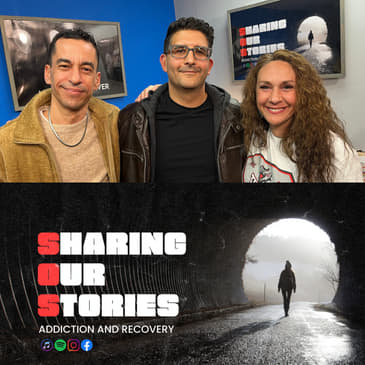
Our guest is John Doubleday who was incarcerated for murder.
See Privacy Policy at https://art19.com/privacy and California Privacy Notice at https://art19.com/privacy#do-not-sell-my-info.
[00:00:00] The views, thoughts, and opinions expressed in the following program belong solely to the host and guest and do not necessarily reflect those of this radio station.
[00:00:08] Our parent company, advertisers, or affiliates. Welcome to sharing our stories.
[00:00:12] We share stories of support for individuals in recovery from substance misuse and mental health related issues.
[00:00:18] There are numerous pathways to recovery, and each week we welcome powerful leaders and role models who have struggled in drug and or alcohol. And we talk about not only that addiction, but also they share in their recovery. Because we want people to know that yes, recovery happens. There's a lot of people suffering from addiction to drugs and alcohol. And they just don't think that they can get sober. I know because I was once one of those people. So we just want to share that recovery happens. And if you or somebody that you know, love, care about is suffering and addiction, let them know this program
[00:01:44] exists and that they can learn that, yeah, there's a lot of pathways everybody gets together and there's opportunities for lots of different seminars, but it's people within substance use mental health health care. And everybody is working together to fill in the gaps. It's evidence based research and people are talking about what's going on in the world and how people sign up for it. This year tribe had a booth hazel book. Obviously had a booth as well. But then other professionals or people just within the field, they go and they attend the seminars. And it's a great, it's a great, great opportunity to network and become better connected with like-minded individuals.
[00:04:21] And I know for tribe at least, I mean, I met people,
[00:04:24] I have met so, so many people Cross-mingly like that. It's so awesome. Yeah, exactly. So that was one of the things being, tribe recovery homes being a Medicaid provider for those agencies that don't accept Medicaid. It's like, how can we support each other? If you are private insurance only, if you're getting Medicaid calls,
[00:05:40] please send them our way.
[00:05:41] And for private insurances,
[00:05:45] we need to work better together
[00:05:47] so that we're making sure people have All right, because you got to bring in the audience. That's right. You got to add Pizazz Bell's whistle fireworks. All right. So our guest this week, my is John double day from New Orleans, Louisiana. And you work here in the mall, hi at the Hazelbrook sober living. Yeah, shout out to them. Great people that have come by here before as we just said, everybody working together.
[00:07:01] But John is our guest for sharing our stories.
[00:07:04] And I know that this is trouble probably around middle school. And just getting everything from getting suspended to working my way to getting expelled from two of my high schools.
[00:08:20] That was something that I took pretty hard
[00:08:22] because I felt like I was constantly trying I would go to like, I would get arrested and just do some overnighters, uh, misdemeanors like trespassing or drunk public, you know, uh, public drunkenness or, you know, disorderly conduct. Um, so I spent, you know, a few nights there, you know, here and there at, uh, Orleans Parish prison. Um,
[00:09:40] cause they don't, that's what they call the county jail there. It's actually part
[00:09:44] of the prison. Um, it's definitely not a good place. Um,
[00:10:45] legal platoon, which basically you're just waiting to, to for your paperwork to come in so that you can get your bad conduct discharge. Well, you know, through the process of that,
[00:10:52] there was a lot of shame that I held, you know, in because my unit was getting deployed.
[00:11:00] And I felt like that was like the first thing that I really like, I had graduated high school,
[00:11:04] but I didn't even attend my own graduation because it like a display case. I had a cast on my arm from getting in a flight, you know, the week before, because, you know, I had these, I would get in these blackout drinking spells.
[00:12:22] And, you know, I really wouldn't recall what I did,
[00:12:26] you know, set so there was a lot of shame to that. They were very forgiven and like, I mean, they didn't understand, you know, because my uncle struggled with addiction, my grandfather struggled with addiction,
[00:13:40] but they didn't really understand, you know,
[00:13:41] the scope of, you know, what it would take for me to recover
[00:13:46] and me wanting that recovery, two younger siblings. So, you know, that wasn't something that they allowed in their home. So I had to kind of figure it out. And so, you know, I would jump between, you know, living, you know, a neighbor's houses or my brother's house or this or that. So I was kind of like, you know, just jumping around from place to place and really going through some rough areas. And
[00:15:01] New Orleans, you know, can be a really, you scratching the surface of some of my issues. They're kind of like an AA based program. So I had to a better part of a year and it was a cousin that we had lived with before in New Orleans. So we decided to move out here. I was actually really spiraling. I had gotten involved with a bad crowd carrying a weapon, getting really invested in 2006. So I hadn't even been here for a year, a little over a year. Barely, barely in Colorado, yeah. Yeah, my son hadn't even, you know, barely turned a year old, or actually he hadn't yet,
[00:20:22] turned a year old at the time.
[00:20:24] And so, you know, I felt like I was ready or, you know, I wanted to take that accountability, but I took it really hard because I felt like, you know, that wasn't something that I had intended and, you know, to have been sentenced that, you know, I really,
[00:21:40] it was very difficult for me.
[00:21:42] And I remember when I originally went to the county, I was kind of like blew me off. And I remember thinking like, I'm not gonna do a life sentence, you know, afraid. And I'm not gonna be pushed around or be a victim anymore. And that was what I had told myself. I remember that very clearly. And I remember this guy filling up his cup.
[00:23:01] And as soon as he filled up his cup with coffee,
[00:23:04] I went and slapped it all on him, you know.
[00:23:06] And we ended up getting in a fight.
[00:23:07] And that was it my my prison journey was Was a lot harder. I made it a lot harder, you know, then it needed to be I actually ended up getting more time. So I ended up with life without the possibility of parole plus
[00:24:23] you know five years because of that and
[00:25:25] I got in flight for life and I ended up in segregation.
[00:25:30] So I remember thinking after that incident,
[00:25:34] I would sit in that cell and think like, is that what I'm created for?
[00:25:36] Like is this my purpose?
[00:25:37] Is this all I'm good for?
[00:25:39] Like I was like, if that's the case,
[00:25:41] then I don't even want to live, you know?
[00:25:43] And I remember asking God to like remove that from me
[00:26:45] I just felt like I was just trying to survive, you know, at the time. By the grace of God, after my second stint in segregation, and I had gotten that, you
[00:26:53] know, sentenced, you know, to the extra five years, I had made my way to Buena Vista.
[00:27:00] And while I was there, I had gotten word super emotional because here I am, you know, listening to my family plead for my life and I hadn't even been like fighting for my own life, you know, all these years, like are fighting for them, you know, all these years,
[00:28:21] like I had been fighting for the homeboys
[00:28:24] and what I had thought, you know what, I'm kicking back. Like I remember telling them I was like, I'm good. Like I'm kicking back. I'm doing me. Like I've been watching people come in and out all these years. Like I'm doing something that's for me. Like whatever you feel about it, so be it.
[00:29:44] And that by itself was huge for me. I wasn't looking and I remember like just looking at this dude like like in a rage like dude You know what I'm trying to do and here you are like putting this in jeopardy And and I remember him just cussing me out calling me every which name and I'm just like like my like Like holding myself back, you know I'm still cussing him out as well, but like holding myself back and I remember he storms out his room
[00:32:07] I have to change the way I think or I'm never going to get out of prison. So I really started buying into everything that they talked about like the CBT and REBT.
[00:32:15] I started really reading a lot of self-help books that related to that like Albert Ellis
[00:32:20] and just a lot of cognitive behavioral therapy type books because I wanted to learn it for
[00:32:24] myself. I got paroled. I was actually on the waiting list. I was one of the last individuals to get paroled to Pier 1. And so I was super excited about that. I had got progressed to, they sent me to my first minimum restrictive yard, which is like no longer concrete walls.
[00:33:42] You have a window, your walls are made out of sheet rock.
[00:33:46] You're like, you can go to yard, I remember feeling like a kind of like an outer body type thing because I just it didn't feel real like I felt like it was Almost like I was drowning and like everything was just muffled and That was a deep blow I immediately went to go speak to one of the therapists there
[00:35:00] and
[00:35:02] as I was speaking to her I had
[00:36:02] list, the laundry list, they know who's coming in. Your homeboys are right there waiting for you.
[00:36:05] And I'm just like, man, I'm going to have to deal with this and that.
[00:36:09] And I'm like, I was like, you know what?
[00:36:12] I was like, man, I felt a lot of fear coming back on.
[00:36:16] But most of all, I just felt like defeated.
[00:36:19] Like I was never going to get out.
[00:36:20] You know, again, they sent me to Fremont here to do my time. And so I actually ended up relapsing while I was there because as soon as I hit that yard, the homeboys came and actually gave me some dope.
[00:37:40] And I remember burning a hole in my pocket because I had, you know, they were, I knowing that, knowing that I gave them my word, I had to stick with it and know that they're watching me and, you know, looking out for me and things like that. And so I got back on track, I ended up mentoring there for over two and a half years and working my way back
[00:39:01] down to that MR, you know, and mentoring there some more
[00:40:05] demographic. And so it was, it was awesome. And it was like building up my self-efficacy and my, you know, self-esteem and, you know, just removing some of that shame and guilt,
[00:40:11] you know, from my past and, and building up my self-worth. So it was a process. But
[00:40:17] when I became eligible for community, another blessing there for all of that, you know, and I stole that from you. And I was like, you know, I apologize to her. And I basically told her, this is what I'm doing now., I'll put your name in the hat. And I interviewed with Jess and Gino. And, you know, they asked me, you know, about my past and where I am now. And they were like, you know, you have the job. And I was like, wow, this is great. I get to, you know,
[00:43:03] really get back and get involved in the community. So I was in my third semester of college now. Congratulations. Thank you. Yeah, thank you. How old are you? I can ask. What do you mind to ask? How old are you? I am. I just turned 40. 40 slash in your third year of college. Yes. That's right. That's awesome. Yeah. You never should. It's never too late to go back. No, that's for that all.
[00:44:21] So let's spread that.
[00:44:22] Yeah. And I actually spent my 40th in Hawaii.
[00:44:25] So it was awesome.
[00:44:26] Yeah. While on parole. be a part of this like it's called save standing against violence every day which is a task force for gang violence, you know, gun violence here in the city of Aurora, You know, something stood out to me was one of the individuals that said at that event, they were like, you know, I'm glad to see you're doing well. You know, that doesn't necessarily happen too often.
[00:47:02] And I was thinking like, you know, actually it does.
[00:47:05] You know, like from my experience, like know, that with the foundation of my faith, you know, have just been so foundational for where I'm at today. You also had to make a conscientious decision of changing how you act and what you do on a daily basis. You talked a lot about being involved in gangs and the violence in prison and being so entrenched
[00:48:24] in that that I literally could hear you saying that was a different person.
[00:48:28] Absolutely. putting into practice, you know, a lot of that discipline, like, uh, changing the way I speak, like really, I found out a lot of the things that I said was negative, you know, and, uh, derogatory or like aggressive. And I had to like take a step back. And sometimes I wouldn't talk, you know, like I just wouldn't, you know, talk for a while. I wouldn't be forced to speak.
[00:49:41] Yes. And I would remove myself from other stimulation. It's cool to be like this. And a lot of times that's a gang culture and it's derogatory and it's overly aggressively sexual. And so you have to conscientiously go, I'm listening to it, I'm not doing it. Yeah lot. It really did take a lot of effort and like one in soul searching and practice and you know, a lot of times I kind of like, I guess, kind of overlook that, you know, from where I'm at today. But more years to see if you're really ready. Absolutely. Cause otherwise you're gonna get out of your Anyready and you're gonna be back. Yeah faith is in faith unless it's tested Multiple times absolutely Yeah, very a lot and I think that really that really served to build like strong conviction
[00:53:40] Now and knowing who I am knowing who I was like raised, you know, they supported me financially while I was incarcerated. Yeah, so it's I did have a lot of support. I just needed a lean on that, you know, and support myself to believe in being able to just reach them where they're at, meet them where they're at and connect with them on a level that many people aren't able to connect with them to empathize with their situation and to just support them and give them that hope and motivation and just breathe life into them. A lot of these individuals,
[00:56:20] they don't realize their potential.
[00:56:22] And that's the saddest part.
[00:56:24] When I tell them, like, dude big easy, the big easy has been our guest. Dude, thank you so much for being here. Thank you for having me. One last thing with these last couple of minutes, Judy Gaiegos, you, her daughter, spoke on your behalf to help you get released from prison.
[00:57:41] How much is that important part of your recovery
[00:57:44] and where you are today? or maybe disrespect for like struggling in their recovery, I'm able to just kind of like, I know the grace that was shown me. So I'm able to just kind of put my personal feelings to the side and like really connect with them and try to support them and whatever they're going. So it was huge, it's been huge.
[00:59:04] My mother passed away and she saw me so before she passed away and that's kind of like what I cling to.
[00:59:07] Like that's my torques that I hold onto as my mother.