
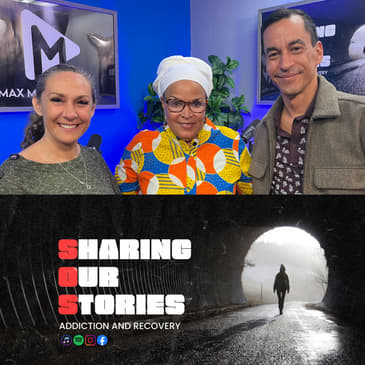
Our Guest today is Imani S. Latif from New York city. She has been in Colorado since 1994.
Imani is the founder of It Takes A Village, LLC
Her battle with addiction started when she was young. She always found love with the biggest drug dealers in the city. She was cooking her own freebase in her apartment and was a functioning addict with a job. She didn't mind it and was doing her thing; her family couldn't really tell her nothing because she was functioning. She got pregnant by her boyfriend at the time and at the ultrasound she was told her baby would be born without a brain, so she had to make a tough decision to let it go. The doctors told her she would never be able to have a baby. She decided that day that she would get clean. She saw her boyfriend get high and couldn't believe that's what she looked like when she was using.
Imani made the decision for herself to leave that boyfriend who gave her allowance paid rent on the apartment, all the amenities would be gone but she had to make the decision for herself to be better and get into a better situation. After that she met Hassan (her now husband) at her job where he was interviewing for a position. She asked him to hang out on new year's and they did. From there Hassan asked Imani to turn Muslim and they would get married, but it had to be on their terms. So, she finally converted and called Hassan to let him know the news. A lady answered the phone and Hassan had already married somebody else. (OUCH!) Couple of months later Imani met a man and had a child with him (her only child) which the doctors said would never be possible and was the biggest blessing she could have ever asked for. Soon after her job was paying people to relocate and was granting them funds based on how many years they worked in the company. Imani took it and moved her and her son to Colorado where Hassan was also. The rent was cheap in Colorado in 1994 and she had already been out here to visit Hassan before! Right as Imani showed up, she got a job within 3 weeks of moving because she doesn't like doing nothing being stagnant.
She now is an advocate for the HIV/AIDS/LGBTQ community she has been doing outreach for 40 years and has groups and meetings talking about safe sex, racism, jobs. Led by Arel Flynn, he is the biggest advocate in this community being one of the leaders of brothers forever. Listen to the rest of the story here.
Find It Takes A Village in Aurora, Colorado right on the 15-bus line off of Leema and Colfax
1475 Leema St Open 9-5 Mon-Thursday 9-3 on Fridays
Testing Available Now
Phone # 303-367-4747
Website: Ittakesavillagecolorado.org
See Privacy Policy at https://art19.com/privacy and California Privacy Notice at https://art19.com/privacy#do-not-sell-my-info.
[00:00:00] The views, thoughts and opinions expressed in the following program belong solely to the host and guest and do not necessarily reflect those of this radio station. Our parent company, advertisers or affiliates. Welcome to Sharing Our Stories. We share stories of support for individuals in recovery
[00:00:15] from substance misuse and mental health related issues. There are numerous pathways to recovery and each week we welcome powerful leaders and role models who have struggled in drug and or alcohol addiction, have found a pathway to recovery and who thrive as positive community members
[00:00:29] with an ongoing vision of success. Join us as we share our experiences, strength and hope. When the world says give up, hope whispers, try it one more time. Hey welcome back to Sharing Our Stories. My name is Slim along with Nani Aljaleel from Tribe Recovery Homes.
[00:00:46] Tomas Hernandez cannot be here today but if you're just tuning in, Sharing Our Stories is a program about addiction and recovery and what we do is we share stories about the struggles people have gone through in their addiction and where they are currently in their recovery.
[00:01:02] With the hopes that by sharing these stories we can touch somebody out there to find the pathway to their recovery, to believe in their recovery or if you're a friend or a family member of somebody who is struggling
[00:01:13] for you to understand what it is that they're going through and maybe you can be a part of their support system in finding their recovery. So thank you for joining us. We've got a great guest today. Her name is Imani S. Latif. We've already had her husband on
[00:01:28] so I'm really looking forward to having her speak. But before we get to Imani and welcome, welcome, welcome, I got to check in with my girl Nani. Nani how you been? So good to see you again. Yes, good to see you. Yeah, what's up?
[00:01:41] We just got back from Las Vegas earlier about a week ago and it was the grand opening of Tribe Recovery Homes, Las Vegas. Yes, it was awesome. So excited to be out there. I just think it's so cool because I've known Tomas for years now
[00:01:57] to see that like to see it in person, to go to Vegas and to see the center and to see that it is there and it's going to be a place that brings recovery to Las Vegas. And there's already a lot of great organizations.
[00:02:13] We got to meet so many cool people there. And literally in the area that they're in Tribe Recovery Homes, Sin City is just surrounded by so many really cool community organizations. Yes, yeah. The community really showed up. There was an LGBT organization in the same parking lot.
[00:02:33] There was a clinic for those dealing with a methadone clinic there. There was an emergency clinic. There was just so many things located in that same spot that you could just see where Tribe Sin City landed is going to be like one more hub
[00:02:49] for helping people in Las Vegas. So yes, absolutely. Yeah, it's very cool. It was a great event. The community really showed up. And you work your butt off. You're at everything doing everything. Yes. Like you're in Vegas, you're in Denver, you're here, you're there, you're helping folks.
[00:03:05] In Boulder. Yeah, in Boulder, like multi-working. Yeah, love it. I love it. And it's part of your recovery too. It is. It's a huge part of my recovery. Absolutely. Well, I'm so glad to see you again. Thank you. Don't leave to Vegas without bringing me. Imani, welcome.
[00:03:21] Thank you. Thank you so much. It is a pleasure to have you here because we've had your husband on. I, here's the weirdest part, and I told you this earlier, is when your husband came on, I was dealing with my father passing away.
[00:03:32] So I wasn't here to meet your husband, and Tomas was here. And I really wanted to meet him. And now you're here and Tomas is in here. So trying to get us all in one place with a Latif family member seems to be very hard to do.
[00:03:47] But I'm so glad to have you here. You're the founder. It is called It Takes a Village. It Takes a Village. And what it takes a village does is empowers the HIV population with education and psychotherapy. And I'm sure more than that. Yes.
[00:04:00] And how long has that been around? We celebrated 20 years last year. Congratulations. Wow. Yes. Huge. Well, that's really awesome. So you've been in recovery for over 40 years? It will be 41 years. 41 years. December 29th of this year. Wow. Amazing. Thank you. Don't look at it.
[00:04:23] And that is an amazing, amazing 41 years. Like wow. Wow. But the thing is that I always remember that it doesn't matter how long you still have to have the same approaches to things and that I still take everything one day at a time.
[00:04:43] It's not easy just because it's 41 years. Yeah, yeah, yeah. And I mean it's a lot easier than it was then for me. But you just basically, I remember what I went through. And I don't wanna go through that again. I remember the people that I heard.
[00:05:02] I remember where I was and so I have a lot to lose. And I have a lot of people that I would let down. Well, we would be really honored if you would share with us some of that and how you got to 41 years in your recovery.
[00:05:21] Oh my goodness. And tell us about It Takes a Village. So we wanna thank you for being here. Thank you for inviting me. Oh, it is such a pleasure. And mahi, our guest today on Sharing Our Stories is Imani Eslatif. And I'm gonna say from New York.
[00:05:36] From the Bronx. From the Bronx. From the Bronx. All right, from Bronx, New York. Thank you for being here, Imani. But I've been here since 1994. But you're always gonna have some Bronx in you. I can hear it. I can't hear it. I'm never gonna get rid of that.
[00:05:50] You can't. But this is home. I do love Colorado and it was probably. This is the third, 29 years. Yeah, it was the best move I ever made. Oh, we're glad to have you here. Colorado was happy to have you. Well, so, oh, you know,
[00:06:05] I use my life and my experiences to understand what other people are going through and work with folks, you know? And it is a lot to do with why I started, it takes a village. But I'm one of those folks, I mean, I suffered trauma as a child.
[00:06:26] And nobody talked about it back then. I mean, I am a little old. And nobody talked about it. Nobody talked about child molestation and child rape. And I went through that and it came out with a vengeance, my trauma when I was a teenager.
[00:06:45] And I had nobody to talk to about it. I had tried to tell somebody in my family and they didn't believe me because it was a relative. And so, it really, I started self-medicating. But it didn't hurt that I married
[00:07:04] one of the biggest heroin dealers in New York City, not knowing that he was a heroin dealer. So, when I was 19 years old, I moved in with him and he was the son of the ambassador to Trinidad and Tobago, from Trinidad and Tobago to the UN.
[00:07:26] He was the son. So, he had diplomatic immunity. So, I was gonna ask him. Yeah, yeah. But he also had this double life. So, he was in college and he had a job and when I moved in with him is when I realized what else he was doing.
[00:07:41] At the top of the chain. You know what I mean? He was, he wasn't the one selling it. He was the one people reported to and he was only 19 years old. Oh, wow. But it was probably a lot to do with his position from his father. Oh yeah.
[00:07:57] Yeah, absolutely. Oh yeah. He had his own money. And so, I moved in with him and he sold heroin. You know, so I started sniffing heroin and that's really the first drug I ever used. But he was also, I suffered horrific domestic violence with him.
[00:08:23] He was very violent. And so then I started using pain killers because I had broken bones and I had a broken arm and I had a broken foot and I had all these different things going on. I think that that's one of the main things
[00:08:45] that we as women and not to say that domestic violence doesn't happen to men because it does but I think that that's one of the things that when we talk about domestic violence and we talk about, we have to examine whether that person
[00:09:00] went through trauma as a child because a lot of times that's the only reason why it gets allowed. That's the only reason people say, well, why did she stay? You stay because you don't really think you have any value. You stay because somebody makes you feel
[00:09:18] as though there's something, you're worthy of something. Anyway, I won't go through that whole thing. I mean, I got out of it because I did some violence to him and I got away and I actually ran out of the house after doing what I did
[00:09:44] and got on the subway in New York City with my pajamas on and bedroom slippers and went to a friend who I used to work with and she put me in her house and I ended up going to Michigan but the addiction had started
[00:10:00] and so I started really just doing everything whether it was quailudes, whether it was smoke weed every morning before I got out of bed and just a lot of different things but I always, I was one of those folks who was a functioning addict, they call it.
[00:10:19] And so I started working for New York City Health Department and I was a liaison between the health department and the mayor's office to resolve health related issues. So rodent infestation, stuff like that. And I met this guy who turned out to be the biggest cocaine supplier
[00:10:49] to the court system. To the court system? 110 Center Street, have you ever heard of a hundred? So like judges and lawyers, is that what we mean by the court? Yeah, another court officer. I mean it doesn't throw me, I mean it's quite believable
[00:11:03] but I just, you know, verify. Have you ever heard of a hundred Center Street? No. It's like the main, like when they show it on TV and you know. It's on the street. Is that what you mean? No. When they show it on TV
[00:11:15] like in any of the crime stories like the law and order or anything like that, you know, and they show them going into court, it's a hundred Center Street. Okay. That's the main state court of Manhattan. And my office was right across the street.
[00:11:31] So I met this guy, I thought he was really nice and everything didn't know that he was supplying cocaine to you know. To the legal system of big wigs. I actually was brought to my knees by crack and it wasn't crack back then because
[00:11:51] crack wasn't really like the big thing yet. You bought the cocaine and then you made your own free base. And I just, it brought me to my knees. It made me lie and cheat and spend my rent money and all this other kind of stuff.
[00:12:11] So in 82, see how old I am? In 82, 83, no, 82, sorry. I found out I was pregnant and I had been told that I would never have children. I had had something called endometriosis. And I had had two miscarriages already and they said, we've seen what you look like inside
[00:12:40] and you're never gonna have children. But I got pregnant and three months later they said, we're gonna do an ultrasound, right? Regular. And I did the ultrasound and the fetus did not have a brain, had no brain. And so he said, you know, you have to terminate.
[00:13:06] You know, you can either go through with it and have a baby with no brain born or you can terminate. And that's when I said to myself, and I don't know, can I curse on here? Let it go. I said to myself, so it was one thing
[00:13:21] when you f*** your life up, now you're doing it to your baby. When is this gonna stop? And that was December 29th, 1982, not 83, 1982. And I never used after that. I left out of there. I wanted to get high. I wanted to give up, but I never used.
[00:13:52] I went home, he was there, he used and I watched him use. And I don't know where I got the strength to do that, but I watched him use and I said to myself, damn, that's what I used to look like. Damn, that's what I did.
[00:14:08] Damn, I'm down on the floor looking for that piece of rock and it actually turns out to be a piece of kitty litter and you try to smoke it and this is who I am. I can't do this, I can't do it anymore
[00:14:25] and I'm not gonna do it anymore. And that's the last time that I used. And I knew Hassan from working at the health department. I remember the first time I ever saw him, he walked in, he did his interview and I was like, who's that?
[00:14:47] And so I told my boss, put him in the office with me because I had an extra desk. He says, you better behave yourself. No, I'm putting him in the office with me. So we just became like really good friends.
[00:14:59] And I called him and I told him about it and I was so upset and I said to him, because we were at the end of December, I said, do you wanna hang out New Year's Eve? And he said, maybe.
[00:15:15] But he did and that was our first date and I never used since, haven't used since then. And I became Muslim in April of 1983. He kept sending me books, he kept sending me all kind of tapes,
[00:15:31] all kind of stuff but it had to happen when I was ready and when I believed what I believed and it had to happen when I answered my own questions about Islam versus Christianity. It was your path. I'm not gonna be one of those women that just converts
[00:15:47] because- You don't follow. Yeah, exactly, exactly. So that and I believe that when you stop using you do have to replace it with something. Equally time consuming, equally important cause there's a lot of time that you spent trying to figure out where you're gonna get the money
[00:16:07] and how to cook it and I used to love that part of it but now I needed to replace it and that's what I replaced it with, I replaced it with Islam. I'm not gonna tell my whole story with Hassan back then because I could just choke him
[00:16:22] but he wanted to marry me but he didn't wanna marry me if I wasn't Muslim because he had already been married to somebody who wasn't Muslim and didn't work out. And when I took Shahada to be Muslim, I called him and a woman answered.
[00:16:41] He had already married somebody else. Oh. He had already married somebody else. Oh man. But by then I was already like committed to it and so I just- It was your path at that point so it wasn't like I did this for you.
[00:16:53] Yeah, I had nothing to do with it. Yeah, I didn't do this for you anymore. Yeah. Just cause I never was a follower or I did this for me. Absolutely, absolutely. That was your own journey. Yeah, yeah, yeah. But that following January, I married this guy.
[00:17:09] I got pregnant. I didn't tell anybody cause miscarriages. Yeah. And eight and a half months later, I had my only child. Yes. And they told me, we didn't wanna tell you this beforehand but you'll probably never have any more children. I said I've been told that before.
[00:17:31] I was told I was never gonna have any children. And so my son is my pride and joy. Oh, I love it. There were complications but he's here. Yeah. He'll be 40 next year. What's his name? Sama, you say. If I may ask if I- His name is Usama.
[00:17:50] Usama Russell. What's up Usama? Yeah. My man. He's my pride and joy. And four grandchildren including seven month old twins and a nine year old and a five year old. Yes. Yeah. I don't know if rock bottom is the terminology to use for your scenario that occurred there.
[00:18:12] And I don't even like the word scenario. But it almost feels that way that learning that your child had no brain was all it took. Just like somebody had to say, oh, you know, I was sleeping on the street or I woke up in a hospital.
[00:18:30] It's a similar in its own way. I was devastated. Devastating. Because- It changed your way of thinking. Yeah. You saw the man that you were dating at that point and completely were like, that was me? And it was pretty instantaneous. It was that night.
[00:18:45] That was that night after I had the sonogram. And it's probably a good thing it was that night because maybe I would have had, if I had had time in between, I would have, you know, the cravings still there. Wanna do it.
[00:19:02] But I think that I was devastated because that was the longest that I had been pregnant. And usually only lasted like two months. I was beyond that. And so I had hope, you know? And I was 31 years old. I was 31 years old.
[00:19:24] So you don't, you know, as you get older, it's harder. But so yeah, that was rock bottom for me. I mean, there were things that I didn't like, of course, about my life. You know what I mean? People in my family knew I was using, you know?
[00:19:43] People would disappoint it with me. But like I said, I was functioning. Like I would go to work every day, you know? Did I do a good job? Probably not. What did people at that time think of drug use and alcoholism? Because it's different from now.
[00:20:01] It is different. But you know, like I remember my brother coming in the house and seeing me cooking cocaine, you know? And he was so mad at me and he was so disgusted with me and he just left. Everybody knew that I was doing something. Nobody knew really.
[00:20:20] And it was just, you know, just getting into... Because you're functioning? Yeah, because I had a job and I had my own apartment. Courtesy of the guy that was the biggest, you know, cocaine dealer. You're good at finding the biggest. I know, hey!
[00:20:36] If they're doing something, they're the best at it. Which one am I talking about? Like Hassan, he's the best at what he does too. Now he's legit though. Yeah, yeah, he is legit. He is legit. The thing about it though, but he helped me
[00:20:49] because he had addiction in his history too. And he just wasn't totally finished at that time. But he helped me a lot. That sitting there in that doctor's office after they told me and I had to get dressed again, it was my rock bottom.
[00:21:11] And people might say no, you have to be homeless or you have to be in jail but it was because I felt like God was giving me my last chance and you blew it because you'd rather have this crap, you know?
[00:21:30] So yeah, I didn't think I was gonna have kids anymore. I thought that was my last shot. So, but I'll tell you this, that it was the craving, the activities, the people, him. I had to tell him by, I don't know.
[00:21:54] The whole lifestyle that you would have to do. Yes, everything, everything. And I had to tell him, the guy, the dealer, the, you know, my boyfriend, that I couldn't see him anymore and we had been together like four years.
[00:22:11] I had to tell him that I couldn't see him anymore. I couldn't do this anymore. That takes a lot of strength in itself. Yeah, yeah, but it was also a source of income for me because he helped pay my rent and you know what I mean?
[00:22:23] Stability, all your stability, you gotta give it all up. Had to give it up, had to give it up. To get clean. Which you wanted then. I think I really wanted it anyway, but that was, you know, and I say that to say that, you know,
[00:22:41] we all know that addiction doesn't just impact us. You know, it impacts our whole family, our friends. And in this case, it impacted, you know, I didn't have any kids. I wasn't married and it impacted what I thought would be my future. You know?
[00:23:02] So it was my rock bottom. It was. But so then we move on, right? Now I've got this baby and I'm in New York and in the AIDS epidemic had started in New York City and everybody was hearing about it, but we were all scared of it.
[00:23:28] And at the health department, we were really scared of it because our clinics, you know, and we're seeing. And so they call up the rest of the regimen of all of us in the health department and say, we're starting this new department.
[00:23:45] It's HIV, no it's the AIDS Bureau of Program Services, something like that. We need people to volunteer to move from wherever they are over to that department and nobody wanted to volunteer. You would have to be out doing outreach. You'd have to be educating the community.
[00:24:06] You'd have to work some crazy hours. And if you ran across people that had HIV, you'd have to connect them to care. At that time there was no care. There was no cure. There was no medicine. People thought you can get it from the toilet seat.
[00:24:18] Yeah, there was so much fear and it turns around. You have to go through all the training. We had to go to CDC. And I was like, okay, because even though I was married, my husband didn't really provide for us or anything
[00:24:36] and I'm struggling, so it was a lot more money. And so I took it. I said, okay. And I'll tell you that it probably was one of the most important decisions in my life. It was very difficult, but I've met some of the most amazing people.
[00:24:57] People don't know that when you are faced with life and death's decision, you can either rise to the occasion or not. There were a lot of people that were saying, okay, well if I'm gonna die anyway, then I'm just gonna keep doing what I'm doing,
[00:25:12] whether it's shooting drugs or whether it's whatever it was. But there were some amazing people who fought and they fought until they died. And these are the people that inspire me every day, every single day because I absolutely love them. And I look for their names.
[00:25:36] I found out some people have died, most of them have died. But it got me into this field and it made me realize that there is hope for people. They just have to know how to see differently than how they've been seeing all their life.
[00:25:58] That there's different lives out there for them. And give them hope even though at that time there wasn't a lot of hope for folks with HIV. It only feels like there's been hope in the last five to 10 years that it's really started to be.
[00:26:14] The medication came about in 2000, I wanna say I'm not sure, so don't hold me to it, but probably like in the early 2000s, there was this new medication and people can say what they want about Dr. Anthony Fauci,
[00:26:33] but he was one of the people that led the charge to find drugs for people with HIV that work. And so he, I mean we had some medications. Nobody, I mean they did, they made people sick. You had to take them every day.
[00:26:51] It was like several pills a day. You had to take them with food, all of these things, but it worked. And then they just, the research just kind of improved it over years to the point now where some people just can go into clinic every two months
[00:27:09] and get a shot of the medication and that's it. A lot of advancement. They have to take it every day, a lot of advancement. That's awesome. I definitely want to ask you about it takes a village, but before we get to there,
[00:27:21] I want to ask you about those first few years in your recovery and cause you didn't go to a rehab. You weren't in a sober living. You didn't do meetings. This was you, right? I did some meetings. Some meetings, okay. So it's similar to my own story
[00:27:39] in that I didn't do any of those things. I did some meetings and it was kind of like it's time to make this change. So what did you do during those first few years to continue that path of, yeah, this is it.
[00:27:52] This is my recovery and I'm staying sober. You changed the people around you. You changed your surroundings. Exactly. I wasn't hanging out with the same people. And then I also prayed a lot. You prayed? I meditated. Yep, your life became part of Islam.
[00:28:16] It was hard sometimes because I did have cravings. And here's the thing, I'm an alcoholic and an addict. So man, I could drink with the best of them. And so to me, alcohol was harder in some instances than even the free base. Because alcohol is everywhere.
[00:28:41] Everywhere, you know, I go to my parents' house and they're having a drink and it's everywhere. Cheers, celebration, happy New Year's. We just had a baby, all these things. Everything is a celebration. But that's why I say, and I'm not trying to proselytize people because I believe
[00:28:59] that everybody has their own journey. Whatever works for you works for you. If you're an atheist, if you're, you know, I just, it works for me. No, but Islam was my program. I love it and agree. Because I believe that there is not one pathway to recovery.
[00:29:16] That's right, that's right. There are an untold number. I couldn't even put a number on it because there'll be a new one tomorrow and we'll have to add. That's right, that's right. Because everybody's pathway can be completely different. It's different. You can find people that say, oh man,
[00:29:30] that exactly the same. You and me did the exact same thing. Absolutely. But it doesn't mean that's not everybody. And while it works for her, won't maybe not work for me. Maybe it will, who knows? But for me it was Islam. Because, you know, and the,
[00:29:46] I wanna say this, because there are a lot of people that are raised in Islam and usually or come into it, you know, when they were a lot younger than me than I was. But for me the first 10 years, man, I was doing everything like by the book.
[00:30:06] By the book, you know what I mean? I even moved to Brooklyn, which is where my son was born. I moved to Brooklyn and I didn't know that there was a mosque not far from me. So every morning you hear the call to prayer, which is the Adhan.
[00:30:24] And I just thought, wow, this is, I'm Muslim now and I'm hearing this call to prayer. I didn't realize like there's a mosque. I didn't bring mosques for you. It's not just like it is. Not in your head. But I just thought, wow.
[00:30:39] You just finally know what it is. But yeah, so that helped a lot. I mean, I can't drink. I can't smoke weed. But I'll tell you how much addiction tries to grab you and keep you. And, you know, now my son, my son was raised Muslim.
[00:31:03] He was born Muslim, but he has drinks every now and then, right? So when I'm babysitting for my kids, my grandkids, I go to his house. And so there might be a bottle of rum, there might be a bottle of whiskey.
[00:31:18] I have actually taken off the top and smelled it. And it smells wonderful, but I can't drink it. I can't drink it. To me, what that tells me is, girl, don't get it twisted. You might be 41 years away, but alcoholism and addiction is just waiting for that chance.
[00:31:44] It is alive and well. You know what I mean? It's just waiting. Open the door for him. Yeah, it's just waiting for you to just do it. Take a drink. You could take a drink. You don't, nah, you can. You've been 41 years. You can do one.
[00:31:57] And I know. That's the biggest lie of all. That is absolutely, absolutely. So that's why I say, and I said at the beginning that it's still one day at a time. It's still one day at a time because things happen that make you say to yourself,
[00:32:16] I just don't feel like dealing with this right now. One drink could make me feel better. And no, it can't. No, it will not. It will not get better. Girl, in time it's only gonna be worse. Now I know why people call you auntie. So auntie, auntie.
[00:32:33] How did you get to Denver? Oh, well, okay. You've heard of Rudy Giuliani, right? Yes. So he's not everybody's favorite person, certainly not mine. But he did one thing for me. And that is when he was mayor, is when I worked at the health department.
[00:32:51] And Mayor Giuliani said, I wanna get rid of all of the city workers there's too many of you on the payroll. I'm gonna reduce this payroll and this work force. I am going to give whoever wants to do a buyout, $1,000 for every year of employment,
[00:33:15] unemployment for a year at the highest rates at New York City rates. Okay. And one year of health insurance. Wow. Then you said... Pick me. By that time, my husband, him and his wife had moved out to Colorado, had had a baby and he was arrested.
[00:33:39] He was in jail. He was in prison. And he got arrested in 88. He wasn't even, he hadn't even had his trial yet. And his wife called me and said, I'm leaving Hasan. I need help financially. Can you send money? I'm just asking everybody to send money.
[00:34:07] So me and my daughter can move back to New York. And here's his address. She said some other things, but I won't say it. She knew that there was still this love between us. There was, yeah. And she said he really could use
[00:34:24] like somebody writing to him or something like that. So I started writing to him. That's different. That's really cool. I told him, I said, you will always be one of the best people I've ever known. I don't care that you're sitting in jail for something.
[00:34:41] And I started writing to him. And so in 92, we got married. And we got married and by that time he was instantaneous. She left and went home. So now all these years later, now we're back together. It's just that we're not together.
[00:35:05] And so he was in Canyon City. And so when they did this, it was like, okay, you have an opportunity to move to Colorado. You're gonna be taken care of. Cause I had worked my whole adult life, but I had a child. So it was like, you know,
[00:35:27] I have to make sure he's okay, that we're both gonna be okay. And he's about 10 at that time. He was nine. Nine, yeah. And so I put in for it. I had been with the health department with the city of New York for 16 years. So I got 16 grand.
[00:35:43] That's 16,000, mm-hmm. Which is pretty good in 1992. Right. And not only that, but $495 a week for unemployment. So another 2000 times 12. That's a lot. And the rent out here was so cheap then. It was 1992. 1992, yeah. 94 is when I came out. 94, okay, and it's 19. Still. Yeah, still.
[00:36:09] Cause I remember 2001 was great. So 1994 sounds really good. I had come out here, obviously I'd come out here to visit Hassan several times. I loved it. But the other thing was that my son, I did not want him going into middle school in New York,
[00:36:25] in New York, metal detectors. And it was just terrible. And I didn't want that for him. So I said, okay. And I remember asking Hassan, I said, I'm gonna be so scared. I don't know if I'm gonna feel safe.
[00:36:44] What if things end up with us not having any money? And he said to me, you're safer on a street corner with God's protection than you are in Fort Knox without it. Wow. And I was like, that's pretty powerful. All right then.
[00:37:04] I'm so sad that I didn't meet Hassan when he was here. Now that I know you, I have to meet your husband through you. But he said that to me and I thought about it and I'm like, everything's been working out so well. Okay, I'll do it.
[00:37:19] So a couple of things happened. I took a couple of turns because I was still scared. I moved to Atlanta, which I said after three weeks I was like, I could have stayed in New York for this crap. And then I moved out here.
[00:37:32] And so I had all that unemployment, right? I got a job with Colorado Age Project within three weeks of being here. I just couldn't stay not working because I just felt uncomfortable. But I moved here in October of 1994. I never looked back. I love it.
[00:37:58] And this is home. This is home for me. But I'll tell you, one of the things that I worried about was my son because he didn't know anybody and he's by himself and everything. And this part just, I dropped him off to fifth grade,
[00:38:12] his first day of school and this was like two weeks after we got here. He doesn't know anybody. But of course, when he's in fifth grade, it's not like you can get out and stand with him or anything like that. He got out. You know what I mean?
[00:38:24] So he got out. Don't embarrass me, buddy. No, no, that's the last thing. He gets out of the car. He's standing on the corner. He's kind of looking around. And out of the crowd comes this tall blonde kid that had like a haircut
[00:38:41] like you put a bowl over somebody's hair and then just cut around there and look like a bowl. And he comes out and he talks to Sama and then he puts his arm around him and he starts introducing him to all his friends. It just breaks my heart.
[00:39:00] No, that is beautiful. Doesn't break my heart. It makes my heart warm. Yes, yeah. He introduces him to all of his friends. That guy was his best man in his wedding. And he was his best man. That's awesome. And they're still like best friends. How cool is that?
[00:39:17] So, It's wonderful. So that's why I say that this was like the best move that I could make was out here. It was meant to be. Yep. And he played football all through school and you couldn't do that in New York.
[00:39:31] Most of the schools didn't even have fields. So yeah. Yeah. Yeah. I'm sure as you've kind of implied that there's definitely been downs with the ups but it sounds like since that moment that you decided to make the change in your life that the ups have definitely outweighed.
[00:39:51] Yeah. And it's been a wonderful path to where you are. But you wanted it for somebody else. I wanted it for other people. I wanted other people to, because I had to deal with my trauma. And that's kind of what I did a lot
[00:40:07] working with the health department because for the first year in that HIV department I was doing outreach on the peers, West side peers of New York city with gay men who would be doing voguing dancing up and down the peers. Like it was a runway.
[00:40:32] And I got to know them and I got to know that most of them had been thrown out of their house because they were gay. Some of the transgender folks, they weren't saying that they were transgender then they call themselves transvestites. But that and I need a tissue.
[00:40:48] Let me go grab you. I'm just, but a lot of them are, thank you so much. Of course. A lot of them were had things happen to them like what happened to me? You know? A lot of them had substance abuse issues.
[00:41:06] A lot of them were just, that's where they lived. But now they had HIV and they were dying. And so I worked with women who were trading sex for money or drugs along Rockaway Boulevard in Queens. And they, and I had, and they'd say, there's the condom lady
[00:41:24] and everybody would just crowd around me because nobody used to use condoms before that. But I would come every week, twice a week at the same exact time. And they know there's condom lady, condom lady. And then they'd come and they'd get their stuff.
[00:41:36] So this became my calling. And that's helped me with my recovery. That helps me because knowing that people are kind of where I was, not quite, but seeing them wake up. You know what I mean? Yeah. Seeing them get to the point
[00:42:04] where that's not what they wanna do anymore. Watching them get right. Watching them get right. And so it continued when I got here. I worked at a place where a lot of the folks that were coming in the doors weren't necessarily valued. They weren't gay white men.
[00:42:32] They weren't well to do. And I rose from case manager up to director of programs. Like I was over care and prevention. But I said to myself, I wanna start an organization where I don't care who you are, what you look like. You are welcome. You are family.
[00:42:57] Come in and have a cup of coffee, plug in your phone. Because that phone's were just kind of starting. Stay a while. Just chill out. Stay a while. And where you see people that look like you. And but I was still scared because I was like,
[00:43:15] how do you give up a job? Like where you're like at the top of the thing. But I did. Yeah, you did that. Yeah. And I started, it takes a village in 2002. And we were in a building with no heat in the winter,
[00:43:33] no air conditioning in the summer. Pigeons in the walls. It was terrible. It was horrible. But a lot of the clients that I knew, and then we did a lot of outreach, they came. And I would say probably 70% of the clients that we serve
[00:43:53] have had addiction or alcoholism. And it really, really helps them because I don't shy away from my story. There's a big picture in the front, in the lobby. And it was this, it was a signal I think it was,
[00:44:11] but it was a, they did a whole ad campaign. Do you see it on TV now and then with the people saying, I am a woman, I am a mother? It's the same campaign. But it's a bunch of pictures of people in recovery
[00:44:27] and my pictures in there telling the story of my baby. And I say to people all the time that, this is something that you have to want. You can't do it for me. You can't do it because people, you have to want a different life.
[00:44:47] And you also have to know that you can have a different life. So a lot of agencies, they won't serve people that are under the influence. We do, we do, because that might be the first step. And it's also- Turning them away doesn't help.
[00:45:05] No, it could be the first step. And then also, they can see what services we have. As long as they're not being abusive somebody broke the front door of our agency one day not long ago, but as long as they're not being abusive, come on in.
[00:45:29] So what are the services that you provide with it takes a village? A lot of services. Yeah, lots of services. So it's not just for people living with HIV. It's for people who are at risk for HIV. But it's also people who have survived crimes, substance abuse treatment,
[00:45:48] mental health services, the groups. So we have the group for gay black men. The first group that I started and it was actually before it takes a village, I just saw so many black and gay men becoming infected. And I'm like, there's nothing out there for them.
[00:46:07] So we met and we did a focus group. Now I didn't lead the focus groups. I found a man who was in the population and he did the focus groups. And man, those guys were so like, yes, this is what we need, this is what we need.
[00:46:28] The first group we had almost 40 guys in there. And the room that we chose was too small. Like they were out in the hallway. So then we, so I went to the health department and we got funding. And I hired somebody, gay man.
[00:46:47] And Brothers Forever is the longest running program for gay men in the state of Colorado. Not just black gay men, gay men. Cause it's lasted every single Monday night without fail, 7 p.m. There's a group. Then they go to things like a contingent of the guys
[00:47:06] are going to seem dream girls over the weekend which is out in Lone Tree. So it's a great place to make friends. It's a great place, but it also see it addresses things that lead to HIV, which is isolation, stigma. The virulent homophobia in the black community
[00:47:34] is just horrible because the church and the mosque because I've been thrown out of mosques before. I've been thrown out the mosque on a park road. Are so powerful in the black community. So guys that grew up in the church,
[00:47:52] guys who are allowed to be the choir director and be gay they can't bring their partner there. They can't say anything about being gay. Just come and be quiet. But lead the choir. Exactly, or play the organ. And so we addressed a lot of that
[00:48:13] and the guys would just keep coming. Guys that are from out of town would come. I mean, it just is wildly successful. And so they do groups. They go down to Royal Gorge or they go to Eeliches. And so we have a younger guy contingent too.
[00:48:34] So it's called Bomb, Brothers on Mail Bonding. And so they meet twice a month. There's always food involved. Cause they meet at night at seven o'clock and they will complain if there's no food. No, no, no, there's always food. If the food's not up to par.
[00:48:50] Oh I see. Yes. So our grant has money for the food. And it's a really, really great. And what they do is they talk about safer sex but they also talk about racism and they also talk about finding jobs and they also talk about their families.
[00:49:08] Like they talk about everything that impacts your lives and they are led by Errol Flynn. Have you ever heard of Errol? Only the actor. Oh okay. Errol is Mr. like he was 16 when he went to Sing Sing. Wow. And he is the biggest advocate of the 12 step program.
[00:49:34] He leads groups. Okay. He's gay. And his mother was on heroin. I mean, his story is just amazing but he... Oh you'd be good to talk. Oh I'm glad. You know what's going on. I was gonna say I mean. I'm saying. She's on the list. Yeah.
[00:49:53] Yeah, Errol's amazing but Errol worked with us and so Errol is one of the leaders of Brothers Forever and then Dusty Raymond who's from Louisiana. By the way, Errol even though he grew up homeless and with a mother who's on heroin
[00:50:11] and went to all of that and was in Sing Sing at 16 and everything last year he got his masters in social work like he's just the guy. Good for him. And then the young guy is Marquise. He's 26 years old and he works with Denver Public Schools
[00:50:25] but their jobs with us are mostly at night and during the weekend so yeah. That's Brothers Forever and then Transaction is for the transgender women of color and it's run by two trans women who are, one speaks Spanish and the other doesn't
[00:50:40] and it's opinion leaders who lead the... They go out and do the outreach and everything and they talk to people in their social networks and so we incorporate mental health therapy as well as substance abuse treatment and the person who is our addictions counselor
[00:51:02] for It Takes a Village is Hassan and he's been doing that now for the last 13 or 14 years. He's on call 24 seven and I know he does that job because I'm right there when that phone rings. That's gonna say you know. And it's like, oh my gosh,
[00:51:22] it's three o'clock in the morning and he's like go back to sleep, I'll get up and he just goes out and goes into another room but so he has a lot of jobs. But you know the programs are, they're really good
[00:51:37] and the people that run them are really good. I'm very proud of it. It is really an honor to have you here and this has just been awesome. This has been awesome. Where is It Takes a Village located? We are in Aurora.
[00:51:53] We are right on the 15 bus line. We're on Lima and Colfax, 1475 Lima Street. We are open nine to five Monday through Thursday at nine to three on Fridays. I believe in staff getting a break every now and then. Can you come work here?
[00:52:15] Mental health, they get mental health days. Oh one of the other big things is we do testing. Oh yes. We have the highest positivity rate of any agency besides Denver Health or some of the hospitals. We have a really high, and people say well that's not good
[00:52:35] but it is good because then they get into care and then we do case management. They can get financial assistance, they can get their rent paid, bus passes, all those kinds of things to help make life easier to navigate and we go into the jails
[00:52:48] and we work with men and women who are incarcerated and have HIV so that when they get out we can immediately connect them to their medical care and other services. So we try to think of everything but I am proud of myself
[00:53:09] because I feel like it's been a long way since standing in that kitchen cooking free base. Do you look back at that person like it's a different person? No, no. No, same person. I just am, I have more wisdom now. And that experience is still valuable to me.
[00:53:37] Like I wouldn't change anything because now we don't hire people that, you have a master's degree and so on so come and work with us. If you don't have that experience, if you don't have that lived experience you can't work and it takes a village
[00:53:54] and that starts with me. I have that lived experience. I have the education but I have that lived experience of having been raped as a little girl and dealt with my trauma and the addiction and I have that experience. So I know where nobody can come in there
[00:54:12] and tell me anything about how to get clean and use it as an excuse that they've gone through trauma. And I have the utmost empathy. I know everybody can't do it. Everybody, some people have a really, really hard time but I believe that everybody can do it.
[00:54:42] If I can do it, everybody can do it. Yeah, yeah. So coming to Colorado, this has been one of the best experiences for you. Absolutely. Yeah and your life's work, everything that you had in New York it all built up to coming out here
[00:55:01] and all those experiences that you had in New York it all started and it all built up. And then my husband got out of prison when I was 56 years old. Yes. And I had something to show for it. You don't wanna be one of those women
[00:55:15] that just goes to the prison every single weekend and like that's their whole life is the prison. I wanted to have something to show for it. Of your own. And I believe that success is not how much money you have. I tell people in my job,
[00:55:34] I'm not making a lot of money so that means you're probably not making a lot of money. Don't work in nonprofit field. That is the fact. You know what I mean? That is the fact. I believe the success is leaving the world better than you find it.
[00:55:48] I got a lot of crap that I gotta make up for. I gotta balance my scales a little bit. You know what I mean? I've done crap in my life, you know? And so if I can balance my scales by do the work that I do.
[00:56:01] Auntie thank you for the work you have done for this community. And like I said earlier now I know why people call you Auntie now. So that's why you hear me say it. I can feel it. I can feel it. Yeah, come on Auntie.
[00:56:14] She might actually be my auntie. We haven't talked about family yet. She might actually be my auntie. That's absolutely right. What is the phone number for it takes a village in the website? 303-367-4747. And the website is It Takes a Village Colorado spelled out dot org.
[00:56:34] All right, It Takes a Village Colorado dot org. Malhi wherever you're at put your hands together Thank you Imani Eslatif from the Bronx. That's right. Colin Colorado home for being here. Thank you so much. Once again, that was It Takes a Village Colorado dot org.
[00:56:52] You can find this program if you wanna listen to it in its entirety on our Facebook page. You can find it on our YouTube page just search for sharing our stories. You can find it on both of our radio stations websites.
[00:57:04] Make sure you subscribe on our YouTube page because we want you to come back and hear some more of these amazing stories and share in recovery Malhi. This program is brought to you by Tribe Recovery Homes. We wanna thank them for the work that they do here
[00:57:20] in Colorado, in Las Vegas and soon to be in other places around the country. And we also wanna thank Caring for Denver here in the Malhi. They're one of the very important organizations that helps our recovery community stay connected to better assist our Denver community.
[00:57:37] So thank you to Caring for Denver. This is Sharing Our Stories. Our guest once again, Imani Eslatif Malhi. Thank you so much. Rest of the world, everybody everywhere. Thank you so much for being here with us on Sharing Our Stories.