
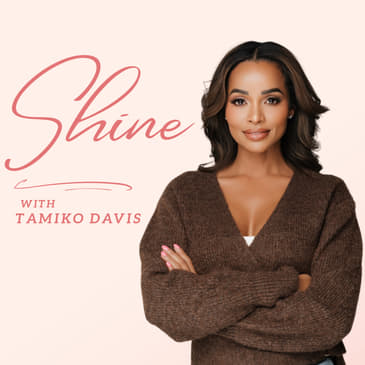
Tamiko welcomes Stephanie Tavares-Rance, co-founder of the Martha's Vineyard African American Film Festival, to discuss her journey from fashion and music industries to festival co-founder. They discuss overcoming fear, fostering community, and celebrating black culture. Stephanie shares insights on creating the C Suite Summit for women, the importance of relationships, and transforming challenges into success.
Subscribe on: YouTube, Spotify, Apple Podcasts, Pandora, iHeartRadio or wherever you find podcasts!
This podcast is powered by The Plug
See Privacy Policy at https://art19.com/privacy and California Privacy Notice at https://art19.com/privacy#do-not-sell-my-info.
[00:00:00] This podcast is powered by The Plug. Hey everybody, Tamiko here. First, thank you so much to all of you who have followed, who have viewed, who have liked, subscribed, shared, forwarded videos, my episodes. It means so much to me. You guys know this platform as It's a Thing with Tamiko Davis. Well, drumroll, I am changing the
[00:00:24] name. You may remember from my past episodes, I talk a lot about shining, right? Letting your light shine, this little light of mine and finding whatever is within you and bringing it out for the world to see. And that has just really resonated with me. And as I continue on with this platform and with this podcast and it starts to take shape, I want the name to reflect the conversations that I
[00:00:53] hope to bring to you. I want to talk to folks. I want to bring folks on to my podcast who have done the not always easy task of letting their own light shine and have been an inspiration to so many people, including myself. So there you have it. It's a Thing is now Shine with
[00:01:16] Tamiko Davis. It's still me, same platform, new name with a new lens. I'm excited. I'll see you on the next episode. Hey, you guys, welcome to another episode of Shine with Tamiko. I'm so excited to welcome my
[00:01:40] guest, Stephanie Tavares-Rantz. Stephanie is the co-founder of Run and Shoot Filmworks. She is the co-founder of the prestigious, ever-growing, wildly popular Martha's Vineyard African American Film Festival. She is the founder of the C-Suite Summit and series. And most importantly, she's my friend. Stephanie. Hey. Thank you so much for doing this. Thanks so much for having me on. For being here.
[00:02:09] Yes, I'm honored. So right off the back, I like to start my episodes with a quote. Okay. My favorite, and I've used it before. I don't know it by heart. I should know it by heart. It is called Our Deepest Fear by Marianne Williams. Oh, I love this one. Yeah. Good, right? Yes. Our deepest fear is not that we are inadequate. Our deepest fear is that we are powerful beyond measure. It is our light, not our darkness, that most frightens us. I love this part. We ask ourselves, who am I to be brilliant, gorgeous, talented,
[00:02:38] fabulous? Actually, who are you not to be? You are a child of God. Your plain small does not serve the world. And then skip down to the end. And as we let our own light shine, we unconsciously give other people permission to do the same. That's right. And as we are liberated from our own fear, our presence actually automatically liberates others. So that resonates with me a lot. And that's why I've created this
[00:03:05] podcast and why I have you here. Yeah. Is just the gift and the art of finding your light and letting it shine without pause, right? And without just being fully confident, I guess, in your light and owning it. Right. So for you, what's the quote that you live by, your favorite quote? You know, I like that. And I also like, you know, again, not letting anybody dim your light is important
[00:03:31] to me. And just do it. Like I've always said that in interviews. Like I'm the type of person who jumps in feet first, not always the best strategy, but it seems to work for me. I try not to let fear stop me from doing things. So I just kind of, I get really excited about something. I just, I'm all in all 10 toes, 10 fingers. And I'm like, let's do this. Let's make it happen. How do you get rid of that fear? Because fear is a thing, right? It can hold. Yeah.
[00:03:58] Yeah. I know it's held me back. Yeah. It can, it can hold us back from doing a lot. How do you circumvent that fear? That's interesting. I don't know. Like with, with the festival and the C-suite, you know, these things just kind of, I love doing it. You know, it doesn't feel like work. It doesn't feel like a job. It's my third child. Yeah. And I want to protect it and nurture it and have it grow. And I just don't let things kind of slow me down. I just do it. And I'm not going to sit here and
[00:04:24] say that. Circumstances don't frighten me. Of course they do. Right. But you have to, everything I do, I do for the greater good. You know, my intention is always pure and always from a place of love. It's not to be malicious or anything like that. But I, you know, like I said, when I get excited, I just kind of jump in and fly the plane and build it at the same time. Fly the plane and build it at the same time. When you said you do things for the greater good, that's one of the
[00:04:54] things I was thinking about because with run and shoot film works, right? That's something you and your husband, Floyd founded together. Actually, it's my husband's company. Oh, okay. Yeah. Sorry. Film festival. Sorry, Floyd. It's ours. Yes. But from that stemmed the color of conversation series. Yeah, that was great. Again, it was just, I was still in corporate and we were just thinking of names to call the conversations that we do with talent that comes to the film festival. And I don't
[00:05:22] remember who thought of it, but it was like, oh, color of conversation. Then I had a friend of mine do this really cool logo for it. And it just kind of stuck and we love it. Color of conversation. Let me just go back. When you talked about doing things for the greater good, that's what I, what struck out, stuck out for me is that with all the things that you've accomplished and that you've created, you have created so many spaces and safe spaces for black folks and for our community.
[00:05:48] Um, well, which came first out of the three of those? Oh, the film festival. The film festival. And then from that C-suite was born. No, from that, then color of conversation started happening. And I think during 2020, Floyd started doing, um, podcasts via zoom with, with talent that had films coming out and that kind of took off. And then I, it was in 21 where I had this idea, like these things come to me like at three, four in the morning, I'll just wake up like, oh, that's a great. So I was like,
[00:06:16] I want to create a space for women to come together and just sort of coalesce. And I just felt like we're so siloed. Like there's, you know, women in sports, entertainment, health care, educate. Like I wanted to create a space where we're all together. Cause you never know where your next friendship, your next job, your next, whatever is going to come from. And then it just kind of birthed. And I was like, I'm going to call it the C-suite and started doing these luncheons on Martha's Vineyard during the festival. And it took off. Um, and then from there I was
[00:06:43] like, let's do this in other markets. Cause everyone's like, oh, do one in my city, do one in my city. I'm like, well, if I get a sponsor, I'll do it wherever you want. So then I did it in LA, New York, Denver, Boston, Atlanta, uh, I think, yeah. And, and DC and they, all of them were just so special and so amazing. And then from there it was like, okay, what's the next step? I was like, I want to do a summit. Let's do a summit. And then I did a summit here in, uh, in Colorado,
[00:07:10] Beaver Creek. Right. And it was fantastic. A hundred women came and I picked Colorado purposely because people had this misconception about Colorado, specifically black people. Like, are there any black people there? I'm like, yeah, not a lot of us, but there's some here and black folks are doing amazing things in Colorado. Right. So, and I wanted people to see how beautiful this state really, it's gorgeous. Like you can't deny it's a beautiful state.
[00:07:35] Right. So we, I did it here intentionally. I did it in Beaver Creek and the women who came from all across the country were like, oh my God, Colorado's gone. Like I told you it's really pretty here. And it's not cowboys and horse. I mean, that does exist, but that's not like the whole thing. It's not freezing cold here all the time. So yeah, it was great. And then last year we did it in Carlsbad, California, which is fabulous. And we're doing it again this year in Carlsbad. So it's just sort of taken on a life of its own. And then I also started membership. So a lot of the
[00:08:04] women are now members of the C-suite. So we're, we're doing this whole membership thing where you get, you know, one-on-one mentoring and small cluster events and newsletters and all the good things. Yes, I get the newsletters. Oh, good. I attended the C-suite luncheon here in Denver. And I think I just, I hadn't been in Denver very long. No. And to walk into a room full of black
[00:08:29] black women and who were celebrating one another, who were accomplished, who all lived here. Exactly. I was blown away. I was blown away, but I also like breathed a sigh of relief feeling like, you know what? I'm, I'm going to be okay here. I will be okay here. And most importantly, my daughter growing up here because my kids are now growing up here. I grew up in LA.
[00:08:54] Right. And to see that you can still find your way and do wonderful things. And, and, but also though to hear, I remember you had someone on, she taught, spoke about being the only, like her experiences growing up as a black young girl here in Denver. But I mean, she still went on to do amazing, wonderful things. Yes. Such a wonderful spirit experience. I just think that
[00:09:18] you have a knack for creating these spaces, um, for us, you know, to, and like you said, they just, everything is taking off, taking on a life of its own. It is. It's amazing. And unselfishly, I started these spaces because I wanted to meet more women. You know, I wanted to meet different people. I just wanted to make some new friends and that's why I started it. Yeah. Take us back to your early days. So your background is in marketing. Yeah.
[00:09:46] Yeah. PR. Yes. A&R, the music industry. Yeah. Yes. Right. In the nineties, it was great. But you studied fashion. I did. I did. So, so where, where did that jump? How did the switch happen? Yeah. It just kind of happened. You know, I was at EMI Records, uh, SBK and then SBK bought EMI and EMI at the time was like Wilson Phillips, John Sacata. We had D'Angelo, we had Gangstar, like we had all of these, Arrested Development, all of these great artists. And honestly,
[00:10:15] I, there's a newspaper in New York called the Village Voice. And that was like the newspaper. I'm from New York city that you go to to find jobs, like different jobs. Cause when I was in school, I wanted to be a fashion, I wanted to be, um, in fashion. I knew I didn't want to be a designer cause I couldn't draw. I wanted to be a buyer. Okay. And you know, worked at every single department store, was trying to figure out what buying program I wanted to get into. And then as I got to learn it, I was like, Oh, I don't think I like this. There's a lot of math, but this is like
[00:10:41] very, and not knowing that I was a creative at that time. I'm like, this is just so structured. Like I need something forward. Yeah. It was just like, you got to wear pantyhose. And I was like, not understanding, like that's not who I am. Right. Structure wasn't really for me. And I don't know that you would think of that when you think of the fashion industry. No, but you know what? It's better now because there's so many opportunities and social media opens you up to so many different avenues. I didn't know anything about, it's funny. I was just
[00:11:09] talking to Floyd about this. I didn't know anything about costume design or being a stylist or, you know, those fun, different things. I just knew, Oh, I'm going to be a buyer. And then I got disillusioned and was like, I don't think I want to do this anymore. You know, I wanted to work at one of the houses like Calvin Klein or Ralph Lauren, but I was like, I don't know if I really want to, I don't know. It just felt very not me. Which is a natural progression coming from college. It is. Right. Right. And other, the other women that were in the class loved it. They wanted,
[00:11:38] you know, they wanted to work at Saks Fifth Avenue or Bloomingdale's, but I was like, I don't want to do this. So anyway, so long story short, I took a PR class at Pratt, where I went to school and I was like, this I like, like, what is this publicity? What is PR? What did you like about it? I just thought it was so interesting. And I was, I've always been a very outgoing person. And I went up to the, the, the guest speaker, Sally Fisher PR. And I went to her
[00:12:05] and I, that, that was going through my, like, you know, I think in college, everybody goes through their, I'm black phase. And I had all these Malcolm X buttons on and stuff. And I went up to her and I was like, I'm Stephanie and I want to work with you. And she just loved that. And I was an intern and I got to work on, on the PR side for do the right thing with, with, uh, 40 acres and Spike Lee, not with him, but like the film and specifically one of the editors, which is amazing. Yeah, it was.
[00:12:35] And it was like, you know, I got to go to the premiere and it was just kind of like, this is what I like. I like this, but the energy behind everything, but didn't understand their freelance lifestyle. Like once that's over, you got to find a new gig. I didn't know it. So, okay. I did that for a little while, you know, do the right thing, came, did well. And that was the end of that account with her. And then we did some restaurant stuff. And then, um, uh, I was leaving school and looking
[00:13:02] for work and still thinking, okay, I'm going to, you know, going on interviews at the gap and Ann Taylor and all. And I was like, this is not what I want to do. So there was an ad in the village voice for, um, intern at SBK records, you know, working with the number two person at the company, you know, listening to demo taped and blah, blah. And I was like, Oh, that sounds cool. I didn't know what the hell it was. I wasn't the girl that watched the Grammys and thought I'm going to do that one day. I was just trying to get a job. Right. Right. And, uh, you wanted,
[00:13:30] you wanted to be interested. You wanted to be excited. Yeah. What you were doing. I didn't know what I want. I didn't know. I didn't know. It wasn't, I didn't know anything about the music industry. It wasn't something that I thought about like, Oh, I could work here. I didn't think about that. And, um, I lied and said I was still in school. So I like cut like my, my resume. Okay. Resume. I cut like the logo from the school and put it on paper. And I don't know.
[00:13:55] Oh God. You really did. I did. I MacGyvered this whole thing and typed up whatever. And I got the gig. I got the intern and I loved it. I was like, this, this is interesting. Like I loved it. And then from there I was in the music industry for a long time and got to work, uh, alongside, uh, my boss at the time on like Frank Sinatra, uh, duets one and two, D'Angelo, like so many. Did you meet? Yes. And Patti LaBelle cause she was on duets and Lena Horne when she was still with, like,
[00:14:23] it was just amazing. And you know, got that life and then got to go to the Grammys and I was going to LA. This is back in the day when America, everybody from New York flew, um, American to go to LA. Okay. Yeah. Yeah. I kind of remember not really, but we got to find American airlines to go to LA. It's like, okay, whatever. And I would stay at the Mondrian. I love that. Oh my God. It was just very fun. Taking me back. Yeah, man. So it was just like, you know, when, when expense accounts were full and, um, I just loved it. It was great.
[00:14:52] As you're, you're talking about it. Cause I asked you to kind of like take me back to it in essence, like where it all started. Yeah. But it is, I'm just being reminded of when we come to a certain point in our lives and you look back and like your story, it wasn't straight and narrow. Like some of those women that you were in class with, you know, in fashion school and how things can kind of up and down or maybe, but like even right or left. Absolutely. Right. And you kind of do this and, and okay, well, I don't know so much about this one.
[00:15:22] Let me go try this industry and let me respond to that ad. That could be interesting. And now you're flying across, but still how like current present day, how it all, it all comes together. I tell people that all the time when you look back, anyone, when you look back on your life and everything that's happened, happened for a reason. And it all kind of weaves together to get you to the point. Everything I've like, like in New York, music industry, leaving the music industry, getting into PR, doing that for a
[00:15:51] while, getting introduced to Martha's Vineyard from doing, Floyd and I used to go and go to the vineyard and hang out. Yeah. And then doing something with Marto Cognac on Martha's Vineyard. And then from there, like thinking, oh, this is fun. Someone bought some films and not even thinking about a film festival to Floyd working on a film in Barbados to me going to hang out with him and saying. Even though Stephanie, sorry to interrupt you. No. Marrying someone. Yeah. Right. Who worked with Spike Lee. Who worked.
[00:16:21] We were at the same premiere. I didn't even know him. Isn't that crazy? Like in how that kind of. Yeah. Exactly. That is bizarre. Like I met him. Yeah. How did you and Floyd meet? We met at a Russell Simmons. Don't say deaf comedy jam. No. Okay. No, we met at a Russell Simmons Christmas party. Oh, yeah. No biggie. In Soho. It was crazy. Like, yeah. And he was working with Spike and I had finished that
[00:16:46] internship. But it was just interesting how that whole thing kind of came together. But yeah, when you look back on your life, you kind of see how everything sort of comes together. And even moving to North Carolina, I'm jumping in my career and working at Family Dollar. Like, I didn't even know what the hell the family was. Where'd you do Family Dollar? I led digital marketing. Wow. Yeah. So it was, you know. Now that's retail. Right. And here I am back in like retail, right? Fashion. So it all came back full circle.
[00:17:15] We left New York after 9-11. I was like, I can't, I don't want to stay here anymore. I didn't feel safe in New York. And I was just, you know, I love my city, but we just needed a little break. I was like, I love New York. But when you have kids, it's just very tough to be in the boroughs, specifically Brooklyn with the Browns. Were you children born in New York? Yep. Both of my kids are from New York. And it's like, I want something different. So we moved to Charlotte. My parents were out there and, you know, Charlotte was beautiful. Great. Didn't love Charlotte just from a creative standpoint.
[00:17:45] And it just wasn't. Yeah. I can see that. Yeah. It doesn't really lend to creativity. No. I didn't fit in at all. They were just like, I was like, and like, yeah, you work in a bank? Wow. That sounds super boring. But what I can get out there, it's very linear. And I'm like, this is so not me. But got this job at Family Dollar to do digital marketing. And I needed a job because the festival wasn't, and the film festival was happening in the background with all of this, right? It's 24 years old. Right.
[00:18:11] But at that time, I couldn't do the festival full time. And I couldn't do it full time. So I needed a job as well. And this is around the time when the recession happened in 06, 07. Devastating to our family. We almost lost our home. It's crazy. Floyd's work dried up in the film industry because everything just like, it was like a snowball effect. It was like, we're firing, we're firing, we're firing. And everything just shut down. Production shut down in New York. It was just crazy. And we were just like, oh my God, you know, we got to find a job.
[00:18:40] And, you know, people look at me and him and they think, oh my God, they're so successful. Every A-list talent comes to their festival, but you don't know my story, right? It wasn't. There's always a backstory. There's a backstory, right? We struggled, you know, like there was a time we didn't have any money. That thing was not an overnight. No, it took 24 years. You know, it wasn't overnight and we didn't have any money. And I had to take a job at Dillard's department store. Yeah, that's real talk. You know what I mean? Just to.
[00:19:10] And that's important to say though. Yes. You're simply working towards a dream, which I don't, because I think I've heard you say before, I don't, I don't think you had an end game with this festival. I never thought it would be 24 years. Like I thought, honestly, I thought, and you probably heard, I thought I would do this for a year or two. And then some great studio would be like, oh my God, we want to hire Stephanie. She's so innovative, such an out of the box thinker, not realizing that
[00:19:37] this was the big thing I was supposed to be doing. Like I didn't have a, I was like 24 years. And not to take anything away from the beauty of what the festival is and what it stands for. But in essence, at one point it was kind of like a means to an end. Is that what you're saying? Yeah. And it's interesting you say that because the festival to me is like, you know, when you meet a guy or a guy meets a girl or whatever, and they're like, you put them in the friend zone, not realizing that they're the one. They're the one.
[00:20:04] Because through thick and thin, the film festival was always there. Even when the recession happened, we still did the film festival. Like we still got sponsorship to do like crazy. So it was always there. And I think it was whispering in my ear, like, Stephanie, just focus on me. You won't be disappointed. But I was too afraid to take that leap and do that full time. Actually, we couldn't do it because it was, we needed a job. Our kids were really young at the time
[00:20:30] and I had to work and I did, you know, a bunch of different jobs and the film festival in the background. And then as the film festival started growing, the universe will tell you, it will ask you like, well, what do you want to do? Like, are you want to, you want to stay here or you want to do this? Right. And it came, there came a point where I could, cause Floyd's always been freelance. He's always worked for himself. I was always the corporate girl, but there comes a point where you have to shit or get off the pot because I couldn't do both.
[00:20:58] Right. You couldn't like corporate part. You definitely can't part-time the festival. No, cause it's a kid. It's growing and it needs more. So I, I would sneak out this one. I lived in Charlotte. I would sneak out the building, go on my car, take a call, you know, go into a conference room, take it. Like it was crazy. And, but I loved it. And I was like, this is what I love. But I also loved Family Dollar. I love that opportunity. You know, they gave me total autonomy. Like it was great, but I knew that the festival was something I really,
[00:21:24] really, really, it was special. Right. And at Family Dollar, I created this thing called Family Dollar Fabulous. Again, like it was, we worked with all of our suppliers and it was like this big fashion thing. We had all these, all these brands come and we invited all back then vloggers were coming up. And that was like the big thing to be a vlogger. And we did it in Charlotte, New York and Atlanta. And it was huge. It was fantastic. I was like, this is fabulous. So it had like a fashion show? Yeah. It was like a, yeah, it was like an expo. Okay. Yeah.
[00:21:52] And all like P&G was there and Revlon and they would have all their wares there for the vloggers to, to talk about. It was fat. It was great. And, um, we did it for three years and then, you know, Family Dollar went out of, went out of business and, and the universe tested me again. It was like, well, Stephanie, what do you want to do? You want to stay in corporate? You want to go with them to wherever state they're going to, or you want to just do this festival? And I was scared and I got a corporate job. And then when I was supposed to sign the papers, I said, I don't want to do it.
[00:22:21] What scared you about giving your full, I mean, I think I know, but yeah, I mean, healthcare, healthcare, right? This is before Obamacare. It was healthcare. Right. And I guess security, you know, what is that? Family though. Family. Right. Exactly. So, but then something in my head was like, you're, you're doing the same thing over again. You don't want to do this corporate hamster role because it's not for women. And I don't care about what color you are for women. Once you get to a certain age,
[00:22:48] they, your numbers up. I don't care what anybody says you get, you get let go. Like that's how they treat women in corporate America. And I just knew I didn't want to go through that again. And I just was like, you know, I'm focusing on the festival and, and Floyd was already always focusing on it because we did it together. But for me, it was like, I'm doing this full time. And it was the best decision I ever made. I never looked back. And I think that's the beauty of it too, is again, like not to take away from the one,
[00:23:15] it's a partnership what you and Floyd have, right? And he has his strengths. You have your strengths. Right. It's melded together into this beautiful thing. But you just said something that it seems to me that the festival couldn't be what it is now without you in essence, and without your input and your passion. And so to have the two of you together create this thing. So how is it working with your spouse?
[00:23:43] How much time we got now? I mean, it's not, you know, it's not for the faint of heart. It's not easy, you know, but it's not easy. And there are definitely days where we're just like, I don't want to work with you anymore. I'm done. But then I would not want to do this with anybody else. Like I had a partner year one, and that didn't work out because there's always some sort of
[00:24:06] jealousy or insecurity or something, right? That shows its ugly head. And even though it is hard, I wouldn't change a thing. I would do this with my husband because all the money's in one space. Right. And, you know, we trust that we have its best interests at heart, right? This is our thing. It's our baby. Like you said, you have the trust.
[00:24:31] Yes. Yeah, we're doing it. It's legacy for our children. You know, and we created this, we created this together. Like Floyd has always, he's been there lockstep. It's both of us together. We're both co-founders of this film festival. And so just, I'm reminded too, just how you have the C-suite series for women. Yeah. Has it Floyd launched? Yes, he does the men, the C-suite luncheon for men. Oh, that's awesome. Yeah. So it's just for men.
[00:24:55] Throughout this journey, how important have relationships been for you personally, but I think professionally with your success? And you know what, this is the first time I've lived in a city that people know that I do the festival. It's interesting. Meaning Denver? Yeah. Okay. And I moved to Denver because I was still in Corp and I was relocated out here to leave Digital Marketing for Boston Market. I hated that job. You know, it's interesting being in a city
[00:25:25] where, and I do events, I do things here as well. You know, it took me a minute to find a tribe here in Denver, a lot of, a lot of frogs. And I, you know, it's interesting. It's hard as you, and I think it's for men and women, as you, and you, you know, this as well, as you climb the ladder of success or people perceive as success, you know, people want to put you in
[00:25:54] a category. They want to judge you without judging you. So they see me, you know, I'm the one that's always, I'm the one that's more front facing than Floyd is. Right. But in terms of just being out in these streets, but you know, they, they have a certain image of who they think I am and the fact that I do something on Martha's Vineyard. So saying, oh, I do a film festival
[00:26:18] on Martha's Vineyard, that already, you know, oh, you know, it does that, but it's like, you haven't, it's funny one time and I'm jumping, but that reminded me of something when I was in the music industry, this woman said to me, um, you know, you seem like the type of woman who would be with a white guy and no disrespect to white guys. And I was like, the hell does that like the type of woman? What does that mean? I don't know. What is that type? She couldn't really, I'm like, what the hell is that? A black woman. And I'm like, well, no, my guy's black,
[00:26:48] but I don't, you know, and if I was with a white guy, what, I don't understand what, what does that mean? Right. Like, what are you saying about me? Yeah. Are you criticizing me? Right. Exactly. I don't know what that, I don't take it as a compliment. I take it as like, what are you saying? Right. Well, you like nice things and, or you're the kind of girl she would say, you probably have like really nice lingerie. And I was like, I don't, I don't like lingerie. When I go in the bed to go to sleep, I like to get a t-shirt and men's bottom. I like to sleep.
[00:27:14] It rides up, it itches and you're cold. Yeah. I'm not the girl. Yeah. Cause some people, you know how some people dress just with nothing. I don't like to be cold. Me either. And I'm always cold. So I, I am grandma in the bed. I don't care. I'm not trying to be all sexy with the neck. That's so it's like, right. The thing rides up to your neck, a silk pajama, you know? So people have the image of me. It's like, no, that's, that's not me, girl. Well, I would imagine though. It's, you know, how, how can you say it? Like people,
[00:27:45] any city, you know, I, I think it's, it is a challenge to be known for what you do, right. What you've accomplished, who, you know, who you're married to. Right. Right. Um, rather than basically just who you are. Right. Like just get to know me. I'm not the things that you think I, just because I like nice things. Does it mean I'm, you know, or that you feel you're
[00:28:12] certain, like you feel like you're better than folks. I know. I've always been judged like that. I've always had this outgoing personality always to my, to, to my detriment, honestly, because people just want to judge just the outward. Right. I remember I had a girl tell me one time, uh, my brother's ex-wife actually, you know, uh, she would come to our parent, my parents' house and, oh, you would live out here. It's like, what? You know, it was a really nice
[00:28:41] area on a lake. Oh, you would live out here. Cause we live in the same community. I was like, what the hell does that? I live where I like you choose to live in the hood. That's not what I want to do. Like, that's not me. Like I like to say that. Right. It's like, or I had on something, I don't know, jeans and like you, like something like that. Yeah. Oh, you would wear that sweater. And I'm like, why are you sweating? Like that's always been like, people just have to comment on, and I don't care what you wear. That's why I started the summit. And one of the things I say,
[00:29:10] at the summit, I don't care. You want to come in jeans and a t-shirt. You want to come in a tutu. You want to come in a suit. I don't care. Right. Just be your true authentic self. Whatever makes you comfortable, come. I don't care. If you like to wear designer down, good for you. You want to wear, you know, overalls and a tank top. I'm down. Like, I don't care. I just want to get to know you as the person. But I think thinking of the C-suite though, with the summit and those spaces though,
[00:29:36] sometimes I would imagine it is hard because your label, right? And your accomplishments and your title, not your label, your title. And, and, you know, I think I know one time you had a C-level executive from Delta Dental. Oh yeah. Right. Love her. Yeah. And she's from Denver. Her, she stood up.
[00:30:00] Kelly. Love her. But I, that your title is what brings you into these spaces. Yes, it is. Right. And so to get into that space and then let that dance, let that, let your guard down or let the facade go and kind of show up authentically, that's not easy for people. Well, I set the tone, to be honest. I don't, I don't do that. Right. You know, I'm very intentional about who I invite to the luncheons. I'm very intentional about who gets an invitation to register for the summit
[00:30:29] because I don't want that energy there. You know, I start off every summit by saying, this is not a crabs in a barrel space. If that's who you are, you take your happy ass on out of here. I'm not doing that. You're in the wrong place. Right. And it's funny because every time I do a luncheon or the summit, the women come, cause they all come in like, oh my God, or they've never been like, what is this going to be? You know, I was reluctant to come. I didn't know what to expect. Yeah. And I was like, and they're like, this has been the most wonderful experience because
[00:30:56] you're just so warm and welcoming and all the women that you bring together are just like, it's just a, a, a, a love fest for, for three days. Love fest and connecting. And connecting and having real conversations about, you know, women's health. And we had a, my girlfriend's a makeup artist and, um, she works with Paco Rabanne and, um, Caroline Herrera and told us all we're doing our makeup wrong. Like that was such a, no, thanks. I know it was like a two, the two hour
[00:31:24] session went to four hours. Like she showed you got wrong foundation, wrong. That was like, it was crazy. It was so much, but it was just great to be like, we're doing it wrong. Right. And then we had a healthcare conversation and that was great. Like women talking about menopause and premenopause and difficulties getting pregnant and fibroids and cancer. And they just let it all out. And it was just so empowering and special that these women felt safe to talk about
[00:31:50] what they're going through because I always have black doctors, black female doctors on the stage in different disciplines. You know what I think too, I always have said that, um, especially becoming a wife and a mother, if I really wish that women were more transparent about their experiences, good and bad. Yeah. And their hangups, their struggles. I mean, you don't have to tell your business to everyone,
[00:32:15] but I really think that there are so many missed opportunities to share, to share, is to share knowledge. And it can be very isolating. Yes. Right. And it can be. And again, like to your point of building relationships and personal relationships that can be isolating because no one really wants to. Well, I started because before I wouldn't talk, I would just keep everything in. And, and I, you know, started opening up to just like a couple of women and just talking and they
[00:32:45] were like, girl, me too. Or, you know, are you going through this or no, I'm going through this. And it just felt good just to connect with people on a human level about just life, you know, like raising kids is hard, right? Raising teenagers or kids in their twenties is tough, you know, just everything. Like the way the world is now, it's tough. Like, what are we doing? Having aging parents is tough. Like all of that is just tough. These shared life experiences. Shared life experiences.
[00:33:14] Yeah, we're all going through it. Maybe not at the same time. Right. But at some point we are all going to go through it. And I think too, it's like, and then there's something to be said about when you share your experiences, folks coming up behind you can learn from you, right? Right. My new thing is, um, send the elevator back down. Okay. Tell me about that. I love that. I know it's not mine. I read it somewhere and I was like, I'm saying it that at the luncheon on, on the vineyard and I'm saying it at the summit. It's just really important for women to send the
[00:33:42] elevator back down. Send the elevator back down. Send the elevator back down for the next cohort of women to come up because you have to, like, we can't say what you have to step aside and let someone else come up as well. You got to bring people up with you. The ultimate goal with the summit is to get more black women on corporate boards because that's where the power lies. Right. So I always have a, um, a conversation with black women on boards and we talk about it. And I,
[00:34:08] and I always joke, I just met this great woman who was on the board of J crew and I was like, and she's going to come speak at the summit. And I'm just like, girl, we saw succession. I know it's, it's easy. I saw six. I was like, it ain't all this. You got to take a class. No, it's all about who, you know, the relationship, the relationships and people bringing up your name in those closed door meetings. Hey, we got two board seats. Who do you think? Oh, Tamiko Davis would be fabulous for this board. You like her. I love her. Bring her in. Let's
[00:34:37] interview her. That's how it happens. It's that easy. That's how you get jobs as people, you know, speaking your name and saying great things about you. You know what I mean? So that's what I want to create. That's what I want more of us to do. Stop the crabs in the barrel. Right. Cause we all have this in common. We're women and we're women of color. Like we have to stick together and help each other out. So in your elevator, when you send it down, what are like three things that you would put in that elevator that you want to make sure like the
[00:35:05] women coming up behind you, hold on to like understand or keep in mind. Yeah. Keep in mind that this is not a crabs in a barrel mentality. Keep in mind that you have to take no mask, take your mask off. Like that's hard. It is. It's important. It's important. Take your mask off. And also, you know, come into this space, not judging other women. That's, that's what it is. And be open to it's four things. Be open to the possibility of meeting someone new.
[00:35:36] Maybe you want to be in entertainment, but this woman in finance is really interesting to you. Maybe you're supposed to be in finance. Just be open to whatever the universe is bringing towards you. How have your professional relationships contributed to the success of the film festival? Yeah, it's funny. I would say that 98% of the sponsors that we have are led by women. Wow.
[00:36:03] Yeah. There's hardly any black men. It's all women. Black women or women? Black women at these big companies. It's all black women and they become friends. They become buddies. Relationships. And it's all relationships. So, you know, I tell your, your, your viewers, you know, you want to start your own business. You want to do it. It's all about relationships. Everything is predicated on relationships. It's not that difficult. It's relationships. And people trusting you that you're going to deliver on what you say you're going to do. And if you can't, or there's an obstacle. How do you do that when you're starting some, starting out with something new though?
[00:36:33] You start small. Like I think a lot of people's mistake is they want to like have this grand thing. Hit the gates. Yeah. Come out the gates running. Yeah. But you can't, it's not sustainable. Right. Our festival started in a tiny conference room, probably as big as this space. But 10 people, right? The film festival, 10 people. Yeah. 10 people at, at, at 800 seat theater where we are now that we fill up every day. But in the, in the beginning it was 10 people. It was my parents, Floyd, Zaire was one and some random filming. It was horrible. I was devastated.
[00:37:02] And then from there we grew, we were in a conference room at a hotel with like 60 chairs. Start small. So what keeps you, what keeps you quote unquote in it during that growth process? I loved it. I love it. I love it. I love it. I love the filmmakers. I love the fact, I love seeing them, their face light up when they see their film on a big screen. I just love it. I love having them come to Martha's Vineyard and realize that this is where we're supposed to be. It's where we belong. There's a lot
[00:37:30] of black history on this island and the ancestors are speaking to you. I love all of that. And the sense of community that you see. And the sense of community. And that black joy. It is. It is our happy place. It really is. You come to the finger and you exhale. There was never a plan B. No. Well, plan B was Martha's Vineyard. It was supposed to be in Barbados. Right. Right. Right. But I never felt like I said, I didn't think and he didn't. 24 years later, Academy accredited. I never. That was not. And that's why I think it's so successful because we
[00:37:57] went into it with no ego. It was like, we're going to build this plane and fly. I didn't know what we would know what we're doing. We just did it. Like just kept doing it, kept doing it, got better and better. And I think that's why it's great because there's no ego and it's totally organic. And the love for it just shines through. Yeah. And I know I said this once to you offline when we were at dinner and not, it is in no way a competition. But for me, I look at,
[00:38:24] and I know it's a completely different model, but I look at the Martha's Vineyard African American Film Festival kind of being the new, I don't know if I'm allowed to say this, but it's my podcast. I guess being the new Essence Fest. Oh, that's interesting. Meaning because Essence, the Essence Festival was where we, you could find us, right? Fourth of July weekend. And that was a weekend of joy and connection and representation and celebrating our
[00:38:52] community and each other. And that is the film festival now. You know, yes, it's centered around, you've never heard that? You've never heard that? I've heard more so where like we're Sundance, right? The same paradigm as Sundance. Essence is way bigger than us. Of course, but I mean for our community. No, no. Yeah. That sense of belonging and joy. Absolutely. Yes. It's great. So what can we expect from the festival this year? Oh, so many great things. Yeah. We've got a lot of great things happening. We're going to be
[00:39:21] showing the Earth, Wind & Fire doc and they're bringing in Quest Love. We got Janelle James from Abbott Elementary coming. We're doing the Brittany Griner doc and the director's coming. Oh, I didn't know there was one. Yeah. It hasn't come out yet. So is that a documentary about her life? Yeah. And Post when she was- In prison. Yeah. Craziness. Incarceration. Yeah. And in Russia of all places. And I've got this really great documentary called
[00:39:46] Black is Beautiful, which I love. The Kwame Brathweiss story. Didn't know this story. This guy in Harlem coined the phrase Black is Beautiful. Did these fashion shows in Harlem with all these beautiful black women? It was an amazing documentary. That's where that came from. That phrase. Yeah. Mm-hmm. I've got just so many amazing, I mean, so much. A lot. And so when you receive these submissions, which I'm sure is like in the hundreds and you- No, 900 to be exact. 980. I think it's
[00:40:13] what was here. So the whole year that you're prepping and planning for the festival leading up to it, are you and Floyd watching? Yeah. Yeah. He has a team. He's in charge of procurement. So, and I watch the films too, but that's it. And he has his team of people who watch every single film. And I watch the films and yeah. So we narrow down almost a thousand films to like, I don't know, 64, 65 independent films. And then we have about, I don't know, 15 or
[00:40:41] 20 sponsored content from all the streaming partners and studios. It's crazy. And then it's like down to like 60. Yeah. That are shown at the- Yeah. 60, 65. Yeah. It's crazy. That's crazy. I mean, we could do- Like two or three film festivals and you know, they're in that, and a lot of arguments come from that as well. It's like, oh my God, why aren't you accepting this film? It's amazing. Accept this film. We don't have any space. No, you got to, you know, and it's some, it's hard because we can't accept everything. The parking spot, the parking, you know,
[00:41:11] only so many, so many spots for cars in the parking garage. So. Until you build a new one. Until we build a new one. But we know, we really try to focus on, um, no struggle porn. I don't do that. And- What do you mean by that? Like, I don't, no struggle porn. Like no, you know, my daddy was a drunk addict and my mom was a kid. Oh, you mean in the film contest. Yes. Yes. And those stories are important. They're important, but that's not- No, that's not our whole story. That's not the black experience. Yeah. It's the total black experience. That's a human experience. Right.
[00:41:38] It's not necessarily a black experience. And so, you know, and we look for, in 24 years, we've seen everything. You know, we look for things that are different that we haven't seen before. And I will say we have amazing films from England. Ah, amazing films from African filmmakers who are based in London. Beautiful, great films. Like London, it came through this year with the content. It's awesome. We get films from all over the world. Okay. So as we wrap up and we think of the concept of letting your own light shine, what
[00:42:06] keeps you going? What inspires you to do what you do in your personal life as a mom and a wife, but also professionally? What inspires Stephanie? The fact that people didn't believe in me or didn't think I could do it. And I just did it. You just did it. And I just do it. You just do it. I just do it. You don't hesitate. There's no fear.
[00:42:31] There is a little fear, but we push through it and we just do it. Right? They say, oh, why? And I do it. I push myself. I'm my own competition. Like, yeah, I'm going to do this. I'm going to do a summit. Yep. I want to do a summit. We're going to do a summit. And that's not to say that there won't be struggles and you won't. Of course. Yeah. Setbacks. Of course. You just got to keep going. Keep going. Just keep swimming. Keep swimming. That's my other phrase. Okay. So wait, we've got just do it. Yeah. Send the elevator back down. Send the elevator back down. I love that. You can use it. Okay.
[00:42:59] And just keep swimming from finding Nemo. Just keep swimming. Just got to keep swimming. Keep swimming. Thank you so much. Thank you. It was just so much fun. I enjoyed it. I love you as a friend. I love you too. But I also am so proud of you. I'm excited. I'm proud of you with this. Your podcast shines. Tomiko David. I'm going to do it. This podcast is powered by The Plug.