
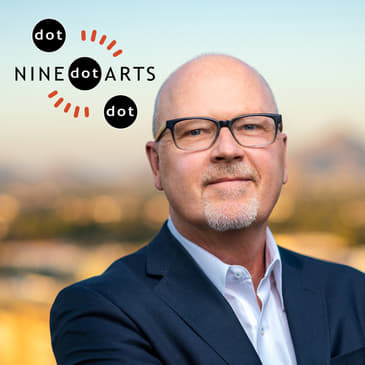
Steve Lindley, COO of Holualoa Companies, shares why successful real estate projects prioritize people over product and feelings over formulas, revealing how creativity drives lasting value in the built environment.
For show notes and more: https://ninedotarts.com/podcast-why-creative-cities-thrive
See Privacy Policy at https://art19.com/privacy and California Privacy Notice at https://art19.com/privacy#do-not-sell-my-info.
[00:00:00] This podcast is powered by the plug. Welcome to Dot Dot Dot, the continuing conversation around art, placemaking and how to create meaningful experiences in the built environment, all while making a positive social and financial impact.
[00:00:23] This podcast is hosted by experts at Nine Dot Arts, a national art consulting and creative placemaking firm that helps clients differentiate their projects through the power of art and culture. Hello everyone, I'm Molly Casey, chief curator and co-founder of Nine Dot Arts, and today I'm joined by Steve Lindley, the OO of Holuoloa. Yeah, it's the Hawaiian stuff always trips me up.
[00:00:51] And someone I've been fortunate to get to know through our membership at the Urban Land Institute placemaking Council. Steve, thank you for joining me today. Yeah, thanks for having me on Molly. I'm excited to share. Yep. So let's go ahead and just dig in. I'd love to just introduce everybody to a little bit of who you are, where you come from. So you've spent more than three decades in commercial real estate now, which is incredible.
[00:01:18] You've been everywhere from capital markets, brokerage to now leading a global investment firm. Yep, yep. And throughout it all, you've been a champion for arts and culture in the built environment. What drew you to this intersection of real estate community and creativity? It wasn't intentional. It feels like an accident. I'm really a city geek. I love cities. I love how they fit together. I love the complex systems that are cities.
[00:01:47] And right out of college, I moved to New York City and I worked on Wall Street. And I was in the finance business, kind of the opposite of what you would think as cool, creative, artistic. But I'm an artist at heart or creative is a better way to put it. And New York City is one of the greatest cities in the world for a reason. Right. And I would just melt into the city. And at the time, the 80s, it was pretty gritty. So the street art scene was gritty and cool.
[00:02:19] Unbelievably rad. Punk rock shows in the East Village. I would get my company, my Wall Street company's tickets to the high arts. Right. So we'd go to concerts and we'd go to theaters. But then I moved to Phoenix. And I kind of had that. Yeah, very different. Not as different as you think and definitely not changing. But the Phoenix most people know is not New York City and not a creative place.
[00:02:47] And I read the book Rise of the Creative Class by Richard Florida many years ago. And for people who know it, he looks at certain demographic things that define creative parts of our city, actually productive parts of our city, cities, neighborhoods, etc. He doesn't define creativity or creatives the same way you and I would. It includes artists and musicians and culinary creatives. But it involves anyone who's creating something.
[00:03:16] Oh, interesting. But it inspired me. And I worked at a big real estate company. I had a research department say, where are those places in Phoenix? And all of a sudden I started going to those places, which were kind of at the time relatively unknown. Now they're very well known. And I found a lot of art and creativity and street art and kind of this gritty, we're in Phoenix and we're going to show off who we are.
[00:03:46] Fast forward now till today. I live in the Roosevelt Row Arts District and a high rise there. As you know, I'm on ULI's National Placemaking Council. I have served, I don't know, on the board for one of our top non-art or arts nonprofits, ArtLink. And I get called on to speak and share about arts and culture and creativity often. And it's, it's a, I love to do it. And it's a passion now. It's become a passion.
[00:04:16] That's, that's really inspiring. I mean, for you to be able to go from New York City where all of this is just in your face, it's happening all around you. And then to go to Phoenix and, and actually seek it out and find it and it's there, right? Yes. That's something that's really exciting to think about because it makes, it makes you think this can, this is happening everywhere, right? These undercurrents are in our cities. Yes. I'm a closed store economic development director.
[00:04:46] And so I've sometimes, when she started in the city of Phoenix, I toured her team through some of the arts driven development in our city. And I said, we hide our cool. It's like, you come around the corner, you see a building, you're like that piece of crap building should be torn down. And then you open the door, you're like, oh, I think I'll be hanging out here for a while. This place is so cool. Oh. And she said, we need to do a worse job of hiding our creativity. We need to put it out there, right?
[00:05:15] Because creative cities thrive. And so, and I agree with that. And we're doing a better job. Yeah. You guys have made, I mean, Phoenix in and of itself. I mean, I, there's no doubt that it is making a huge mark on the creative landscape. And we've done a few projects in the area and we have no lack of resources for creative local talent, both established and up and coming. Yes.
[00:05:39] And I think one of the most underrated parts about it is the expectation people have of like, oh, Phoenix art equals Scottsdale and beautiful paintings of landscapes or horses. Yeah. And it's like, oh my God, that's like, that's like the tiniest bit of what's happening here. Mm-hmm. Yes. It is so much more, like, there's just so much more diversity that people don't know about.
[00:06:04] Uh, you and I know Juanita Hardy, who is these ULIs national creative placemaking efforts. And, uh, so I toured her maybe like eight or 10 years ago through our city, looking at arts driven development. And by the time she was done, she's like, here's what I can tell you, Steve, I'm looking at all this art, street art and pop up art and alley art and yarn bomb cactus or whatever it is. And I can tell I'm in Phoenix.
[00:06:35] I would never say I'm not in Philadelphia. I'm not in LA. I'm not in, uh, some other city. This speaks to me as who Phoenix is. And I could try to describe it to the people here, but the best thing is come here and see, right? Come and see. Take, take, go walk around, go see the art district. Yeah. That, that speaks a lot to, to the, um, just to the creative talent there. Like there really are invested in the local. Yes.
[00:07:02] I've heard people say that in Phoenix, our artists collaborate and cooperate. And in other cities they compete. That's so true. Mm hmm. And so because we're not an established art center, you're not trying to, I mean, we'd all like to sell a piece of art for a million bucks, but it's, it's less likely to happen here. So it, at some level you're in it for the money because artists need to make a living.
[00:07:32] You're also in, in it for making a difference and putting your city on a map and really telling the story that we can tell here at Phoenix. It's pretty cool. It's a community and arts community. Without a doubt. Yeah. Without a doubt. Yeah. How refreshing. Um, all right. Well, Hulu, Hulu invests across many asset classes. Mm hmm. You guys are in office, retail, hospitality, multifamily, mixed use. I mean, you guys run, run the gamut. Mm hmm.
[00:08:00] Is there a particular asset type you especially enjoy working on? Yeah. And why? Um, so one of our coolest properties in our portfolio, which epitomizes what I love to work on. I, so we have amazing hotels. We have some great places that we work on, but one of our coolest is park central. Hmm. It's a failed mall, not any longer. Uh, it was the original mall in Phoenix.
[00:08:28] People have memories of, you know, doing their Christmas shopping there or buying their first pair of shoes or all that sort of stuff. Right. Uh, it had died a little bit, but the large mixed use adaptive reuse properties are the ones that are really fun to work in. And you can, there's a lot of ways to incorporate arts and culture and creativity into those program events, which we have there. Uh, traditional murals and sculpture.
[00:08:57] The, the building has a lot. Um, bringing in, uh, arts gallery spaces and arts organizations. We house those on site there. Um, I think people underestimate culinary creativity or cocktail creativity. Right. Yeah. And so one of our top restauranteurs, Chris Collins is about to open up a restaurant there. It'll be amazing. Cowboy seafood.
[00:09:23] And I won't tell, I won't tell you what it is, but with that name, you know, you want to be there. Right. And then, and then here's the big thing is we build community there. Like we think of, we think of it as a place where we're trying to build community where that community comes together to appreciate and support the creativity that we've kind of worked into that project along with a lot of collaborators. Wow. Mm-hmm.
[00:09:52] I love that you've taken specifically this, I did an old mall to do that because I don't think of, I think of malls as a place of commerce and that's really what they're there for. Mm-hmm. And to take that and turn it into community is just a beautiful transformation. Yeah. I mean, we're going to go, you're not going to go to go whatever buy, you know, maybe, maybe you still are buying your Christmas presents because there's an art gallery there and you want to go support your local creatives, but it's such a different experience if you're
[00:10:22] there for other events and activities that aren't just commerce related. Mm-hmm. And it's really hard and it takes a holistic view. Yeah. But if it was easy, everyone would do it and we're, we're succeeding. So we like the hard jobs at Halualoa and our partner Sharon Harper at Plaza Company has been a key collaborator on that with us. Collaboration. Yep. Back to collaboration.
[00:10:45] So that you touched specifically on bringing in arts organizations. Mm-hmm. And that's something that, you know, obviously at Nine Dot Arts, we're always trying to push like, hey, oh, you have an empty space. Like you're a multifamily developer and you're required to put retail on the ground floor. You don't do retail. So this is kind of out of your bucket and your wheelhouse. Mm-hmm. But maybe we, maybe we bring in an artist in residence for the six months while you're
[00:11:15] trying to lease it or something like that to try and activate the space with creativity. Yeah. So I was curious to find out a little bit more about how you guys go about doing that. And if there's a way that you pull certain levers to get creatives in there, because it is a harder, there's harder entry level with, with rent obviously with creatives, because they're not bringing in a regular income probably. Yes. From their creative endeavors. So I'm curious how you guys navigate that and how you support that.
[00:11:45] Uh, think of it as an amenity. So, uh, do you, we have a conference center there. What's our rent? Nothing. Right. Do our tenants locate there because of the conference center? Yes, they do. Um, think of the food and beverage and the coffee that we have there. Those are tenants who pay rent, but we're curating this amenity, right? And not all amenities. We have, uh, fire pits and we have fountains on site. Those cost money. What's our return on investment.
[00:12:14] It's actually really high, but it's not this specific fountain generates this much in rent. Right. And so at park central specifically, we have a couple buildings that just were not that leasable. Right. You know, we have amazing space. The, the project we've done is, is beautiful. You'd want to locate if you were walking through it, but these two buildings were not the most leasable.
[00:12:41] So we handed one over to art link, a nonprofit that I'm very close to and was on the board for, and it's now their office space. And they have, they have people there. They've had their gala at park central. They've had the governor's arts awards at park central. They also have taken a portion of their space. Um, and they have, uh, turned it into a gallery. And it's one of the, yeah.
[00:13:10] When they have shows there, they're some of the best in our city. Um, very, very cool, cool place. But if you think of it as profit center. Yeah. Your profit is on every other tenant who came after that. Right. And so, and we have many, so that's part of the formula that's working at park central and our other developments. I love that.
[00:13:35] Especially because if they're, if they're, they're bringing in their gala folks and their audiences, I mean, not as great ROI for the rest of the property for you guys, right? They're going to be there getting the coffee, eating the food, spending more time coming back because they've had such a great experience, but it is at a met it's think of it as an amenity such a great way to think of it. I'll share the tenants, the tenant profile that have followed that.
[00:14:05] Okay. So researchers from Barrow Neurological Institute, right? And they're inventing things and they've chosen to locate there the big hospitals across the street. So that helps, but this they've chosen to locate there, uh, the Arizona Republic, our local newspaper just moved in the first time they've moved out of downtown Phoenix someplace else. They needed new space.
[00:14:29] Um, and here, one really big one is we just signed a lease and, and they took occupancy a couple months ago. One of the largest nonprofits in our state, uh, Valley of the sun United way moved from Camelback, one of our traditional office markets to Midtown. Wow. And the very first thing they did, they were having their hundredth anniversary celebration
[00:14:53] is they hired Liliana Mora, cool local architect and bombed one whole wall on the outside of their space with one of the most beautiful murals you've seen in a long time and it fit in. And so they're honoring as a nonprofit and an influencer people, people are coming to visit them at park central, seeing the art, seeing the cool development and our ability to incorporate arts and culture. It's not the sole reason they went there, but it's a big part of it. It's a driver.
[00:15:23] Yeah. Yeah. That, that is, those are tremendous stories. I mean, to move those organizations away from traditional office like that, that's true. That is just kind of unheard of. That's very cool. Congratulations. Thank you. Yeah. I need to come to Phoenix like tomorrow. Oh yeah. That's true. I need to come check this out. Um, well pivoting a little bit off of that, um, and thinking big picture more about these
[00:15:50] different asset types, I mean, obviously in a mixed use development and in an adaptive reuse environment, like you just spoke of with Amal, clearly arts and culture have played a huge role in that development and creating community and even garnering new attention to the space. Yes. What about some of the different asset types? Like, how do you feel about, you know, arts and culture playing a role across hospitality, uh, you know, multifamily, some of these other areas.
[00:16:18] So I'm going to use the word creativity, not arts and culture. Okay. And I tell people to beware the formulas. So the typical is, Hey, I want to incorporate arts and culture. It's cool for return. I'm find me a big wall and I'm going to bomb it with a mural. I'm going to paint a big girl, which is great. Right. That works maybe in midtown Phoenix, uptown, downtown, the arts district. Uh, but maybe you're going to do something different in Scottsdale.
[00:16:46] Maybe you're going to do something different in suburban Phoenix where we have, we just built an, uh, beautiful AC Marriott element, dual branded hotel that partners Jackson Shaw out of Dallas up in the area that's famous now. Cause we're doing $165 billion semiconductor plant for Taiwan semiconductor up there. Oh, but when you walk into it. That you just feel the creativity, the place.
[00:17:16] And so creativity, it's not always art. It has amazing art and they were very good about curating the art they put there, but it's people it's a great food. It's so this is a suburban hotel, um, that's benefiting from its design and architecture. And, um, it's not a naturally art centric development, but it better have it. Right.
[00:17:45] And if it doesn't have it, it's going to be boring and sterile and people aren't going to want to stay there. I, my personal theory is every piece of real estate can benefit from creativity, but it, um, it's not the same formula. And the way you do it might be different for a little industrial building in the suburbs than you do for a giant mixed use, like perk central. A hundred percent. I'm so glad you said that too, because it is so true. I love the, the all encapsulating creativity.
[00:18:13] Cause that everything from, you know, the design finishes to like the furniture to like you said, the food and beverage. I mean, it all, it's all creativity, all of that. So it's really important to have that and not to follow a formula. There is so much that gets lost in like that idea of, Oh, if I just do this, it'll check the box and people will like it. And it's like, like you said, yes, it's better than nothing. Correct. Let's think further about the story of this place.
[00:18:43] The audience is coming here. How do you plug into that? Yes. And I think a lot of people are like, Steve, those formulas keep people away from investing in creativity and their properties. Steve, do you really think I should take this class a beautiful office building in the best sub market and put a giant mural on it? That's not on brand. I'm like, you're right. Right. But it better be a creative place where you feel inspired to work there.
[00:19:10] Cause the companies were going to be your tenants need to attract people, the talent and retain the talent, but we're going to be inspired by a great place. It's a creative place. Yeah, no, I love that is. That is very well said. This is one of the reasons I wanted to have you on the podcast because you just take these ideas and you, you, you just are so eloquent with them. Um, well, a lot of our listeners are also real estate professionals who are trying to balance that creativity with financial performance, sort of as we touched on before.
[00:19:39] Um, and it, and you know, a lot of times this gets put to the wayside. Um, so from your perspective, what's the real business case for integrating creativity into development? Um, you know, I think we talked about the mall. So that's one example. Have you, and, and also a little bit about AC. Are there any other sort of tangible things that you've seen like leasing velocity or tenant attraction beyond, um, the specifically the mall?
[00:20:08] Yeah, I think, I think there's a way of framing it that probably helps for that. Cause I get approached by that all the time. Steve, I get it. You're the arts guy. How do I do this? And this is how the conversation goes. I think I can make more profit on my development. If I incorporate arts and arts is what they'll say, not arts and culture or creativity. Tell me which artists to hire, how much it'll cost and what the return is on my investment. Right.
[00:20:34] And that happens a lot, not as much as you would think, but it's the extreme, right? And you hear it Molly and your business. And so I use an architect analogy. Uh, what's the return on hiring a great architect who designs a stunningly beautiful place versus a lousy architect who delivers a sterile, uninspirational place. What's the return? What's the difference in cost? It's a hundred grand or 500 grand. What's the return on 500 grand?
[00:21:04] And I don't know, but you know, you're going to have it by your leasing velocity by everything there. It's the same for arts and culture. And here's the cool thing. There is a growing body of research. It's not super, there's still room to go on it to finding the actual return and there's community return. So once again, you and I, through our ULI membership, um, they have a thing called arts
[00:21:31] in place, which has been an initiative that's lasted the last couple of years. Uh, Juanita Hardy, again, has been one of the leaders on that. They're going to publish next month, a guide to best practices in artist developer collaboration. It should come out in April and they've been working really hard. I don't know that they've solved the, the monetary return the same way that nobody can identify the return on hiring a great architect, but you just know it, but they've been working
[00:22:00] on it and they'll have great best practices for how to do that. That'll be something then we can just always have that ready to send. Just put it in our ready to send here. You want an answer? Here's here's some amazing data to back it up. Um, yeah, we've been for sure. Helping Juanita with that and our own data collection. And it's a tough one. It's a tough one because it's hard to get to, to measure how people feel in the space.
[00:22:28] And no one's going to click on the happy face or same face in the, like the airport bathroom and be like, I feel good because of the art, you know, like it's really hard because it is so much of it comes to that. Yeah. Yeah. But that's all of real estate, right? Right. It's a multi-factor development where you cannot isolate one of those factors, right? Location is your building successful because of location probably. Is it successful because of architecture and design?
[00:22:58] Hopefully. Right. Right. Are you incorporating arts and culture? Is that making it better? Are you doing great service for your tenants? Is there's all these fuzzy things. And if we think we need to quantify each one exactly, we're off. And so the art in effect, being a developer and a real estate investor is an art of sorts where you're bringing together finance and design and zoning and all these things, location,
[00:23:25] to create places that I'm going to use the term inspire. That might not be what a usual developer thinks are profitable, but guess what? If you love the place, you're signing a lease, right? Absolutely. And signing a lease is where the profit comes from. Yes. So. That's so well said too, because yeah, trying to isolate all these different things. If you get one right and the rest wrong, you still fail, right? It's still not going to work. So it is a, it's a stew of different things to make it all come together.
[00:23:55] A hundred percent. A lot of ingredients there. Yeah. I'm glad you, I'm glad you pointed that out. Yeah. There's not, there's not a science behind it. No. As much as we want there to be. Yeah. We're in the wrong business if we want it to be. Yes. Go to mathematics. Exactly. Exactly. Um, well, I wanted to talk a little bit more about ULI since we've brought that up a couple of times and really when I, when I met you, um, a few years ago here in Denver,
[00:24:22] I was just so, um, enthralled by our conversation. I think, gosh, we've just talked all night about all of these different elements and it was just exciting. And so I've loved that ULI, you know, was an opportunity for us to meet and talk and really dig into placemaking as a whole. Um, so I know you're actively involved obviously on the national scale, um, and in Arizona specifically,
[00:24:46] do you think the industry is starting to shift to view art as strategic investment rather than a decorative afterthought or is that still kind of on the cusp? Yeah, no, I think they completely are. Right. Good. Good. And so everyone gets it and they want to do it, but they don't know how. Mm. Hence the ULI report. Yeah. Right. That'll help. Right.
[00:25:12] But, um, it's a skill set that developers are growing in and investors and capital capital has to fund it. Right. The art costs money. Artists don't work for free. They're professionals like the rest of us. Right. And so you have to invest and hire and you'll get that return. So they want to do it, but they don't know how they're great at designing and building and financing buildings.
[00:25:38] They're not so good at incorporating arts and culture and creativity to give it that magic sauce. So luckily more are learning. So that's a big benefit. Huge. But you don't have to learn. It's kind of fuzzy. It's a little tricky to learn. And so you and I speak it very well, Molly, but not everyone does and not everyone needs to. That's true. You need to know who to work with. Right.
[00:26:05] Who are the organizations, the advisors, the people who do speak arts and culture and creatively fluently. And they'll help you get it right. Because one of the problems is you can also get it wrong. Right. Yeah. That's we get a lot of emergency calls. Yes. We tried to do this and the artist is now ghosting us. So we can't figure out how to come to terms. And yeah, it's a it's not. I think it's hard because it's yes.
[00:26:35] At the end of the day, working with creatives like is a business transaction in and of itself, like simply, but it is and it does not transact the way business typically does. There's a lot of different factors and speaking the lingo and understanding how art is created. I mean, all of our staff comes from a creative background. I was a sculpture student.
[00:26:57] So it's interesting because knowing how it works and knowing like how how people who tend to be artists act a little differently. Yes. Or 100 percent. Yeah. You have to know it to adjust. And I always say that we speak developer very fluently. Right. And me included, because that's really what I do. Most people don't speak artist. It's like two different languages. It truly is. And so hire a translator. Right. That's it. Simple as that. Right.
[00:27:27] And the cool thing is they're different skill sets, but coming together, they can create magic. Right. Great places that incorporate creativity arts and culture are magical. And you know when you see it, but the developer has to either speak artist or speak creative themselves, which some do. Some think they do and don't do very well. But even better, there are people who speak it like you, Molly, and your organization.
[00:27:57] So that's a that's an easy place to go. Right. Right. Like you're not going to do the interior design necessarily yourself or the architecture. So like, why would you not outsource to the right experts, the art and creativity? I mean, there's there's so many people offering amazing services now, especially I'm thinking of like some of the folks I've met who are doing work just in the creative culinary. Who are we going to bring in here? Who are we going to bring in here?
[00:28:25] That's going to be the next big thing to really like change the food and beverage scene. I mean, there's people who all that who are really experts in all these different areas of creativity now. Right. And that's where I use this. You'll hear me say creativity more than arts and culture, because I just think that incorporates more. It does. Honestly, when you eat at the right restaurant and it blows you away and you have this cocktail. There's a restaurant in downtown Phoenix where when they serve the cocktail, it's so beautiful. I don't need to drink it. I could just look at all. And I'm happy at that point in time. Yes. Right.
[00:28:55] It's as good as it gets. You know, it's good if you didn't even drink it and you still loved it. Yes, exactly. Oh my gosh. No, that's so true though. I mean, I remember it was a few years back we started chatting and again, it was like a project where we were coming in and it was all about collaboration across all the fields, which I love because those do make the best projects. Correct. Takes extra time. Right. Of course, more investment. But it pays off, I think in the end, because the project becomes so incredibly successful.
[00:29:25] We were talking about what's the music? What's the smell? Yeah. Like I was thinking, oh, that smell. I mean, I didn't even think of that, but that is a whole creative realm in and of itself. And now like you put music in your buildings. It's best practices for top experiential office buildings today. Wow. But what music do you put in? What? Is it elevator music that makes you think you're at your grandma's house?
[00:29:53] Like for me, I just would crank red hot chili peppers and be perfectly content. Right. But that's not what you put in. Yes. And so, so you, now you have to have a translator telling you and each building's going to need a little bit of a different playlist. Who would have thought, but that's fundamental. And the buildings that really succeed in our market and markets around the country are thinking about all the details like that. Yeah. Even the lighting. Yeah.
[00:30:21] Oh, at this time of day, the lights go to this level. And then the next time, and then we go to this. I mean, it is just, it's, but that's the stuff that creates the magic. And that's all create. I feel like that's all in the creativity bucket. Mm hmm. Yes, for sure. Creates ambiance and mood. Yeah. Yeah. Um, well going back to this idea of, you know, actually not becoming an afterthought, but really strategic investment upfront and thinking through it. What else can we do?
[00:30:50] I mean, it sounds like you're answering these questions a lot. Obviously we're answering these questions a lot. Mm hmm. Is there anything else that you think we can do to communicate the value of this? So I think it's really important to frame it. You'll hear me say that a lot. That's one of my skills is kind of framing things. Um, so I'm going to start with the opposite. Do you want your building to be boring? No. I think most people would say no.
[00:31:16] How about a sterile building or a bland building or beige, right? We don't want that, right? Do you want it to be cool, impressive, memorable, creative? Yes. You're going to attract the best tenants and incorporating arts and culture is one of the best ways to do it. Mm hmm. You need to figure it out. You need to take the time and figure it out. Talk to the people, get the translators, get the advisors. Yeah. You need to invest in it.
[00:31:46] You can't have zero in your budget and say, isn't there some starving artists who work for free? It's a no. Nothing. No. No. You will see the results. You will see the results for sure. Awesome. So, yeah. That's nice and simple too. I mean, that's something that anybody can understand. Yeah. Yeah. Would you rather be in this building or this building? Yeah. And we all intuitively know that. Yeah. But I think it's that we're intimidated by learning something that's inherently very fuzzy. Right. Mm hmm.
[00:32:15] And done correctly, it'll have a giant impact. And so you got to live in the fuzzy a little bit and. Yeah. Good things will happen. Good things will happen. Well, you're right. I mean, the energy that comes with that good creativity, it just infiltrates, penetrates a space. Mm hmm. Mm hmm. And the one of the things that I love is sometimes we'll be working on a project and the first people who are visiting that project are the artists and they're bringing all their friends because they're so proud of being a part of it.
[00:32:43] So you've already got your first audience for opening day that you didn't even know about. For sure. For sure. The buzz about the space or that particular area. Yeah. Um, I wanted to also just touch on the phasing because obviously there's things like adaptive reuse, right? This place already exists. So we're working with something that's there versus something that's brand new out of the ground.
[00:33:12] I think the Marriott element, I see Marriott element was out of the ground. Yeah. You know, so how do you guys and then what do you also recommend? Think about bringing in this creativity and when like, what is your thought process and advice around that? So I use the words cool, local, authentic. Right. And then my developer clients say, what does that mean? It means nothing, Steve.
[00:33:41] And I'm like, you'll know it when you see it. Right. You will know it when you see it. And so you need to bring the artist to the table early in the process. Usually you start with a builder and an architect. Is there an artist at the table at that point in time have or an arts organization is going to advise you, you, uh, developers don't like engaging the local community. They look at it as a zoning case to be one. Mm hmm.
[00:34:10] And as opposed to engaging the local community as. You know, this developments in your city and we're going to make sure. And I think a lot of people are like, I'm going to paint the art I want on my building. I own the wall. I'm paying the artist. I'm going to paint what I want. Yeah. And they're missing something that are, if it faces out belongs to the community. Mm hmm. And if you get it wrong or paint something stupid or what, whatever it is, it's going to have backlash. Right. Right.
[00:34:40] But if you bring the artists and the community to the table, artists are magicians and they can hear a bunch of people talking about what they love and the places that they're at. And then they suddenly create art and it tells the right story. Right. If you hire the right artist and you, you, you know, you really need good advisors like ArtLink here in Phoenix or your company to just guide you through that process. And so. Yeah. Get them there early.
[00:35:10] Another really important thing. Do not look at art as product. Look at it as people. Right. That is huge advice. Huge. Yes. And so listen to them, engage with them. Our real estate business is all about building relationships. Right. We have relationships everywhere. If we didn't do it, we couldn't do anything. None of us have all the skill sets. Right. No.
[00:35:34] So build the relationships with the arts advocates and the arts community and the artists and give them a space to show if you got extra space, give them a space to create if that works for you. You know, find a way of incorporating them in as people, not as product. Right. And you'll love the art that much more. Right. If you have somebody who's like, Steve, here's what I thought of. And this is why I did this. And you're like, I already loved it.
[00:36:03] But now that you tell me that story and why it fits in this development and this neighborhood and this community, you love it even that much more. Right. That's true. You really did become invested in it emotionally. Yeah. Exactly. It's more than just, I mean, it has to have like a visual aesthetic to it, but then when you get behind it and it gets deeper, it's just that much more exciting. Yes, for sure. Always. And I'm lucky to be married to an artist who shows, right? Yeah. That's part of my art credibility.
[00:36:33] You speak artist. Yeah. You have to. And I, when I'll watch people walk by her art when she's at a gallery opening and they look at it, they're like, that's really cool. And then they walk away. But if Victoria is there, they'll be like, are you the artist? What's the story? Why did you do this? What's I see? There's a fish in a bear. What is that fish? And all of a sudden she's down the rabbit hole of what inspired her for that.
[00:36:59] And, you know, in her case, she sells more of that art because they love the story, but they also just love it more. They're engaged. They spend a lot of time. They come back to see that piece of art. So if you're thinking of art as people, not product, you're going to get a higher return and, and it's going to be easier to let them do the magic that adds value to our real estate developments. Right.
[00:37:24] So like, don't, don't check the box, get your, you know, art and then just let it sit there. Cause that's like, you can just do so much more with them. And we're right now in discussions with a client about doing, you know, art, little artists and videos that you can access with the, with the label of the art. So you can hear from the artist in this public space, like what their inspiration was. Cause that's, that's the, that's the grab.
[00:37:50] That's the extra bit that everyone wants to, to hear it's behind the scenes, right? That's what we all want to know is how is this creative person coming up with this stuff. It's incredible. Yeah. It's genius. Looking ahead. How do you think placemaking will evolve in the next 10 to 20 years, especially as these, as our cities are changing and people, I feel like, and I'm sure you see this too, are really really seeking out experience driven environments.
[00:38:18] Like it is, that is where things are at right now. Yeah. Yeah. So I think we're in this kind of freaky world. It's not actually that freaky. If you look at your day to day, it's still good. But if you watch the news too much, yeah. AI is going to take over. Technology is going to take over. We're going to sit at, we don't need to go to an office cause we're going to work out of our homes. We don't need to go to a restaurant cause Uber eats can deliver. We can buy anything on Amazon.
[00:38:45] And at the end of the day, that's the same thing as do you want your life to be boring and sterile? Some people do. And that's really cool. Right. They're more introverted. That works. Right. But we're going to have to go to places where people are. And if you're an introvert, maybe that place isn't a big party where you're going to have to shake hands with everyone and get to know everybody. But you love being at the coffee shop, walking the world go by and the people walking their
[00:39:13] dogs and the plane in the park or whatever it is. Right. So I think the more technology isolates us. Right. I'm not that worried about technology and real estate. And it's proven out in the office market as an office expert. Yeah. And there's a lot of companies that are remote only. A lot of that didn't come back, but more of them did. Yeah.
[00:39:43] Most of them did. Yeah. Because very quickly they realized that it's great to start a new job, but if you only met everyone on a Zoom team, you'd never get the culture. You'd never get the training. You need to be with people. And so as creators of place, we need to create places where people want to come together and be inspired and be interested and want to be there. They don't need to be there. Right. They don't have to.
[00:40:11] If it's an office building, they could work from home. But creators of places where people want to be. And I think that's a big value that we need to think about. Absolutely. That's reassuring because that's sort of where my brain's been at, but it's nice to hear from you as well. I'm like, even myself, I'm constantly wanting to seek out new experiences, you know, after going through obviously COVID and, you know, even for my kiddos, like they missed out on some pretty big stuff there.
[00:40:38] And I'm like, oh, well, we got to pack in some things you guys missed. Like, let's go find the next thing that is totally new. Let's not go do another, you know, repeat of a place that you can find in every city. Let's go find the unique part of every city that we visit. Yes. Get out of the information overload. Yeah. Get into the world. And, you know, we have sold our attention to a lot of people and it's time for us to
[00:41:06] create places as placemakers that draw your attention to some place that's cool and healthy and creative. Right. Yeah, totally. My favorite photo that we've ever had for our projects was a guy who was walking to the light rail and walked. You could tell it was his like everyday walk and he has his cell phone out, but he's not looking at it.
[00:41:31] He's looking at the new art that Chantal Martin did to take over the space that he walked through every day. And I was like, yes. Oh, I love it. He looked up from his phone on his daily commute. Yeah. That's the idea. I don't know if he wants it or not. Yeah. Right. Yeah. It was a new experience. I love that. So cool. All right. Well, this is one of my favorite questions.
[00:41:55] Can you share a recent place or experience, maybe a neighborhood event or even a specific artwork that reminded you of why creativity, arts, culture, all of these things matter? Like what struck you about that experience? I know you have a million. So yeah, I got a good one though. So I'm just going to go with last weekend. Right.
[00:42:18] And so I live in Roosevelt row, but it's known as one of the best arts districts, not just in Phoenix or Arizona, but around the Southwest and the nation. Right. Awesome. And it's got so much creativity. And my wife and I, we always don't have plans. Sometimes we say, let's go out and we call, I call it walk till we find creativity. Right. So you just open the door. You kind of have a target.
[00:42:46] You're like, I think tacos, I think maybe a cocktail or whatever it is. You kind of have a target. So last weekend, all on our walk, right? I'm in a tree filled garden. There's a five foot high mural by one of our famous muralists, Antoinette Colley, right? Locally famous. She's now nationally famous. Awesome. And a bunch of people are playing mariachi music. It's a taco place and Loteria, Mexican Loteria. Right. Yeah.
[00:43:13] And it's just happening and you can see families and everyone there. We decided not to go there where we have a different target for dinner. I walked past the jazz club like one block away. Right. And that they now have opened up the windows and made the music come out and there's a trio just jamming it. And I'm like, Victoria, should we? And she's like, no. Right. And then I walk one more block and there is a pop up nonprofit performance space.
[00:43:40] Um, and it's a, uh, it's called trunk space and they've been doing nonprofit music performances. They have the tiniest little space ever, but some post punk crank up the volume jam on it. And, you know, mosh pit type of band has got music coming out of there. Right. So you stop and you look at this and you're not even to where you're going yet. Right. We've already hit three places. And then we decide we're going to go to one of our favorite French restaurants.
[00:44:08] It's called, uh, Sotis. It's the one with the beautiful cocktails. Right. And it's in a craftsman bungalow, but we want to, we're not quite hungry enough yet. So we walk into a place called the Pemberton where one of our most creative developers, Jonathan Fento has turned it into, I can't even explain it. Just imagine a, an explosion of outdoor art and creativity to the point where it's overwhelming and legit artists everywhere.
[00:44:38] You could go in there for the cost of a cocktail or free, if you just wanted to walk around and see some of the best art in our city. So we're, we're a little early. We end up at Sotis. We have our amazing French dinner there. We see a friend in our business. Right. And then after dinner, we're going to walk back home. The city's still kind of engaged. It's still happening. It's getting a little more rowdy as the night goes on. Right. Um, and Victoria's like, have you heard of the new speakeasy?
[00:45:08] I'm like, no, we walk in the back. It's called legends never die. We make friends with a bartender sitting at the bar. They're like using strange ingredients and centrifuges and all this stuff. And they're so into what they're doing. And then we walk home after that. That's all one night. And I can tell you the walking distance was probably 15 minutes from my home to where we went. Right. And then you come back in the city.
[00:45:37] Kind of breeze a little bit as you get closer to the residential part over that part. And you walk into your house and we're Victoria. And I like that was fun. That was an inspirational fun. We're energized. We're happy. And that arts and culture and creativity exuding from the place inspires us every time we go out. That's incredible. And I am now going to take up a walk till you find creativity. Isn't it fun? Yeah.
[00:46:06] I love that. Yeah. That is so awesome. But to have it just exuding from all of these places nearby. I mean, what a treat. You have options. Correct. And to know that there's something for everybody. Yeah. Right? Like you guys had so many different options. You're like, oh, that one's really crowded with this group. And that one's really crowded with this group. Like it's just so nice to be able to pop in and experiment with what you are going to discover. Yes. For sure. For sure. Awesome. All right.
[00:46:36] Well, thank you again for just being here today and all of your incredible knowledge and just sharing what you know and, you know, what you've gone through as a developer. So we really, really appreciate your time. Yeah. And if our listeners want to learn more about you and your work, where can they find you? So my email is Lindley, my last name, L-I-N-D-L-E-Y at Halualoa, H-O-L-U-A-L-O-A.com.
[00:47:06] The company with the discipline competitors with an Aloha spirit. And I'm happy to connect and share my passion for arts and culture and creativity in our real estate business. Awesome. We'll include those links in our follow up and anything else that you heard today, we'll be linking in the show. So, Steve, always a pleasure to speak with you. And now I feel very inspired.
[00:47:33] Thanks for tuning in to dot dot dot the nine dot arts podcast. To learn more about our guest and some of the topics that we discussed today, check out our show notes at nine dot arts dot com forward slash podcast. Follow us on LinkedIn and subscribe to nine dot arts wherever you get your podcasts. And if you're looking to transform your next project with art and culture, please email us at let's talk at nine dot arts dot com. Until next time.