
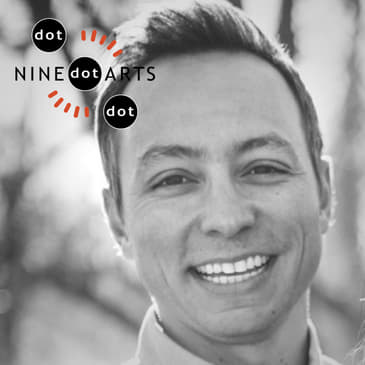
Dominic Weilminster, Founder of Points West Design Works, explores the responsibilities of a great architect, from engaging communities to embracing constraints to designing with optimism, not ego.
For show notes and more: https://ninedotarts.com/podcast-design-as-a-form-optimism
See Privacy Policy at https://art19.com/privacy and California Privacy Notice at https://art19.com/privacy#do-not-sell-my-info.
[00:00:00] This podcast is powered by the plug. Welcome to Dot Dot Dot, the continuing conversation around art, placemaking and how to create meaningful experiences in the built environment, all while making a positive social and financial impact.
[00:00:23] This podcast is hosted by experts at Nine Dot Arts, a national art consulting and creative placemaking firm that helps clients differentiate their projects through the power of art and culture. Hello everyone, I'm Molly Casey, chief curator and co-founder of Nine Dot Arts, and today I'm joined by our partner and friend Dominic Weilminster, also known as Wild Monster, founder of Points West Design Works.
[00:00:51] Dominic, it's about time we had you on the show. Yeah, I'm excited to be here. Thank you, thank you, thank you. It's so great to have you. Oh, let's just jump right in. You've worked across massive global firms and now run a nimble local practice. Can you give some background on your career trajectory, excuse me, and how opening your own practice has shifted the way you approach design?
[00:01:19] Yeah, sure. Opening my own practice has been an adventure, but I started out actually in a past life. I was a newspaper journalist and then I changed careers and decided to pursue architecture.
[00:01:34] I was fortunate to work for a great local firm called R&L after I finished graduate school and I stayed there for the first essentially 15 years of my career. When I started in architecture, it was around 2008 and that was during the Great Recession. It was a pretty stressful time to be working.
[00:01:59] I have to say I attribute some of my career trajectory to a combination of not knowing any better and just being interested in the design process and engaging myself on projects that I got the opportunity to work on. My career in leadership at R&L, I can attribute that to YouTube cat videos because during the recession, we needed something to boost the culture.
[00:02:29] For me as a student intern at the time, I was like, this place is so stressful. I need to do something to sort of take the edge off of this work environment. So I started something called Fun Day Afternoons. Oh my gosh. And we did design presentations in the office as well as funny videos and stuff like that.
[00:02:51] So that started the ball rolling in terms of my role at R&L as a leader culturally and a leading design voice there. Thankfully, I was able to progress and become a principal there and one of the kind of design director voices in the office. In 2017, we joined Stantec. So R&L merged with Stantec. Stantec's a large global practice.
[00:03:20] And I eventually became the practice lead for the office and then the regional design director for the U.S. West. That was a very different dynamic. Stantec is a global practice with a lot of offices all around the world. There's pros and cons with any scale of business.
[00:03:39] But in 2022, after really debating it for probably five years and my wife probably tired of thinking it through with me, I branched out and started Points West. And so to... Congratulations. Thanks. Just like huge congratulations. That's a big jump. Yeah. And it deserves the attention that it, you know, you need to acknowledge how cool that is.
[00:04:09] It's a big deal. Yeah. Yeah. I mean, I think there's, I have an appreciation, obviously, having worked at different scales, that there's a role for different scale firms to play across the world of the built environment. For me personally, my journey to starting my own practice really came down to me recognizing that when I got into architecture,
[00:04:35] one of the things that drove me here is to be a good creative design voice within my own community. And although I've had great experiences doing master planning internationally and architecture across the country, I really wanted to just get back to working in my own backyard.
[00:04:59] And more kind of broadly within our industry, and certainly here in Colorado, there's been an influx of national firms that have merged with local firms. And I was part of that, obviously, when we joined Stantec. I felt strongly that there's a quality that comes with practicing locally, that kind of a client care and knowledge of your community,
[00:05:27] that you can really practice authentically better as a small practitioner or as a local practitioner, I should say. And so I wanted to get back to that and be able to have my attention be focused on the local communities here in Colorado, in the Mountain West, where I've always been. I'm kind of a homer. I'm a native of Colorado. For better or worse, I've never made it out of the States.
[00:05:57] It's hard to, you leave, and it's really hard to not come back. I've done that a couple of times. Yeah. You can't beat it. That is, okay, before we jump into more about where you're at right now, because that's such an interesting story to see you go from, you know, journalism of all things, to now owning and running your own practice locally. I'm curious what it was that took you from journalism to architecture.
[00:06:26] I mean, they're both creative fields. Like, you know, you're writing, you're designing, you're, you know, there's definitely, I can see some overlap. I know that you are incredibly creative and thoughtful with your practice, but how, how did you make that jump? Like, what was it? Yeah. Well, journalism, I mean, I surprised myself by getting a degree in journalism, I think. Oh, okay. I'm doing what now?
[00:06:53] So, you know, if you think back, and probably a lot of people can relate to this, when you're in undergrad, you kind of have an idea of maybe what you want to do. But not everybody, you know, can project exactly what you want to do. So, I knew that writing came easy for me, and I enjoyed it. And so, I pursued that in undergrad, and I had a great time.
[00:07:19] I wrote, I was, I found myself being a feature writer. So, in newspaper journalism, feature writing is a little bit longer form. It's more kind of the human interest side of things. And you can write with more of a narrative voice. So, I like that as a little bit more creative.
[00:07:39] And so, I got an internship at the Rocky Mountain News because I won a feature writing award in college. And when the Rocky Mountain News existed, I did one of my prizes for the award was to be an intern there. And that was a great experience. It got me the opportunity to then get a real job.
[00:08:05] So, I moved to Durango and wrote for the Durango Herald. And I was an education reporter and city reporter down there. You know, journalism is, it's a difficult job. It's a really important job. I almost think everybody should take some journalism courses, or I should say media literacy courses. Because to have that background, to be able to interpret where your information is coming from is really important in today's landscape.
[00:08:34] But for me, while I enjoyed writing and the creative aspects of that, I found myself being, not wanting to always report on cool things that are happening. But I wanted to become someone who's helping contribute cool things. So, that started me down the path of thinking about, okay, what opportunities are there for me to use creativity? But maybe apply it in a way where I'm creating things.
[00:09:03] And honestly, architecture wasn't necessarily immediately on my radar. But I used to kind of, I was sort of like a fan of architecture and sort of had my own idiosyncrasies with being a little bit anal retentive design-wise. So, I was like, well, maybe I'll give this a try.
[00:09:23] And I remember I had to do a week of basically like basic drafting for people with unrelated degrees once I decided to go to graduate school. And I remember I was so nervous. I couldn't like draw a straight line with a ruler or with like a straight edge. I was like, and I remember biking home after the first day. And I was like, I have made a huge mistake.
[00:09:53] But as it turned out, by the time, by my second semester, I started to realize that the process that I learned, the thought process that I learned in journalism, where you take lots of different kind of disparate information and you have to boil it down into something that both is succinct, makes sense, and is hopefully has some like beauty and readability to it. That thought process suddenly clicked.
[00:10:18] And I was like, oh, man, this is the same process I go through when I need to think about designing a space. And so then all of a sudden, it started to make sense for me. Yeah, yeah, I stopped having that thought that I had made a huge mistake. Thank goodness. And really, thank goodness you did keep sticking with it because I always enjoy working either alongside you on a project or hearing about what you're working on
[00:10:43] because the way that you approach projects is, it's just interesting to hear your thought process every time and what excites you about a project. And you just bring up things that I would never have thought of or thought anyone else would have mentioned. So it's very cool that you ended up where you did. Thank you. Thanks for doing that for the world.
[00:11:05] I think a lot of how I maybe approach work, I can maybe attribute to that journalism background because, you know, if I had just gone straight into the design field of architecture, I maybe wouldn't have gotten the education in human experience that I got in journalism because there's a lot of people, soft skills, and observation space that you get.
[00:11:34] And it's really like, you know, we're, in my mind, as an architect, I'm designing places for people. And so taking the time to be able to understand how places work, that's like really huge skill to have to apply it. Well, and to listen too, right? Like I think as a journalist, you're listening to so many things. And like you said, distilling it down.
[00:12:01] And I've seen you in action do it and be able to take, you know, a room of people that all have differing opinions and get everyone by the end to agree on a direction. Yeah. You know, and it's incredible because that does, that is a skill that I do. That's interesting. I do think that that's probably where that came from. I have not always seen, not everybody works that way. Yeah. Yeah. That's cool. Well, thanks for going down that road with me.
[00:12:28] I was just curious about that switch because it is, it's, you know, it's, it's dramatic change. Just all of a sudden say, I'm going to go be an architect now. So we've, I've, I've, we've had some folks from the Nine Dot Arts studio who said, now I want to go be an architect now that I've been exposed to so much of it. And so I think it's just always nice to hear how did you decide to go do that? And what have you benefited from?
[00:12:53] Um, so question to back to sort of like working for, you know, this international firm at Stantec to now your own, um, personal firm points West. What do you do differently that you couldn't do before? Like what feels more accessible or less accessible? Like what are some of the differences between those two?
[00:13:17] Uh, you know, it's interesting because, um, on one hand, I'm very grateful of the path that I took because I have a, uh, uh, I have, I can look back on my past experience working for R&L and Stantec and, and draw from a really excellent practices.
[00:13:37] And so something that I, that I actually think is cool to be able to do as a small practice is to bring that sort of sophistication of process and knowledge to, um, clients that maybe aren't even aware of that being how to work with an architect. Um, you know, a smaller client, they maybe can't afford to hire a big fancy firm.
[00:14:06] And so the level of service they get, um, can be, can vary quite a bit at, at the scale of being a small practice. Um, so that's, that's something that I am thankful both from a practitioner standpoint, but also maybe from how I can help clients out perspective.
[00:14:27] Um, but as a small practice, the other thing that I think a lot about is you just, you, you have the ability to focus on the work. Um, I was just meeting with someone this morning and I was talking to them about how as a smaller business, you get to make the decision about, you know, how much do I really want to put on my plate?
[00:14:55] You can, you can evaluate the work that is on your plate, be able to discern between this is a really important opportunity and I need to be able to give this a lot of my mental energy or I need to, you know, hustle and make sure I'm, I'm getting, getting new opportunities.
[00:15:15] Um, but like I, I have a project that is, um, under construction right now where the client was a big client for me. Um, and I got to give them great attention and be thoughtful about lots of aspects of their project. Um, where when I, when I worked at a larger practice, the volume of work is much larger.
[00:15:44] So you have to be a little bit more like an inch deep and a mile wide versus being able to dive deep on, on things. So I, I think that's a, something that's pretty cool. The other thing, um, I think is, is great is because you don't have some of the external pressures or you can kind of write the rules when you have your own practice.
[00:16:07] Because the, um, the, the, the way you shape the design process on a project can be tailored and, and sort of, um, you can really sort of squeeze the lemon of design on certain things to make sure you're, um, being like true to the opportunity that's there. So, um, you know, the example I would give is like, I'm, I'm super excited.
[00:16:34] I'm, I'm about to start a new project where, um, you know, as it's a, it's a community mental health center. As part of that project, we want the design to reflect the community. We want the design to be a source of wellness for the people that use the building.
[00:16:53] And so, uh, during the concept design phase, I created a, these 10 principles of restorative design by drawing on, uh, trauma informed design, arts and culture, and, um, biophilic principles that we can bring together to like make sure that we're thinking about the right things to make the design as like, um, beneficial as possible to people. So being able to incorporate stuff like that is cool.
[00:17:19] I love that because you really like, yeah, you have the time to really dig into that and you can collaborate with the client maybe a little bit more than you were able to before and really start to unpack some of those things. Yeah. There's just a little bit less red tape around, around some of that stuff or less external pressures. I will say this kind of funny story.
[00:17:45] I, I, um, I occasionally like, um, I, I gave a, uh, a lecture at CU Boulder. They have like a professional practice class. And so I was asked to go in there and talk about what working at a big firm is like and what working for yourself as a small firm is like. And, um, so I was telling my story and I was saying how, you know, I, at my previous job, I was a principal, I was a regional design director.
[00:18:14] I had a fancy title and now I have my own practice. And some days I wake up and wonder, does anybody know if I exist? And that, but I said that kind of like, I said that in a kind of a joking way. Um, but like, you know, when you're small, there's, there's like times where you're like, Hey, like, you know, you're less of a big fish.
[00:18:36] And after I got done with the, the, the, the like lecture, one of the students walked up to me and he goes, Hey, I really appreciated, uh, what you went over today. And I just want to say, I'm, I'm sorry about your loss. And I was like, and he was like, well, you said like, you used to be like really important and now you're not important anywhere. And I was like, Oh man, no, I, it's just a different, it's just a different word of practice.
[00:19:03] Oh, that's what a sweet student though. How kind to be so thoughtful, like really thinking about you and your, your existential crisis. Can I call you sometimes? Yeah. Oh my gosh. That is really funny. But no, I think it's true. I mean, when you are, you know, when you are smaller, you're, you are kind of saying, hello, I'm over here. Don't forget. Like I have got this practice.
[00:19:29] And I think it's really cool too, because it does allow for when you do dig in with those clients, um, the, you know, when you're, you're finding, especially the local ones, when you are working more regionally, you develop amazing relationships. Yeah. Yeah. Yeah. It's like you have fewer, fewer projects, fewer clients, but you, you have this much more connected relationship. So, which is very cool. Yeah. Yeah. Yeah. It's special.
[00:19:58] It creates a nice long-term relationship where, you know, you're making meaningful changes. Like you can see the meaningful changes happening in front of you. Yeah. Which brings me to my next question. Um, so your company values include design as optimism, which I feel like we're kind of dancing around at the moment. Um, and emphasize, you also emphasize that the work should always be fun. And this is what makes me think a little bit of the mental health project, right?
[00:20:26] Like mental health isn't necessarily thought of as fun or optimistic, but it is, I mean, like it can be, and just the thoughtfulness that you brought with trauma-informed design and art and culture and thinking of these other things, biophilia, things that we know are beneficial. I feel like that's a great example of you bringing those values to life. Um, but I was curious how you got to that ethos.
[00:20:53] I mean, some architects are just very serious, very academic, very, you know, like very much, this is a serious thing that we need to, you know, um, pay respects to, which I don't disagree with. But I, I, of course, if you know me, you know, I'd prefer fun and optimism over serious any day.
[00:21:15] Um, so I'm just curious how you, how you came to that and, you know, how do you keep that running true and through on projects that might be a little bit more difficult? Yeah, I, well, I mean, so the, the way it's written on my website is it designs a form of optimism. And I got that from a former leader that I used to work with.
[00:21:42] And like, um, you know, that design as a form of optimism to me is, is speaks to the way that you approach any of this work. And it's that everything that we do, it's kind of like the, I think the doc, doctors have like the Hippocratic oath where they do no harm or whatever.
[00:22:04] You know, the way that we ought to think about our work is that, is that we should, um, if, if anything, um, as architects, our clients should pay us to some degree to be optimists on the project. Because there's so many constraints that, that often drive great things on projects. And there's practical constraints like your budget and schedule, all that stuff.
[00:22:27] But, um, to get to, um, design that, that really, um, supports, um, people's wellness or supports a community's wellness, then, um, we have to believe that what we're doing can have a positive impact.
[00:22:51] And so that's where, you know, there's, there's, there's tons of projects out there that are pretty, pretty, um, pragmatic. And, um, there's certainly times where you're not gonna, you know, have every project be this fairytale thing. But, um, there's usually almost every project has some, um, human interaction component to it. Right.
[00:23:18] Where, like, that's your, that's your little nugget that you can dig into to make that project better. Uh-huh. Is the Eastside Human Services Facility for Denver Human Services. And that building, when we started working on it, um, the, the conversation was around how do we create a secure facility? And it deals, it's another mental health type facility. Right.
[00:23:47] It has, um, the security is an important priority and private privacy. And so there are these very serious conversations about how we deal with that. But there's also like a component of that project where we, um, you know, I started to talk about, can we give people a dignified experience?
[00:24:09] And, um, um, there's research out there that shows that if people are in spaces where they feel, um, sort of respected and dignified, that incidents of vandalism or perceived safety goes, it, it, incidents of vandalism goes down. Right. Perceived safety goes up. Right.
[00:24:33] And so, um, people's, um, sense of their community investing in them goes up.
[00:24:59] And so, um, uh, I think that those services facilities were being, um, feeling marginalized, but, and also creating kind of, um, security issues. And, uh, I remember when that building opened up, I was like walking through doing a warranty check with the contractor. And I was wearing like a vest and a hard hat. Um, but I didn't look like a contractor cause I was wearing like low furniture clothes, you know?
[00:25:24] And, uh, and a guy came up to me in the parking lot and he was like, Hey, did you, did you do any, like, did you design this building? And I was like, yeah, um, I, I was on the architecture team. And, uh, and he said, you know, I take the bus across town now to come see my social worker here because I feel good coming to get help here versus, you know, the, one of the other facilities. And so that, that was like one of the coolest experiences.
[00:25:51] And that really for me was like, well, this is a perfect example of, um, design being able to be optimistic in a serious situation. So, um. That's really powerful. I mean, just, and to have, to have that unsolicited feedback of, you know, validating those choices and really taking those design, um, options into consideration and moving them forward.
[00:26:19] I mean, it probably would have been really easy for you to just not do that. Yeah. Yeah. And if, if we're, you know, if we like allow ourselves to be a little bit optimistic and hopeful, we, chances are we have a little more fun in the process too. That's true. Because we're like focusing on some positive things with design. So that's the, that's the, we should have fun part of it too.
[00:26:43] Is this is a getting, getting, getting projects done is stressful, uh, stressful for clients, stressful for contractors. It can be stressful for the architecture team too. Yep. And, um, so everybody has to work really hard and people have to take risks and stuff like that. But at the same time, uh, we, if we set our sights on something that's, that's optimistic or hopeful, it takes a little bit of the edge off. Hopefully.
[00:27:13] So. Yes. Yes. I, I, I, I luckily get to play in that sandbox a lot because art is usually the fun part. Totally. Um, but it's also, I think, you know, design is also incredibly fun, especially in those like initial stages of figuring out, you know, what does this space want to be? And how do we make it come to life? And yeah, what are some of the values that we want to bring and infuse into the design, um, to create amazing spaces that people literally want to be in?
[00:27:43] Like he goes on the bus across town just to go to that site because it makes me feel good. That says a lot about the power of architecture and design. Love that. Thank you for that example. That's, that's incredible. Um, well, speaking of constraints, you mentioned that there are always project constraints. We know some of the hard tack ones like budget timelines.
[00:28:10] Um, but I wanted to find out how you approach those constraints and how you sort of like can work with them to turn them into an opportunity as opposed to something that could be a barrier. Yeah. Um, yeah. What are, what are some of those constraints that you're dealing with right now specifically and how do you approach them? Sure. Well, I mean, um, almost every project has constraints.
[00:28:35] Um, it kind of, I've worked on projects that have had like almost a unlimited budget. I'd have had a couple instances in my career. Wow. Really? In my career. And it's actually like that in itself is kind of a constraint because you kind of can do whatever. So, uh, I almost prefer having constraints. Um, yeah.
[00:29:00] The constraints that most commonly come up and particularly now, um, are, are budgetary, um, a little bit less time constraints now because at least locally, um, because the economy is, uh, at least the building industry is, um, you know, not, uh, going at the pace it was over the last 10 years. Um, yeah.
[00:29:25] Um, the time constraints generally are maybe a little bit less intensive, but budget is really important. And I guess the way that, um, the way that I think about this and this is true for, this isn't like some special recipe for, this is probably true for a lot of architects, but I, this is something that, um, I really just embrace is I know almost every project is going to have constraints.
[00:29:55] I like to figure out what those key constraints are as early as possible. And then just be honest about what it, making sure that the design is achievable and reflective of those constraints.
[00:30:13] And, and then, um, also where there's opportunities, if you have a highly constrained project where there's opportunities to apply design, it's like, you need to find where those are and make sure you're prioritizing those key spaces.
[00:30:33] So like in my mind, trying to force design or fussiness across a whole project when it's, when it can't be afforded is like going to break everybody's hearts. You know, the architect's going to bust their butt and have to value engineer everything. The client's going to be stressed out because they are going to be, have their heart set on something that's not achievable. So it's not that you aim low necessarily.
[00:31:00] It's that you're just try to identify what the realistic strategy is from day one. And the way I always think about it is that if the design is simpler, that means you can make all the details really shine because you're not kind of plastering everything and not everything needs to be on volume level 11 either. So no, in fact, that's usually not, that's usually overwhelming. Yeah.
[00:31:30] And there's, there's times I think where some of the, some of my favorite architecture is, is quiet. Um, it's, you know, whether that means that it's, um, good, it contributes to the context of a neighborhood, but it doesn't shout for attention or it's architecture that it allow the experience of the space.
[00:31:54] It allows for calm, you know, it doesn't need to, it's not begging you for attention, you know? So I think, um, those are strategies where you can have a constrained project and still come out with a beautiful project. Um, so that's like, I, I, I don't shy away from constraints.
[00:32:17] I kind of, I kind of like figuring them out and, um, I've, I can point to past project examples where, um, it, it became just such a, such an important part of the project to have those constraints, um, that it made the projects better. Like, I don't want to drone on too long here, but the. No, no, tell us. I think this is the stuff that's really interesting. Like one of my favorite examples is, um, uh, another past project.
[00:32:46] I, I, I had the great privilege of doing a renovation at the college of architecture and planning at CU where I went to school. So my professors, my professors were my clients. Uh, I remember in the kind of scary. Yeah. A little stressful. I, in the very first meeting, one of the people came over to me and said, Dominic, there's no way you're ever going to get any of us to agree to everything. Was that your challenge? Did you take it, take that challenge?
[00:33:14] We, you know, on top of that, we had a really tight budget, but the big idea of the design is that the students are there to learn the basics of design and the basic fundamentals of design. Deal with how you work with materials in an honest way, how you, um, work with details in a legible way. That's well, that shows the craft behind the detail and how you order spaces in a way where it contributes to the spatial experience.
[00:33:43] And so taking those as like the key principles of the design education that's taught there, it helped to, um, inform how we dealt with this difficult budget constraints and with the difficult client constraints of everybody not wanting to agree. So first I got the clients to agree that, yes, these are the, these are the principles that we're trying to teach the students. And then the second thing was in those principles is honest use of materials and, and clean detailing.
[00:34:12] And so the materials we used were very basic. It's, it's like blackened steel, which was probably the fanciest material we used. It's drywall and it's, um, and it was, um, basically the same grade of plywood that they used for concrete forms. So it's like the lowest grade of plywood. Oh yeah, sure.
[00:34:32] And it, um, it, the plywood has all kinds of imperfections, you know, but it's just put together in a, in a way where the students can understand how it's built. It's beautiful, but it has like a wabi-sabi character to it. It can wear with time and, you know, we got it to meet the budget.
[00:34:55] You know, so it was, so you can't, nobody can, the professors cannot disagree with that design because it's literally what they're teaching every day. Exactly. Yeah. They're like, well, he can't, we can't, yeah. You can't argue with that. That is so smart. And I love that use of simplified materials. Our first office was over in, um, the taxi building. And I love that simplicity of design there too, with these materials that otherwise you would, you would pass by and be like, ugh.
[00:35:25] You know, those are materials I don't want to be around. But then when you use them in the right way, they're really beautiful. And you don't see the utilitarian purposes of them, but also that they can serve a bigger purpose. So I, that's a really cool example. Yeah. And it's like the student work is what should, we, part of the space is like gallery space. And it's like, as you know, curating art, it's like the space needs to take a backseat to some of this stuff. So, so it was like. Yes. Awesome.
[00:35:53] Let the, let the art, let the architecture do the work and the space be the blank backdrop. Yeah. Yeah. Oh, that is so cool. Um, I just actually got to hire one of my professors for, for a project. And I was like, I can't believe this is happening. It was amazing. And it was so much fun. It is fun.
[00:36:16] Um, so speaking of your, the simplicity of this design, I'd love to dig in a little bit more to what your aesthetics are. I mean, obviously you're, you're responding to clients and they're sort of like demands, needs, you know, thinking about budgets and constraints. But I know that a lot of your work emphasizes sort of simplicity and restraint. And you were mentioning some of these, you know, projects where it's really, it's okay to be quiet.
[00:36:45] It doesn't need to be loud and in your face. Yeah. So what does simple elegance look like in maybe a more complex project? And I don't know if you have an example, but is there, are there times when you have to sort of say, oh, we're going to pull back on this. This is getting overly complicated or this is getting overly designed. I mean, how do you balance that? Yeah.
[00:37:09] I mean, um, the design process should include a, an, an editing process. It shouldn't be always additive. And so, um, you know, sometimes, uh, and this is maybe just me speaking personally, I, I can feel like, man, I'm not being, um, fancy enough with my creative thinking.
[00:37:33] Um, but, uh, oftentimes I, I tend to, um, gravitate toward design where it's very, very clean, most important for me is thinking about, um, human scale, um, space. And so, um, if there's a reason to break up, uh, a building design, and if there's a reason
[00:38:02] that I don't want to come across as like a strict human, uh, emotionless modernist, like, um, there's like a really important human dimension to design, whether it's, um, you know, we see it most often, um, when we talk about like the streetscape and, you know, the pedestrian realm, but, uh, we should be thinking about it, uh, you know, as, as frequently as possible through designing spaces for people.
[00:38:32] The simple elegance, I guess, um, is sometimes something that, um, as a designer, it can sometimes be a hard thing to get towards because you can feel pressured or feel like you have a lot of ideas to bring to something. And, um, so a lot of times, uh, the way I think about it personally, the way I've coached
[00:39:00] other, um, designers in the past is to, you know, sort of take time at moments as you're developing design and really be able to be able to understand what you can pull away and what, what is important, fundamentally important to keep. Um, and that usually like can help gauge for you whether what you're doing is an elegantly
[00:39:29] simple design or, um, you know, an overly complex design. I think there was, uh, uh, Norman Foster, who's a famous British architect. He, he, um, he had a client that asked him how much is building weighed at one point. There's a documentary, I think that's even called that. And, um, and it was like this crazy question, but he, he, it, it became this foundational thing
[00:39:56] for him where he was like, you know what, am I designing the, the, the most elegant solution with the least amount of material or whatever? Um, that's, that's quite a larger challenge than just trying to do, you know, uh, very fancy, very complex, uh, building. And so, um, you know, this is an interesting thing when you're working, particularly with,
[00:40:24] like working with a client is, um, as a designer, you have a opportunity to, to blow their budget and, and, you know, show them something and just hope maybe I can convince them that this is so cool. They're going to find another million dollars or whatever. Or, or you can sort of take it as a, your own responsibility of like, I need to be a
[00:40:50] steward for their budget and, um, put something forward that fits, you know, what, what they're trying to, to do. And, you know, this project behind me is actually an example. It's a, it's under construction right now, but it was one where, um, you know, we actually started the project out with a little bit more complicated design and the client did like it. Um, but then, you know, when it came time to reconcile that with their budget, um, they
[00:41:20] kind of had a change of heart and in terms of what their long-term plan was. And, um, you know, you can sort of feel sorry for yourself at that moment as a designer, or you can, or, or you can, um, or you can just embrace it and, and lean into it. And, you know, ultimately what we were, what we're doing with this project is, uh, it's an addition onto this company's, uh, onto an existing building.
[00:41:48] Oh, so you're thinking about how it integrates as well. And, and it's ultimately, it's, it's not the front door. It doesn't need to be shouting for attention, but it can be, um, a beautiful addition to the block and a nice, quiet, sophisticated addition to their, their building. And that fit within the budget. And it'll be, it'll be a, a pretty little building when it's done.
[00:42:13] And so I think like, um, you know, I said it already, you didn't, not everything's got to be volume level 11. So, um, I really appreciate that. I get a little cranky driving around Denver sometimes. Yeah. I follow your Instagram, Molly. I know. Um, the other thing I think about is like, if, um, like Japanese architects are very good at this.
[00:42:40] Oh, there's, there's, um, like a, there's a quiet confidence that comes from designing simplicity. Um, and it takes more, uh, discipline to do that well than to sort of keep throwing ideas at things. So I, I just think, you know, it, it, it benefits people in multiple ways. Yeah.
[00:43:05] Well, I think you also, as somebody who's using this space, you learn to appreciate that simplicity for a much longer amount of time than if something sort of is like. At volume 11 where it hits you. And then, uh, you know, by the third or fourth time, you're like, yeah, I get it. Okay. There's like less, um, sort of, I don't know, appreciation overall for the simplicity, but also there's less to sort of uncover.
[00:43:35] Yeah. I will say, I'm glad that there, there are people that are really good at being more maximal and, and, um, and like, I love that stuff. Um, it's not necessarily where I, where my brain goes naturally, but, um, we need all that variety, you know? Yeah, we do. Like it would totally, if everybody did what I said, what I just said, it would totally suck. You know? It would be boring. Yeah. It would be so boring.
[00:44:04] But, but at the same time, if everybody made everything, you know, shout from the treetops, uh, it would, it'd be like. We need to have eye masks on half the time. Yeah. Yeah. We need to have like not being able to look around. Something that can provide inspiration for new design and other opportunities.
[00:44:30] So it's, um, variety is, is critical in the design world for sure. Plus it's more fun because there's more variety, the more we can critique. Yeah. Yeah. And I also think like you can, you don't have to do one or, you know, always do one or the other. There's, there's going to be stuff on a project that maybe the project needs to be very simple and there's a little jewel box area where you can make it this surprise moment of delight. You know? Yeah. That's, that's awesome.
[00:44:58] You know, that makes it really impactful if you do that. Yeah. It's not a hundred percent in either direction. Yeah. It's a really non-committal, uh, part, portion of the interview. Oh, um, all right. Let me see. I, now I'm off topic cause that was fun. Um, so, okay. I want to get back to our collaborations, bring it back home.
[00:45:24] Um, so we've been able to collaborate on a lot of, uh, art master plans with you and we love bringing you into those projects. Um, Pearl square, wild light, um, both of those happen to be in Jacksonville, um, as well as the Denver international airport art master plan, which was, um, a really, really amazing project that I'm very proud of. And I wanted to know how you would describe your role on this.
[00:45:52] Cause we're usually coming in under an architect, but here you're coming in under an art. Yeah. Well, I mean, these projects are like some of my favorite things to work on there. It's a change of pace and, you know, it speaks to that design as optimism thing to be able to work with public art. And I, I find it, um, just so enjoyable to see the, the range of public art that we get
[00:46:22] a view with clients on the, on the projects as we kind of vision, uh, what, what the flavor of the art is. Um, so my role is, um, really, uh, if it's a community or say a development, um, you know, or an, or an airport, um, it there's, there's kind of a whole network of how people use those
[00:46:46] spaces and, uh, a hierarchy of how those spaces are designed. And so the way that I view my role is to start by first mapping the existing conditions of those spaces. So it's kind of a, a forensic exercise almost of, um, going through and understanding how
[00:47:11] a community works or how a plan development is, is planned to work and then be able to identify where it makes sense for art to play a role in either contributing to an existing space or, uh, the cool thing with art is that it can play a role in, in being like a breadcrumb trail to get people to activate other spaces.
[00:47:35] And so, um, the, the first part of my involvement is, is always that kind of understanding the systems, uh, that are, um, moving these communities around. And then, um, the, the next layer is when we start getting into art locations is collaborating
[00:47:59] with the nine dot team to think about, okay, what, where can art go? Uh, what types of art makes sense in different locations? Um, is this a primary priority piece of art or is this a, a secondary or a be nice if you could do it over here? Uh, level of art. So that's, that's what I, I, the way I try to help out and I just cheer a lot, cheer you guys. Cheerleader.
[00:48:29] Thank you, Dominic. No, it's just great. Cause I think you have such a, um, you such valuable background in these large scale master plans and how people thinking about how people currently are using a space or how we want to intend them to use a space. Cause ultimately it's always, you know, a guessing game of how people will actually use a space. Yeah. Right. You might intend it for one thing and people might adopt it for something else. And you're like, Oh, that's cool. Okay. I didn't think about that. Yeah. Yeah.
[00:48:58] I mean, the, the, um, the wild light, uh, master plan example, that's in a bit, a large plan development down in, um, outside of Jacksonville. And they have like this amazing trail network planned and they've built out portions of it.
[00:49:22] Um, the overall developments like you're going to develop over the course of decades. Um, but, um, there's, you know, in, in some ways, like, um, there's communities where they're going to be introducing us amazing amenities that doesn't even exist right now. Right. And, um, they're, they're rolling the dice on hoping that the community takes advantage of that trail network.
[00:49:48] Um, so we talked to them about, um, the opportunity for art to show up along that trail network to be a way to draw people out there. We talked about art, uh, on that trail network being a way to connect with the local art community. So maybe there's a component of, um, local art integration that, that happens out there. So it's like thinking, um, creatively on multiple levels about how people use the space, how
[00:50:17] it reinforces the art community in the area. Those are, it's, it's ends up being like kind of a multifaceted benefit. Um, that's what I really like about those community art plans. So me too. It's fun and optimistic, but serious at the same time. Cause we really have to think about how it all works together. Yeah. Budget. Yeah, totally.
[00:50:40] Um, so question for you, what should architects understand about working with art consultants that maybe they don't always consider any little, uh, wisdom? They're super fun people. They're super fun people. Um, yeah, well, uh, I think a few things is when you're, when you're, uh, working on a
[00:51:08] project, um, sort of putting in the plug for integration of art early is, uh, is really important. It's almost important for the architect just to vote, just to voice it, not just to put it on the client's radar, but, but to put it in your own head as you're thinking about the design.
[00:51:29] Um, so, um, uh, uh, that's one thing. Um, along those lines, um, along those lines, there's opportunities to think about if you are truly integrating art, um, art is sometimes an opportunity to trade out or enhance the architecture.
[00:51:58] Um, you know, uh, speaking of like budget constraints or, or whatever you could, you could, I don't know, instead of paying for, uh, a standard fancy ceiling in a lobby, maybe it's got an art piece worked into it and you shift the budget around so that you have something that's more original than, um, originally anticipated in the space.
[00:52:25] Um, so I think that's, um, those are kind of pragmatic considerations. Um, and, uh, the knowledge of working with like a art consultant, like Nine Dot, um, just to be able to, because there's so much art out there and there's so much, and art can encompass
[00:52:48] so, so many types of things, um, that early engagement with, um, with your team is something where, um, you might get an idea that for art integration that you didn't have before. Um, and, uh, and then the last thing I'll say is, is, um, there are projects where, um,
[00:53:16] um, representing the neighborhood or the community is fundamentally important to that project, um, being accepted in its, in its place. And, um, art is a, is a way to do that. It's a, it's a way to directly involve the community, but it's also a way to, um, reflect culture or, um, or inspire culture in an area. Yeah.
[00:53:42] So I, I think it's, um, it's, it's something that should be, should be thought about in the same way that, um, on a project we need to be thinking about, um, you know, we, we may have a private parcel of land, but a portion of that land either interfaces with the public realm or we have the opportunity to create an enhanced public realm by giving back just
[00:54:09] tiny bits of our, our project, you know, and art integration in a project is another way to do that, where it's like, we're going to add delight to our community by putting in little surprise moments. So I, I think, um, there's so many good reasons. Um, so. That's awesome. Thank you. Those are, I mean, so those are key points we always think about, but it's nice to hear it, that it's true on the other side too. Yeah.
[00:54:38] You see the benefits. I mean, not everybody is this cool as me. No, this is true. This is true. Just kidding. Facts right there, man. Um, well, I want to just close this out with a final question that we ask everybody. It's my favorite question. Can you share a recent place experience or artwork that reminded you why art and culture matter? Um, jerk you about it.
[00:55:08] It's a hard question. Um, you know, uh, the, the thing that I, uh, is probably most front of mind for me right now is, um, I'm about to, I think I mentioned it earlier. Like, uh, I, I, I have the privilege of working on this, um, project that'll be, uh, um, uh, community mental health center, uh, maternal mental health center.
[00:55:34] So it's like a, uh, mental health center that, that is, uh, has a peer led support for, for women. And it's in, um, historically underserved neighborhood, um, in Denver. And it's, um, something where it's powered by the strong community culture in that neighborhood. And so this is the project I mentioned earlier where I, I've put together these kind of 10 principles of restorative design.
[00:56:02] And within those principles are ideas about integration of arts and culture. And the, and so I have that in the background, the, I've started to be kind of doing some pre-research and design thinking, sketching on, on that project. And, um, the, the population in the area is largely Hispanic, largely from Northeastern
[00:56:31] Mexico regions. And, um, it made me think about, uh, uh, my wife and I were in Mexico year before last. And there is art integrated in, um, in the most like vernacular simple ways, because in, in
[00:56:57] like small towns in Mexico, it's, it, everything is kind of crafted by the, by the place and the available materials. And, and, and you talk about like not having a high budget. Um, these are things where it's local crafts, people are putting them, putting their culture out there on display directly through their work, you know? And so we were at a, at a, like a, uh, a rat little local cafe and it had a little courtyard
[00:57:26] and it had like the most beautiful, um, pergola kind of thing, uh, around the perimeter. And the pergola, like you could make a pergola in a standard way. This was like, um, taking rebar and making this ornate, elaborate, um, really cool thing. But you could tell it was made by someone who just cared a lot, had some skills, had some,
[00:57:54] had the materials and it created a beautiful art piece within this beautiful landscape courtyard. And that to me was like, well, this is something that like the community probably loves anybody at any income level here can probably, um, feel like they, they feel represented there. Um, and, and people not from there, like us tourists, we were like, this is amazing.
[00:58:23] We, we don't, we don't have this sort of craftsmanship, you know, readily available. We, we have, um, whatever you could go try to find something, someone that, that does this and it would be astronomically expensive. But, but, um, so that, that, um, trying to, uh, encapsulate that experience of what I would
[00:58:49] say was an art piece, um, is, was really inspiring in that moment. And, and it's something that is exciting in maybe, uh, find a way to apply some version of that in, uh, in my work here. Uh, hopefully. Well, it's so cool. Thank you for sharing that. Those moments, those little moments when you find something so unique like that really do stick with you. It's just, you're like, I don't know where the person came from or what they were doing,
[00:59:17] but they did this really awesome thing and now we all get to enjoy it and it's approachable and it's for everybody. Yeah. And it just beautifies the space, but you know, it's also functional. Yeah. I mean, it was like, um, I like the term like delight, you know, it was that to me implies that it was something unexpected. And delight is not like, um, your head explodes kind of excitement.
[00:59:46] It's kind of like this, this like, whoa, this is amazing. And it brings a smile to your face. That's kind of like what I love. Um, and there's, there's public art examples out there that, uh, bring that, give you the warm and fuzzies like that. Yeah. I love it. Oh, well, thank you so much, Dominic, for joining us today on the podcast. It's always a delight to talk to you. Yeah.
[01:00:15] Well, I like talking to you guys and all your teams. So this is fun. No, it's really fun. So, um, appreciate all of your insights and the value you bring to all the projects you work on. And I'm excited to see what the happens with the, um, mental health center you're working on. Can't wait to see that come to life. Yeah. That's great. Um, and if our listeners want to learn more about you and your work, where can they find you? Um, go to pointswestdesign.com.
[01:00:45] Awesome. Okay. We'll include those links and other topics you heard today in our show notes. Um, but with that, we'll say I'll bid you adieu and have a lovely rest of your day. Thanks for tuning in to dot, dot, dot, the nine dot arts podcast. To learn more about our guests and some of the topics that we discussed today, check out our show notes at nine dot arts.com forward slash podcast. Follow us on LinkedIn and subscribe to nine dot arts wherever you get your podcasts.
[01:01:15] And if you're looking to transform your next project with art and culture, please email us at let's talk at nine dot arts.com. Until next time.