
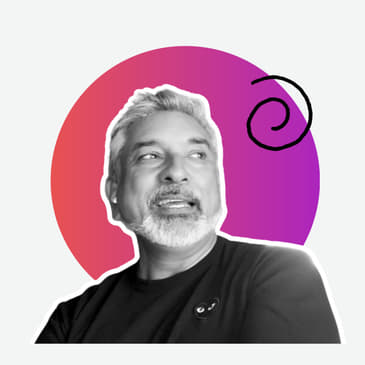
Vishaan Chakrabarti, founder of PAU (Practice for Architecture and Urbanism) joins host and the AIA Colorado Architect of the Year, Adam Wagoner on the show to discuss his journey from Calcutta to becoming a prominent figure in architecture and urbanism. Vishaan reflects on his diverse education, spanning engineering, art history, and architecture, and shares insights from working at SOM and teaching at Columbia. He elaborates on his philosophy of critical regionalism and his firm's mission-driven projects like The Refinery at Domino. With a focus on the relevance of architecture in tackling global issues, he also highlights the challenges and rewards of navigating this complex profession.
Vishaan Chakarabarti's New Book, The Architecture of Urbanity: Designing for Nature, Culture, and Joy
This episode is sponsored by Modern in Denver Magazine and Daniel Jenkins Photography
Listen & Subscribe on Apple Podcasts | Spotify | Amazon Music | Pandora or wherever you get podcasts!
Check out Adam's firm, High Low Buffalo!
This podcast is powered by The Plug Podcast Agency
See Privacy Policy at https://art19.com/privacy and California Privacy Notice at https://art19.com/privacy#do-not-sell-my-info.
[00:00:06] I was struggling to understand why this thing I was attracted to, ARCHITECT-ING,
[00:00:13] was relevant to the world.
[00:00:15] Like was this just kind of superficial attraction like a bad date or was it something
[00:00:21] that had more meaning?
[00:00:23] How does this relate to all of the big issues of our day?
[00:00:26] And so this book in many ways is about bad.
[00:00:29] It's an argument for the relevance of our profession
[00:00:32] to the biggest challenges the world faces.
[00:00:38] Hello.
[00:00:39] Hello.
[00:00:40] Hello.
[00:00:41] And welcome to ARCHITECT-ING.
[00:00:43] Welcome to ARCHITECT-ING.
[00:00:43] Hey, there you go.
[00:00:44] Hey.
[00:00:45] Okay.
[00:00:45] This is Ben O'Wild.
[00:00:50] Welcome to the ARCHITECT-ING podcast with a special host.
[00:00:55] AI-A Colorado Architect of the Year at a Wagner.
[00:01:02] Oh my thank you.
[00:01:03] Thank you.
[00:01:06] I like how you had to look behind your back because you actually at your office.
[00:01:13] And you know, normally we push these off into the very last minute the last night.
[00:01:21] I had to do it late at night but now I pushed it back so far that I have to do it during the day.
[00:01:26] So I'm pulling back out of work to do this intro.
[00:01:30] But yes, thank you.
[00:01:31] We had a very fun last week, right?
[00:01:35] Yes.
[00:01:36] And the AI Colorado Awards and it was very honored to receive the architect of the year from last year's
[00:01:44] young architect of the year Rebecca Wagner who gave me the award.
[00:01:48] I have no idea you were winning.
[00:01:49] They had asked me to just read the criteria and present the award as a past winner.
[00:01:55] I thought nothing of it because you're too young to be architect of the year.
[00:01:59] And so thank you.
[00:02:01] Thank you.
[00:02:01] No idea you were winning until I was on stage and they said you should stick around.
[00:02:08] Then I just forgot lost it.
[00:02:10] Yeah, it was surprising because they they've promised told me that I was going to win
[00:02:16] that award of young architect of the year and then I showed up.
[00:02:20] And they announced the young architect of the year and it wasn't me.
[00:02:23] And it was a weird, a weird moment and then a very nice surprising moment.
[00:02:29] But then when they told me I wasn't young anymore and just told but I'll take it.
[00:02:37] And then I got to hand you the award and that was really really special.
[00:02:40] And I'm so proud of you.
[00:02:42] Yeah, it was fun.
[00:02:44] Thank you.
[00:02:44] That was fun.
[00:02:46] But I'm still I'm still on a hiatus from doing podcasts.
[00:02:51] But we have a new podcast today.
[00:02:54] This one was a little bit special.
[00:02:56] This was with Denver architecture foundation and they reached out and they're doing their doors open.
[00:03:03] Denver events this month.
[00:03:07] And their keynote speaker is Fashan Chaka Bardy from New York.
[00:03:13] And so I had opportunity to interview him before his keynote.
[00:03:17] And so this is a little bit of a special one.
[00:03:21] And we'll have another one with Denver architecture foundation that will be coming out soon.
[00:03:26] And then another one with month of modern that I did a panel discussion with them and that will be turned into an episode.
[00:03:35] So, we sort of have new episodes coming out.
[00:03:41] Yes.
[00:03:43] So, if you're one of those architects who have been emailing me asking to be on the show and I'm saying no, I'm on a hiatus.
[00:03:50] Don't get mad at me when this comes out because I'm still on a hiatus from local architects.
[00:03:57] But that looking forward to probably the new year when I'll start those up again.
[00:04:03] But yeah, do you know, Vishan?
[00:04:05] I know the firm.
[00:04:07] Yeah.
[00:04:08] Yeah.
[00:04:08] Yeah.
[00:04:12] He's a very, very accomplished guy at FAA.
[00:04:17] He studied a number of different subjects.
[00:04:20] It kind of kept circling around architecture.
[00:04:22] But then came to architecture.
[00:04:24] He was a principal at SLM, a principal at shop.
[00:04:27] He was the director of New York Department of City Planning under Bloomberg.
[00:04:32] And did a lot of cool projects with in that role.
[00:04:35] And he was even the dean at UC Berkeley and Burmino design for a little bit.
[00:04:41] But then about a decade ago founded PAU.
[00:04:46] And yeah, just had a great, a great interesting conversation with him.
[00:04:51] He also has a book that's coming out called the Architecture of Urbanity, designing for nature, culture, and joy.
[00:04:59] A pretty, pretty interesting read in itself.
[00:05:03] So.
[00:05:03] Fine.
[00:05:04] Looking forward to it.
[00:05:05] Yeah.
[00:05:06] And he's keynote talk is this Thursday, September 26th at the Denver Architecture Museum.
[00:05:14] So go to the Denver Architecture Foundation.
[00:05:18] Did I say the museum name right?
[00:05:20] Let's see.
[00:05:21] He's at the Denver Art Museum.
[00:05:23] I feel like I've been saying Denver and Architecture and Foundation in the museum all too much.
[00:05:29] Anyway, he's going to be at the dam this Thursday.
[00:05:35] Go to the Denver Architecture Foundation to see more information about his event.
[00:05:40] And for all the things cool things they have going on.
[00:05:43] Yeah, cool stuff tours.
[00:05:45] And we have a slide recording coming up this Saturday at a door, a very cool space designed by Ginsler.
[00:05:52] Wow.
[00:05:54] Check it out.
[00:05:55] All right.
[00:05:56] Enjoy.
[00:05:57] I think that that's funny.
[00:05:58] You know, I have my guests all answer the same question.
[00:06:02] And I think it ties in well here of who are you?
[00:06:05] You know, like a part-t sketch kind of two sentence.
[00:06:08] Who are you?
[00:06:10] Does it tie into that books and teaching in practice?
[00:06:14] For me, it's really simple.
[00:06:16] I architect author urbanist.
[00:06:19] Hmm.
[00:06:20] So how'd you get there?
[00:06:21] Where'd you go up?
[00:06:22] I was born in Tocada.
[00:06:25] And for a couple of years there, then we moved to Tucson, Arizona.
[00:06:29] My parents were immigrants.
[00:06:31] My dad was the obvious location in the right from rights.
[00:06:34] Well, they lived with their family and they were like desperate to get out.
[00:06:39] And so my sister was six.
[00:06:40] I was two.
[00:06:41] And I think my father applied for chemistry teaching jobs all over the country and got one and two.
[00:06:47] So they came here with $32 and they settled into Tucson.
[00:06:51] And then a few years later, we moved to Boston.
[00:06:54] And so I'd mainly grew up in the kind of working class suburbs of Boston.
[00:07:00] Hmm.
[00:07:01] And hated every minute of it.
[00:07:03] But my dad would get speaking gigs because he was scientists.
[00:07:08] He did research and he'd splice and dice on a rareria.
[00:07:12] And we would all on a shoe string budget travel and sea places.
[00:07:16] I mean, we went to the Soviet Union before the wall fell and Poland before the wall fell.
[00:07:22] And I really, I think a lot of like the seeds of becoming an architect are really from that travel.
[00:07:30] So using chemistry, that's right.
[00:07:33] He was a molecular biochemist and bio physicist in his he, yeah, smart dude.
[00:07:39] He was a cataract researcher.
[00:07:42] And my mother by contrast was a master's in Bengali literature and was a classical Indian singer.
[00:07:50] Like it was total left-brain right brain.
[00:07:53] It's an architect, right? You're right there.
[00:07:55] The year the combination right.
[00:07:57] Yeah, in the middle of their fights.
[00:07:59] Oh, I don't know.
[00:08:00] I came the architect.
[00:08:02] That's funny.
[00:08:03] So it was just you and your sister growing up in that environment kind of,
[00:08:07] you know, after around in the violent, for King class Boston.
[00:08:14] What, what area of Boston was that? Where did you say was?
[00:08:17] Monthly.
[00:08:18] Well, it's called Arlington now right next to Cambridge,
[00:08:22] but back dead it was called Ollington with that scientist background scientist and and singer in language.
[00:08:28] Coming out of high school.
[00:08:30] Did you know what you wanted to do?
[00:08:32] Well, I had to be a good Indian boy and so I had I went to engineering school.
[00:08:36] Like we had basically like two choices, doctor and junior.
[00:08:40] You know, like even like lawyer was verboten.
[00:08:43] And so I went to engineering.
[00:08:46] I was a fairly horrific engineering student.
[00:08:50] And every elective class I had I took either an art class or an art history class.
[00:08:57] And by the time I was in my fourth year this was up at Cornell.
[00:09:01] I had taken so many art and art history classes that I realized that if I stayed two more
[00:09:07] semesters, I would get a second bachelor degree in art history.
[00:09:12] And that's what I ended up doing you know my parents at that point had like pretty much given up
[00:09:17] and like they just sending the student loan forms.
[00:09:20] So I graduated with this crazy dual degree in engineering and art history,
[00:09:24] which like everyone like here's that and says oh like that's the perfect combination for architecture.
[00:09:30] And in a lot of ways it was but there was no strategy to it whatsoever.
[00:09:36] Right? Then I worked in New York and the late 80s.
[00:09:38] I went and got a city planning degree and then I very reluctantly finally succumbed
[00:09:43] and got an architecture degree.
[00:09:46] What kind of engineering was that that undergrad was it just this general if you could make it to get through it?
[00:09:51] Yeah, it was I was decent at math and so I ended up doing operations research and industrial engineering.
[00:09:58] Which is like a lot of systems planning, a lot of statistics.
[00:10:05] You know I think more than anything else, college is about learning different kinds of critical thinking
[00:10:13] and I think using the analytical side to the engineering side I think has been helpful.
[00:10:17] And especially doing that, keep by jowl with studio art classes and art history classes like
[00:10:24] I was probably the only person on that enormous campus doing that.
[00:10:28] I think after I looked it up to this day, no one's ever done the combination and the school kind of fought me on it but I didn't care.
[00:10:36] And so you know in retrospect it was a really good education at the time it was a very uphill battle with everyone.
[00:10:43] And then they see then you went and did architecture at Berkeley is that right?
[00:10:48] Yes. So I worked in New York for a few years.
[00:10:50] I did.
[00:10:51] And what as what were you doing?
[00:10:53] I actually went to work at SLM.
[00:10:56] First job was the port authority of New York New Jersey.
[00:10:58] I worked in World Trade 1 in the Old World Trade Towers as a transportation planner.
[00:11:03] I had done some internships.
[00:11:05] The engineering background was actually like a lot of transportation planners have that background.
[00:11:09] So I had done some internships in Boston with the local public transit authority.
[00:11:13] And so I got a job at the port authority of New York and New Jersey.
[00:11:17] And I worked there for about a year, but I was in this crazy long range transportation planning department that like you know contemplating projects that were never going to happen.
[00:11:28] And so I found it very I think the part of me today that is an architect that needs to like think about things that get built and walking through space that's under construction.
[00:11:39] I didn't know about that part of myself at that point, but I think that part of myself was very frustrated by this long range shift when I ended up getting a job at SLM.
[00:11:50] Because SLM had an unfairly acted urban planning department back then.
[00:11:56] And I've always been a good writer and so like I wrote a lot of reports for them and stuff and ended up going and getting an urban planning degree from MIT.
[00:12:04] So I did that for two years, rate experience.
[00:12:09] And then I went to Berkeley, which is kind of a sister school that MIT's from my architecture program and I also very much wanted to get away from the east coast.
[00:12:18] I had spent most of my life on the east coast other than when I was two and two son Arizona.
[00:12:22] I had a fantastic design education to Berkeley.
[00:12:25] Stanley said it was one of my main teachers and we just we were in the waiting days of the large layer of a DEL SOMTO.
[00:12:33] I also come up from UCSD and so I actually got a very, very good design education there.
[00:12:38] I also traveled across country six times and three of those times as well.
[00:12:43] I was a Berkeley student and so you know I think that experience gave me a much broader kind of understanding of the country and the relationship of architectural landscape.
[00:12:56] Then had I just stayed in you know the six or seven schools clustered in the Northeast and so you know it was a great wide ranging non-linear education that led to a great wide ranging non-linear career.
[00:13:13] I mean yeah you had such a combination of degrees and experiences going into grad school and especially we you know already working for SOM what sort of like surprise you most about
[00:13:25] like when you actually got into architecture school you know I was in city planning and I knew I was incredibly designed curious I had MIT I had urban design studios.
[00:13:37] I liked to draw I knew I wanted to do this but I was really reluctant because especially having studied urban planning in the early 1990s you know even then we knew global warming was a big issue
[00:13:52] we knew like the world's politics for changing you know the Berlin Wall had just fallen and I was struggling to understand why this thing I was attracted to architecture.
[00:14:05] Was relevant to the world like was this just kind of superficial attraction like you know a bad date or was it something that had more meaning.
[00:14:14] I showed up at Berkeley like two days before studio began everyone else had been there for like a month and a half like that housing.
[00:14:23] I ended up sleeping in the YMCA and San Francisco not realizing that the YMCA in San Francisco was like an hour to ask and you to Berkeley and each director.
[00:14:32] But you know inside of two weeks of design studio I was completely sucked in right just completely never look back.
[00:14:40] In a lot of ways from that moment to the moment of the publication of this book I've been in this constant argument with myself about if you care about all these broader issues in the world.
[00:14:54] What is the relevance of architecture to those issues you know and how does one stay true to being a designer and all the things that being a designer entails right which is kind of a a monastic enterprise.
[00:15:09] Right of understanding materials and instruction and spatial theory and all the things that are can turn right while the very internal right while also remaining externally focused in terms of.
[00:15:25] How does this relate to all of the big issues of our day and so this book in many ways is about bad it's an argument for the relevance of our profession.
[00:15:35] To the biggest challenges the world faces and so it's been quite a journey you know I'm 38 years old and I'm only now kind of settling into a frame.
[00:15:46] Where I feel like comfortable in the skin of my profession and really knows I'm doing it I'm supposed to be doing relevant to like all of the experiences and interests I have.
[00:15:58] I feel that that frustration right of especially you know people coming out of grad school where you have these these big.
[00:16:05] Projects and big thesis and big ideas and then you you come out and you hit you hit the profession and you you start drafting.
[00:16:11] Toyla details are you know rest from details or something like that and and you know how how you how you can hang on to those those larger things and making.
[00:16:22] And being in a position where you can still think and impact change at that larger scale.
[00:16:29] But it seems like you know thinking about your career you've just kept putting yourself in those positions right so like after you've got at a grad school.
[00:16:38] Did you go back to S. I mean I did I did I did I went back to S. I went back to S. I have my god my license.
[00:16:45] I did all those things you know CDs and like all those things you mentioned I and I was very very focused on getting my license because they're realized that.
[00:16:54] You know one of the things about because it is a monastic profession.
[00:17:15] I mean to mix metaphors you know the other thing I find a lot of is like that like you can't eat from the forbidden fruit of like global knowledge right.
[00:17:27] Yeah, like you're supposed to be pure to the traditions and pay the architecture in order to be an architect and so you know I realize that with such a broad.
[00:17:38] Back around that I had to really focus and for six years.
[00:17:43] Really just focus on architecture licensure you know I left S. I'm after 9.11 as an associate principal like fully fully I felt like a quipped to be an architect.
[00:17:57] I mean S. I'm is an interesting place and I mean it's not always where the best design is practice but it's a great place to learn it's sort of like a big teaching hospital in a city right where it's not always the best medicine.
[00:18:12] But like you get thrown into the emergency room and you're doing triage at 29 years old and you know you're just exposed to so much so quickly.
[00:18:21] And so you know it's a very good education in terms of that and so.
[00:18:28] But I left after 9.11 and I actually took a hiatus from architecture for almost a decade at that point really.
[00:18:36] Yeah because 9.11 which was an extraordinarily architectural event that like one reading of it.
[00:18:50] You know this city I love was in pain and it you know a bunch of us worked in the Bloomberg administration.
[00:18:59] Even though he didn't know us from added we applied for positions they believed in subject matter expertise and.
[00:19:08] Yeah, we did really good important things I mean you know like I was very involved in.
[00:19:15] Reintegrating mystery grid at the World Trade Center site or helping to save the high line or expanding Columbia University you're extending the number seven line or rebuilding the waterfront.
[00:19:25] And you know there's a lot of people who look back on that period and say well those are the things that gentrified New York and there's some treat to that but the thing is is.
[00:19:36] At the time no one was right about gentrification people were right whether the city was going to survive right like no one knew whether they're in multiple attacks would companies still like employ people in New York City.
[00:19:49] Well you know where we are sitting duck like there's just it's very hard to describe people now almost a quarter century later the sense of fragility.
[00:20:03] Right that this extraordinary important place in national and the world history you know had and so being part of that and really kicking in like the urban planning side and kind of other parts of my brain.
[00:20:17] And so and after that I worked on a joint venture on Penn Station and you know taught at Columbia University for almost a decade wrote my first book.
[00:20:29] And I re-enter architecture years later as a partner at shop and I did that in 2010 I think and then started pal in 2015.
[00:20:45] So you know it's a very unusual trajectory I think most people and they start their firms.
[00:20:50] They're either fresh out of grad school or a couple years out of grad school and they have the advantage of not having a lot of personal responsibilities you know like it's just that right.
[00:21:02] But they have the disadvantage of not really knowing what they're doing like it's very you know you have to figure out everything as you go along.
[00:21:08] Whereas when I started my firm it was really scary I had two kids and two more inches and all of that and so I had a big you know set of responsibilities to deal with.
[00:21:19] But I had been around the block enough that I kind of knew how in architecture for a ran and that like.
[00:21:24] You know figuring out how to get clients and figuring out how to execute on jobs and hiring good people.
[00:21:31] Not a bit was easy but it was it was you know there were all things I understood much more.
[00:21:38] You know right yeah and so again just a very book non-linear education non-linear career because I feel like it's you know the thing of New York it's just such a collection of amazing designers and you go out on your own.
[00:21:52] Yeah like you're saying maybe a few years out of grad school or something maybe you're teaching somewhere and you start off and you're doing one or two apartments at a time right and you're slowly scaling up and slowly scaling up.
[00:22:03] But like you're saying you know that experience of the city understanding how the kind of the city planning government works and then jumping into the partner at shop.
[00:22:11] Like I remember that from a recent graduate being like hey like hearing the U became this partner I was like where did this guy come from you know like how how do you become a partner at shop all the sudden.
[00:22:23] It's like what was this rock star guy that just demands his own position here you know it's like what was that sort of like I'm curious.
[00:22:32] You know that happened because again I was teaching Columbia I know the other partners for a long time and I'm very grateful to them they gave me a great opportunity not everyone would have done it.
[00:22:43] I did have a couple of other job offers that were similar from other big firms they were the most designed oriented of those job offers and you know look again.
[00:22:55] I think it's easy to forget that there was all this other background right I was I had been the associate principal at SLM you know worked on skyscrapers and stuff but you know and so I just I took a break and and did something else you know something that I think is much more available to younger generations.
[00:23:13] I think it's a little bit more available than was available to us is this notion that like it's okay to go do something else for a while like hit the pause button.
[00:23:22] And I feel like I'm so much better of an architect as a consequence of that diversity of experience.
[00:23:29] Instead of just kind of sticking down this linear road from school until now you know.
[00:23:40] I know what it's like to sit on various sides of the table right I've been in positions where you hired architects right I've been at universities when they hired architects I've like.
[00:23:51] You know if you've been in different business settings academic settings government settings each setting has its own.
[00:23:58] Language and kind of ways of doing things and what I find often is that like not just an architecture but in every profession like you're you're always in kind of the vertical.
[00:24:12] How you do things and then we have to cross cut against the horizontal of like how like government does things for instance right.
[00:24:21] Often there's a lot of misunderstandings there's a lot of like lost in translation between the two language systems and so there's a lot of frustration the architects were frustrated the governments frustrated right I can't tell you how many times I walked out of the meeting and one of my.
[00:24:39] More junior people will say she's like heavily they said that and it said no matter your misunderstanding that's not what they meant they meant this right and it's literally like.
[00:24:51] Knowing different languages and and stuff just getting lost in the in the shuffle of how people think it work you know.
[00:25:02] I was it I was the head of planning for Manhattan under mayor Bloomberg and you know those are really handy days and so an architect would come in and they had focused.
[00:25:14] So much on their project and like it was so important to them and I got that but the problem is is that.
[00:25:20] They needed to have some sensitivity about like the meeting I just left in the meeting I'm going to go to after that like we're operating on this completely different horizontal there deep in their silo.
[00:25:31] Right and thinking about how important like every last detail their project is to them and God bless it is I get but.
[00:25:38] You know at the same time like when you're a government official and you're like reviewing a project you're thinking about it in the context of everything else that's going on.
[00:25:51] In in your city in your portfolio and like the the two just don't always mesh and and so you have to say no to things that make no sense.
[00:26:02] To the architect and like they have they really struggled understand why and so.
[00:26:09] You know like it's it's those things that I feel like having that big broad range of experiences really helped us navigate.
[00:26:18] Some some sticky stuff at power.
[00:26:21] Yeah and it's also attracted certain kind of architect that wants to be that kind of Swiss army night.
[00:26:28] Right yeah I was going to ask you know like for for me I've always I've jumped around a bunch of different firms I've only worked like maybe two years is the max I've ever worked at a firm had my own firm like four four different times.
[00:26:39] But it you know it's always easy to see kind of like the grass is greener you know on the other side sort of thing and so like has has how.
[00:26:48] kind of satiated that that horizontal connection desire for you and in what ways have you like resculpted the architect the idea of the architecture firm for you to to to do that to satiated.
[00:27:03] Yeah great question.
[00:27:05] It absolutely has and does it's not just for me I think it's for the entire.
[00:27:10] I think the practice I think the you know we're about 30 people and I and the people come to us are hardcore architects they want to be architect they don't mind doing the toilet details that's all fine.
[00:27:21] But they really are interested in our larger role and voice and society and so we do a ton of things around that we've done three major op-eds with the New York Times where we can the visualizations.
[00:27:35] The books you know I really encourage our people to go out and engage you know in communities in different ways and all of that comes at a cost right like so.
[00:27:48] You know we've done these so for instance the New York Times work we've done these visualizations they take months and months to do there's all this data and research the backs them up often we spent.
[00:28:00] You know in some cases hundreds of thousands of dollars of our own resources doing that work we get paid 500 dollars from the New York Times I can take the team out for some things.
[00:28:12] So why do that and why I expose the firm to that kind of risk like I don't have a trust fund I don't have any other like you know means of support here.
[00:28:23] There's enlightened self interest like obviously it gives us a lot of exposure out in the world and you know that's good in terms of sort of marketing and visibility but it also and this is a central argument in the book.
[00:28:38] It puts us in the position of being thought leaders and I think a good thought leader has to take risk.
[00:28:46] I find that people are too risk averse in our profession but everything even if you look at a a contracts about like.
[00:28:53] I think that is a kind of a good idea to take me as a method.
[00:28:54] I mean imagine if Carlos Garba had a lawyer telling him that he couldn't work with local laborers because means a method is violated liability insurance right like you know it's this way in which in which really since World War 2 we've diminished in the er at ourselves as a profession.
[00:29:15] And to me the most damaging aspect of that trajectory was by the time I was in architecture school when really suddenly you had this definition of excellence around stark attention.
[00:29:33] And to me nothing has done more damage to the credibility of our profession because while all of us are sitting there talking about the difference between like Frank area and culture of events on a deed.
[00:29:47] What we don't think to understand or recognize and again this goes back to my like larger like just the experience that had because I know a lot of people outside of architecture and what what people with architects don't see and understand at all.
[00:30:04] And so what I think is how negative view of architecture that gives everyone else.
[00:30:11] You know so if they read about I won't name names but if they read about a really superstar architect bank rupting a town in Spain or hundreds of guest workers die at a stadium project that someone's designing and the architects says, I've got nothing to do with that.
[00:30:31] You know just time and time or you know just time and time again we're on the wrong side of history neom.
[00:30:41] Right like why should someone who's in the political world and the business world trying to address serious issues like climate change or political decision or any of the other like the mental health crisis.
[00:30:57] Look to architects and say, oh gee that's a profession that might have a solution for me.
[00:31:03] If that's what we define as excellence and those are the people we look to as heroes right that it is done an extraordinary amount of damage and so to me.
[00:31:15] The investment in things like those op-ed to the near times is to say, no we can be a different kind of agent and society.
[00:31:25] We can actually help decision makers help communities.
[00:31:30] We can help them think about a completely different way of say how cars inhabit the city of how our train station operates of you know how to solve the affordable housing crisis right like those are issues people care about right and then like the work of making it look great.
[00:31:54] To me this is like.
[00:31:58] Assurgent who speaks to the general public about public health issues knowing that when she goes back into the surgical theater she's got to be a really good surgeon but she's not going to talk about.
[00:32:12] You know the complexity of these details of being a good surgeon when she's out in public talking about public health and just understanding that you've got to share with us.
[00:32:23] She's a shift content and message right instead of like again being like this linear monastic kind of person we are you know everyone's going to talk about a titanium facade who gives a fuck.
[00:32:37] Like like that's all stuff that's inside baseball for us and that's fine that can be but it's not what the world cares about and.
[00:32:48] We seem to really struggle to understand that nuance and difference.
[00:32:53] Yeah, that doesn't you know I was thinking about like my question I was going to bring up you kind of addressed it a little bit but that difference between.
[00:33:01] I thought later within architecture and a star detect you know like like you know my my wife works against her and there's a lot of things I love about that firm you know but I I.
[00:33:13] I'm not sure about this trend of you know larger and larger firms and more and more about groups of people unless about sort of individual and the and the.
[00:33:25] The the whip lash against the sort of star detect you know where but but it's still I think people want individuals they can look to and leaders they can look to and ideas that are coming from people right.
[00:33:36] And so that sort of like star detect the you're talking about is this sort of failures within the the personality of those people but you know we could still probably point to a few star detects that.
[00:33:48] That are still that are pushing towards that and I guess that difference between star detect and maybe thought later as you're defining it.
[00:33:55] Yeah, and that's a really good point because I think.
[00:33:59] I think you do still need individuals. You know there's nothing wrong with big corporate firms and a lot of them collect a lot like a firm like answer collects a lot of really interesting data around works base usage and others up that I think it's valuable there's a lot of big firms that do you know healthcare work and other things that again, I think is valuable but.
[00:34:17] Removing it from the personal for a second so I'll use an example that I often use G to gain and I think G to G and I are rough in same age and.
[00:34:26] I think she's been a real leader in this I mean she you know she came out of the box talking with community centers, you know one of the things I really admire but she is.
[00:34:36] He has become synonymous with contemporary Chicago architecture because he dedicated to her city even though she's got four offices worldwide.
[00:34:46] He's dedicated to her city in the way I feel very dedicated to New York City and it's played and I think people looked at her in that city time and time again when it's in crisis.
[00:34:56] And so like I do think individuals really do matter in terms of what you're talking about right.
[00:35:04] And like even you know just to be fair to like a guy like Frank Erie here he is the latest agent is career and suddenly he's doing all this urban planning work in Los Angeles around the river which is kind of good to see right because I want to we associate.
[00:35:20] But to me the easy counterpoint this is this ridiculous neon project you know we were asked to participate in that product three different times.
[00:35:30] It could have paid for thousands of op-eds in the New York Times right we said no every single time because we won't work for a character like MBS and it's a complete disaster for the desert ecosystem.
[00:35:44] You know I was actually looking at a map and try to the western point of neom is only a couple hundred miles from Gaza.
[00:35:54] You know the billions of dollars is going into this ridiculous thing in the desert where there people dying every day over a land.
[00:36:05] I mean you know so the thing is is I really think that that stuff is increasingly vestigial.
[00:36:14] And we are seeing a number of individuals we're going to conduct ourselves differently in this space and this is I actually think where the diversification of the profession more women in the profession people of color leadership positions is really critical not just for representation not for checking boxes.
[00:36:33] But because you you just bring a different mindset to the table right you know and so.
[00:36:42] You know I'm hopeful about all of this but it is it is not an easy change which is again like this is a lot of the book is about this because it's complicated and it has to be I'm hoping that the book will be as.
[00:36:59] useful for students as it might be the people who have nothing to do with the field to try to understand the thing of like what could the role of architecture be relative to the big challenges we face.
[00:37:13] Right yeah I love you know I started diving into it and and just you know that that's something I became a lot more passionate about of love.
[00:37:21] I guess in your language of of better explaining that monastic language to people and and it's that but it's.
[00:37:30] Yeah you know I there is such a.
[00:37:33] I think that's a power and a beauty to architecture done on its best and I think you know educating the public on that more and more and allowing the kind of back and forth between that.
[00:37:46] But to your point with the book of of just better explaining.
[00:37:49] The crossover right in the urban environment in the in economics in architecture and how they're all all related here and and this sort of possibilities right of dreamy a little bigger.
[00:38:02] I know I know you highlight a few projects as a sort of like almost interlude within the book what what's one of the projects that that you've been doing that that most sort of.
[00:38:15] Yeah demonstrates these ideas from the book you know it and.
[00:38:21] I mean most of the stuff I mean there's a few that clearly stand out I mean all of them are mission consistent all of our work we try to put through the still.
[00:38:31] I mean the most direct obvious one especially because it's fully built is the domino sugar refinery because.
[00:38:41] It either that project grew out of an enormous amount of community engagement.
[00:38:47] It grew out of a new park system.
[00:38:50] It grew out of the fact that the building itself was a historic landmark.
[00:38:55] So there's no like if you want to think about something that is the opposite of building a spaceship in the sand would slaves.
[00:39:05] Right, this is it right like this is it's all being done under the exigeant circumstances of the complexities of building in New York City and you know.
[00:39:17] We came up with the solution of building a building and a building and there's always by feeling growing in the middle of that gap and.
[00:39:24] You know this event space and all of this public space down the bottom building and to me what I'm proud of is the fact that you know like.
[00:39:32] I was compared to the work I did in the high line.
[00:39:38] You know every city.
[00:39:41] Fields of enormous amount of change taking place and a lot of that change comes in the form of new development new buildings that are really quite awful.
[00:39:51] And I'm going to put it all and feel like they can be anywhere.
[00:39:57] So it doesn't you know the building is built it's built with standardized materials it's built with standardized code.
[00:40:05] And as a consequence, you know the building the new residential building in Denver looks like the one in Boston looks like the one in Shanghai looks like the one in Dubai.
[00:40:14] And that's very off putting for people and in ways that I think a lot of non architects.
[00:40:22] Think about without having the words to express it like they don't that they know there's a problem without really truly being able to articulate with the problem it's.
[00:40:31] And so I'm going to say that it's a problem with the building.
[00:40:33] So it's a problem with the building and it's a problem with the building.
[00:41:01] in its forms, in its approach, is woven into the city.
[00:41:06] And so, you know, we're one of the competition
[00:41:10] to expand our own pace, rock, roll, hall of fame,
[00:41:13] and Cleveland.
[00:41:14] That's also an act of weaving.
[00:41:16] We're designing a big building
[00:41:17] in the heart of Princeton University.
[00:41:19] That's very much an act of weaving.
[00:41:22] And so if I had to like summarize this
[00:41:26] in a very succinct way, I think of the 20th century,
[00:41:30] as a tabularasa approach to the world, right?
[00:41:35] Where you basically ignored whatever existed
[00:41:38] and you built a new thing from scratch
[00:41:43] that was your signature.
[00:41:45] And that is, I mean, if you think about the history
[00:41:47] of modern architecture, it evolves out of world
[00:41:50] or two and world or one where there was,
[00:41:53] like kind of sense, that there was tabularasa.
[00:41:55] And this is why I think the desert
[00:41:58] is still so attractive to people who want
[00:42:01] to put on quote, experiment because they love
[00:42:05] not having constraints pushing against their sculpture
[00:42:10] and the sand, right?
[00:42:12] We just don't think that way.
[00:42:13] If you're gonna try to rebuild communities
[00:42:15] and think of our climate and so forth,
[00:42:17] you have to think about the entire city, not just a building,
[00:42:21] but an entire city is a kind of adaptive reuse project, right?
[00:42:25] And that where you're building on layers of history,
[00:42:28] layers of infrastructure.
[00:42:30] And so to me if the 20th century was about tabularasa,
[00:42:33] the 21st is about palmsas.
[00:42:35] It's about the continual layering
[00:42:38] of narrative history, you know, structure.
[00:42:42] And so all of our work keys to that.
[00:42:47] And I always go back and it's become much more relevant
[00:42:51] again, which I'm glad to see because he's a friend of mine
[00:42:53] to Ken Frampton's work on critical regionalism, right?
[00:42:57] Because I think that work is so relevant
[00:43:00] to the moment that we're in right now.
[00:43:02] And so you see a lot of students reading that work again
[00:43:08] because it's become at some level of touch zone
[00:43:11] for how to kind of operate in the time
[00:43:15] as that we're living in.
[00:43:17] And so the book talks about that.
[00:43:20] But I would say that all of our projects
[00:43:25] are attempting that form of critical regionalism.
[00:43:29] And you know, sometimes our research projects
[00:43:31] think about prototypes that then have to be adapted to region.
[00:43:35] So we won this competition to design the next generation
[00:43:40] of regional air traffic control towers for the FN.
[00:43:43] Yeah, right?
[00:43:44] And so now we're in the middle of site deployment
[00:43:46] and doing a bunch of site adaptations for those.
[00:43:50] For Ted, we did this research project
[00:43:52] around carbon negative housing.
[00:43:54] That again was a prototype that could be adapted
[00:43:57] for regional climate and construction techniques.
[00:44:03] And so in a lot of ways, do I think
[00:44:06] that that is like the most groundbreaking set of ideas?
[00:44:10] No, but I think recent the sizing them
[00:44:13] of the moment that we're in is really important.
[00:44:17] And I don't think I'm alone in doing that.
[00:44:19] I think there are others that are doing that as well.
[00:44:21] And that's why the book talks about the work
[00:44:24] with a lot of other people, Tatiana Dobau or Vena,
[00:44:29] O'Donnell and Tumie and Dublin,
[00:44:32] where I think there's a lot of different examples
[00:44:34] of this going on worldwide that are really interesting to me.
[00:44:38] Yeah, yeah, yeah.
[00:44:40] And I know that, yeah, you've made it in process right
[00:44:45] of living in cities with raising kids in the city, right?
[00:44:51] And avoiding the poll of the suburbs, right?
[00:44:55] And my wife and I are doing the same thing
[00:44:56] in a very small house here in the middle of Denver.
[00:45:00] And that idea of city planning,
[00:45:04] right, of having these big ideas,
[00:45:06] these radiant city ideas, right?
[00:45:09] In the middle of the desert,
[00:45:12] Tablearasa versus integrating into something.
[00:45:17] And this ubiquitous of architecture globally,
[00:45:21] let's see, I'll tie all these things together.
[00:45:23] I'm just like saying words right now.
[00:45:25] But, but, you know, the development of the suburbs,
[00:45:29] especially in the United States, right,
[00:45:31] that all look the same and structure in a way,
[00:45:35] what do you think the possibility is of there
[00:45:38] of having that as the Palmsus base, right?
[00:45:43] And interweaving and new urbanism into that is in the suburbs.
[00:45:47] In the suburbs, yeah, is there an easy,
[00:45:50] so I think the idea kind of that,
[00:45:53] the reason to tighten that right, yeah.
[00:45:54] We have and look, the thing is
[00:45:56] is the suburbs are not a monolith.
[00:45:59] I think it's very difficult with the excerpts
[00:46:01] of where built in the early off, right?
[00:46:04] The subdivisions that came out of the Clinton
[00:46:10] and W. Ares were real, I mean,
[00:46:15] those were places that were built without any sense
[00:46:18] of a name street, you know, big box was killing malls.
[00:46:23] So even then, you don't even have like the shopping mall
[00:46:26] as a basis of kind of community glue, right?
[00:46:29] And so you really have to kind of
[00:46:32] rethink those places from scratch at the top.
[00:46:35] They're real-day suburbs from the 30s and 40s
[00:46:38] and 50s all around our major cities
[00:46:40] that I think are identifying, you know,
[00:46:43] you see it in all sorts of different ways.
[00:46:45] There's examples all across the country,
[00:46:47] which I think is interesting, although the architecture
[00:46:50] that's supporting that could certainly be better.
[00:46:54] And then, you know, redo a tremendous amount
[00:46:57] of work outside of New York City
[00:46:59] and, you know, a lot of the cities in the United States
[00:47:04] are suburban fabric within the city boundary, right?
[00:47:11] Like Detroit, right?
[00:47:12] Where Detroit is, it would be in the city.
[00:47:15] It's like incredible amounts of sprawl actually, right?
[00:47:20] And there I think again, you gotta focus on this notion
[00:47:25] of the city as a platform for adaptive reuse
[00:47:28] where you say, where are the entry points?
[00:47:34] Like so we've been working with Ford
[00:47:36] with a Ford motor company on Michigan Central Station
[00:47:39] because even though, you know, they just renovated
[00:47:43] it's a locus of new activity
[00:47:46] because in those places that are very horizontal
[00:47:48] and spread and kind of suburban,
[00:47:50] you have to figure out where you're gonna concentrate
[00:47:52] your energies right to try to create
[00:47:56] kind of archipelago's in a sea of like lots
[00:48:00] of horizontality, right?
[00:48:02] And so I think it's possible.
[00:48:06] There are limitations around transport
[00:48:08] that are really difficult, right?
[00:48:12] But like that carbon negative housing module,
[00:48:15] I was saying that it's a three story housing module
[00:48:17] but it's about 48 units per acre
[00:48:19] and it's like something that we,
[00:48:21] like it's basically a code module
[00:48:23] where it's basically trying to take a lot of code restrictions
[00:48:30] and optimize for what is a low-cost form of housing
[00:48:35] that's still dense, that's still a nice place to live
[00:48:39] and has the potential to be operationally carbon negative
[00:48:44] that can create a fair amount of density
[00:48:48] in a building that is basically the height
[00:48:51] of the three story suburban house, right?
[00:48:56] Or two stories suburban house with dormers, right?
[00:49:00] So I do think there are things you can do
[00:49:05] but it's always hard and look we still,
[00:49:07] that the amount of time I spend thinking about parking,
[00:49:11] I just like I wanna blow my brains out, right?
[00:49:14] As an evidence, but I have to constantly spend
[00:49:16] all this time thinking about parking, right?
[00:49:18] But that's the active densifying America, right?
[00:49:23] Which is really what this is about.
[00:49:24] Is about things like that
[00:49:28] but I also don't, it's not,
[00:49:31] so you what's really important about it is
[00:49:33] it's not just an active urban planning,
[00:49:36] it's very architectural, where you put a door,
[00:49:39] what materials you use,
[00:49:40] where you situate a low-ding doc,
[00:49:42] how you create a something limitation,
[00:49:44] those things are all deeply deeply architectural
[00:49:47] and require our skill set, right?
[00:49:51] It's not just a thing of urban planning
[00:49:52] that figure out zoning and land use, right?
[00:49:55] And I was gonna ask you about that with the housing module,
[00:49:58] how are you then able to then still weave in this idea
[00:50:02] of regionalism or non-uniformity with that idea.
[00:50:07] So yeah, it's on our website
[00:50:09] and people can look at the visuals
[00:50:10] but basically the code allows a three story building
[00:50:13] almost everywhere in a national building code
[00:50:16] without an elevator as long as the ground floor unit
[00:50:19] is your wheelchair accessible.
[00:50:21] And so, things in most municipalities
[00:50:23] if you go above three stories
[00:50:25] that triggers the requirement for an elevator
[00:50:27] as soon as you need an elevator
[00:50:29] and you need two elevators
[00:50:30] and as soon as you build two elevators,
[00:50:32] you build a hallway and fire seers
[00:50:34] and then the developer wants to build 150 units
[00:50:37] of walk-in plank building instead of,
[00:50:42] so that's why we see,
[00:50:43] when people like the mode,
[00:50:45] why can't we have density like Barcelona and Paris?
[00:50:48] Well, most of that stuff's illegal by today's code.
[00:50:51] You can't build a seven or eight story walk-up, right?
[00:50:55] And so,
[00:50:58] we said, okay, let's see what we can do with that three stories
[00:51:01] and so we pin wheeled apartments around three stories,
[00:51:04] main nicely wheelchair accessible units on the ground floor.
[00:51:06] The ability to have a little bit of recalibration for as well, right?
[00:51:10] But what's really interesting is that everyone's
[00:51:12] on a single-star module, right?
[00:51:14] The openings have to be big enough
[00:51:17] for the fire department to get in.
[00:51:19] But then what's really interesting
[00:51:20] in terms of how you adapt to regionally is
[00:51:23] that can be built out of two by fours.
[00:51:25] It can be built out like H steel.
[00:51:29] It can be built out of brick.
[00:51:30] It can be built out of CMU.
[00:51:33] It can have a masonry expansion expression.
[00:51:36] It can have a wood expression.
[00:51:37] It can have a, you know,
[00:51:39] so it can be highly regionally based, right?
[00:51:44] And like I think there's a lot of things to talk about
[00:51:47] with communities there.
[00:51:48] We have an all affordable housing project going up
[00:51:50] in Eastern York that's blocked and tight,
[00:51:51] but where it was super important
[00:51:54] to the local council member that it'd be brick.
[00:51:56] We were able to design brick buildings
[00:51:58] in a very limited budget
[00:51:59] that are not at all historicist looking
[00:52:02] at the contemporary of brick.
[00:52:04] But those things are really important.
[00:52:06] So you can, so again, like this stuff is so like inside
[00:52:12] of our profession is that they're talking
[00:52:14] about code modules and stuff.
[00:52:16] And most people don't care.
[00:52:17] They just wanna understand the outcome.
[00:52:19] And so you go out in the community,
[00:52:22] understand how to make a regional,
[00:52:24] you talk about the outcome.
[00:52:25] And it's more about the facade,
[00:52:27] the reflaw and all of those things
[00:52:29] as opposed to that people don't really need
[00:52:32] to know about the rest of it, right?
[00:52:35] But hitting those things that they are important to them
[00:52:39] and they understand it.
[00:52:42] Well, you know, I just thank you for coming on here.
[00:52:45] Thank you for talking, thank you for the book.
[00:52:48] I personally, I just I love seeing models like you
[00:52:51] that are thinking about the architecture,
[00:52:54] the business of architecture in a different way.
[00:52:56] And yeah, just establishing yourself as a thought leader
[00:53:01] in these ways that are really trying to improve our environment
[00:53:05] and appreciate, you know, we look,
[00:53:07] we really look forward to you coming
[00:53:08] and having the keynote speech talk here
[00:53:13] for a didn't rocket lecture foundation in a few weeks
[00:53:17] and looking forward to it.
[00:53:19] Thank you for joining me myself.
[00:53:20] So thank you.
[00:53:22] Yeah, all right, that's like your hand.
[00:53:24] I don't know if you have just a few more minutes
[00:53:25] but I know we're coming up here but yeah.
[00:53:29] Yeah, it was too bad.
[00:53:30] You guys partnered with the Open Studio
[00:53:33] on the North border RFQ didn't you?
[00:53:38] Yeah.
[00:53:38] Yeah, it has too bad you didn't make that short list
[00:53:41] but yeah, I think they were looking
[00:53:43] for the list of usual suspects on that one is my sense.
[00:53:48] Yeah, well and I actually got shortlisted
[00:53:50] with Tatyano Bow on that one
[00:53:52] and so we're moving forward but
[00:53:55] oh, that's right, she's great.
[00:53:56] She's a good friend.
[00:53:57] She's a wonderful person.
[00:53:59] Yeah, she was one of my professors in grad school
[00:54:02] and then my wife and I went and worked for her
[00:54:04] for a little bit down there and yeah, I love her.
[00:54:07] But it's been a really nice,
[00:54:09] a good excuse to kind of reconnect with her.
[00:54:12] Yeah, yeah.
[00:54:13] We'll see what happens with that project.
[00:54:16] It could be a could be a grenade but hopefully
[00:54:18] it's something good.
[00:54:20] It was an unclear scope as I recall.
[00:54:25] Yep, and we've received the budget and it's even less.
[00:54:31] But yeah, what really amazes me about these things
[00:54:35] is like, you know, like I'm sure you guys did,
[00:54:38] we were really hard putting that proposal together.
[00:54:41] I read about, we had heard nothing
[00:54:43] and then I read about the results
[00:54:45] in an article in the Arctic newspaper.
[00:54:48] Right, the fact that these people,
[00:54:51] like the level of disrespect, right?
[00:54:56] It's just extraordinary.
[00:54:58] Well, and to make us do it twice, right?
[00:55:00] Yeah.
[00:55:00] Then it's something twice and then yeah.
[00:55:05] And so now what we're doing is there's five teams
[00:55:07] and at the end of this month,
[00:55:09] we have to put another one together
[00:55:10] where it's just budget and fees and schedule
[00:55:14] and then they take it down to three teams
[00:55:17] and then you actually get to interview and stuff
[00:55:18] and it's not gonna be done, you know,
[00:55:20] tilt the end of the year.
[00:55:22] But I mean, increasingly, like we dodged the bullet.
[00:55:26] Yeah, but I also worked for Open Studio
[00:55:28] and that's a good group over there
[00:55:30] but we had a really good competition done.
[00:55:34] But I mean, how do you balance that of A having those standards
[00:55:39] of the firm and having to only go after certain projects
[00:55:44] and trying to think bigger?
[00:55:48] And I mean, in attracting that I guess, right?
[00:55:50] Like obviously you're putting your hope there's a,
[00:55:53] it's a doubly.
[00:55:54] But yeah, it is absolutely brutal.
[00:55:57] Let me know what else to say.
[00:55:59] It's simply brutal.
[00:56:01] You know, it's just not at all an easy thing
[00:56:07] and, you know, like this thing of,
[00:56:10] so for the air traffic control towers, we're the AOR
[00:56:13] because there actually quite small buildings, right?
[00:56:17] Or for the Domino Curtain Wall, we were the AOR.
[00:56:20] But for these larger projects like Princeton
[00:56:22] and Rock Hall and stuff,
[00:56:24] we always team with someone.
[00:56:25] Usually it's a good relationship
[00:56:26] but finding an AOR is really difficult
[00:56:30] because I get it.
[00:56:33] Oftentimes, like they don't trust
[00:56:34] whether they're gonna get big credit and stuff
[00:56:36] and, you know, so we try to go out of our way
[00:56:39] to be collaborative but it's not,
[00:56:46] it's not the easiest thing to figure out, right?
[00:56:49] So there's that.
[00:56:51] And then, um,
[00:56:53] let's buy my account right now.
[00:56:55] We have 10 proposals out at different stages.
[00:57:01] We either interviewed or we just submitted
[00:57:03] a proposal or whatever.
[00:57:05] We're months of gone by and we've heard nothing.
[00:57:10] Right?
[00:57:11] And the clients just think nothing of this.
[00:57:13] They think it's perfectly like good behavior
[00:57:16] and these government clients,
[00:57:18] private clients, you know, cultural clients,
[00:57:21] it doesn't matter.
[00:57:22] They all think that like this is okay, right?
[00:57:25] And so, no, it's brutal.
[00:57:28] Right?
[00:57:29] It's really, really unbelievably brutal.
[00:57:33] And then it's just, you know,
[00:57:37] like, like, price, twice this year.
[00:57:39] I've been like kind of at Wixand
[00:57:41] and then suddenly write up that moment,
[00:57:43] the universe provides an client, a new client calls
[00:57:46] and says we're really interested in having you do this.
[00:57:50] The funny thing is that
[00:57:52] we've had much, much more success
[00:57:55] with just invited,
[00:58:01] it's not where they just call you
[00:58:02] and say, you have the job that never happens.
[00:58:06] But where they say we're gonna,
[00:58:08] we want to talk to you in three other firms.
[00:58:12] And we have a really good track record in that situation.
[00:58:18] Princeton happened that way.
[00:58:20] Rock Hall was a big drag, drag out competition.
[00:58:25] But, um,
[00:58:25] whereas the open RFP stuff is just brutal.
[00:58:30] Because the problem is you never know
[00:58:37] what preconceptions, prejudices,
[00:58:39] the people on the other side have.
[00:58:42] This might just be some wild fishing expedition.
[00:58:45] You don't even know if they've got the money to build a project, right?
[00:58:48] Like it's just, you know,
[00:58:49] and so we've become much, much more circumspect about those.
[00:58:53] Because they take a ton of time to submit for
[00:58:56] and nine times out of 10.
[00:59:00] There's some wrong.
[00:59:03] Yeah, yeah.
[00:59:05] And it's just that having that experience
[00:59:09] to have that confidence that the phone's gonna ring, right?
[00:59:13] It's that that's not experience.
[00:59:15] That's just, that's just, I don't know.
[00:59:18] Or lack of a better word, stamina.
[00:59:21] Oh, yeah.
[00:59:22] Yeah, it's pretty rough.
[00:59:24] Oh, man.
[00:59:25] Yeah, you know, I just,
[00:59:27] this firm that I've had now,
[00:59:29] just by myself, I've had for about a year.
[00:59:32] And I had a firm with a partner for two years before that.
[00:59:35] But just last night, we had the AI Colbert Awards.
[00:59:40] crazy, I was awarded
[00:59:41] architect of the year for Colbert Awards.
[00:59:43] Oh, cool.
[00:59:44] It's like,
[00:59:45] but I have a boat dock that's going through review right now.
[00:59:50] And I have one house edition,
[00:59:51] and I can barely pay myself.
[00:59:54] And it's just that the most insane thing of like,
[00:59:57] you know, you could look good from the outside,
[01:00:00] but it this business is brutal and,
[01:00:03] and you know,
[01:00:03] and obviously, it honestly doesn't get better.
[01:00:07] Yeah, I mean, that's the thing.
[01:00:08] It really doesn't get very much better.
[01:00:13] You know,
[01:00:15] you have to be really,
[01:00:16] like Norman Foster is a friend.
[01:00:18] And even though I have no interest in building
[01:00:20] the practice of that scale,
[01:00:26] I've learned a lot from him.
[01:00:29] In terms of like,
[01:00:31] because you got at the end of the day,
[01:00:33] protect yourself and your family,
[01:00:34] like you've got to have an ability
[01:00:36] to like go sleep in night and not worry constantly.
[01:00:41] And so,
[01:00:41] I don't know.
[01:00:42] I don't know.
[01:00:42] Yeah, what does he say?
[01:00:43] What does his say to advice there?
[01:00:45] Like,
[01:00:45] well,
[01:00:46] I mean,
[01:00:47] he's bought and sold that from,
[01:00:48] I think,
[01:00:49] three or four times.
[01:00:52] Yeah, he's created like a fox that dude.
[01:00:55] He's just extraordinary.
[01:00:57] You know,
[01:00:57] he also,
[01:00:58] look, he was born totally wrong side of the tracks.
[01:01:01] He's an enormous risk taker.
[01:01:04] But the land under his office.
[01:01:07] You know, so in 2000,
[01:01:08] whatever that was,
[01:01:13] he sold a non-controlling interest
[01:01:15] in fostering partners,
[01:01:16] I think,
[01:01:17] for 500 million pounds.
[01:01:19] And the reason that number,
[01:01:20] yeah,
[01:01:21] and the reason that number was so high,
[01:01:23] is because the own billion in South London
[01:01:27] under his office.
[01:01:29] And that's where the wheel was built
[01:01:31] and like,
[01:01:32] and the land was worth nothing when he bought it.
[01:01:35] So he's just been super, super smart
[01:01:38] about really,
[01:01:40] really tough,
[01:01:42] risky things
[01:01:43] and you know,
[01:01:44] the guy in balls is steel.
[01:01:47] It just balancing that idea of risk taking
[01:01:49] plus protecting your family, right?
[01:01:52] It's just,
[01:01:53] yeah,
[01:01:53] when you do what and yeah,
[01:01:55] it's crazy.
[01:01:56] Great, thanks a lot.
[01:01:58] All right, take care of it.
[01:01:59] You too, see ya.
[01:02:01] You can visit architecting.com
[01:02:03] that's architect dashing.com
[01:02:07] to see images from this week's guest.
[01:02:09] And please rate and review the show
[01:02:11] wherever you listen to podcasts.
[01:02:13] Have a great week and keep connecting.
[01:02:18] This podcast is powered by the plug.
[01:02:21] This is Sarah Hubbard,
[01:02:23] host of you and me kid,
[01:02:25] a podcast about starting and raising
[01:02:26] a family on your own.
[01:02:28] We've just launched season two
[01:02:29] and I'm speaking with single moms,
[01:02:31] those still considering an expert in relevant fields
[01:02:34] to give you a real sense of what the day to day
[01:02:36] experience of solo parenting looks and feels like.
[01:02:39] Plus, this season I've partnered with California
[01:02:41] Cryobink,
[01:02:42] the number one's firm bacon in the US.
[01:02:44] So wherever you are in the process,
[01:02:45] this podcast provides some support,
[01:02:48] humor and helpful information.
[01:02:49] Listen to you and me kid,
[01:02:51] wherever you get your podcasts.