
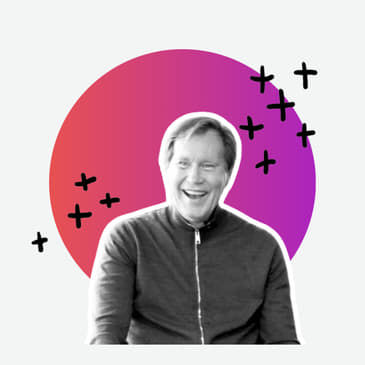
Recorded live at the University of Colorado, Denver College of Architecture and Planning, located in the heart of downtown Denver, Thomas Phifer, founder of Thomas Phifer and Partners, joins Adam Wagoner on the show to discuss the essence of architecture, the balance between client needs and creative expression. During his journey from the Clemson University School of Architecture in South Carolina to becoming a renowned architect, Tom has carved a noteworthy career in the field of architecture. Before founding his own firm, he worked with esteemed architects like Richard Meier and Charles Gwathmey. His firm is celebrated for its projects like the Glenstone Museum and the Warsaw Art Museum. The conversation explores the importance of mentorship and pivotal experiences abroad, insights on the role of light, community, and design in shaping human experiences.
Watch this episode on YouTube & please subscribe!
Listen on Apple Podcasts | Spotify | Amazon Music | Pandora or wherever you get podcasts!
This episode is brought to you by and hosted at the University of Colorado, Denver College of Architecture and Planning. Located in the heart of downtown Denver! CAP offers a vibrant and hands on learning environment. Whether you're pursuing undergraduate or graduate degrees in architecture, urban and Regional planning, or landscape architecture, their programs are designed to push boundaries and prepare you for the future of the profession.
This episode is sponsored by Market Your Architecture, a firm that helped Adam boost his lead generation from just a few each month to over 50! Use promo code "ARCHITECTING" for 10% off
Check out Adam's architecture firm, High Low Buffalo!
This podcast is powered by The Plug Podcast Agency
See Privacy Policy at https://art19.com/privacy and California Privacy Notice at https://art19.com/privacy#do-not-sell-my-info.
[00:00:05] And so, you know, after he pinned it up, maybe another 20 people came into that little room.
[00:00:10] And he went over for a couple of hours every one of his sketches.
[00:00:15] This guy was James Sterling, who was this remarkable architect.
[00:00:23] And that was my first introduction to, well, maybe there is something more than making it work.
[00:00:31] Right.
[00:00:37] Hi. Hello.
[00:00:39] Hello.
[00:00:39] Hello.
[00:00:40] Hello.
[00:00:40] Hello, and welcome to ARCHITECT-ING.
[00:00:42] Hello.
[00:00:43] Welcome to ARCHITECT-ING.
[00:00:44] I'm Rebecca Wagner here with the host, Adam Wagner.
[00:00:47] Hey, Adam, who's on the podcast today?
[00:00:49] Hello, Rebecca.
[00:00:51] Yes.
[00:00:51] Today we have a...
[00:00:53] Wait, wait.
[00:00:54] Let me guess.
[00:00:54] It's a special one.
[00:00:56] No.
[00:00:57] I was going to say a good one.
[00:00:59] Not special.
[00:01:00] But this is special.
[00:01:02] And good.
[00:01:03] So, today we had the opportunity to snag Thomas Pfeiffer and have an interview with him.
[00:01:13] And he was there to do a big lecture at the University of Colorado, Denver Architecture and Planning College.
[00:01:25] And so we were able to invite him in for a sort of roundtable discussion with my students and Bernardo Garcia.
[00:01:34] Yeah.
[00:01:36] Fun.
[00:01:36] It was very fun.
[00:01:38] Yes.
[00:01:40] It was a great experience.
[00:01:45] We'll get into this in the interview, but my studio is redesigning the architecture building right now.
[00:01:51] And they did...
[00:01:53] We dove deep into precedents.
[00:01:55] And one of the precedents was Thomas Pfeiffer's Clemson School of Architecture.
[00:02:04] And so I think that a lot of the students might have been a little nervous to have him there.
[00:02:13] Yeah.
[00:02:13] It's a big name.
[00:02:14] And it was just really cool to see how humble and approachable and down-to-earth Tom Pfeiffer was.
[00:02:24] And he really put everybody at ease and just allowed for it to be a really easy conversation about his work and about architecture and his experiences and his path in getting to where he was.
[00:02:39] Nice.
[00:02:40] So...
[00:02:40] That's great.
[00:02:41] Checked a lot of boxes.
[00:02:44] What does that mean?
[00:02:45] No?
[00:02:46] Don't...
[00:02:46] Not checked.
[00:02:46] I don't know why.
[00:02:47] I meant that it was like, it was good on a lot of levels.
[00:02:50] Oh, okay.
[00:02:50] It kind of comes across as like, it just did it to check a box.
[00:02:56] I only interviewed Thomas Pfeiffer just to check a box.
[00:02:59] That's not bad.
[00:03:01] I interviewed Thomas Pfeiffer box.
[00:03:03] So, nailed it.
[00:03:08] No, but then he gave a great lecture, an hour and a half long lecture about one project, his new Warsaw Museum.
[00:03:19] And then we were able to go out and hang out for a reception afterwards.
[00:03:24] So, again, just a really fun and enjoyable time all around.
[00:03:31] And hope you enjoy seeing this conversation too.
[00:03:36] You'll be able to watch it on YouTube as well.
[00:03:40] Oh, nice.
[00:03:40] Looking forward to it.
[00:03:41] Yeah.
[00:03:42] Looking forward to this.
[00:03:43] And then looking forward to the next things that will come out will be our dispatches.
[00:03:49] We can say that.
[00:03:50] Ooh, dispatch.
[00:03:51] Dispatches from the AIA Colorado Practice and Design Conference keynote speakers.
[00:03:58] So, watch out for that.
[00:04:00] Double enjoy.
[00:04:01] Double enjoy.
[00:04:02] Bye.
[00:04:03] Well, yeah.
[00:04:04] Thanks for joining us here.
[00:04:06] We're excited to have you.
[00:04:08] Yeah.
[00:04:09] Get a little preview before your lecture tonight.
[00:04:11] Sure, of course.
[00:04:12] Yeah.
[00:04:13] You know, so, he doesn't like me calling it out, but did you watch that video that Kevin
[00:04:19] made of you, about you?
[00:04:21] He would rather you say no, that you didn't walk it.
[00:04:24] So, that's better.
[00:04:28] I am the shyest, the most self-conscious person in the universe.
[00:04:35] And I've never read an article about our work.
[00:04:40] I've never seen myself on tape.
[00:04:43] I've never heard myself being recorded.
[00:04:47] So, it's nothing personal.
[00:04:51] Good.
[00:04:54] Yeah.
[00:04:54] He was, you know, excited by the fact that I told him I sent you that.
[00:04:58] So, but I think, you know, so the interesting thing was that we, the project this semester
[00:05:04] is to redesign this architecture school.
[00:05:06] And that with the idea of really having them think deeply about what they think architecture
[00:05:13] is and like, you know, how it, how and what the environment is that it should be taught
[00:05:17] within.
[00:05:18] And, and so we did a round of precedence studies where I feel like we dove deeper than most
[00:05:26] precedence studies and they each made a video about it, but really diving into, you know,
[00:05:30] the history of the school, the sort of history of the pedagogy of the school, but then also
[00:05:34] the history of, of the architect and, and sort of like what formed them and how, how that,
[00:05:41] that structure came out.
[00:05:42] So you, you were one of those with your, your Clemson school, but I like to open these things
[00:05:47] with just this one question of, of who, who you are.
[00:05:51] What's the sort of party sketch of, of Tom Pfeiffer in a, in a sentence or two?
[00:05:57] Meaning?
[00:05:58] Just, you take it however you want.
[00:05:59] Like, who, who, who are you?
[00:06:02] I'm kind of a person from South Carolina, Columbia, South Carolina.
[00:06:07] I grew up there, um, till I was 22.
[00:06:12] I'd never been on an airplane before, never been out of North Carolina, South Carolina
[00:06:16] or Georgia before I hopped on a plane and went to the overseas program that Clemson had.
[00:06:22] And then that opened the world because we were meant to go all over Europe.
[00:06:28] So I, I was real homebody, uh, during those early years.
[00:06:36] So, but how, so how did you fall into architecture?
[00:06:39] I feel like, you know, architecture is one of those professions that really opens the doors
[00:06:43] for homebodies, right?
[00:06:45] In a way.
[00:06:45] And, and it can kind of be rare to even know an architect at a certain, in a certain place,
[00:06:51] right?
[00:06:51] A rural place.
[00:06:52] So was that something that you knew you wanted to do or how did you find it?
[00:06:57] Well, you know, my father came home from World War II.
[00:07:02] He became a homebuilder like so many other people there.
[00:07:08] You know, the families were expanding, folks were marrying, having lots of kids, setting up
[00:07:14] neighborhoods.
[00:07:15] And my father built houses for them.
[00:07:19] So he was, he was, he would, he was a developer.
[00:07:23] So every night he would have drawings on the den floor that I would thumb through and hang out with a little bit.
[00:07:34] And then I'd go on construction sites with him and watch and look.
[00:07:37] And in the seventh grade, I had this amazing teacher who, I think they called him mechanical drawing, but they'd give you some very simple forms, triangles, squares, I mean, cubes, cylinders.
[00:07:51] And you'd have to draw plans, sections, and elevations of those with like a six-inch pencil on this thick green paper.
[00:08:01] And I just love that.
[00:08:03] I mean, I would stay in there forever and do that.
[00:08:06] And then in high school, they had an architecture teacher, architecture person there.
[00:08:14] And we were asked to design and make drawings, do a little working drawing work.
[00:08:19] And this was when I was seven, 16, 17, and 18.
[00:08:23] I somehow through that class met an architect in Columbia.
[00:08:30] And he came over to me and he said, I want you to, he just completely out of blue, he said, well, you design a door for me.
[00:08:38] Remember, there's like a door, a door.
[00:08:41] And so, you know, I didn't know what the hell he was talking about.
[00:08:46] So, you know, I went back and designed a little door and he said, let me have that.
[00:08:54] And a week later, he came back and said, I really want to take you up and introduce you to the dean at Clemson University.
[00:09:04] I would like for you to go there because you've got.
[00:09:08] You had an amazing door.
[00:09:09] Yeah, I did this amazing door.
[00:09:12] And so he walked up and the dean at that time was this person named Harlan McClure, who was a rural, he ran that school.
[00:09:22] It's pretty precise and tough.
[00:09:25] He let me in immediately.
[00:09:27] And so, you know, that lesson along with some others, you should really just look for these mentors in your life, you know,
[00:09:37] and try to find these people that are going to be there to kind of give you a boost at particular moments and really latch on to them.
[00:09:47] Because I was friends with him, with this particular person for a long, long time.
[00:09:54] And he was one of the people.
[00:09:56] I mean, I don't know whether I would have ever gotten into architecture school there.
[00:10:01] But he was the one that pushed me ahead.
[00:10:03] You know, so I found some other professors that were mentors there that pushed me along.
[00:10:11] And then, like, with the precedent video, you know, we were sort of speculating on the pedagogical, like, history of Clemson in architecture school.
[00:10:22] So when you say, you know, the dean was tough and, like, controlled things well, what was the sort of, like, direction of the school at that time architecturally?
[00:10:31] There was, I mean, he was, he designed the two buildings that were there when I was there.
[00:10:37] And they were right out of IIT, you know, museum buildings with steel, wide-flange spandrels.
[00:10:47] Is that what you added on to?
[00:10:48] Rick Enfield.
[00:10:49] Your firm added on to?
[00:10:50] There was one addition that was done by somebody else that wasn't so nice, and then ours was behind that.
[00:10:56] He was there, but I had just some terrific professors.
[00:11:00] It didn't ever matter what it looked like.
[00:11:04] There was no discussion of style.
[00:11:06] There was no discussion of any kind of image.
[00:11:12] You didn't really have to present images like one does today.
[00:11:17] Of course, back then, the only thing in the library was progressive architecture and architectural record, along with usually black and white books.
[00:11:25] But it was all about how it worked, what was the programmatic diagram of the building, and how did that somehow lift itself up to make it, to make a section and to make a site plan in an elevation.
[00:11:43] It was just very, very simple.
[00:11:46] You know, so I wasn't taught to produce any particular image.
[00:11:52] And it really wasn't until I traveled to Europe in graduate school that I really understood, you know, I was, this is another one of these happenstance moments.
[00:12:04] The professor that we had in Genoa, this was a long, this was like back in 1976, where the professor in charge there was English.
[00:12:15] Only 12 students, this general program, and we traveled to London.
[00:12:23] And he specifically came over to me and he said, I want you to go to this school called the Architectural Association.
[00:12:29] And we rode over on the hovercraft.
[00:12:31] Can you imagine what that was like in 1977?
[00:12:35] Really bumpy.
[00:12:36] So, you know, I arrived there about 630 or so.
[00:12:39] And so I said, well, I don't know where I am, but I'm going to go to the school and just see what's up.
[00:12:46] And so I walked into the school and there was this little tiny conference room.
[00:12:50] A little house, a little building.
[00:12:51] Little tiny conference room at the Architectural Association.
[00:12:55] And there was this huge guy there.
[00:12:58] I mean, really quite a big guy.
[00:13:01] And he had purple socks on.
[00:13:03] I remember that like it was yesterday.
[00:13:04] And he was pinning up these little cards.
[00:13:09] And he must have pinned up a hundred of them all around.
[00:13:13] And he had this bottle of whiskey.
[00:13:15] And it was in the middle of the table.
[00:13:18] And one glass.
[00:13:19] And so, you know, after he pinned it up, maybe another 20 people came into that little room.
[00:13:24] And he went over for a couple of hours every one of his sketches.
[00:13:29] This guy was James Sterling, who was this remarkable architect.
[00:13:37] And that was my first introduction to, well, maybe there is something more than making it work.
[00:13:46] Right.
[00:13:47] That this guy had an idea about this, how to make an image out of a building narrative.
[00:13:59] And so from there, I said, wow.
[00:14:01] You know, I didn't sleep that night.
[00:14:03] Right.
[00:14:04] And I went to see every one of his buildings in England, which are these.
[00:14:07] You guys should really look them up.
[00:14:09] That was really his height, too, right?
[00:14:11] Yeah.
[00:14:12] He was right in there.
[00:14:14] There's one way up in Leicester that's there.
[00:14:18] This kind of wild tower with this beautiful laboratory roof, glass roof.
[00:14:24] There was a building in Oxford.
[00:14:25] There was a building at Cambridge.
[00:14:27] You know, all of these buildings that were really at that moment, just things that nobody had really ever seen before.
[00:14:34] And he explained these three competitions he was working on.
[00:14:38] One in Stuttgart, one in Dusseldorf.
[00:14:40] And there was another one.
[00:14:42] Maybe one in Cologne.
[00:14:44] And there were these three competitions he was doing.
[00:14:47] They weren't finished buildings.
[00:14:48] And he talked about all his methodology there.
[00:14:51] And so that was that happenstance that happened.
[00:14:55] And the third important moment for me, so I really got enthusiastic about architecture and found a job with this guy named Harry Wolfe.
[00:15:05] I don't know whether you guys ever know that name, but you should look him up.
[00:15:09] That was right after grad school?
[00:15:10] That was right after grad school.
[00:15:12] He was in Charlotte, North Carolina, and a remarkable architect.
[00:15:15] And, you know, he had attracted people from Khan's office, from Pays' office to come down to Charlotte.
[00:15:22] He had this amazing studio in this kind of historic indoor arcade that was there.
[00:15:33] And he had the upper floor of that, so all of the little bays were filled with glass.
[00:15:37] And he gave everybody a lab coat.
[00:15:41] These kind of white coats down there.
[00:15:44] And you had to wear that every day.
[00:15:46] And people who had done a building got a little stripe.
[00:15:53] Did you have to wear the tie and, like, tuck the tie in?
[00:15:56] It was amazing this guy's head fit through the door.
[00:16:00] But, you know, a remarkable guy.
[00:16:02] And there were some people with, you know, ten little...
[00:16:06] It's like how many planes you shot down.
[00:16:07] Exactly.
[00:16:09] And it had a little wolf associates there.
[00:16:12] But he was...
[00:16:14] Man, did I.
[00:16:16] I was blown away by that, too.
[00:16:18] He did some really amazing work.
[00:16:21] And the drawings he made, and I don't think I really ever experienced that
[00:16:29] until I moved much, much later in my life to New York.
[00:16:35] And so those couple of years there were amazing.
[00:16:40] And then I wanted to move to New York.
[00:16:41] I'd never been to New York in my life.
[00:16:48] But I think the experience of being in Europe, you know,
[00:16:55] sort of led me to think, well, maybe New York is pretty great.
[00:17:00] So I wrote, I don't know, ten or twelve letters up there.
[00:17:05] Attached some work.
[00:17:07] I only got a response back from one person.
[00:17:12] It was Todd Williams and Billy Chen.
[00:17:14] And Todd said, yeah, we'd love to see you.
[00:17:18] See, you know, kind of took a double take and said, sure.
[00:17:23] So I flew to New York.
[00:17:24] Do you want to get paid?
[00:17:26] Exactly right.
[00:17:27] So I, so, you know, the taxi dropped me off.
[00:17:30] I didn't really know anything about New York, uptown, downtown.
[00:17:33] So the cab dropped me off at Times Square.
[00:17:38] There.
[00:17:39] So I, but this is back in the, in the, in the late 70s when New York was not like it is today.
[00:17:46] It's, it was really down on its heels and not this kind of activity.
[00:17:51] And I mean, it was, the park was a mess.
[00:17:54] That aside.
[00:17:55] So I, I thought, well, maybe if I walk this way, the numbers keep increasing.
[00:18:00] And so I walked up to 57th Street.
[00:18:04] And Todd happened to have his office in the Carnegie Hall tower.
[00:18:11] This, this little tower that was right next to, right adjacent to Carnegie Hall, part of Carnegie Hall.
[00:18:19] So I went in there and met Todd and Billy.
[00:18:23] They, this is, this is another one.
[00:18:25] This is like the third lesson.
[00:18:28] They spent an hour and a half with me, not knowing me from Adam.
[00:18:34] And after a while, I was wondering, what in the world are they looking at?
[00:18:38] You know, I had this portfolio, I had it open.
[00:18:40] They were talking and I almost blanked out there, you know.
[00:18:45] And so, so at the end, I mean, they were so sweet to me asking me a lot of questions about how I grew up.
[00:18:51] And I was, hmm.
[00:18:54] And so then at the end, they said, well, you know, we don't have any work.
[00:18:59] It's just Billy and I sitting here.
[00:19:01] That's why we can spend an hour and a half with you.
[00:19:03] Yeah, right.
[00:19:04] Exactly.
[00:19:04] So, so maybe I was there afternoon entertainment.
[00:19:06] Yeah.
[00:19:10] And so, you know, he said, well, you know, Billy and I, you know, we just are sitting here trying to get to work.
[00:19:17] So we don't really have a position.
[00:19:19] But I, my good friend, Charles Guathamy is right downstairs.
[00:19:25] And I know he'd love to see you.
[00:19:28] He has work.
[00:19:29] Yeah.
[00:19:29] So I went downstairs and Charlie hired me on the spot.
[00:19:33] Wow.
[00:19:34] I borrowed $300 and moved to New York.
[00:19:37] And so, and ever since then, you know, there's been this, you know, Todd and Billy were so generous at that moment.
[00:19:46] And they've been generous with me and others, so many others in New York forever and ever and ever.
[00:19:52] So it certainly can never live quite up to that standard.
[00:19:56] But you certainly want to reach towards that.
[00:19:58] You know, we're so generous and, you know, just very, just kind of amazing people.
[00:20:04] So you always need to find those people who are just kind of weave through your life, who you can find a way to kind of find your place.
[00:20:18] So we'll open it up here a bit.
[00:20:20] But, but like, I'm always interested in, in the beginnings of your firm, you know, in that, like Todd and Billy sense of just like sitting around like, I don't know how much work.
[00:20:29] And, you know, this would have, what did that look like for you?
[00:20:31] So you were at Richard Meyer right before your, I was a Richard Meyer.
[00:20:36] And then did you get a project or you just go off and say it's time or did he kick you out?
[00:20:41] I was so fortunate to receive a year's fellowship in Rome at the American Academy.
[00:20:49] And so I went over there and I mean, I certainly thought I was going to go back to work when I came back.
[00:20:55] And, you know, I took my amazing wife, amazing, and our two little boys, none of the Atoll, over to Rome for the year.
[00:21:09] That was, that was an adventure, definitely an adventure.
[00:21:14] And then about two months before we were getting ready to go home, I really thought, well, maybe I don't want to go back to work like that.
[00:21:22] Maybe I want to start my own practice, but I didn't really know.
[00:21:26] I mean, my wife and I have been together forever.
[00:21:28] We just had our 35th wedding anniversary, plus another three or four years.
[00:21:34] And she works with you, right?
[00:21:35] Yeah, she's an amazing architect with historic preservation.
[00:21:40] Right.
[00:21:41] She does a, she has a specially in stained glass, for goodness sakes.
[00:21:46] I didn't have any work, didn't have any notion of where to get work.
[00:21:52] I, I had worked for people ever since I've been out of school.
[00:21:57] I had never been on an interview, like for a project.
[00:22:01] I had never had to control a payroll.
[00:22:04] I, you know, I, I had absolutely no experience in what it meant to run a practice.
[00:22:11] I mean, like nothing, but, but I had run a lot of projects, managed a lot of projects.
[00:22:19] And so I did know something about doing that, but I did, I didn't know how to tell Jeannie because, you know, two little boys, they're both in school in New York.
[00:22:31] She had taken some time off with our youngest boy.
[00:22:35] So I waited until my brother-in-law and my sister-in-law were in town, along with my nephews.
[00:22:43] And so we were in the back garden there.
[00:22:46] And I thought, well, now's my chance to announce it to her.
[00:22:50] To your brother-in-law?
[00:22:52] It was, it was, it was like having an emotional support animal.
[00:22:55] And so.
[00:22:57] Hi, my name's Tom.
[00:22:58] And I think I need to, yeah, yeah.
[00:23:00] And so I told the group that I was thinking about starting my own practice.
[00:23:06] And it's a little silence.
[00:23:09] And Jeannie, you know, she got right to the point.
[00:23:11] She said, well, do you have any work?
[00:23:15] And clearly looking our two boys over there, played in the grass.
[00:23:19] But then my brother-in-law and sister-in-law piped up and said, wow, we think that's really great.
[00:23:27] Thank God they were there.
[00:23:30] Because, you know, Jeannie, of course, after that, when we got back, was really supportive.
[00:23:35] But, you know, it was, I started in kind of August of the year we got back.
[00:23:41] And I swear by March or April, I had no work.
[00:23:47] And I thought, well, you know, maybe I, I'd been teaching a little bit, you know, to get a little income.
[00:23:55] And I didn't have any work.
[00:23:56] And I thought, and then all of a sudden I got this little house.
[00:24:01] And, and then I'd done some United States courthouses with some of my previous folks.
[00:24:08] And so I knew the GSA.
[00:24:10] And somehow I made the list for this competition for this courthouse in Salt Lake City.
[00:24:17] But I was still just one person.
[00:24:19] It was me.
[00:24:21] So, so for two months I flew out and found an associate architect in Salt Lake City that I could use to draw this thing up.
[00:24:31] And we built a model out there and we won.
[00:24:35] That's when you added the partners part.
[00:24:36] You're like, yeah, there's lots and lots of partners.
[00:24:39] You know, we have a big alley.
[00:24:42] And so, you know, we, we won that.
[00:24:44] And then that started it.
[00:24:45] But, you know, it was, it was a little scary.
[00:24:48] It's not like the work comes tumbling in.
[00:24:51] You know, like, like, well, all you've got to do is put your shingle out.
[00:24:55] And all of a sudden there it is.
[00:24:57] But it is strange, right?
[00:24:58] I mean, like you landed a courthouse after like a house, right?
[00:25:02] But I had already done two United States courthouses.
[00:25:04] So I had a little bit of credibility in front of the jury.
[00:25:07] And our scheme was pretty clear.
[00:25:09] I, I, I don't think the other people had ever done a courthouse.
[00:25:12] So I understood the security of a courthouse and the separation between judges and prisoners and staff.
[00:25:20] And I, I understood how to put a plan together.
[00:25:23] And it was an addition to a, to an historic building.
[00:25:26] So I kind of understood that.
[00:25:29] So I, they played right into my wheelhouse there.
[00:25:33] Because any other kind of building with any other kind of jury, I mean, there was this man's name who sadly just passed away.
[00:25:42] Ed Feiner.
[00:25:43] I don't know whether you guys ever knew him or not.
[00:25:44] But he was the person that developed the design excellence program in the United States for, for all GSA buildings.
[00:25:53] And he, he elevated the presence of design in public buildings from nothing up to something.
[00:26:02] And I, he was, he was another one of my supporters and mentors.
[00:26:08] We're just having, Adam and I were having this discussion before.
[00:26:11] That's closing up.
[00:26:12] No.
[00:26:13] Okay.
[00:26:14] Before you got here.
[00:26:17] And one of the things that we were discussing is there seems to be two very different paths to, I guess you could call it recognition in architecture.
[00:26:28] Right.
[00:26:28] One is like getting job after job as much as, as many as possible, paying the payrolls, you know, like, and the other one is more through academia, through art.
[00:26:43] Or it's really, right.
[00:26:45] Or it's self-promotion in a way or something.
[00:26:48] Yeah.
[00:26:48] Right.
[00:26:48] And so I wanted to ask you that, but added, added to that same question.
[00:26:54] The other question is, do you think it's better to like choose very specific good projects or get as many products?
[00:27:08] Because I think.
[00:27:09] Especially as a young firm.
[00:27:10] Right.
[00:27:10] As a young firm or as a young architect.
[00:27:13] We both have young firms and we sit next to each other, share an office space.
[00:27:17] So we talk about this a lot.
[00:27:18] Yeah.
[00:27:18] I mean, up until about the last five years, because I've had two really, really, really difficult clients.
[00:27:26] So I didn't select those well.
[00:27:29] But for some reason, I've been so fortunate to find these projects with these people that are, that have been really supportive.
[00:27:36] And I don't know really how the work exactly comes in.
[00:27:42] Like I said, I'm kind of shy and self-conscious.
[00:27:45] So I don't go out and market the way I should.
[00:27:49] We're not.
[00:27:49] We have a little Instagram site that person in my office runs.
[00:27:53] So I'm still really shy about doing that.
[00:27:57] And somehow we've been able, I mean, I've never really been over, I don't know, 25 people and we're down to 16 people now.
[00:28:04] So we have a really kind of, I don't know whether you call that small, I don't know, small to medium, whatever.
[00:28:10] And somehow we've been able to maintain that, that way without ballooning up too much when there's a ton of work and without shrinking too much when there's not a lot of work.
[00:28:22] And so somehow when I look back, I don't know how all of that has happened.
[00:28:30] It's a little bit of a mystery because I didn't seek anything in particular.
[00:28:37] But whenever an opportunity comes in, you try to, you know, you try to get the project that I've had.
[00:28:45] Finally, you know, I thought when I got to be 55 or 56 or so, I'd always heard people like Khan who talked about Jonas Salk as being this life-changing client.
[00:28:58] And, you know, and I'd never really had anybody like that.
[00:29:01] I had had some great clients who were really supportive and good people.
[00:29:05] But until I received the Glenstone Museum Commission, I had never really had anybody like that.
[00:29:12] And they changed my life.
[00:29:13] They were, they were the big leap for me because they just completely changed the way that I looked at the world.
[00:29:21] And we worked together and made that building together.
[00:29:24] And I just never had an experience like that before.
[00:29:28] It was just, it was, it was like the world opened up and we made that building.
[00:29:34] And then a few years after that, we started working on the Warsaw Project.
[00:29:39] This, and I'll talk about that a little bit tonight.
[00:29:44] Tonight, this building is built in the shadow of a palace of culture that Stalin built back in 1955.
[00:29:52] When that country was completely leveled by the Germans and the Russians.
[00:29:58] I mean, what does it mean to build a museum and a theater, which is the voice of those people at this moment?
[00:30:08] And so, you know, the symbol of this palace was, was that you, you didn't have a voice.
[00:30:17] And so to try to respond to that, as well as the, as the ghetto wall running right through your site, as well as the commercial that was built up around the, around the palace in the years since 1955.
[00:30:33] That project was really loaded.
[00:30:35] And so I had an amazing client there, the director of the museum and ended up being the guiding force in the theater too.
[00:30:43] And she was the one that led me through that project, took a long time to figure out what to do there.
[00:30:49] That was a really loaded and so many artists and critics and historians and all this, she just led me down the path.
[00:31:00] And it's one of the, you know, greatest experiences of my life to work under those circumstances.
[00:31:07] And I mean, I got to tell you, we had the opening.
[00:31:10] I was over in Warsaw for a week, two weeks ago.
[00:31:15] And it was, I mean, I was in tears.
[00:31:17] There were, I've never seen a work of architecture, mine or anybody else's, that just, where a work of architecture met, met the moment in there, in the history of that place.
[00:31:33] There were 50,000 people that came through in two days.
[00:31:38] The opening was wall to wall in the building.
[00:31:42] There were cheering, there were parades.
[00:31:44] There were, I mean, for a week, it was 200 members of the press.
[00:31:51] I, I've just never seen this outpouring.
[00:31:54] And it is because that they really recognized that this is our voice.
[00:31:59] I didn't, you know, I didn't publicize that notion.
[00:32:03] But they understood that this white building sitting there in the middle of Warsaw, sitting at the base of this palace that they don't know what to do with,
[00:32:11] that is this awful history that they had, this Stalin thing that goes back to their city being leveled.
[00:32:21] And for 20 years after that, no voice, that they would have a place that they could come and be a part of what their voice was going to be.
[00:32:37] Yeah, I mean, that had to be powerful.
[00:32:40] Just, just sort of everything you've, you've worked through and built up through your career to have these ideas and to, to have that manifest and that experience and that power of architecture had to be powerful.
[00:32:53] Uh, do we have any questions from the class here?
[00:32:58] 20 bonus points for you.
[00:33:03] I have a question.
[00:33:05] For a finger, I have it right now.
[00:33:07] Oh, wow.
[00:33:09] Oh.
[00:33:10] Okay.
[00:33:10] As architecture students, we're taught not to try to confine ourselves to one style in order to be adaptable to clients and feature.
[00:33:19] And I noticed that many of your projects also avoid adhering to singular style.
[00:33:24] And I'm wondering how you maintain a strong sense of authorship and identity as a designer without confining yourself to one style.
[00:33:35] That's a really good question.
[00:33:41] And I think that idea of style, right, is an interesting question of what that means.
[00:33:50] Because in one sense, I could say it's very clear, you know, it's a very clear thread.
[00:33:55] Yeah, yeah, yeah.
[00:33:56] And it certainly is.
[00:33:57] But, you know, I think in the beginning of my practice, I was so nervous because I'd never really had to design anything for something that I'd put mine in my office.
[00:34:10] And so the first idea that would come into my brain, I would do, I would make because I was petrified that I wouldn't be able to come up with a second one.
[00:34:20] And the client was there and I'd never had my own client.
[00:34:23] Are they going to like this?
[00:34:24] And so I just put down on paper what I worked on for the first week.
[00:34:32] But then slowly, I got more patient.
[00:34:37] And I then took not the first idea, but the fourth idea.
[00:34:42] And then I got to the point where I could get to 10 ideas.
[00:34:46] And now the office, we're up to 20, 30 ideas before we really settle on one.
[00:34:52] And I've gotten much older now.
[00:34:54] And I've gotten much more patient.
[00:34:56] And I think it's true.
[00:34:58] I never knew this when I was 40.
[00:35:00] But, you know, with time does come wisdom.
[00:35:04] And with that wisdom comes patience.
[00:35:07] And you just have to sit there and let it churn and discover things that are new.
[00:35:15] When we start a project, we don't really start by trying to sketch things.
[00:35:21] We start with an image.
[00:35:22] We have these cards that you, I don't know whether you've seen those on our website or not.
[00:35:26] But we start with just these 8 and a half by 11 cards.
[00:35:30] And we put images on them.
[00:35:31] Images about landscape or art or culture, architecture, whatever they are, anything.
[00:35:39] And we just start trying to figure out where the path is.
[00:35:47] And those cards are pretty eclectic.
[00:35:50] And it's probably, I mean, I'm just saying this for the first time.
[00:35:55] It's probably because those cards are so eclectic that we don't get locked into a particular material,
[00:36:04] nor do we get locked into a particular expression right away.
[00:36:10] Because these cards are kind of a way to explore your curiosity about where you want to go with this.
[00:36:17] And all of a sudden, things slowly click.
[00:36:21] And you begin to go down that path.
[00:36:22] And then all of a sudden, that path comes to a dead end.
[00:36:26] And then you kind of, well, let's back up here a little bit.
[00:36:29] And let's go in that direction.
[00:36:30] And all the while, you're kind of meeting with your client and trying to get them to be patient.
[00:36:36] Patient, yeah.
[00:36:37] Yeah, well, that's the other problem with architecture.
[00:36:40] You have a payroll.
[00:36:42] You have a schedule.
[00:36:44] You have a client who's paying you.
[00:36:46] You have a contractor.
[00:36:48] And so, of course, I'm saying this, all of this within the discipline of getting the project done.
[00:36:54] You know, we're not an artist.
[00:36:55] We can't sit there forever and make that.
[00:36:58] And so, all of this is in the realm of fitting within a kind of schedule there.
[00:37:05] But, you know, sooner or later, if you're curious enough, you're going to find a path.
[00:37:10] And I mean, I'm not real sure why every project looks a little different.
[00:37:15] But it does start off kind of where there are a lot of tangents that we're going off to.
[00:37:23] And that's probably one of the roots.
[00:37:25] What do you guys think about that idea?
[00:37:27] You know, you're all knee-deep in your projects right now, right?
[00:37:32] And the idea of patience and the idea of sort of iteration and work.
[00:37:38] What's something that resonates with you about that within the profession or within your project so far?
[00:37:45] Or the difficulties that you're having with it?
[00:37:48] I don't know.
[00:37:48] I think, like, I, like, respect.
[00:37:49] Wait a second.
[00:37:51] Oh, yeah.
[00:37:52] I know.
[00:37:52] I think I respect, like, the idea of, like, letting whatever that client's intention is for the project to come through instead of, like, a preconceived style or an idea that the architect wants to show.
[00:38:09] Like, I think, I don't know.
[00:38:11] I think that's, like, pretty powerful.
[00:38:13] Yeah.
[00:38:14] But it's an interesting balance, right, of the sort of, you know, the totally service-based profession of doing everything the client asks for versus they're coming to you for your unique vision on this.
[00:38:29] And, you know, ideally it's something that surprises both of you, right?
[00:38:33] Yeah.
[00:38:34] And, I mean, you hope you find a curious client because, you know, there are a lot of clients who say, I would like to do this.
[00:38:41] I'll take you over to a building and point there and I like this.
[00:38:46] Particularly developers, you know, they think this sells and I know just as much as you do about what it should look like and, you know, and here it is and let's go off and do that.
[00:38:58] So, there certainly are people like that.
[00:39:02] And, you know, that takes some time to kind of weave them back into the narrative of making something that is that neither one of you expected.
[00:39:14] Can I ask a question now?
[00:39:16] Sure.
[00:39:17] Oh, yeah.
[00:39:17] Sorry.
[00:39:18] Sorry.
[00:39:18] I did fine.
[00:39:19] You know, for our studio right now, we have the special prompt of, like, what is architecture?
[00:39:25] And, like, what is architecture to you?
[00:39:26] So, I'm going to ask you, like, that same question.
[00:39:29] I know it's maybe, like, somewhat of, like, a loaded question to, like, think about on the spot.
[00:39:34] But, like, it seems like, like, I don't know, is architecture, like, a place that gives people a voice like that project in Poland?
[00:39:43] Or, like, what is that idea?
[00:39:45] Are you able to take you in it for yourself?
[00:39:48] They ask me, like, I keep asking them, what's architecture to you?
[00:39:51] And they ask me and I was like, I don't know.
[00:39:52] I'm using you guys to figure it out.
[00:39:54] That's what the studio's got.
[00:39:56] For me right now, like, one of, like, the most important things for me right now in architecture is, like, trying to make our buildings more, like, climate responsive and sustainable.
[00:40:05] And trying to set this precedence for the future generations of people behind me that can, like, already embed this into architecture.
[00:40:13] And, like, because I think it's such an important thing that we should be doing.
[00:40:16] So, for me, like, that's kind of what architecture is right now is, like, sustainable and the whole idea.
[00:40:23] But you've also had a problem, especially for, like, midterm, kind of, like, if that's the whole concept, then, like, how do I fill out the other half, right?
[00:40:33] And so you've, it's interesting in your project, you've struggled with sort of then what, how does that manifest itself in a different way?
[00:40:40] Right.
[00:40:40] Because that can be just a tool, right?
[00:40:42] Or unifying the campus.
[00:40:44] Right.
[00:40:45] And, like, bringing community together.
[00:40:47] Because I think that also, like, plays into the idea of, like, it takes a community, like, to pull off these things, you know?
[00:40:53] So.
[00:40:54] But, yeah, back to the question.
[00:40:55] Are you able to articulate, like, what you think architecture is?
[00:40:58] I think particularly now, it's important to make architecture that brings people together.
[00:41:06] You know, there's such, there's such remarkable diversity in our country.
[00:41:12] And I think to make architecture that brings people together is a catalyst for bringing people together.
[00:41:21] I think should be the kind of number one thing to try to do.
[00:41:27] The second thing, I think, is to, is to use the architecture as a catalyst to awaken the senses.
[00:41:36] Smell, touch, light being the foundational material there.
[00:41:44] Let it, let it be a study of how you move through space, through light, shade, and shadow, and deep shadow, to get the natural world to be a part of the experience.
[00:41:58] So that you don't disconnect it with, with your body's rhythms, with the sun every day.
[00:42:07] I mean, we're, I'm just about to give a studio exercise next semester about something resembling a monastery where there is this timetable every day that they, they, you know, they get up in the morning.
[00:42:26] They sleep in a little cell.
[00:42:28] From this time to this time, they're in their room.
[00:42:32] From this time to this time, they're walking to breakfast.
[00:42:34] And they do this every day of every year, over and over and over again.
[00:42:41] And the most beautiful monasteries in Europe are choreographed through light.
[00:42:49] And when you see the light changing, and you do this every day with the light changing every day,
[00:43:03] specifically, your body then becomes attuned to the rhythms of nature, to the rhythms of the sun.
[00:43:13] And I can't think of anything that is more connected to the world around than, than an experience like that.
[00:43:21] So I want to study that extreme because we'll probably never get a project that needs that, that kind of particular expression being that extreme.
[00:43:32] But there are some lessons to be learned from that about how one moves through space and light and shade, shadow and deep shadow and light and, and, and, and how your body can, can really relate to the light and relate to nature.
[00:43:48] That's architecture.
[00:43:50] Then boom.
[00:43:52] I have two questions.
[00:43:54] Yes.
[00:43:54] So based on what you recently said, like bring community together, because I feel like, and I really, that, that pressure really grabbed me because what do you, what do you think right now we are missing of creating community together?
[00:44:10] Like I'm talking about like, like, like I'm talking about like, like I'm talking about like a small scale right now, because I feel like if I'm in the living room with my family, okay, we have this living room with a TV, with the couches and the table in the middle.
[00:44:23] Um, but at the same time, um, but at the same time, um, but at the same time, um, but at the same time, I think each one of us are sitting on an iPad or a laptop or like a phone.
[00:44:30] How do you think if we're looking at a smaller scale, like a family size, how do you think bringing this small community together with all the things that's happening right now, um, technology and stuff like this?
[00:44:44] Like how does, how, how can architecture solve that problem?
[00:44:49] I, I, I, I don't, um, you know, all of this technology came to me so late in my life.
[00:44:56] I mean, I grew up, uh, where one had to make a phone call on a dial tone, on a dial phone to talk to anyone.
[00:45:08] And so the rhythms of our family were much different.
[00:45:11] We, we sat in our den.
[00:45:15] We ate around the table in the evening and came together.
[00:45:20] Dinner was at six o'clock.
[00:45:22] And there was a screen porch there.
[00:45:24] There was a yard in the back.
[00:45:26] And we were a very closely knit family, but we didn't, yes, we had a little bit of television, black and white television back then.
[00:45:34] And, and, and I think that we were pretty together, all watching the same thing, you know, so that was actually a family activity.
[00:45:45] That was a little bit easier.
[00:45:46] Now with technology, it's much harder.
[00:45:51] I mean, even, even my wife and I, when we're sitting there together, there are some evenings where I've got things to do on my phone and so does she.
[00:46:02] And we don't, you know, we just don't chat as much those evenings.
[00:46:06] And that's a, that's a real loss.
[00:46:09] You know, it, it's a little bit like, you know, in grammar school now in New York, my son's a, my son teaches sixth and seventh grade.
[00:46:19] They make them leave their cell phones in a bag.
[00:46:22] I don't know whether they do that here or not.
[00:46:25] So have your family leave their devices once a week, one evening a week.
[00:46:31] You'd be amazed, I'll bet, at what you guys would really chat about.
[00:46:37] Yeah, yeah, I totally agree with you.
[00:46:39] And that leads me to the other question, which is like, what do you think the role that architecture should play in influencing human emotions and behavior in a space?
[00:46:50] Like, what's that role that, that emphasized that?
[00:46:53] I think it's all about light.
[00:46:57] I think that, you know, a space without light is tragic.
[00:47:08] Khan even said, you know, you, you need just a little bit of light in a deep shadow space to understand how dark it is.
[00:47:19] So, you know, light, light is a catalyst that awakens the senses.
[00:47:27] And I, I just think, I mean, certainly for me, that is so fundamental in the way that I think about making space or beginning a project.
[00:47:37] You know, just trying to, trying to do that with every little piece of choreography, every space, trying to find that way of framing, framing nature, framing the landscape, framing the sky.
[00:47:53] That's what James Turrell is all about.
[00:47:56] You sit there on the bench, you look up through his framed opening and you watch the clouds move.
[00:48:01] When Michael Heiser went out to the desert and dug these two big holes in the ground in Nevada, he went down to those holes and he framed the sky.
[00:48:15] He went below the earth, he framed the sky and the clouds and he connected himself with the world.
[00:48:25] I mean, way too often, way too often, we have, with the architecture that we make, we've, we've disconnected ourselves with a natural world.
[00:48:38] I think it's interesting that idea, that, like, that thing of, like, how can architecture have power over technology again?
[00:48:46] And that idea of, like, almost rivaling the power of the technology, you know, in, like, in the Glenstone, right?
[00:48:53] It's, it's this sort of idea of these separate galleries where you have a transition space between them.
[00:48:59] And it's like, your senses are sort of cleansed and you go into this sort of profound, simple space or in a trail project, right?
[00:49:07] Like, you go in and it's something more profound than what you're scrolling.
[00:49:13] Yeah, I'll talk about that a little bit tonight, but you, the whole journey around that, we, we wanted to take a journey from light to light, to light shade, to shade, to shadow, to deep shadow and back into light.
[00:49:31] And the whole thing, I mean, it kind of, I'll talk about this again tonight, but it sort of looks like on the outside, we kind of move these things around to have some kind of magic massing.
[00:49:44] You know, like some, but it was all about shuffling them around so that in this passage, you would move around to get light shade and shadow.
[00:49:53] Well, yeah, again, we're very thankful for you being here.
[00:49:57] And, you know, it's funny, it's funny you talking about sort of being shy or nervous.
[00:50:01] I think a lot of, a lot of the students were very, they're like, he's going to be here.
[00:50:06] He's going to, he's going to talk to us.
[00:50:08] We're going to have this.
[00:50:09] It's awesome to be able to come in contact with an architect of your caliber and just to be like, look, we're all struggling with these things.
[00:50:16] Or like, we're all searching and just pushing to make things better.
[00:50:21] And from my perspective, a lot of our perspectives, like we're just very thankful for the work that you do and the striving you do.
[00:50:28] So thanks for joining us.
[00:50:30] Thank you.
[00:50:30] It's really there to be.
[00:50:31] Thank you.
[00:50:36] You can visit architecting.com.
[00:50:39] That's architect-ing.com to see images from this week's guest.
[00:50:44] And please rate and review the show wherever you listen to podcasts.
[00:50:47] Have a great week and keep connecting.
[00:50:53] Hi, I'm Eli.
[00:50:55] This show is made by my mom and dad and these people.
[00:51:00] This podcast is powered by The Plug.
[00:51:04] The RODECaster Pro 2 is the world's most powerful all-in-one audio solution for all types of creators, including podcasters.
[00:51:12] Graffiti and Julius use one at The Plug.
[00:51:14] It offers studio quality audio and revolutionary features for creators.
[00:51:18] While being incredibly easy to use, RODECaster Pro 2 all-in-one production solution for podcasting.
[00:51:24] It's on sales for $690 right now.
[00:51:27] And there's a link in this episode description.
[00:51:29] Check it out.
[00:51:31] This is Sarah Hubbard, host of You and Me Kid, a podcast about starting and raising a family on your own.
[00:51:37] We just launched season two, and I'm speaking with single moms, those still considering, and experts in relevant fields to give you a real sense of what the day-to-day experience of solo parenting looks and feels like.
[00:51:48] Plus, this season I've partnered with California Cryobank, the number one sperm bank in the U.S.
[00:51:53] So wherever you are in the process, this podcast provides some support, humor, and helpful information.
[00:51:59] Listen to You and Me Kid wherever you get your podcasts.