
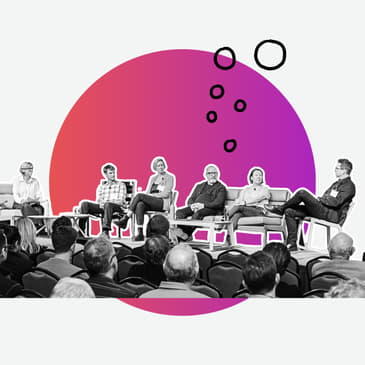
Live from AIA Colorado Design + Practice Conference in Keystone, CO -- Join Sarah Broughton with Adam Wagoner, Steve Scribner, Maura Trumble, Ken Andrews, and Linnaea Stuart, a panel featuring architect and firm award winners, to explore the intricacies of leadership in architecture. Discover key insights on building trust, evolving business strategies, and adapting mentoring practices in a changing industry. This episode offers a valuable discussion on managing work-life balance, the challenges of remote work, and the significance of peer networks and mentorship. A must-listen for industry professionals seeking to understand how these leaders are shaping the future of architecture.
Watch this episode on YouTube & please subscribe!
Listen on Apple Podcasts | Spotify | Amazon Music | Pandora or wherever you get podcasts!
This episode is sponsored by:
AIA Colorado - the Colorado Chapter of the American Institute of Architects — the voice of the architecture profession in Colorado.
Pendula an inspiring co-working studio to connect and enable architects + practitioners in related fields (engineering, planning, development, interiors, landscape, production and design).
Signature Windows + Doors collaboratively engages with architects to bring their vision into reality while maintaining the integrity of design intent.
Check out Adam's architecture firm, High Low Buffalo!
This podcast is powered by The Plug Podcast Agency & Collective Culture
See Privacy Policy at https://art19.com/privacy and California Privacy Notice at https://art19.com/privacy#do-not-sell-my-info.
[00:00:03] If you can be multifaceted, tenacious, and a go-getter and half a leader that provides you the agency to do so, you're in a sweet spot right there.
[00:00:14] Applying our passion to what we believe in, I think really deeply, like fundamentally.
[00:00:19] My big thing to Ben is just like designing your career like you would a project, right?
[00:00:23] And if you can be all four of these, then you're the all-star.
[00:00:27] But when I can do it without quiet confidence, I've always been very successful.
[00:00:37] Hi.
[00:00:38] Hello.
[00:00:39] Hello.
[00:00:39] Hello.
[00:00:40] Hello.
[00:00:40] Hello, and welcome to Architecting.
[00:00:42] Hello, and welcome to a special series of the Architecting Podcast.
[00:00:46] I'm your host, Adam Wagoner.
[00:00:47] Over the next five episodes, we're bringing you exclusive interviews with the keynote speakers
[00:00:52] from the 2024 AIA Colorado Practice and Design Conference held in Keystone, Colorado.
[00:00:57] I was grateful to AIA Colorado for once again inviting me to sit down with these giants of our profession
[00:01:05] and diving deeper into some of the ideas from their talks as well as deeper into their personal stories.
[00:01:11] So this first episode is a bit of an outlier, but it kind of literally sets the stage with a panel discussion from this year's design award winning leaders.
[00:01:22] It features Ken Andrews and Linnea Stewart, principals of the 2024 AIA Colorado Firm of the Year, Arc 11.
[00:01:32] Steve Scribner, principal of the Young Firm of the Year, Shape Architecture.
[00:01:38] Mara Trumbull, this year's Young Architect of the Year.
[00:01:42] And myself, this year's Architect of the Year.
[00:01:46] The discussion was moderated by Sarah Broughton.
[00:01:49] Check this episode out as we really dive into kind of what it means to be a leader and how we're leading in different ways.
[00:01:56] And also just the different challenges that are impacting each of our firms and our own unique situations.
[00:02:05] So I thought it was fun. Keep it a listen.
[00:02:08] For the last hour of the day, we're going to focus on the Architect and Firm Award winners.
[00:02:18] Please welcome to the stage Steve Scribner, Bauer Trumbull, Ken Andrews, Linnea Stewart, and Adam Wigner.
[00:02:33] So, Steve, we're going to start with you.
[00:02:36] Could you please do a small introduction, 15 minutes or less?
[00:02:42] Let's try to keep it under the 45.
[00:02:45] I'm Steve Scribner.
[00:02:46] My partner at Shape Architecture.
[00:02:49] We're a mighty firm, 8, in Cappell.
[00:02:51] We're a catty corner from Trader Joe's, which is important.
[00:02:55] I'm originally a Mainer.
[00:02:56] I grew up in an 1840s farmhouse connected to a nice, like, wooded lot, 20 acres, farm garden.
[00:03:03] I still grow three quarters of wood they eat, vegetables they eat.
[00:03:08] And I think that is part of who I am in terms of the value of that connection.
[00:03:12] I've never seen a house that's as connected to the land.
[00:03:15] That's what I grew up in, and that's always what we all try to do.
[00:03:18] But I ended up in Colorado in 2002 and working in Telluride on custom and residential.
[00:03:27] Through a very long, winding story, I ended up back at Colorado Acker Garden School in 2018
[00:03:32] and joined my partner, Morgan, at Shape Architecture.
[00:03:36] I was a physical major in undergrad.
[00:03:38] I discovered Passive House in grad school against my will.
[00:03:43] It's very annoying to me, but once I took the blue pill, I couldn't go back.
[00:03:48] And then when I met Morgan, he and I, I do his, him through his wife,
[00:03:52] and he and I have realigned values around sort of building science and sustainability.
[00:03:57] So we joined up and I have made shape with his two.
[00:04:02] Great.
[00:04:03] Congratulations.
[00:04:05] Awesome.
[00:04:06] All right.
[00:04:06] Bo?
[00:04:07] Hi, everyone.
[00:04:08] I'm Mo Trumbull.
[00:04:09] I'm a partner with CCY Architects in Dassault, Colorado.
[00:04:13] Originally from the panhandle of Nebraska, for those of you that don't know,
[00:04:18] Nebraska has a panhandle.
[00:04:20] I grew up 16 miles outside of the closest town on the corner of the circle.
[00:04:25] So with a deep appreciation for the Jeffersonian grid early on,
[00:04:31] and that kind of upbringing in the landscape, I would say,
[00:04:35] is still a big part of why I do what I do.
[00:04:39] Went to school at University of Nebraska
[00:04:41] and spent time coming out to the western slip of Colorado when I was little.
[00:04:45] My grandpa lived in Hotchkiss.
[00:04:47] The mountains were an escape for us.
[00:04:49] So when I got out of school, I knew I was in being Colorado.
[00:04:53] I thought I was almost positive I was going to be on the front range,
[00:04:56] and I found CCY.
[00:04:59] They were winning design awards in 2011,
[00:05:01] and I wanted to work for somebody who was doing incredible work,
[00:05:05] and it was much to my surprise and grace that it turns out you can do world-class design
[00:05:12] and live in a small mountain town.
[00:05:13] So moved out in 2012, didn't look back, found a good home,
[00:05:19] and have been with the firm ever since.
[00:05:23] Been on the leadership team since 2017,
[00:05:26] and a partner with the firm for the last two years.
[00:05:29] That's right.
[00:05:29] How are you CCY these days?
[00:05:31] We're 43.
[00:05:32] Okay.
[00:05:32] Yeah.
[00:05:33] All in the salt.
[00:05:34] Amazing.
[00:05:34] Interesting.
[00:05:35] Oh, let's see.
[00:05:37] My name's Ken Andrews, obviously.
[00:05:38] I guess that just goes to what I'm saying.
[00:05:40] I'm originally born and raised here in Colorado.
[00:05:43] I'm one of those few originals, I guess.
[00:05:45] I'm not going to use the word native because I don't like that,
[00:05:47] but I'm an original Coloran.
[00:05:49] I was born in Denver, and then when I was about four years old,
[00:05:52] my father moved us to where we owned the town Saponero on Blue Necy Resort,
[00:05:58] and that was a town with us.
[00:06:00] And we ran a business up there, and then because it was so hard,
[00:06:03] I kind of grew up living all over the western slope from Durango, Cortez,
[00:06:08] Montrose, Gunnison, Lumbtime, Gunnison,
[00:06:11] and ultimately landed in Montrose World High School.
[00:06:15] And I guess I can say that's where I hailed from.
[00:06:17] Came to CU right along the same time with Sarah.
[00:06:22] Went off to Rice, and then came back and joined Narco Levin,
[00:06:25] which is the firm that I've been at for the last 21 years.
[00:06:29] I've been a partner, because I've been a principal for 14 years,
[00:06:33] and I've been a partner now for just over five years.
[00:06:37] And I'm a second generation in the firm as we're working through it.
[00:06:42] I also spent 12 years teaching at the University of Colorado,
[00:06:46] so with a lot of family faces here that I haven't seen in a long time
[00:06:49] since I resigned about 10 years ago.
[00:06:51] But it's amazing to see so many of you out here that are now leaders and partners
[00:06:55] and principals in your other firms and with other firms.
[00:06:57] So it's really inspiring to come here and see all of you guys again.
[00:07:02] I'm Lodea Stewart, and I am the other half of the second generation of Narco Levin.
[00:07:09] And can you hear?
[00:07:10] I can't.
[00:07:11] Okay, great.
[00:07:12] Let's see.
[00:07:13] I grew up as one of three Asian kids in a small town in New Hampshire.
[00:07:22] And I went to Syracuse University for school, got a bachelor's of architecture degree there,
[00:07:27] and then I went to the GSD for two years later to get in that work.
[00:07:33] And I found my way to Colorado about 10 years ago.
[00:07:38] I was sitting in a barbershop, and I was looking through a magazine when I saw a photo from Arc 11.
[00:07:44] And I said, I want to work there.
[00:07:46] So I wrote a letter to each page saying, can I work for you?
[00:07:51] That had interviews.
[00:07:52] And then a couple of circumstances occurred where I had to delay that for a couple of years.
[00:07:57] And then I ended up working at Arc 11 about eight years ago.
[00:08:02] I've been a principal for about two years now.
[00:08:05] I don't know.
[00:08:05] Cool.
[00:08:07] Adam Wagner?
[00:08:09] I, let's see.
[00:08:10] I grew up in the middle of Kansas, and I'm lucky enough to be married to the 2023,
[00:08:17] I'm working to the year of Michael Liger.
[00:08:19] And we met at Kansas State and moved around the world to the Netherlands and to New England and Mexico
[00:08:26] and then came here about eight years ago.
[00:08:28] And I am on the fourth generation of my firm, my own firm.
[00:08:34] My first person.
[00:08:36] So my newest firm is called Kyla Buffalo.
[00:08:39] We've been around for about a year, and it's one person.
[00:08:43] And I run the architecting podcast and teach at CU Denver.
[00:08:52] That covered?
[00:08:52] Let's get on to it.
[00:08:54] All right.
[00:08:54] Thank you, guys.
[00:08:56] Thank you for your leadership, and thank you for being winners.
[00:08:58] Congratulations again.
[00:09:00] We've had some really great conversations coming into today, so we're going to continue that while we're up here altogether.
[00:09:06] Some of the things we've been talking about, being an architect today and being a leader today has never been more needed.
[00:09:14] We mentioned the AIA national study.
[00:09:17] With clients last year, I identified that clients are looking for architects to provide three things.
[00:09:22] They want communication, they want coordination, and they want fiduciary and schedule stewardship.
[00:09:28] This all coupled with creating excellent design, which most of us got the profession to do, and keeping up with a rapid pace.
[00:09:38] So when we get all this right, we have created trust.
[00:09:42] So I'd like you all to address how you create trust, either in the position that you are in as partners and leaders, with clients, and what is trust looking like for you these days?
[00:09:57] Jump in.
[00:09:58] Well, I think, you know, again, we've chatted a little bit coming into this.
[00:10:03] One topic that's really come up is the idea of, like, deeply listening.
[00:10:08] And that's to your clients.
[00:10:10] It's to your collaborators.
[00:10:11] It's to the people on your team.
[00:10:13] And I think that that really comes from, as Linnea, you really brought this to the table, is, you know, the conversation around empathy in the profession.
[00:10:23] And how being able to put yourself in someone else's shoes is kind of the vehicle to create that trust.
[00:10:32] And that happens in every direction.
[00:10:34] Yeah, I think it was talking about how to create the great balance of structure and empathy within that.
[00:10:40] Also pockets of creativity, inspiration, stirring conversations when needed, but also, you know, finding ways to uplift everybody at the same time.
[00:10:50] It's always a balance.
[00:10:51] I'm figuring out myself as a leader, which is a different position than when I was just part of the staff.
[00:10:59] I'm learning that now.
[00:11:00] For me, it's always been about three things.
[00:11:04] Transparency, accountability, and openness.
[00:11:08] You know, being honest.
[00:11:10] Honesty, transparency, and accountability, I would say, are the three most important things for me.
[00:11:14] And I think my reputation, as everybody knows, that I'm honest and forthright.
[00:11:18] And I'll tell you what's on my mind, whether it's good or bad.
[00:11:21] But if I also come to an agreement, I'm accountable about it.
[00:11:24] And that's, I think, what's really gotten me a long ways throughout my entire career as well.
[00:11:30] Yeah, as a newer firm, it's all we have, right?
[00:11:35] We have to give nothing but our reputation.
[00:11:37] You know, we have a few projects now.
[00:11:39] But I think a two-way street of education is really important.
[00:11:43] So when we engage clients early in our design decision-making process and educate around some of the performative aspects that we may be experts in,
[00:11:52] but also open up that two-way pathway to learn from our clients because they know more than we do.
[00:11:58] We admit it about what they want, who they are, and what they need.
[00:12:01] That does seem to be effective so far in terms of when we get into those difficult situations around budget or time, whatever it is,
[00:12:10] when clients, all of their expectations can be met.
[00:12:13] If they feel like they have been heard and understand why we got where we go.
[00:12:17] But so far, it seems to be just that full communication breaks down the sort of conflict that could occur.
[00:12:28] I feel like I'm in a little weird position here, like where we've been talking about leadership and what it means to be a leader in your firm.
[00:12:35] And it's like I try to lead my own self well.
[00:12:38] I'm not sure if that's me.
[00:12:40] So it's like I feel like it's a little different for me.
[00:12:42] And I'm not...
[00:12:43] You're leading students.
[00:12:45] Sort of, yeah.
[00:12:46] But I feel like I'm not even all that interested in the idea of leadership.
[00:12:50] I mean, especially as like growing the firm.
[00:12:53] Like my therapist is...
[00:12:56] And I have tried to figure out the word for it.
[00:12:58] But kind of like I'm trying to be like a maverick architect where you're...
[00:13:01] I get to kind of float around and jump into different things.
[00:13:05] And I think...
[00:13:05] So I think for me, like the idea of like a standard practice, I'm less interested in that and less pursuing sort of like what leadership is there.
[00:13:14] What I am passionate about, I guess, is setting up platforms for people.
[00:13:20] And so I think that's what like the podcast was for me was there's amazing designers in here that don't necessarily get stories told.
[00:13:28] And so it was setting up a platform to tell those stories.
[00:13:33] We've started...
[00:13:34] Restarted the Denver Architecture League in Denver and bringing people together.
[00:13:39] And so I guess I'm sort of more interested in creating platforms for other leaders to come up and to sort of do that.
[00:13:50] And trying to keep...
[00:13:51] I guess if you were talking about trust, trying to keep those platforms pure where they don't sort of get corrupted by like sponsorship or money or things like that.
[00:14:01] Where the pureness of it goes away to kind of dilute that trust or dilute the stories of other people.
[00:14:09] So...
[00:14:09] But what you've been able to accomplish through leadership or getting us all together to reignite the architecture, leaving the archetype, things like that, is definitely a very strong level of leadership and the initiative that's up to do that.
[00:14:20] Yeah, thanks.
[00:14:21] But I don't like to like...
[00:14:23] If you're going to say like, hey, what's the topic for the Denver Architecture League next month?
[00:14:27] I'm like, I don't want to know about that.
[00:14:29] Like, it's more like, I'll set the platform and then let us other people kind of talk about what...
[00:14:34] And Courtney and Arctusia right now or whatever.
[00:14:36] So...
[00:14:37] Exactly.
[00:14:38] How is that about a little portion?
[00:14:39] That was great.
[00:14:40] You know, you spoke about this the other day.
[00:14:43] It's what we're all finding is the need for us to be leading so many spokes of a project.
[00:14:50] So...
[00:14:51] These days and I find myself as the main communicator for the contractor with the client when it comes to sticky subjects.
[00:14:59] You're just...
[00:15:00] These...
[00:15:01] The breadth that we're doing, right?
[00:15:05] And plus, you know, running firms is a lot.
[00:15:10] So, you know, where do you drive your inspiration?
[00:15:14] Obviously getting either of colleagues, creating a platform for conversation.
[00:15:18] What other areas are you guys...
[00:15:21] How do you do it?
[00:15:22] Well, this...
[00:15:23] Yeah.
[00:15:24] It's always a big source.
[00:15:25] Yeah.
[00:15:26] What was the cut?
[00:15:26] Speaking like each other.
[00:15:28] Hamdi has smoked a lot over the years.
[00:15:31] So I've heard a thing from my uncle where has he had learned that I'd become a principal two years prior.
[00:15:39] And he said, you know, I...
[00:15:42] When I was a leader, there were four kind of traits that a good leader offers, which is basically being a finder, a binder, a grinder, or a minder.
[00:15:51] And if you can be all four of these, then you're the all-star.
[00:15:55] I am not all four of these.
[00:15:58] I think I'm about three.
[00:16:00] And I'm working on the other one.
[00:16:02] But to recognize that in yourself and to know, like, which strengths you have in leadership, which ones you need to work on, I think being very real and honest.
[00:16:10] And somebody also told me the best and hardest question to ask your colleagues is to say, how do you experience me?
[00:16:20] Because once somebody is honest and feels comfortable to tell you that, then you can learn and grow and change.
[00:16:25] And you can also become a better leader.
[00:16:27] And you can gain trust with not only your colleagues, but also your clients, your consultants, everybody around you, if you can be as honest and open about yourself in that kind of realm.
[00:16:39] So the question is, what inspires you to be able to hear?
[00:16:42] Yeah.
[00:16:43] Where do you lean on it?
[00:16:45] Brexler is tough, right?
[00:16:46] I guess my whole life, I've always tried to be influential in some way, whether that's a good aspiration or not.
[00:16:53] And what I've learned, and somebody told me this a long time ago, is you have to do that through quiet confidence.
[00:17:00] And I've wrangled with that a lot because I recognize and I know through my therapist that I definitely have an ego and I have an ability to be abrasive
[00:17:07] and I have an ability to be assertive.
[00:17:09] But when I reflect on the quiet confidence, I think that's where I have stridden the most in my career.
[00:17:16] Especially when it comes to working with clients and students and with peers in that, you know, having to recognize that, yes, it's good to be confident.
[00:17:26] It's good to know what you're doing.
[00:17:27] It's good to strive to have influence because I think, as architects, we're here to shape and change.
[00:17:34] And I fundamentally believe in that idea of progressive architecture and progressive design and what we can do as we lead.
[00:17:41] And therefore, that is influence.
[00:17:43] And I think, you know, if you do that in a really abrasive fashion, it works for some people.
[00:17:47] I found for myself when I've been in an abrasive fashion, it's by firing.
[00:17:50] But when I can do it with that quiet confidence, I've always been very successful.
[00:17:56] I was going to say, I find inspiration in a lot of the same places I've ever been in.
[00:17:59] But in terms of inspiration around leadership, it's like I never wanted to have my own practice.
[00:18:05] And I don't think Martin did either.
[00:18:07] The real founder of our cub, my partner.
[00:18:11] And we both just, I think, found our passion.
[00:18:14] And it is sort of this nexus of contemporary, say, so some architecture and building science and trying to make that cool.
[00:18:23] And so just really applying our passion to what we believe in, I think, really deeply.
[00:18:30] Like, fundamentally, we've found, like, people at our office are pretty psyched because they share that.
[00:18:36] And if they don't, they didn't come try to apply to work for us.
[00:18:39] Here we've had people over the years.
[00:18:41] And, you know, I think that our core values, we wear them on our sleeves.
[00:18:44] And that motivates us.
[00:18:47] And then, yeah, on the leadership side, we have, like, lots of things to work on.
[00:18:51] And we know it.
[00:18:51] But we, so we read books and podcasts, whatever.
[00:18:54] It's more in service to what we set out to do, which is not the leaders of a firm.
[00:19:00] It's to, like, do this kind of architecture we really believe in.
[00:19:05] And I think always in life, we only do what we care about, if not through acknowledgement or,
[00:19:11] this thing of leadership or whatever, it helps us get harder.
[00:19:15] Sure.
[00:19:15] Yeah.
[00:19:16] Most interesting.
[00:19:17] You've had a different trajectory.
[00:19:18] You're fifth generation.
[00:19:19] Yeah.
[00:19:20] At a firm.
[00:19:21] Very established.
[00:19:22] Yes.
[00:19:23] Yeah.
[00:19:24] I've been talking about that journey.
[00:19:26] Yeah.
[00:19:27] Something you do.
[00:19:27] You know, I think I've never, I really never wanted to have my own firm.
[00:19:34] I didn't have that.
[00:19:35] I have to do this, like, really ego-based, kind of like, I really want to go out and start
[00:19:40] my own thing.
[00:19:40] So, I've always been interested in the idea of finding something that is wonderful and
[00:19:49] continuing to build on that.
[00:19:51] I think what we do is such an iterative process.
[00:19:54] And that's how we treat design.
[00:19:56] And why wouldn't I treat my career in the same way?
[00:20:00] And kind of how do you take something that exists, that has a 50-plus year history, and
[00:20:06] start to build on that?
[00:20:07] And for me, from a leadership standpoint, that's, you know, really understanding the core values
[00:20:12] and the history and kind of the weight of that in a really good way.
[00:20:17] And then looking forward of what does that mean for the next 50 years?
[00:20:22] What does that mean for the sixth and seventh generation of leadership to come after me?
[00:20:26] And it's been a really interesting transition to, you know, join as a staff person, kind
[00:20:34] of work my way up, become part of the leadership team, and kind of see the evolution of the
[00:20:40] firm in the last 12 years while I've been there.
[00:20:42] And, you know, one thing we talked about is a really tangible version of that for us right
[00:20:47] now is this focus of trying to build the community-based work that we do and really invest in the
[00:20:55] small towns and the communities that we work in.
[00:20:57] And I've really growled that, like, we are doing that.
[00:21:01] We're actively doing that.
[00:21:02] We're working with several nonprofits and lots of different communities on workforce housing
[00:21:06] projects to kind of continue to grow and evolve the body of work that we do and, you know,
[00:21:12] highly approach the profession.
[00:21:13] And for me, that's been a very rewarding part of kind of this transition into leadership is
[00:21:20] that ability to see impact and voice and agency within the firm.
[00:21:27] And I think that comes from your first question, how do you build trust?
[00:21:30] And that starts, you know, as a young person in a firm and the confidence to voice your opinion
[00:21:37] and do it in a way that is respectful but honest and, frankly, passionate.
[00:21:43] And to find that passion in something that already exists.
[00:21:48] Well, speaking of going to your Parker's last week, Rich, you were talking about that push-pull,
[00:21:52] what needs to happen, right?
[00:21:53] When you're, you know, there needs to be a balance of push-pull.
[00:21:56] When you're getting into a leadership position within a firm where it's not too much pushing
[00:22:00] or pulling and it's that nice balance, that's where you recognize who the leaders are from within.
[00:22:07] You know, amazing work, amazing foundations up here on stage.
[00:22:13] It all, you know, we have to have work, right?
[00:22:16] We have to have clients.
[00:22:18] But having some interesting conversation with you guys about how this is developed.
[00:22:22] When you're a founder, often business develops off your relationships.
[00:22:26] Adam, you as Steve are founders, and there might be a little bit of that going on.
[00:22:31] Now, as second, fifth generation, what's the strategy around business development?
[00:22:37] Because part of being a partner is there's an obligation to be bringing it work.
[00:22:40] So, will you guys talk a little bit about strategies around that or maybe your way to learning to get better at that?
[00:22:48] Yeah, I mean, I think for me, maybe part of that, like, Maverick architect or whatever it is,
[00:22:53] but, like, I, or just being a typical aspirational architect, I wasn't all that interested in the business side of it,
[00:23:01] even when I had my firm for seven, eight years and just sort of able to get by with things.
[00:23:07] And I think within the last six months, I've, like, finally bubbled down and created and made the marketing part into a design.
[00:23:16] And went out and hired a marketing team and, like, have made this really intense, like, system for how things work
[00:23:24] and really leveraging technology in different ways.
[00:23:27] And it hasn't been totally rolled out yet.
[00:23:30] But I spent all the time about myself.
[00:23:32] It's like, I can do it myself.
[00:23:33] I can figure this all out.
[00:23:34] And I put out, like, a hat nine months ago.
[00:23:38] And he's got frigates, right?
[00:23:40] I spent so much time making this perfect video.
[00:23:42] Nothing happened.
[00:23:43] And so I hired this marketing firm.
[00:23:45] And they've been, it's been really great in how they've been structuring it from a holistic idea of communicating value,
[00:23:52] of setting up systems, of even just how you communicate with clients, pitch to clients.
[00:23:58] And so it's been a good growth variant.
[00:24:01] Like, we just put out an ad, I think, like, oh, the day ago.
[00:24:06] And I've already got two meetings set up for it, right?
[00:24:08] So it's shown me, like, the value of experts.
[00:24:12] And it's always hard as a sole practitioner to know sort of when to pay for people and when to do things yourself.
[00:24:19] In this case, it seems like it's paying up to hire somebody.
[00:24:23] But, yeah, it's been a nice experiment of just, like, hey, let's treat this a little more real.
[00:24:28] I need, I guess, me to eat.
[00:24:31] You know, for me, I had E.J. Mead, who was our founding partner and principal, who was not here with us today.
[00:24:38] You know, he was an amazing mentor all along.
[00:24:41] He was one of my professors while I was a student at CU a long time ago.
[00:24:46] And he's been an amazing mentor about business development.
[00:24:48] And E.J., for those of you that know him will recognize that he's very much a mentor.
[00:24:53] Because he's very much a mentor, but he's also very much a connector and a maven.
[00:24:58] As you're familiar with the book, Tipping Point, it talks about that.
[00:25:00] So, you know, in his circles, in his community, he is amazing at making connections.
[00:25:07] If he was here, I'm sure he could connect you guys all to New Jersey somehow.
[00:25:09] Yeah.
[00:25:11] But, you know, and those are hard shoes to follow.
[00:25:14] We've talked a lot about this.
[00:25:15] And it's not, you can't, if you're a second generation, you're not following that person.
[00:25:19] You've got to find it on your own, and you've got to do it on your own, and you've got to figure it out.
[00:25:22] And I think, much like, whoa, I didn't really want to start something from so you're at scratch.
[00:25:28] So, seven years in, at Arc 11, William J. and James came to me and asked me what I wanted to do.
[00:25:33] It was sort of the greater that I wanted to take.
[00:25:35] At that time, it was 17-year-old practice and take it forward.
[00:25:39] And so now, I'm finding that, and I talk a lot about this, of finding our own legs and how we do business development.
[00:25:46] What are the projects that we're interested in?
[00:25:48] And there's a lot of commonality to do it, but there's also a lot of differences in positioning and so forth.
[00:25:53] And one of the greatest things that we do is we hire a business and strategy director, marketing director also.
[00:26:00] She comes with a background in strategy.
[00:26:01] And for the last 18 months, she's been an amazing catalyst to help us rethink about, especially for the second generation principals, how are we going to go about that?
[00:26:11] And she's key to our team on how we decide what we're going to go after, how we're going to go after everything.
[00:26:18] So, yeah, it's very different.
[00:26:20] But we also talked about that, though, for the younger ones and the younger people in the room, you know, you can't emulate somebody because they're not you.
[00:26:28] You have to be yourself.
[00:26:29] Okay.
[00:26:30] That's where I was going to say.
[00:26:31] Okay.
[00:26:32] The first thing you need to know is know yourself, know who you are, know what you want in terms of work.
[00:26:39] And I think that'll be the first step of going in the right direction because I remember when I was offered a position to be a principal, I said, well, I'm not very good at this.
[00:26:50] And you said, it's okay.
[00:26:51] You'll work on it.
[00:26:52] And I did.
[00:26:54] I remember the first year I worked on it.
[00:26:55] I pretty much did everything that was, you know, signed up for everything.
[00:27:00] Big fat failure.
[00:27:01] And then the second year, lessons learned, I was like, all right, I'm going to find the things that I'm actually passionate about, that I care about, and then build a relationship through that.
[00:27:11] So there's, and I also know my capacity as an introvert.
[00:27:14] I can only do, like, three or four, like, business development, relationship building things really well.
[00:27:20] And I'm going to dive into that.
[00:27:21] So that's what I've done.
[00:27:22] You know, I've worked with a group called the Amachio Mayans, which is, they have basically founded the National Parks Association for the Japanese Internment.
[00:27:31] I've worked with a camp in Southeast Colorado, building a relationship there.
[00:27:36] I built a relationship with, actually, one of the church organization about this and affordable housing.
[00:27:44] And working with that group has been very interesting.
[00:27:48] So, you know, I find the pockets that are interesting.
[00:27:51] I dive very deeply into it.
[00:27:53] I let people know that I am all in.
[00:27:55] And I think that also builds trust.
[00:27:57] It also builds the opportunity for projects in the future.
[00:28:00] And also, you know, understanding your worth and saying, by the way, you do need to pay me for this work act of love.
[00:28:09] I would add, completely agree.
[00:28:13] It's about finding your own voice.
[00:28:15] I would say for those folks in the firm that are looking to grow that next generation, put them in the room to hear you talk about your work and your firm.
[00:28:26] And, yes, they are going to talk about it differently.
[00:28:29] But until they get comfortable developing that voice, you kind of have to infill that.
[00:28:35] You have to make a space for them to understand how you interview, how you present to different types of clients.
[00:28:44] And do that in a meaningful way.
[00:28:46] That was something that was done for me early on and really gave me the confidence to, you know, have the elevator pitch or the three-minute, like, what do you do and why do you do it?
[00:28:56] And I think that that is really critical for younger people coming into that business development role.
[00:29:04] And I had the benefit of, again, that long history and that reputation where I didn't have to, you know, rely solely on the story and incredibly impressed with what you guys were doing along those lines.
[00:29:21] But, yeah, that's maybe been – it's a little 101, but for me, something that made a tremendous amount of difference in having that confidence to find the things that I was passionate about and really dive in and be able to talk about the work in the firm and what I wanted to do.
[00:29:39] Yeah.
[00:29:41] It's great to be complimented for something I feel like a total monster.
[00:29:44] Like, yeah, we're – we've been really lucky.
[00:29:46] We've, you know, worked really hard in the early days to make it a hard little niche.
[00:29:51] I think for us, it's really about the collaborators outside of the architects that are not just trying to find clients, but they'll pierce the most.
[00:30:00] So, again.
[00:30:01] But we're very lucky we have our little niche and, you know, we're such nerds that you like to talk to other nerds about building science and, like, has kind of – I mean, it's really –
[00:30:13] I don't know how to cook it.
[00:30:15] But it's a little bit now.
[00:30:16] Hey, but it also seems like, you know, you guys have – you know your personalities, right?
[00:30:20] And you've hired well to help people to put your work out better for you, right?
[00:30:24] Thank you.
[00:30:25] Yeah.
[00:30:25] Yeah.
[00:30:26] Yes, it's true.
[00:30:27] No, that's what it's true.
[00:30:28] We have, like, very, very lucky with who we have on the team that can speak to speak and take pictures and –
[00:30:36] Submit for awards.
[00:30:37] Submit for awards.
[00:30:38] Do you outsource all that?
[00:30:39] No.
[00:30:40] No.
[00:30:40] We're, like, an incredible, amazing team.
[00:30:42] Like, we hired – a few of the people we hired not because they were marketing anybody, but just because they're savvy, really smart.
[00:30:51] Homer South is a professional photographer.
[00:30:54] And everybody, like, I feel like our team right now is very all in on the mission.
[00:30:59] And people just jump in to be, like, oh, somebody was working on an awards mission right now without any guidance.
[00:31:05] And it's going to nail it.
[00:31:07] And it's not the – and I think it really is about just getting the mission.
[00:31:12] But, yeah, we've been lucky.
[00:31:18] But we try not to mess it up.
[00:31:20] Just touch on our small point about skill set, too.
[00:31:22] If you can be multifaceted and tenacious and, you know, a go-getter and have a leader that provides you the agency to do so, you're in a sweet spot right there.
[00:31:34] Yeah.
[00:31:34] Yeah.
[00:31:35] Yeah.
[00:31:35] Well, I think that's a good one.
[00:31:36] You know, this one – I think you talked a little bit on this.
[00:31:38] But I think, you know, like I said, it would talk to a lot of the other people here.
[00:31:40] But if I talk to a lot of my peers, there's a lot of transition going on in the architecture world.
[00:31:45] A lot of firms that we went through transition.
[00:31:46] So we've got a great conversations professional with this.
[00:31:49] One of the things that came out is, you know, those of you that started your own practice clearly had the entrepreneurial spirit that they want.
[00:31:54] And so you recognize something in you that was about business and being able to start a business and do something into business as well as do the core functions of design.
[00:32:03] Your second generation people may not have that.
[00:32:05] They may be coming in where they were clearly good designers and they were clearly good producers and thinkers who do all the stuff that helped you get to do all your work.
[00:32:12] And now they're at a point where they're asking themselves in their lives, what am I going to do, you know, as far as this transition?
[00:32:18] And they're now leaning into a different aspect of entrepreneurialism that wasn't part of their basis of how they started their career.
[00:32:25] So it is kind of an interesting position where you have to start to learn all of those kinds of things where, you know, 10, 15 years in, you might not have to do everything about running the business.
[00:32:34] How do you work?
[00:32:35] And if you can't get work, there's no longevity.
[00:32:37] And I think that's something that I think about constantly.
[00:32:41] In fact, if anything, mid-career for me now to have just turned 50, that's probably the thing that I obsess about more than anything.
[00:32:47] I have all the quiet confidence in the world to do the work.
[00:32:50] It's getting the work now.
[00:32:51] It's the next step.
[00:32:53] There's a lot of good talent out there, right?
[00:32:55] There's a lot of competition.
[00:32:56] There's a lot of competition.
[00:32:57] Yeah.
[00:32:57] Which, again, which is amazing.
[00:32:58] Going back to my students, I love seeing the rising tide in Colorado, having the competition and seeing all the awards being given to other people.
[00:33:06] And that's just fantastic.
[00:33:08] But, you know, I think it is interesting.
[00:33:09] You know, like I had the pleasure of interviewing EJ before and, like, hearing the story of early for how hard it was for him to get work.
[00:33:18] And, you know, beating his head against the walls and trying to do the work you guys do.
[00:33:23] And so it's like, well, it's still the same firm and it's, like, transitioning out.
[00:33:27] It's still that same period of, like, of that entrepreneurship, right?
[00:33:32] I just want to be clear.
[00:33:32] EJ's a lot going on any of my rights.
[00:33:34] Doesn't use to see.
[00:33:35] Sounds long.
[00:33:37] What'd you say?
[00:33:38] EJ might go anywhere right now.
[00:33:40] I just wanted to put that up.
[00:33:41] I mean, no, he's not a portion of all.
[00:33:43] That's different.
[00:33:45] That's part of the new world of being on the work globally.
[00:33:48] All right.
[00:33:48] So.
[00:33:50] Well, obviously, we talked a lot about teamwork, right?
[00:33:53] And so you get the work.
[00:33:55] You're leading the team.
[00:33:56] Now let's talk about mentoring.
[00:33:58] You were talking a lot about this.
[00:34:00] And certainly yesterday, Randy at the Tech Connect spoke a lot about this, right?
[00:34:05] The Gen Z generation.
[00:34:07] And this is not a generational talk today.
[00:34:08] But it's really about communication and how do we, what is the future of mentoring when we are less face-to-face?
[00:34:16] Would we have, you know, newer generations that are more comfortable really in a chat, text with each other, even though they're sitting in the same room?
[00:34:27] And also with a, you know, drastic decrease in the amount of people going to architecture school, by 2030, there's going to be 13% less students going to school.
[00:34:39] And we're already competing.
[00:34:41] There's 6,000 architecture students graduating every year that we're all competing nationally to be hiring when only half of them are really going into traditional architecture firms.
[00:34:52] So it's hard to change our mentorship and how we do it.
[00:34:57] We've had some kind of interesting conversations about that.
[00:35:00] What, you know, what are you all thinking?
[00:35:02] What are you talking about with your firms?
[00:35:03] What are you talking about with yourself?
[00:35:05] How, obviously, it's imperative that we mentor the next generation and continue to rise the tide.
[00:35:12] So how do we do this?
[00:35:16] We talked about this as a group before, but regardless of generational tendencies,
[00:35:22] tendencies, we're in a practice that you basically enter into a position where you're working in more,
[00:35:29] and I noted this before, in more of like a heads down kind of focus, you know, get the work done, research, you know, do good work.
[00:35:36] And when you move into leadership, you're now in a heads up position.
[00:35:40] You're looking up, you're looking around, you're trying to figure out how to lead others,
[00:35:44] how to, you know, get work, how to do all these things.
[00:35:47] And I think it's kind of a leader in a leadership role.
[00:35:49] And I think it's kind of a leader in a leadership role.
[00:35:55] And I think it's us leaders' responsibility to guide that and mentor that into the right direction so that those leaders will rise.
[00:36:04] And I, you know, again, not a generational talk, but I think a huge piece of that that we've seen is it's no longer, you know,
[00:36:15] teaching as many of the technical skills, it's teaching soft skills.
[00:36:18] It's teaching the idea that, you know, we're experts in nothing and pretty well-versed in everything,
[00:36:26] and that's true for our entire career.
[00:36:28] And that is a really hard skill to communicate to young people.
[00:36:34] Like, it's okay that you don't know.
[00:36:36] But this is how you say you don't know in a productive way, and this is how you go and find answers.
[00:36:42] And I think that that transition from heads down to heads up,
[00:36:46] we could do a better job mentoring kind of that mentality at every level.
[00:36:51] So, you know, going from, you know, a draft person to more of a job captain role where you do have some responsibilities.
[00:36:59] Like, how do we start coaching that heads up mentality earlier and not waiting until somebody's a really great project manager
[00:37:09] and a really good heads down person and kind of all over it,
[00:37:12] and then all of a sudden they're in charge of people and clients and communication,
[00:37:16] and they don't know, they don't feel comfortable or confident doing those things
[00:37:21] and don't know how to kind of be the leader that they're all of a sudden expected to be.
[00:37:28] Yeah, I mean, I think for us, there's eight of us,
[00:37:31] and so Morgan and I are kind of like the mentor that lists everybody in the office, and that's fine.
[00:37:36] And it's kind of easy because we're working really, really closely,
[00:37:39] and we have weekly half-hour quarterly, you know, check-ins and, you know, retreats
[00:37:45] where we actually all together kind of talk about how to make the more functional place.
[00:37:51] And I think that really does, we all mentor each other in that way.
[00:37:54] Everybody does have different strengths to bring to that, even that conversation.
[00:37:58] You can feel straight out of class.
[00:37:59] Be kind. We talked earlier.
[00:38:01] People need to be drawing details.
[00:38:03] No.
[00:38:04] People do need to be drawing details, too.
[00:38:07] Why can't I take care of that?
[00:38:09] We're trying to mentor the detail coming, too,
[00:38:11] and I think the challenge for us is, like, you know, we can kind of still do that now,
[00:38:16] and we definitely have great people that have really developed those skills very well,
[00:38:21] but we need to be able to mentor people to mentor people,
[00:38:25] and that's, like, really kind of, I think, about structure, systems.
[00:38:31] I think that's a sticking point.
[00:38:32] It's talent right now.
[00:38:34] Like, I don't know.
[00:38:34] But the heads down, heads up, that's a huge challenge.
[00:38:38] I think, you know, mentorship is part of the three principles.
[00:38:41] I'm writing those twice.
[00:38:42] I don't care.
[00:38:42] I'm not texting.
[00:38:43] It's a good thing.
[00:38:44] Very nice to look up.
[00:38:45] So, you know, the first is, like, my example, right?
[00:38:47] I mean, when I was a young architect coming out of, like,
[00:38:51] loaded architects, I came to things like this.
[00:38:53] I learned what people were doing.
[00:38:54] I asked questions.
[00:38:55] I had a conversation through examples.
[00:38:56] The second is through collaboration, you know,
[00:38:59] through working with people that are better than me,
[00:39:01] people that are younger than me.
[00:39:02] I mean, one of the things I love most about teaching
[00:39:05] was that I got to have 16 different ideas thrown at me
[00:39:09] every day as I was in the studio.
[00:39:10] And it was my job to help them sort out
[00:39:12] what they were going to do with those ideas
[00:39:14] and where they were going to go.
[00:39:16] You know, I had my own problems, design problems,
[00:39:18] that I was dealing with in my own practice,
[00:39:21] but those were, like, great opportunities for collaboration.
[00:39:24] I think the piece that's going to die, and that's missing,
[00:39:27] with all of the remote work and the new technologies,
[00:39:30] is the mentorship through osmosis, right?
[00:39:33] Just the fact that you're in a room,
[00:39:35] and somebody's doing something over here,
[00:39:37] and you're learning from that.
[00:39:38] You're seeing it.
[00:39:39] Especially when you go, this is something we talk about,
[00:39:41] you know, having this one firm rhythm year.
[00:39:43] It's like our culture is a constant talk of mind
[00:39:45] for what we're doing for our culture.
[00:39:47] Good, bad, it's ugly.
[00:39:48] You know, I think we're doing a really great job
[00:39:50] of doing the good stuff.
[00:39:53] But, you know, the hardest thing for me right now
[00:39:55] in the post-covid world is just that sort of the relationship
[00:39:59] of, hey, can you look at this area for a second?
[00:40:01] Or overhearing Linnea having a conversation with somebody
[00:40:04] about something that I learned from that,
[00:40:06] and they learned from me.
[00:40:07] I mean, it's just that osmosis is, I don't know,
[00:40:10] I think it's imperative.
[00:40:11] And I don't know how to recreate that
[00:40:13] in the world of teams in Google and chat and all that.
[00:40:17] Yeah.
[00:40:17] Yeah.
[00:40:18] That's where it being categorized really comes in.
[00:40:21] Everybody likes to work in the office.
[00:40:23] It's a really great environment.
[00:40:25] We have a park on stuff.
[00:40:26] Like, it's true.
[00:40:28] But people, and it's been interesting because we, you know,
[00:40:31] it was organized and we hired people
[00:40:33] that were kind of all at the same level
[00:40:34] that could do lots of things.
[00:40:35] And in the last couple of years,
[00:40:37] we hired a couple of younger people
[00:40:38] so that they didn't become a hierarchy per se.
[00:40:41] But all of a sudden, there was a lot
[00:40:43] that were asked peer, ask your peer.
[00:40:45] And then that's really opened up.
[00:40:47] Right now, the culture is amazing
[00:40:48] with people asking each other.
[00:40:50] They're, like, not necessarily,
[00:40:52] we'll see two people being able to be like,
[00:40:53] all right, yeah, that's cool.
[00:40:55] Not, like, set up by the principles.
[00:40:58] So, yes.
[00:40:59] Yes, we will have to be face-to-face.
[00:41:01] And one of our challenges,
[00:41:02] we had two studios, one intended or one.
[00:41:04] Do they have to, though?
[00:41:05] I mean, I question that notion
[00:41:06] because I'm definitely a face-to-face person.
[00:41:10] And then I get challenged by,
[00:41:11] not even people out of the profession,
[00:41:13] but by clients that, you know, work in tech.
[00:41:16] That's so multiple.
[00:41:17] And get over it for yourself.
[00:41:18] Like, figure out how to do this.
[00:41:19] Like, there's a way to do it.
[00:41:21] Right?
[00:41:23] Yeah, I mean, I think that there's the necessary, yeah.
[00:41:27] Half two might not be the work, but yeah.
[00:41:30] There's value-back.
[00:41:31] Yeah, there is.
[00:41:32] You know, it's like, for my third firm,
[00:41:35] I had partners in Connecticut.
[00:41:37] And we were friends before that.
[00:41:39] And we started it during COVID.
[00:41:43] And it worked pretty well.
[00:41:45] Like, we didn't know anything different, right?
[00:41:46] And, yeah, I'd say we were making good work.
[00:41:51] Things were going well.
[00:41:53] But the thing that always happens is that we'd always have to schedule calls with each other.
[00:41:57] And so we never have just, like, hey, let's get a beer or something.
[00:42:01] And sit down and just not talk about anything.
[00:42:04] And so I think that the frustrations and tensions that we had built up.
[00:42:08] And I think there's this thing of, like, it takes, like, ten good things to overdo one bad conversation you had.
[00:42:17] And so I think that there was always this kind of friction that started to build up.
[00:42:20] And I think that the sort of organicness of those relationships was difficult.
[00:42:26] It's a lagoon problem, too.
[00:42:28] Yeah, it was a button there.
[00:42:30] The spontaneity of interaction.
[00:42:31] And I think that that's on a personal level.
[00:42:34] And, again, back to soft skills.
[00:42:36] Like, that's how you learn soft skills.
[00:42:37] It's actually interacting with other camens in real life.
[00:42:42] And then I think the spontaneity of learning, of being able to be, like, is this cool or is this weird?
[00:42:50] And that is not something you can do over Zoom.
[00:42:53] At least I haven't seen it done successfully over Zoom.
[00:42:56] I think the studio culture of the universities has also been damaged.
[00:42:59] Because, you know, right or wrong, all-nighters in the studio with your peers, the fun, the hijinks, all that kind of fun built in a lot of ordering and both collaboration.
[00:43:10] And when I was teaching, you know, Denver is a commuter campus.
[00:43:14] But I would try to really get everybody to spend studio time.
[00:43:17] Like, not take your project toll.
[00:43:19] Work on a studio.
[00:43:21] Be there with your friends.
[00:43:22] Be part of the hijinks.
[00:43:23] Of course, everything started becoming more and more digital.
[00:43:26] So then it was on the computer.
[00:43:27] And then with COVID, everything became remote.
[00:43:30] And for those of you that were teaching during that period, kudos to you.
[00:43:33] I don't know how you did it.
[00:43:34] But it's the same.
[00:43:35] That's now reinforced this culture of remoteness in our profession.
[00:43:40] And I still think that that's real problem.
[00:43:42] But, you know, I've talked to a lot of peers that have now all 100% back in the office.
[00:43:47] Which, that's great.
[00:43:48] I think I'm supportive of that.
[00:43:50] I don't think if you work for us, that it's always as much as I would like to try it.
[00:43:56] I just think just a lot.
[00:43:57] Yeah, maybe.
[00:43:58] She's got a few more years to me, Ollie.
[00:44:01] But, so, I don't know.
[00:44:03] And I'd love to talk to all of you afterwards.
[00:44:05] Like, what are you doing in your offices?
[00:44:06] How are you dealing with them?
[00:44:07] How are you dealing with the culture?
[00:44:08] How are you living in that train?
[00:44:09] It is one of those things that we've learned that, and I've talked to a lot of people like the KLA, the Ryle, and the RELsports.
[00:44:15] Those of us that are seniors, we can work in our basements or wherever, no problem.
[00:44:19] You know, it's the young generation.
[00:44:20] So, those of you that are emerging professionals here, you know, it's not to punish you to be in the studio.
[00:44:25] It's to be there, to learn and collaborate and be mentored and be part of the culture and get all those things that you may not have gotten in school.
[00:44:32] Because you were, Kate, you did go to school during COVID.
[00:44:35] And so, you were doing everything relatively, and you're missing, I firmly think you're missing out on something.
[00:44:40] So, I mean, where's my soapbox?
[00:44:43] We're kind of finding people that want to be at the office.
[00:44:46] Yeah, I mean, at least they tend to, I don't know what I mean.
[00:44:49] But, like, I don't think there's a human being that doesn't want some kind of connection, you know.
[00:44:55] And so, it's super fun to be there.
[00:44:57] Yeah, but at the same time, we've lost any of the introvert.
[00:45:00] How do you feel about this?
[00:45:01] I would say, yet at the same time, we've lost some really good people because, you know, they wanted more flexibility in their work environment.
[00:45:09] So, it was one of my favorites.
[00:45:12] Yesterday, we were doing this AI thing when they were showing the thing about the...
[00:45:19] Proximity, work proximity.
[00:45:20] Yeah, the work proximity when they were in the presentation with the proximity of, like, why was this huge group in the building?
[00:45:28] Because they were forced to be in the building, but they were separate from each other.
[00:45:31] Versus the people that were just sort of all overlapped.
[00:45:33] And I think this is something that we have noticed, is that everything from concept to schematic design and those really intense collaboration opportunities,
[00:45:39] those create...
[00:45:40] Everybody wants to be in the studio for that.
[00:45:42] When it comes time to be heads down, doing the construction details, the drawings, all that kind of stuff, people want the focus.
[00:45:47] And one of our studios is very much a collaborative environment.
[00:45:51] It's a co-officing environment with a lot of noise in the background that can be distracting.
[00:45:56] And our other studio is very small, a lot of corny commuter, and it can be distracting.
[00:45:59] So, with those really high-focus times, people like being away.
[00:46:02] But I think for the younger generation, that's the hard line, is because that's where the osmosis comes in.
[00:46:07] You're sitting there doing a waterproofing detail, really technical stuff that requires 10 or 15 years plus experience to really understand it.
[00:46:14] And I've met through the problem a million times.
[00:46:15] That's where you want to build turnaround.
[00:46:17] Say, hey, would you look at the sketch for me for a second?
[00:46:18] And there's no amount of getting onto teens and trying to struggle through those sort of bad sketching that we do on teens and the finger-pointing and the lining that's ever replaced.
[00:46:30] And this is probably when you're very successful.
[00:46:32] It is the paper.
[00:46:33] It's just sitting out sketching through.
[00:46:36] At the end of the day, there is a life-state component to what we do, and there is a bit of risk.
[00:46:44] And we're part of it, so it has to – we were talking earlier.
[00:46:49] You just – I think clients expect there to be a high level of experience on their projects.
[00:46:58] And so carving that out and making sure that happens, it takes a lot of rigor and a lot of discipline to make sure that a schedule and a fee can accommodate that.
[00:47:10] Great.
[00:47:11] Yeah, I think I want to take the mentorship question a little bit differently.
[00:47:16] And I was just able to do an interview with Evelyn Lee a few hours ago and looking forward to her talk tomorrow.
[00:47:27] But thinking about her career trajectory where it's something that's very, very different and goes off in a different way.
[00:47:34] And I think my career was a lot of the same way.
[00:47:38] Like Rebecca and I started our firm when we were – our first firm when we were 23.
[00:47:43] And we were hiring some architects to meet us at Starbucks and redline our drawings once a week.
[00:47:50] But we got this restaurant built, right?
[00:47:53] And I think – and like going through – like I've had four firms.
[00:47:57] I've worked for eight other firms.
[00:48:00] And I just like to jump around to kind of sample different things.
[00:48:03] And I think that I'm not directly mentoring anybody in the office.
[00:48:06] But I get coffee with young architects or ex-students once a week.
[00:48:12] And I think that my big thing to them is just like designing your career like you would a project, right?
[00:48:17] You don't have to go to a firm and learn waterproofing details if that's not what you want to do, right?
[00:48:23] And I think that there's a sort of – especially with the price of education right now, there's a knee-jerk reaction of, okay, I do this.
[00:48:30] I need to do this.
[00:48:30] I need to do this.
[00:48:31] I need to do this.
[00:48:32] And it's a linear thing that then puts them into a profession 15 years down the road not doing the thing they want to do.
[00:48:39] And I think that it's a bit – like what I'm mentoring, Beacol, Amic is since I have nobody in my firm, I can just throw bombs into the people that are working in your firm.
[00:48:48] Beacol would be in our value.
[00:48:52] But it's kind of true to like craft these careers in different ways.
[00:48:58] I mean – but it is a little ridiculous in a lot of ways that I'm the architect of the year because I'm a very not well-rounded architect.
[00:49:08] And because I didn't sit with people and never really kind of skipped that journey phase in a lot of ways.
[00:49:16] But taboo being able to con my way this far.
[00:49:20] So bar your hose.
[00:49:23] It just shows that there are multiple paths.
[00:49:25] And so as leaders of firms, it's really – we talk a lot in our firm, right person, right seat, right?
[00:49:32] And really understand that needs to be a two-way dialogue, right?
[00:49:36] You need that push-pull.
[00:49:38] You need to be talking and going, okay, wait, where are you right now in your career and your trajectory?
[00:49:42] What do you want?
[00:49:43] What's giving you passion so that you are lifting your head, taking off the blinders?
[00:49:48] We talk about – we talk about that a lot.
[00:49:50] All right, we're going to go to a speed round of questions.
[00:49:54] And there's no right or wrong answer.
[00:49:56] Okay, so we're just going to go through.
[00:49:58] All right.
[00:50:01] Preferred communication method.
[00:50:03] Steve.
[00:50:03] Steve.
[00:50:05] Email.
[00:50:06] Phone.
[00:50:07] Face-to-face.
[00:50:08] Seize-to-face.
[00:50:10] Podcast interviews.
[00:50:16] Shooter and adventure.
[00:50:18] All right.
[00:50:18] Favorite readership podcast.
[00:50:22] I don't listen to any.
[00:50:23] You do not listen to any podcasts?
[00:50:26] Some readership books?
[00:50:28] No, I like the –
[00:50:29] You don't listen to Evelyn Lee?
[00:50:30] Come on, give her a plug.
[00:50:32] Practice Disrupted.
[00:50:33] I listen to the Blocks podcast with Neil Brennan.
[00:50:38] Comedians come in and talk about what the blocks are that are holding him up.
[00:50:41] And I think that's –
[00:50:43] That's weird shit.
[00:50:43] Yeah.
[00:50:44] For –
[00:50:46] To a, like, Bean Human by Steve Cuss.
[00:50:49] Yes.
[00:50:50] And I also, like, get wise, getting wise or wiser with Julie will be doing Dracic.
[00:50:57] She introduces ladies in their 70s.
[00:50:59] Overweight.
[00:51:01] Yeah.
[00:51:01] All right.
[00:51:01] Some of them write these down.
[00:51:03] I have to pay attention.
[00:51:04] Some of them write these down.
[00:51:05] All right.
[00:51:06] I know I'm listening to a lot of the leadership podcasts, but the one I do is you're listening
[00:51:09] to some really, like, her neighbor.
[00:51:11] It's like what?
[00:51:12] Her neighbor.
[00:51:14] Not a lot of leadership podcasts.
[00:51:16] A lot of podcasts in America.
[00:51:18] But books for me.
[00:51:21] And Brad of Volcanator was a huge one.
[00:51:25] Very informative.
[00:51:28] I guess I have to say architecting because I'm last.
[00:51:36] The culture goes into America like this.
[00:51:40] I listen to How I Do This all the time.
[00:51:43] That's one of my favorite podcasts.
[00:51:45] It's just so fun to get on a bike and listen to that, listen to other entrepreneurs do their thing.
[00:51:54] Any other resources that you mentioned that have been, that are something that you rely on and so you go back to?
[00:52:00] Nan Anderson.
[00:52:02] Nan.
[00:52:03] Aw.
[00:52:03] Well, Nan Anderson.
[00:52:05] You know, we've talked a lot about our, in our offline discussions.
[00:52:10] Coaching.
[00:52:11] Like, yeah.
[00:52:13] Everybody who has active leadership, who's working with a coach or a therapist, you're up here right now.
[00:52:20] There you go.
[00:52:21] Hey, Doug.
[00:52:22] Okay.
[00:52:23] No, I think that, like, people should talk about that more.
[00:52:27] We are a profession where we are top and critical of absolutely everything except for, you know, how we interact with other people.
[00:52:35] And I think as people are, as architects are in more leadership roles, like, dealing with humans is super important.
[00:52:43] And everybody to use coaching helps assistance.
[00:52:49] So, I'm a huge refund for that.
[00:52:53] Thanks.
[00:52:53] Thanks.
[00:52:54] About six years ago, I became addicted to the Harvardists.
[00:52:56] Sure dude.
[00:52:56] Yeah.
[00:52:57] Just because it's got the snippets.
[00:52:59] It's got the deep dives.
[00:53:00] It's got what's my problem today.
[00:53:02] And I go to it.
[00:53:03] There's definitely an article or two dozen articles.
[00:53:06] And then I also just really love all the little miniature publications that they read.
[00:53:10] So, there was one on emotional intelligence with sort of five little books in it.
[00:53:14] I kind of carry them around as journals for a while.
[00:53:16] I'll read you little bits and pieces here and there when I have times.
[00:53:19] Or I think that's another huge abuse for me.
[00:53:21] Well, you did some active coaching a few years ago.
[00:53:23] Do I?
[00:53:24] To learn empathy.
[00:53:25] I'm sorry.
[00:53:26] You did some active coaching to learn empathy.
[00:53:28] I did.
[00:53:28] Yeah.
[00:53:28] Good job.
[00:53:29] Is that right?
[00:53:32] I'm doing a deep dive with an old professor of mine about a term called the missing 32%
[00:53:38] of women in leadership.
[00:53:40] And it is a step between the data.
[00:53:43] I mean, the basic data-driven question is if in the early 2000s, 50% women, 50% men graduated
[00:53:50] from school, why is there a 32% deficit of women in leadership now?
[00:53:55] And that is incredibly exciting and depressing at the same time.
[00:54:00] Yeah.
[00:54:00] Yeah.
[00:54:02] But I think for me, like, one reason I started the podcast was when I knew I was about to
[00:54:07] start my third firm and really, like, harvesting knowledge from these people.
[00:54:11] And I think that the thing that that's shown me is just the willingness of people to share
[00:54:17] if you ask.
[00:54:18] And so, you know, John and Sarah and Steve and Rich and EJ.
[00:54:23] Like, because I've done this, I have this amazing network of people that I can easily call up
[00:54:28] and ask you questions.
[00:54:29] Ask you questions.
[00:54:30] And it's like, I know you have a willingness to do that with a lot of people.
[00:54:34] And so I think for everybody, it's easy to think, oh, they're not going to answer an email
[00:54:39] or they're not going to do whatever.
[00:54:40] But reaching out to people and, yeah, they don't get back, they don't get back.
[00:54:44] But, like, most of the time they do.
[00:54:46] And that's just been a big find for me of never being afraid of connecting with somebody.
[00:54:56] Does that come easy for you?
[00:54:57] What?
[00:54:58] Does that come easy for you?
[00:54:59] The hard beginning?
[00:55:01] I mean, I had a lot of rejection in the beginning and that was hard.
[00:55:04] But then once you get over that fear of that rejection, it's like, okay, yeah, let's do it.
[00:55:09] Let's write it up.
[00:55:10] I think I forget it a lot, you know.
[00:55:14] But easy if you go back to it.
[00:55:17] I think the AIA has been awful, too.
[00:55:18] I mean, you did the Chris Kelly leadership.
[00:55:20] I did this 2018, did a business of architecture student seminar series.
[00:55:26] That's where I'm in.
[00:55:27] And through that, I don't really remember Wayland, but I do have lunch with, you know, a group of four.
[00:55:36] Recurringly, I have lunch with Linnea.
[00:55:37] I really, the peer network is huge.
[00:55:40] It's huge.
[00:55:41] Yeah.
[00:55:41] It's huge.
[00:55:42] And I think that we're so lucky to have a conference in this more informal environment where we can really foster those relationships.
[00:55:50] I'm lucky to work at, like, ten firms also, like you.
[00:55:53] So there's somebody, and between mine and Morgan's past firms, we do reach out to those principals and people working there.
[00:56:01] It's got the rates.
[00:56:03] And it's great when it's from different types of firms in different regions as well.
[00:56:11] You know, there's, like, competitor-friend relationships.
[00:56:15] Like, we are that to each other.
[00:56:16] And having, like, totally outside of that sphere is good as well.
[00:56:22] It's not both.
[00:56:24] Absolutely.
[00:56:25] Absolutely.
[00:56:26] Best of luck with your prize.
[00:56:27] Yeah, I think you were giving me good advice, Steve.
[00:56:30] Oh.
[00:56:32] So, kid, that's about to serve.
[00:56:37] All right.
[00:56:38] What's the guilty pleasure?
[00:56:39] What do you do to relax?
[00:56:40] What's the guilty pleasure?
[00:56:42] What, what, uh...
[00:56:45] Ultimate...
[00:56:45] What do you want to shake?
[00:56:46] What's my frisbee?
[00:56:47] Really?
[00:56:48] Like, you get started, you just forget everything.
[00:56:51] That's guilty?
[00:56:53] That's the only, like, dorky.
[00:56:55] Kind of embarrassing.
[00:56:57] Fantasy, but doubles.
[00:56:59] 100%.
[00:57:00] Drilly?
[00:57:01] Oh, yeah.
[00:57:01] I love that.
[00:57:03] B-sake.
[00:57:04] For me, the last two years, every weekend is I'm pretty consumed with home renovation projects
[00:57:09] because I have a 112-year-old house.
[00:57:11] Hangs a lot of attention, ironically.
[00:57:13] And so I found that, while it may not be the most enjoyable work, I really enjoy the podcast.
[00:57:18] It's marvelous.
[00:57:19] Yeah.
[00:57:20] It's just, I've gone through every episode.
[00:57:22] It's kind of ridiculous, but it brings me a lot of smile.
[00:57:26] And it's great to just hear celebrities, presidents, everybody being interviewed by three best friends.
[00:57:32] And the ridiculous stories that they get into, but also their readership, how they got this.
[00:57:36] It's inspiring to hear all these celebrities that are at the top of their game.
[00:57:40] And how they start, some of them started with nothing, how they got there.
[00:57:43] It sheds a lot of light.
[00:57:45] I've been having crazy dreams watching way too much of the series Slow Horses.
[00:57:52] It's addictive.
[00:57:54] Yeah, we're going to road guilty pleasure.
[00:57:56] I think there's this game on my phone called Zuba that I downloaded for my eight-year-old son.
[00:58:02] That's my dickish.
[00:58:03] Yeah, I pretty much, between these sort of hard meeting or tasks, I play it for three minutes.
[00:58:09] And just hope nobody's watching me.
[00:58:13] Sounds like it's a good candidate for you.
[00:58:15] Yeah.
[00:58:17] That's amazing.
[00:58:18] Anything else to add in front of this group of colleagues while you have the mind light?
[00:58:27] Thank you.
[00:58:29] I can just say thank you to the HEA for the Honor Award this year.
[00:58:34] We submitted and we were completely honored and surprised by it, which is always a great refreshing theme.
[00:58:41] I'd say that.
[00:58:43] Ditto.
[00:58:44] Yeah.
[00:58:45] Yeah.
[00:58:45] We're extremely grateful and humble.
[00:58:48] And yeah, thank you.
[00:58:51] Well deserved.
[00:58:53] All right.
[00:58:58] You can visit architecting.com.
[00:59:00] That's architect-ing.com to see images from this week's guest.
[00:59:05] And please rate and review the show wherever you listen to podcasts.
[00:59:09] Have a great week and keep connecting.
[00:59:16] I'm Eli.
[00:59:17] This show is made by my mom and dad and these people.
[00:59:21] This podcast is powered by the plug.
[00:59:25] This is Sarah Hubbard, host of You and Me Kid, a podcast about starting and raising a family on your own.
[00:59:31] We just launched season two and I'm speaking with single moms, those still considering, and experts in relevant fields to give you a real sense of what the day-to-day experience of solo parenting looks and feels like.
[00:59:43] Plus, this season I've partnered with California Cryobank, the number one sperm bank in the U.S.
[00:59:47] So wherever you are in the process, this podcast provides some support, humor, and helpful information.
[00:59:53] Listen to You and Me Kid wherever you get your podcasts.
[00:59:57] The RODECaster Pro 2 is the world's most powerful all-in-one audio solution for all types of creators, including podcasters.
[01:00:05] Graffiti and Julius use one at the plug.
[01:00:07] It offers studio-quality audio and revolutionary features for creators.
[01:00:11] While being incredibly easy to use, RODECaster Pro 2, all-in-one production solution for podcasting.
[01:00:17] It's on sales for $690 right now.
[01:00:20] And there's a link in this episode description.
[01:00:22] Check it out.