
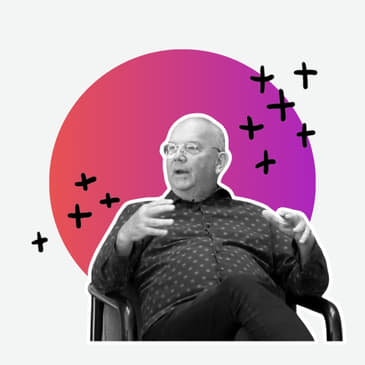
John Ike, a partner of Ike Baker Felton, joins host, Adam Wagoner In this episode, recorded live at the inspiring Adorn space in downtown Denver. John Ike is a distinguished architect known for his eclectic architectural designs rooted in historical influences. He shares his journey from Cincinnati to Columbia University, his experiences working with influential figures like Robert A.M. Stern, and his contributions to postmodern architecture. The discussion also dives into the process behind projects, such as an impressive shingled house on Long Island, showcasing the collaborative efforts between architects and builders.
John Ike's NEW Book: 9 Houses/9 Stories: An Architect and His Vision
Listen on Apple Podcasts | Spotify | Amazon Music | Pandora or wherever you get podcasts!
Watch this episode on YouTube and Subscribe!
Check out Adam's firm, High Low Buffalo!
This episode is sponsored by Modern in Denver Magazine and Signature Doors and Windows
https://www.modernindenver.com/architect-ing-podcast/
This podcast is powered by The Plug Podcast Agency
See Privacy Policy at https://art19.com/privacy and California Privacy Notice at https://art19.com/privacy#do-not-sell-my-info.
[00:00:03] And people would hire us for a project, and you would, you know, where was this project?
[00:00:08] Was it in Maine or Eastern Long Island or Aspen, Colorado, or something like that?
[00:00:15] And so we were always contextual in that realm.
[00:00:19] They checked on him. He was dead on the floor of his apartment.
[00:00:23] Oh, wow.
[00:00:23] And so it was kind of like a shock, you know, being a couple weeks into this practice.
[00:00:29] It was just a couple weeks that you were able to do it?
[00:00:31] Literally, yeah, a couple weeks.
[00:00:33] And...
[00:00:37] Hi.
[00:00:38] Hello.
[00:00:39] Hello.
[00:00:39] Hello.
[00:00:40] Hello.
[00:00:40] Hello, and welcome to architecting.
[00:00:42] Hey, Adam.
[00:00:43] Hey, good to see you.
[00:00:47] It's really nice to see you.
[00:00:48] It feels like I don't get to see you quite as often anymore.
[00:00:51] You're literally a jet-sitting architect that just...
[00:00:55] You don't fly around the world, but you drive around the world to different airports.
[00:01:01] You're designing, like, five different airports right now or something.
[00:01:05] And leaving me with the children.
[00:01:08] There has been a lot of travel.
[00:01:09] Yes, there's been a lot of travel.
[00:01:11] But you're killing it, man.
[00:01:13] You're, like, doing it all.
[00:01:15] Yeah, you just got back from Taos.
[00:01:17] Yeah, there's this...
[00:01:18] In Taos, New Mexico for a pre-construction meeting for a little teeny tiny airport there.
[00:01:23] Should be fun.
[00:01:24] How are you doing?
[00:01:26] Uh, good.
[00:01:27] I think you might have got me a little sick, too.
[00:01:30] Sorry about that.
[00:01:31] You are sick, and I feel sick.
[00:01:33] But life's good, and we're pushing through it.
[00:01:37] And you should ask me...
[00:01:39] Hey, who's on the podcast tonight?
[00:01:42] Tonight?
[00:01:43] Today, this morning, whenever you're listening.
[00:01:45] John Ike is on the podcast.
[00:01:47] So, this one...
[00:01:50] Again, I'm not doing podcasts right now.
[00:01:52] I'm on a break.
[00:01:54] But?
[00:01:54] But it's part of a busy break.
[00:01:56] And I was happy to be asked by the Denver Architecture Foundation to be part of their Doors Open Denver event.
[00:02:06] And they asked me to interview John Ike.
[00:02:09] And it was live.
[00:02:10] It was live at Adorn.
[00:02:14] A Gensler design space.
[00:02:15] A really cool space.
[00:02:16] Yeah, it was a Gensler design space, and it's a cool space.
[00:02:20] It's with workplace resources.
[00:02:22] Yeah, they're loosely related, but it's just a retail store in the base camp.
[00:02:27] Is that what it's called?
[00:02:28] Mm-hmm.
[00:02:28] Base camp block of downtown.
[00:02:30] Yeah.
[00:02:30] But a really cool space.
[00:02:32] And go check it out.
[00:02:34] If you're looking for...
[00:02:36] I think the idea was that they have workplace resources, sales, furniture,
[00:02:40] but then they were looking for things to sort of stage, to populate, style, to adorn office spaces.
[00:02:50] And doing it so much that they set up this other business to do that.
[00:02:53] So, you know, Christmas is coming up.
[00:02:56] If you have a really cool design for mother that you need a gift for, there's lots of...
[00:03:01] I want, like, everything in this store.
[00:03:02] Yeah, it is cool.
[00:03:03] And they host us really well.
[00:03:05] And we had a really nice talk with John Icke, the founder of Icke Baker Felton.
[00:03:10] Again, somebody I'd only talked to once before and didn't really know his work,
[00:03:15] but really, really connected.
[00:03:19] And it's a different type of work that's very eclectic,
[00:03:23] but is very informed by architectural history and precedent analysis,
[00:03:30] but then sort of merging them together in different interesting ways.
[00:03:36] And an architect who's been doing this for a long time
[00:03:38] has had kind of a number of different firms that you can hear in the podcast,
[00:03:42] but just a lot of experiences.
[00:03:45] And again, comes at architecture in a different way that,
[00:03:48] honestly, I might have said I was a little skeptical about,
[00:03:51] but it was refreshing and it was something different.
[00:03:55] And he's very passionate about creating these beautiful, unique spaces for his clients
[00:04:01] that still are, like I said, really embedded within architectural history and design.
[00:04:08] Nice.
[00:04:09] We got one of his books here.
[00:04:11] Mm-hmm.
[00:04:12] Yeah.
[00:04:12] Looking through it, it's really, really interesting, thought-provoking work.
[00:04:17] Yeah.
[00:04:18] So check it out.
[00:04:21] This feels like a very, like, formal way to start.
[00:04:26] No, I'm just interested.
[00:04:28] You know, it's great to Meg and the team here to, like,
[00:04:31] get Doors Open Denver going again in person and already some fun events.
[00:04:38] I'm interested just in the room, how many people are architects or designers?
[00:04:43] Yeah.
[00:04:44] Everyone else is architect interested.
[00:04:47] Are he interested?
[00:04:49] Well, yeah.
[00:04:49] Well, thanks.
[00:04:50] Thanks for coming here.
[00:04:51] I mean, a beautiful space to be in.
[00:04:53] Yeah.
[00:04:54] So we have John Icke here.
[00:04:56] I could go into, like, an introduction, but I think we just figure it out as we go.
[00:05:02] But so, John, I think, you know, it's interesting.
[00:05:09] My podcast, Architecting, the goal of it is to really spotlight and highlight the stories
[00:05:15] of Colorado architects.
[00:05:16] And, you know, there's a lot of podcasts or things that interview really well-known architects
[00:05:21] from around the country, around the world.
[00:05:23] But the idea of this was to just really focus on this local community.
[00:05:26] And so I've been sort of documenting the stories of a lot of people.
[00:05:29] And so John's a little bit different than that because he's not practicing in Colorado,
[00:05:35] but he actually did start his education in Colorado at Colorado College.
[00:05:39] So give us a little background here.
[00:05:42] Where'd you grow up and what were you sort of growing up?
[00:05:45] Grew up in Cincinnati and graduated from high school in 1972 and went to this great
[00:05:54] little hippie college in Arizona called Prescott College my freshman year.
[00:06:00] And they did a kind of, Colorado College has a block system where you take one class
[00:06:05] at a time.
[00:06:07] And this was sort of a block, quarter, block, quarter, block.
[00:06:11] And so your first block was kind of like oriented, three and a half week orientation.
[00:06:17] And my particular group was like 12 or 13 people.
[00:06:21] And we kayaked in the Sea of Cortez around Isla Tiberon, which is the biggest island in
[00:06:27] the Sea of Cortez.
[00:06:28] And it was just an amazing experience, especially coming from the Midwest.
[00:06:33] Never having sort of experienced anything like that.
[00:06:36] And fell in love with Mexico, fell in love with all this kind of outdoor adventure stuff.
[00:06:42] Long and short, kind of went through a somewhat normal freshman year.
[00:06:47] But my final block was a month of butterfly hunting down in Neurit in southern Mexico.
[00:06:54] And after that, I got back and a friend of mine had just bought a single engine plane.
[00:07:00] And he was going to fly to Columbia for the summer.
[00:07:04] And so I...
[00:07:05] In like what, 72, you said?
[00:07:07] Yeah, in 1972, yeah.
[00:07:08] Yes.
[00:07:09] And so I called my parents and said, yeah, I'm going to Columbia this summer.
[00:07:13] And they said, no way.
[00:07:16] Yeah, what were you flying there for?
[00:07:18] My dad was a pilot.
[00:07:19] And so he knew what could go wrong.
[00:07:23] And so they said, get your back here.
[00:07:28] And then they had me tested for what I would be good when I grow up at.
[00:07:33] And basically, I didn't want to do anything.
[00:07:37] You know, it was not...
[00:07:38] It came up flying to Columbia, was what you meant.
[00:07:41] Right.
[00:07:41] It was not cool to have an occupation.
[00:07:44] So basically, they said, well, you're not a good businessman.
[00:07:47] You're not a good doctor.
[00:07:48] You're not a good lawyer.
[00:07:50] Maybe an engineer.
[00:07:51] And I said, oh, God, that sounds deadly.
[00:07:54] And they said, or maybe an architect.
[00:07:56] And I said, I guess if you have to do something, that's sort of the lesser of the equals.
[00:08:01] I like how there's the overlap of not a good businessman, not a good lawyer, not really an engineer, just is like, yeah, architect.
[00:08:09] Yeah.
[00:08:11] So that sort of got me thinking.
[00:08:13] And then my great little school, I was told went out of business.
[00:08:18] I think my parents may have made that up.
[00:08:23] So I transferred to Colorado College, which was legit.
[00:08:27] Did you just make it halfway home?
[00:08:29] Or how did you choose?
[00:08:30] I don't even, it's all fun.
[00:08:32] Yeah, yeah.
[00:08:33] But anyway, so I started Colorado College and I had a lot of credits in science.
[00:08:37] And so I love chemistry, I love biology.
[00:08:40] So I got my degree in biology at Colorado College.
[00:08:45] But at the time, the whole time I was kind of, they had no architecture or any pre-architecture thing going on there.
[00:08:52] But I'd sort of had it in my mind.
[00:08:54] And so I got a grant to sort of set up a pre-architecture program at Colorado College.
[00:08:58] And it was really an excuse to kind of check out the different schools.
[00:09:03] And so I did that.
[00:09:05] And my girlfriend at the time lived in New York City.
[00:09:08] So after I finished, I moved to New York City.
[00:09:11] Worked actually at the Institute of Cancer Research at Columbia as a lab tech for a year.
[00:09:18] I was kind of a disaster at that.
[00:09:19] And then applied to architecture school at Yale and Columbia.
[00:09:26] I got rejected at Yale.
[00:09:28] I got into Columbia.
[00:09:30] And New York City at that time was, you know, Gerald Ford had said the New York City dropped dead.
[00:09:37] It was not a great place to be.
[00:09:39] So I'm pretty sure I was a pity, you know, case.
[00:09:42] And they let me in there.
[00:09:43] And long and short, I got a degree.
[00:09:46] Met my future boss, Bob Stern, there.
[00:09:50] And sort of the rest is history.
[00:09:53] Let's like pull back slightly because I'm really interested in that time.
[00:09:57] So when you started at Columbia, when was that?
[00:10:00] What year?
[00:10:00] That was 76.
[00:10:02] 76.
[00:10:02] And so, you know, we were talking a little bit like that's a pretty crazy, interesting time in architecture, right?
[00:10:09] Totally.
[00:10:10] The modernist masters are dying off like dead.
[00:10:13] And the profession is trying to figure out sort of what's next.
[00:10:16] Postmodernism was on the rise.
[00:10:19] Postmodernism, deconstructivism.
[00:10:20] Yeah.
[00:10:21] Like brutalism.
[00:10:22] And so you land in Columbia where, like you said, Robert A.M. Stern is there.
[00:10:29] And like you have Kim Trampton, other influences.
[00:10:31] And so, and then even sort of like beginnings of kind of digital architecture, you know, is a few years off at Columbia especially.
[00:10:40] What, did you really feel those sort of divisions and different ideologies?
[00:10:45] Yeah, totally.
[00:10:45] It was sort of like this year's presidential race, you know.
[00:10:49] There were the modernists, Ken Frampton's crew, and the postmodernist Bob Stern's crew.
[00:10:57] And we would collect jurors from Princeton, Yale, and New York City.
[00:11:05] And they were very, it was a very lively time.
[00:11:08] There were two distinct camps.
[00:11:10] And everybody was very collegial and everything like that.
[00:11:14] But there was definitely a choice to make.
[00:11:17] And I got sucked into the postmodernist camp.
[00:11:21] Mainly because I thought Bob Stern spoke English.
[00:11:25] I couldn't speak the language that, you know, that these other modernist theorists spoke like Eisenman and...
[00:11:35] Shumi and...
[00:11:36] Shumi and...
[00:11:36] Yeah, all those sort of people.
[00:11:37] So, yeah, that's kind of the path I took.
[00:11:41] But it is interesting if like at that time you were really having to plant your flag on a side.
[00:11:47] And so what do you think, I mean, besides maybe the sort of philosophy and things, you know, behind what Eisenman was doing or Shumi,
[00:11:58] or what kind of drew you to postmodernism, which was a really newish thing, right?
[00:12:06] Like, you know, learning from Las Vegas in what, 69, something like that?
[00:12:11] In 70?
[00:12:12] So, yeah.
[00:12:13] It was because coming from a biology background and a non-architectural, non-theoretical background,
[00:12:21] Bob Stern talked about buildings and styles and stuff like that.
[00:12:26] And as kind of a layperson, that's something that I could really relate to.
[00:12:30] And I was frustrated by kind of the philosophical side of the other group.
[00:12:39] And so this was, you know, we were just going to create buildings.
[00:12:45] And at first it was basically abstracting historical models.
[00:12:50] And then very quickly it got into almost, you know, complete historicism.
[00:12:56] And so I really drank the Kool-Aid and went that route.
[00:13:05] And it was as my career progressed, I became more aware of the great history of modernism.
[00:13:11] And I think it had always been the goal to make historical looking familiar architecture function in a way that people lived, you know, currently.
[00:13:26] And, you know, I think that for the past 50, 60 years, we've all lived in the kitchen and the family room watching TV.
[00:13:33] And rather than having a formal living room and a formal dining room.
[00:13:37] And so it was really kind of making building or houses like that.
[00:13:43] And then also buildings where they felt familiar, but they were, and they were technically modern buildings, but they had that familiarity.
[00:13:55] And so you graduate and then you go work for Bob?
[00:14:00] I tried to not work for Bob for a few minutes.
[00:14:03] Yeah.
[00:14:03] And, but didn't really like the other place I was.
[00:14:06] I called Bob back up and he said, I said, Hey, can I come back?
[00:14:10] And he said, absolutely.
[00:14:12] And so when I started at that office, Bob had gone through a severe downsizing during the seventies because of the economy.
[00:14:22] And so I started there and I think there were three or four people there.
[00:14:26] And by the time I left in the eighties, there were 85 people there.
[00:14:30] And now there's 350.
[00:14:32] And now there's 300.
[00:14:33] But basically it started, I was there on the ground floor of all the commercial projects, you know, with Heinz development and Disney and the institutional projects.
[00:14:44] But at the same time, I got to do houses, which I love.
[00:14:46] And so it was a really great kind of Petri dish to, to acclimate yourself to architecture.
[00:14:54] And so then why'd you leave?
[00:14:56] What happened?
[00:14:57] Because how long were you there?
[00:14:59] I was there for 70 years and it was the Bob show.
[00:15:04] And we were laughing because he, he, he, he was the Dean when I was at grad school.
[00:15:10] And so like you, when you say Bob show, it's like such a visual thing of he he's, he's always in this super sharp suit with bright yellow or orange socks.
[00:15:21] And just like, I'd be presenting a project or something.
[00:15:25] And he would just totally turn his whole body away from you.
[00:15:28] He just didn't want to look at the project even.
[00:15:30] Right.
[00:15:31] And you would, you would call it getting Bob.
[00:15:33] Right.
[00:15:34] Yeah.
[00:15:35] He was, he was quite a character, but he, he was so insightful, not a great architect in my opinion, but a great sort of promoter of this idea of, you know, public architecture, which the public in general could relate to at least during those times.
[00:15:54] I think things have, you know, obviously evolved.
[00:15:57] And he also, you know, the, the sort of my colleagues from that period were some really super interesting people who've gone on to do interesting things as well.
[00:16:08] He was there at Columbia and then he was at Yale, but he was really able to cherry pick great people and identify future leaders.
[00:16:16] And so it was a great place to, to grow up.
[00:16:20] So you, you, you were learning in that environment and then you decided to go off on your own at that point.
[00:16:25] So I, at one point I, I was kind of sick of New York when I was in my thirties and, and kind of longing for a smaller market.
[00:16:34] And I, and so I talked to people in Providence and Cincinnati and Pittsburgh and Milwaukee and with the idea of kind of heading out.
[00:16:44] So I, at one point I was in my thirties and my thirties and I, and I went into a little bit of a small market.
[00:16:44] And then I realized that the money is in New York and that's where, you know, the people with big budgets who really did interesting things were.
[00:16:54] So I sort of decided to stay.
[00:16:56] And then a friend of mine at the firm said, Hey, I've got a couple of clients.
[00:17:01] You want us just, you know, do our own thing.
[00:17:04] And I was ready at that point, you know, a couple of years prior, I really wasn't ready.
[00:17:08] And so we left, this guy's name was Alan Gerber.
[00:17:13] He super talented, like an amazing interiors person, but also a really strong architect and a very strong partier.
[00:17:22] And, uh, just had an out of control lifestyle.
[00:17:26] And so literally we had, we had separated and we were renting desks, um, on three 30 West 42nd street.
[00:17:36] And we had two or three people helping us one Monday.
[00:17:40] Alan didn't show up and that was kind of normal.
[00:17:44] So I didn't really worry that much Tuesday.
[00:17:47] He didn't show up.
[00:17:48] And so a friend of his called me and said, have you seen Alan?
[00:17:51] I said, no.
[00:17:52] He said, I'm going to go check.
[00:17:53] They checked on him.
[00:17:55] He was dead on the floor of his apartment.
[00:17:57] Oh, wow.
[00:17:57] And, and so it was kind of like a shock, you know, being a couple of weeks into this practice.
[00:18:03] It was just a couple of weeks that you were literally.
[00:18:05] Yeah.
[00:18:06] A couple of weeks.
[00:18:07] And Bob said, Hey, if you want to bring your projects and come back in, you know, you're more than welcome.
[00:18:14] Um, but the two clients who we had, we were doing from the ground up houses in Brooklyn said, if you want to continue, we fully support you.
[00:18:25] Uh, you always seem to be the stable one.
[00:18:28] And so I made the decision to go with it.
[00:18:33] And Alan's father loaned me $14,000, you know, so I could make payroll for a couple of weeks and, or a couple of months.
[00:18:41] And I paid him back within six months.
[00:18:43] And then at that same time, I realized I probably didn't want to do it alone.
[00:18:50] And so my friend, Tom Kligerman, who was also at Bob's office, who had gone to Columbia, I'd met him at a class at Columbia.
[00:18:58] He went to Yale for graduate school.
[00:19:01] And I said, do you want to do this?
[00:19:03] And he said, yes.
[00:19:04] And so he kind of extricated himself over the next year.
[00:19:08] And so it was he and I for a long time.
[00:19:10] And then we hired this incredibly talented renderer named Joel Barkley, sort of, uh, as we went along those first couple of years and then kind of reeled him in as well.
[00:19:21] And so that's how this firm, Mike Kligerman Barkley kind of started.
[00:19:27] And we were really a house firm because at that time the economy supported houses.
[00:19:33] When was that like kind of?
[00:19:34] That was sort of late 80s, early 90s.
[00:19:37] The economy wasn't great, you know, but we were good at house architects.
[00:19:42] And so that's how we kind of got going and went for 30 years.
[00:19:46] And, uh, Joel left in 2018, uh, Tom and I split about a year, a year and a half ago.
[00:19:55] And so he took the New York, uh, operation.
[00:19:59] I took California and here we are.
[00:20:04] You know, I think it's interesting.
[00:20:05] We were talking a little bit earlier.
[00:20:07] I also just had a partner that we split up like a year ago and it's so hard to find those kind of right people.
[00:20:13] And I think especially, you know, when you came out of, out of Bob's office and postmodernism is sort of at its, at its peak in a way.
[00:20:22] And so, you know, I could see sort of easily finding those like-minded people.
[00:20:27] Uh, but then, you know, after, you know, early nineties, right.
[00:20:32] It really starts going out of fashion, right.
[00:20:35] And, and so the idea of, did you feel pretty aligned in the architectural direction with your, with your partners?
[00:20:44] And even once it sort of did go out of fashion that way and figuring out what's next.
[00:20:50] Yeah.
[00:20:51] So no, we, we were totally aligned.
[00:20:53] Um, and the thing that's different about a, uh, residential or house practice versus a commercial or institutional practice is that there was, and still is a large contention to people who wanted more traditional houses.
[00:21:09] And that's sort of what we specialized in, but they were usually, they weren't a straight Georgian house or, uh, you know, we did do a lot of shingle style houses, but they were usually mashups of a bunch of different styles.
[00:21:23] And I think that's how our firm, you know, sort of created its identity of being able to synthesize these different styles that were more or less traditional and familiar, but the way the houses were designed and functioned was the way people live.
[00:21:42] So that was kind of our MO in a, in a, in a word.
[00:21:46] Right.
[00:21:47] Yeah.
[00:21:47] Cause I think that word of, of mashup is pretty fitting.
[00:21:52] And I think it was another way that you stated it in the book, but it, but it is this really interesting body of work where, yeah, like you're saying it, it's not, it's not traditional.
[00:22:04] It's not just copying styles, but there's a lot of kind of mashing up and hybridization of different styles into a, into a thing.
[00:22:13] And yeah.
[00:22:14] So, so I'm curious sort of, um, how, how you saw that evolve maybe, or how, um, how you see this sort of thread of that.
[00:22:22] I didn't really think about it that much, but you know, it just, it just sort of happened and people would hire us for a project and you would, you know, where was this project?
[00:22:33] Was it in Maine or Eastern Long Island or Aspen, Colorado or something like that?
[00:22:39] And so we were always contextual in that realm and then would mine different others, you know, sort of sources from history.
[00:22:49] When you're doing a house in Aspen, you may look at a sort of Swiss architect from the 1930s or 1940s and look to them as a way of kind of bringing something in to, you know, rather than doing a straight log house or what was fashionable at the time or, or whatever the sort of typecast models were.
[00:23:13] So we always would draw from Joel, Tom and I were all big students of history.
[00:23:19] We had a great library and would really, you know, go to the bookshelves.
[00:23:26] And it's sort of interesting now, like the problem we always had with, you know, the subsequent generations in our office is they would always go to, you know, the computer and do a Google search.
[00:23:38] And the sources would always kind of take you in a kind of predefined pathway to something.
[00:23:46] Whereas the library was a much more sort of random and free association based on our, you know, past experience with history.
[00:23:55] And the firm was sort of only as good as their library.
[00:23:58] Well, yeah, but we had a damn good library.
[00:24:00] Right.
[00:24:01] So, yeah.
[00:24:02] Well, I think, you know, talking about books, it's, it's interesting with, with the book, you know, in typical architect fashion, I like procrastinated for this.
[00:24:11] And then I tried to start reading it at like eight o'clock last night and I did, I could, you know, I think it was a great format for procrastinating architects where you have, you know, that it's a very clear, yeah.
[00:24:24] Very clear concept of, okay, here's, there's nine projects and here's a story for each project.
[00:24:31] It's a page of text and then it's a bunch of beautiful photos.
[00:24:34] Right.
[00:24:35] So I'm.
[00:24:35] And a drawing.
[00:24:36] And a drawing.
[00:24:37] Right.
[00:24:37] And very nice drawings, which I appreciate as well.
[00:24:41] And so, yeah, I really loved the, the idea of that, of, of really getting in and, and understanding the, the story behind the thing.
[00:24:50] And that's, that's what I've become more and more passionate about is like, how do you bring more non-architects into this like beautiful process of design?
[00:24:57] And I think that's what Denver Architecture Foundation is, is a great mission there.
[00:25:01] But then I got into it, I was, is a, it was kind of disappointing almost where it's like, there's so many stories and so much complexity that happens in the process of a, of a building.
[00:25:13] Right.
[00:25:13] Yeah.
[00:25:13] To put that into a page, it's sort of impossible in a way.
[00:25:18] Right.
[00:25:18] But, but it, but it gives you these little tiny kind of vignettes.
[00:25:21] Yeah.
[00:25:22] You pick one person.
[00:25:23] So it, it's always, you know, it takes a village to create.
[00:25:27] And the thing that I always sort of disliked about the marketing or, or basically the publishing side of architecture is in order to sell anything, you had to put a single name on it, you know, and, or.
[00:25:42] Or two names.
[00:25:43] Yeah.
[00:25:43] Or a few names.
[00:25:44] And it didn't really tell a story.
[00:25:46] So the book is really, each chapter identifies a key player in that particular project.
[00:25:52] Sometimes it was my partner, Tom.
[00:25:54] And other times it was the builder, Frank Di Bono.
[00:25:57] How often do you hear from the builder?
[00:25:59] You know, when, and it's such an integral part of the story, or it may be, you know, the metal worker who did all this amazing metal worker and all these relationships that you develop, you know, are sort of key to understanding what these projects are really about.
[00:26:17] And so, you know, I'm, I've never been much of a writer.
[00:26:21] Thank God.
[00:26:22] And so, you know, I had a writer who I'd known from different periodicals like Archipestral Digest and things like that.
[00:26:30] And so he was the one who wrote these stories.
[00:26:33] And we would, basically what happened is we would get on the phone, Mitch, me, and let's say Frank Di Bono, who was the builder in this one particular project.
[00:26:43] And we would have a conversation just like we're having now about how did this whole happen?
[00:26:49] And what were the things that you remember out of this project?
[00:26:53] And what, you know, what really matters to you?
[00:26:57] And what matters to a builder is different than what matters to an owner, which is different than what matters to the photographer who takes all these wonderful pictures and they provide the representation of this project to the general public.
[00:27:12] And so it was a little, you know, dipping your toe into the water of each of these little stories.
[00:27:19] What I think is interesting, like Frank Di Bono, this guy who grew up in Sicily or Malta and built his parents' kitchen when he was 12 years old.
[00:27:34] Right.
[00:27:35] And then just sort of started this cabinetry carpentry business and then immigrated to the States and now is doing these super high-end houses and things.
[00:27:43] So give us, like, yeah, let's dive into the story of that project and sort of how it came about, how, you know, it's a very defined style and grand space with that.
[00:27:56] Give us a little more.
[00:27:57] Yeah, that was the story that's profile.
[00:27:59] We'll see if it comes up here, yeah.
[00:28:01] It was a house on the east end of Long Island and it was a shingled house and...
[00:28:07] What do you mean when you say that?
[00:28:08] So a shingled house?
[00:28:09] I mean it had wood cedar shingles on it.
[00:28:12] Okay.
[00:28:12] So you're not really talking like stylistically?
[00:28:15] It's not shingles style, but it has, you know, our repertoire sort of utilizes different techniques from the shingles style from 1880 on.
[00:28:26] But I met Frank in 1995 through somebody who was an interior designer in our office and it's been a 30-year, fantastic relationship.
[00:28:37] And the thing I loved about Frank is that so often when you hire a builder, you struggle to get the minimum of your ideas out.
[00:28:48] He would so enhance the projects.
[00:28:51] Like he would take the door.
[00:28:53] Inch and three-quarter door is not good enough.
[00:28:55] I want a two and a quarter inch door, you know.
[00:28:58] And for instance, this house had these brackets on them that were done out of cedar and he said, no, they have to be steel, you know, and then we'll clad them in cedar to prevent sort of a hurricane uplift and things like that.
[00:29:11] And he said that he didn't tell you until he installed it.
[00:29:15] No.
[00:29:16] But the integrity of the wood is, yeah.
[00:29:18] He would, he had standards.
[00:29:21] My standards are pretty high, but his standards were way beyond mine.
[00:29:25] And so that's why I loved having him in all these projects.
[00:29:29] And we'd done a number of, probably we'd done 10 or 15 apartments in the city.
[00:29:35] And this was the first sort of house that we had done.
[00:29:38] And he just brought so much more to the table and with such incredible passion.
[00:29:45] And so it was always a pleasure to work with him because what you put down on paper was only the beginning.
[00:29:52] And what he would bring to the project, you know, was really the payoff of working with him.
[00:30:00] And it's, it's just typical of so many of the people who you work, you work with them because they bring something more to the project than you can.
[00:30:11] Yeah, you have an idea, but they can really kind of, you know, embellish and enhance and make it so much better than you could ever do on your own.
[00:30:22] Yeah.
[00:30:22] So I'm interested to sort of dive into the weeds of the project if you guys indulge us here.
[00:30:27] But like, what was the sort of background of the client, the site, and then that idea?
[00:30:34] What was the idea?
[00:30:35] How did it evolve?
[00:30:37] So we met the client because the clients were Argentinian.
[00:30:42] A couple, they had kids.
[00:30:44] He worked in finance.
[00:30:46] She had a great aesthetic sense, very Argentinian.
[00:30:50] Lots of cow hides and sort of clean Argentinian modernism.
[00:30:57] But we met them from Frank doing their apartment.
[00:31:01] I can't remember whether I designed the apartment or not.
[00:31:03] I might have, I might have been involved in the design of the apartment.
[00:31:07] And then they said, well, we have this, this property out in Bridgehampton.
[00:31:12] And it had a kind of a crumbling 1900 farmhouse on it.
[00:31:19] And they had bought a barn and imported the barn to the lot.
[00:31:23] And classic kind of Hampton thing with hedges on the sides, a very identifiable rectangle.
[00:31:30] But it was also, it was subject to floodplains because it was near the bay.
[00:31:35] So it had to be elevated, but you were up against the height limit.
[00:31:39] And so typically our shingled houses had steeper roofs on them, but you couldn't do that there.
[00:31:46] We sort of identified Bernard Maybeck, who was a great San Francisco Bay architect who emigrated from the East Coast to the West Coast in 1900.
[00:31:59] And really became kind of the preeminent architect at the turn of the century up into the 20s in San Francisco.
[00:32:07] And he would do these shallower, hipped roofs, almost Swiss chalet in style.
[00:32:13] So we basically borrowed that technique.
[00:32:16] And then the clients and I both kind of resonated over this house in Uruguay.
[00:32:22] I forget the name of the town in Uruguay that all the wealthy Argentinian, Buenos Aires people go to.
[00:32:30] And there was a house in the world of interiors that we loved that kind of melded industrialism and modernism.
[00:32:38] It was very chic.
[00:32:39] And so that was the plan, kind of an organizational model for the house.
[00:32:45] And then cladding it in the shingles of eastern Long Island, but detailing from Bernard Maybeck on the West Coast.
[00:32:55] And that was kind of the genesis for the basic idea of the house.
[00:33:01] Yes, I've been like staring at the slides behind you, but I don't think it's part of this.
[00:33:05] Oh, it's not.
[00:33:06] You have to buy the book.
[00:33:07] Okay.
[00:33:09] But yeah, it's too bad because, you know, it's interesting hearing you talk about influences, right?
[00:33:15] And we all, with architects, we all have influences in the project.
[00:33:19] But the sort of modernist experience or modernist line of design normally is really about abstraction.
[00:33:27] It's not about historicism.
[00:33:28] Right.
[00:33:28] And you're really bringing these, you know, references in.
[00:33:31] And it's interesting the sort of like what you choose to bring in, right?
[00:33:36] Yeah.
[00:33:36] Because it's not like you're saying, okay, this is from Long Island and we're looking at Long Island architecture.
[00:33:42] We're looking at San Francisco.
[00:33:43] We're looking at Uruguay.
[00:33:44] And it's coming together.
[00:33:46] Yeah.
[00:33:47] It's a real sort of whimsical process in a way, maybe.
[00:33:52] And mashing up.
[00:33:54] I want to say like exuberant, right?
[00:33:55] Of like having that vision.
[00:33:59] Or like is it really about sort of the dovetailing in with the clients?
[00:34:03] That's what it really is.
[00:34:05] Their references were, to a large extent, yeah, they were aware of what was going on out in the Hamptons and stuff like that.
[00:34:12] But they also had this whole other side of their life culturally from South America, which was very important to them.
[00:34:19] And sort of, you know, collaborating with them.
[00:34:23] And Frank, who was integral in the whole process as well, in developing these sort of ideas and then making them into a reality.
[00:34:34] And so, the concept of it was mainly like this Uruguayan house that we'd seen in World of Interiors.
[00:34:42] And then dressed up in sort of shingles.
[00:34:46] But abstracted also because it's kind of a very clean, modern house, which was their aesthetic.
[00:34:53] Yeah.
[00:34:54] So, I'm interested, you know, we've been sitting here for a little while just talking.
[00:34:58] If there's any questions or any thoughts that you have, raise your hand.
[00:35:03] Yeah.
[00:35:05] I was curious.
[00:35:06] Will you guys have a photo in the slideshow of a kind of broad map?
[00:35:12] Oh, yeah.
[00:35:15] Yeah.
[00:35:15] Wait, sorry.
[00:35:16] Bree, let me repeat that for the podcast here.
[00:35:20] We're first on this project.
[00:35:22] So, yeah.
[00:35:23] Bree was talking about just the raw natural materials and the use of that in the work, right?
[00:35:29] And the slides that we're seeing here.
[00:35:31] Yeah.
[00:35:32] Those were brought to the project by the clients.
[00:35:36] And it was a husband and wife who had owned an advertising agency in San Francisco.
[00:35:44] And they were very, he especially, was very aesthetically oriented.
[00:35:50] And so, they collected natural materials from the site.
[00:35:55] Okay.
[00:35:57] And brought those, you know, to the table in terms of establishing a palette.
[00:36:03] Because the whole idea was we wanted this house to really blend into the landscape.
[00:36:10] And they had chosen a site.
[00:36:12] I mean, it's in a, I forget the name of the development.
[00:36:15] It's up Carmel Valley, up from Carmel.
[00:36:18] And it's an absolutely incredible development that was done, laid out based on a 1920s estate that was like, I don't know, 30,000 acres or something like that.
[00:36:30] But they would site houses in groups of four.
[00:36:34] But you would never know you were near another house.
[00:36:38] Because you could only see them by looking across the sort of arroyo or the valleys and seeing these other houses in the distance.
[00:36:47] So, they wanted their house from a distance to really blend into the landscape.
[00:36:51] And they chose this site.
[00:36:53] It didn't have the absolute killer views of Monterey Bay.
[00:36:57] And it was much more kind of subtle, but not subtle.
[00:37:04] But, I mean, you know, these sites are just absolutely incredible.
[00:37:08] And so, they brought those materials to the table.
[00:37:10] And then we selected the stucco and the roof and all those sort of things, the color tones, to sort of match those or sort of complement those natural materials from the site.
[00:37:22] So, a great involvement of architect and owner who had very specific ideas but also was very willing to sort of let us do our thing to a certain extent.
[00:37:38] And they were kind of, when they asked me, how do you describe that house?
[00:37:43] And I said, to me, it's kind of a ranch house.
[00:37:46] A ranch house in the vein of this architect named Cliff May who practiced in California in the mid-century.
[00:37:55] Started out doing Spanish mission houses but developed into kind of what we know as the modern ranch house.
[00:38:01] And, you know, he was very active here as well.
[00:38:03] Oh, he was?
[00:38:04] Yeah, yeah.
[00:38:04] Okay.
[00:38:05] Influential, yeah.
[00:38:06] Okay.
[00:38:07] Yeah, I mean, so many people loved ranch houses.
[00:38:10] And the owners were kind of aghast.
[00:38:11] They never thought that they would have a ranch house because that was sort of their idea was this 50s suburban thing that was called a ranch house, which is a single level kind of, you know.
[00:38:25] Sprawling.
[00:38:25] Cookie cutter thing.
[00:38:27] But in essence, that's really, it was a Cliff May description of a ranch house that really motivated us in terms of that.
[00:38:35] Was that what you were asking about, Brie?
[00:38:37] When you said that question, I was thinking about this mountain lodge of just how striking that roof material is and just the stone and the sort of like the heaviness and the authenticity of these materials on this project.
[00:38:54] Yeah.
[00:38:54] It's like, it's sort of overwhelming in a way.
[00:38:57] And yeah, take us through this house.
[00:38:59] So that was, this one was really.
[00:39:00] When I say think of mashups, this is, yeah.
[00:39:02] Yeah.
[00:39:03] This one was really authored by, by Joel Barkley, my former partner.
[00:39:08] It was the, the program.
[00:39:11] It was a couple who lived in the Bay Area and the peninsula after then, I guess.
[00:39:17] And they had, they bought this house up in the, the Sierra.
[00:39:21] This picture, especially right there.
[00:39:23] Yeah.
[00:39:24] It's just, and, and so they wanted a house that was, they were amazing.
[00:39:30] I mean, they had two kids.
[00:39:32] Their kids didn't like to watch TV.
[00:39:34] They liked to read books.
[00:39:35] I mean, I don't know how they sort of got them to do that.
[00:39:39] And totally unlike my kids.
[00:39:41] But anyway, there was, this house was very specific.
[00:39:44] They were really looking to Joel to sort of, to sort of set the tone for it.
[00:39:51] And so he started looking at these A-frame houses from the mid-century.
[00:39:56] There's some great ones in Big Sur and things like that.
[00:39:58] But, you know, they also in Tahoe and also Frank Lloyd Wright did these amazing A-frame houses.
[00:40:05] So that was sort of the initial idea.
[00:40:08] But then it's extruded and it's sort of like circling the wagons almost.
[00:40:13] Like it's a, it's based on a Pentagon.
[00:40:16] And Joel is an absolute nut for these sort of complex geometries.
[00:40:21] And so this house really evolved that way.
[00:40:24] And then materially, all the, all the rock was, was quarried on the site.
[00:40:31] And, and basically laid up on, on the foundation.
[00:40:36] And the, and the biggest problem with this location is the amount of snow.
[00:40:41] They get like 12, 15, 25 feet of snow, you know, in the winter.
[00:40:46] And how you get rid of this snow.
[00:40:49] And so it was all really designed around snow shedding and getting it away from the house.
[00:40:55] Hence the use of the copper roofs.
[00:40:57] And then how do we handle copper and this kind of diamond shingles, you know, which I think you guys saw that picture.
[00:41:05] Which is just the most amazing painting of materials that create this sort of gorgeous vocabulary that is one with the nature.
[00:41:18] And when you see this house from, you know, far away, it's sort of like, you know, the, the Denver Art Museum that, um, Leverskin did.
[00:41:29] You know, where he's, um, in a much more abstract way, you know, sort of talking about the mountains.
[00:41:36] And this, with these steep, these steep roofs is also, as well as being functional, it's an allegory to, you know, the mountain setting that it's in.
[00:41:47] Um, and the clients came to us through Paul Wiseman, who's a, uh, designer in San Francisco.
[00:41:57] And it's done a couple of projects for these guys.
[00:42:01] And so they really, I mean, great relationship between us and them.
[00:42:06] And we've done a couple of houses, probably four or five projects with them, all of them very different.
[00:42:11] But they're very supportive of the architecture direction we went.
[00:42:16] But their interiors are very complimentary because they're very simple, but they're sort of bold colors, simple shapes, amazing light fixtures for that project, which they custom designed.
[00:42:28] And so it was a fantastic collaboration between owner, you know, architect, um, and, and interior designer.
[00:42:39] And, and I was involved through the project because I was running the West Coast office.
[00:42:46] And so we basically built the house.
[00:42:48] Joel was in New York.
[00:42:49] He would come out occasionally, but we were to a large degree that the office oversaw the construction of it.
[00:42:57] And there were a lot of field decisions.
[00:43:00] And so that's kind of how that one worked.
[00:43:02] Yeah.
[00:43:02] Interesting.
[00:43:04] Any other burning questions?
[00:43:05] Yeah.
[00:43:06] I'm curious, as you feel the house of those years, if all these pictures of the current house of the landscape is so incredibly important.
[00:43:15] And when you were building houses earlier on, was there this idea of landscape architecture and sustainable plantings and like all that it incorporated?
[00:43:27] Yeah.
[00:43:27] Any other than the home and rich, breaking nature inside?
[00:43:31] Or is this dependent on where these homes have been?
[00:43:34] It is dependent on where they've been, but there's always been, you know, a real intention to tie through the contextualism of the architecture and the landscape.
[00:43:46] It wasn't as clearly defined back in the 80s and 90s.
[00:43:51] But there was sort of nascent at that point.
[00:43:54] And it was kind of the beginning of that.
[00:43:57] And so much of the indigenous architecture, which we often looked at, drew upon local materials because that was the way things were built in the 19th century, 18th century, you know.
[00:44:10] And then the historicism sort of carried that through into the 20th century.
[00:44:17] But, you know, obviously we were, you know, exposed to modern architecture.
[00:44:23] And that was part of the idea.
[00:44:26] I mean, when you look at a mid-century building, it's really all about blurring the lines between interior and exterior.
[00:44:34] And sort of bringing the outside in and the inside out.
[00:44:38] And so we always tended to do the hardscape for the landscape.
[00:44:43] So that would sort of bring the architecture out into the landscape.
[00:44:47] And then we quite often would work with landscape architects who would then select plants.
[00:44:55] And more and more recently, it's, you know, native, sustainable landscapes.
[00:45:02] Yeah.
[00:45:03] I was just wondering, you're talking about all the different styles and stuff that you're using.
[00:45:07] I was wondering kind of the thought process about how you can combine all those styles and kind of like make them your own style.
[00:45:17] It's just kind of like free association.
[00:45:19] You know, like you, you know, you're thinking of a mountain project.
[00:45:22] And like I mentioned, there's a Swiss architect, Jacques Lemem, who did these amazing houses in Chamonix in the 30s and 40s.
[00:45:33] And they were modern, but they were still chalets.
[00:45:38] And, but he was using deco details.
[00:45:42] And so you can't help but think of that when you're, you know, you're in a mountain setting.
[00:45:48] What can I bring to this?
[00:45:51] That sort of, the things that we're interested in, you know, we're really detail oriented.
[00:45:58] And so it's really what comes to mind when you see a house in Seattle.
[00:46:04] Do we have Seattle ones in this photo?
[00:46:06] No, it is not on there.
[00:46:07] Okay.
[00:46:08] Or, or, you know, Maine.
[00:46:13] And it's just, that's the way my mind works.
[00:46:18] And that's the way, you know, my partners, Tom and Joel's minds have worked.
[00:46:23] And that really would sort of kept us together.
[00:46:26] Because other than that, we were sort of three independent little offices under one roof that shared, you know, bookkeeping and billing and, and all those kind of administrative tasks.
[00:46:41] And, and Adam and I were talking about this earlier, that initially in the practice we shared staffs and they would rotate through different projects.
[00:46:50] But then it became sort of, you know, if you wanted to flexibility and ability to sort of, you know, pay attention to a project, it was too much communication required.
[00:47:03] So then we ultimately started to have our own staffs.
[00:47:08] I'm interested, you know, I think that was a good, good question of sort of like mashup of styles.
[00:47:13] And, you know, you were talking about this sort of introduction of the internet into the process of architecture.
[00:47:21] You know, I, I've seen that the sort of like pentrification of architecture design, right?
[00:47:27] Where you can have a client who comes in with this whole Pinterest page and says, do this, right?
[00:47:31] And it's like, can be very disparate things or it can be something that, that kind of goes against what you're, what you're doing in it.
[00:47:38] And it can definitely lead to these like poorly done mashups.
[00:47:41] So I think that's, that's one thing.
[00:47:43] And then, then right in the last year or so, the idea of, of AI coming in and being able to say, okay, I want a Cliff Mayhouse with main influences or whatever.
[00:47:53] And you have 30 options of what that looks like, right?
[00:47:56] Yeah.
[00:47:56] And so it's sort of like this speed of which you can now almost do kind of what you've done and culminated knowledge of 30, 40 years.
[00:48:05] Right.
[00:48:05] Right.
[00:48:05] And so like, what's sort of your, your thoughts on that direction and like how, what's happening there?
[00:48:11] Well, I've, I've never done any social media myself.
[00:48:15] I've never been on, you know, Instagram or, and I, I just don't really have a mind that works that way.
[00:48:22] And so I'm sort of analog in that regard, but it is a, you know, I think probably now the AI thing is probably in its infancy.
[00:48:31] And I think it's, it'll get really good, you know, as time goes on and you'll say, you know, give me examples of Cliff May with Edwin Lutchen's and, and Scarpa.
[00:48:46] And, you know, if it's able to integrate those in that kind of way, that's as sophisticated as what we would do if we were doing that.
[00:48:55] I'm still, I think we're a long way off.
[00:48:57] Well, not that long.
[00:48:58] Like, like we can get images, right?
[00:49:00] But the idea of the full design is a lot of stuff.
[00:49:02] But putting them all together in a coherent style.
[00:49:04] In a coherent way, yeah.
[00:49:04] Is, is probably not there yet, but who knows?
[00:49:07] I mean, it may be.
[00:49:09] And I think that's a real threat to our industry.
[00:49:11] But I think that we were just talking about cameras and things like that.
[00:49:16] And I read the saying that there's this Fuji camera that's really hot right now with, not YouTube, but, oh God, what are the little short 30 minute, 30 seconds?
[00:49:28] Oh, yeah.
[00:49:29] Short.
[00:49:30] Yeah.
[00:49:30] TikTok.
[00:49:31] Yeah.
[00:49:31] It's like a huge TikTok camera.
[00:49:33] And it's out of stock.
[00:49:34] It's like $250 camera, but it's just so hot that you can't get a hold of it.
[00:49:38] And people like it for its retro film-like characteristics of it.
[00:49:44] And so in one sense, AI is a threat.
[00:49:46] But in the other sense, people are so hungry for handmade, hand-done things that, you know, if you're able to do that, they're all, it may not be totally widespread.
[00:49:59] But I think there will be a, there's going to be, you know, a kind of longing for that.
[00:50:07] If you can provide that, you'll be safe.
[00:50:10] I'm interested, maybe just one last one of sort of, you know, you've had this long career that's very embedded in the history and lineage of architecture.
[00:50:22] Are you, are you able to articulate what you think architecture is and, and this sort of purpose and your idea of it?
[00:50:30] That wasn't on like a list of questions I gave you.
[00:50:32] Right.
[00:50:34] That's why I love Bob Stern.
[00:50:35] That's my God's name.
[00:50:36] We didn't have to go there.
[00:50:37] Yeah.
[00:50:38] I had Eisman, so that's why.
[00:50:39] Right.
[00:50:40] Exactly.
[00:50:41] Yeah.
[00:50:41] Yeah.
[00:50:42] Yeah.
[00:50:42] I think basically architecture is the refinement of building and it comes in a bunch of different ways, but it really is a really rational sort of process where a theme or a sort of a confluence of different things is,
[00:51:11] is legitimized almost in a way to create buildings that are more interesting or more functional or more.
[00:51:24] Yeah.
[00:51:24] I guess those things.
[00:51:26] Yeah.
[00:51:27] I feel, I really feel like a fish out of water trying to just answer a question like that.
[00:51:32] Well, it is funny.
[00:51:33] Yeah.
[00:51:33] If you want to make an architect square, ask them what architecture is.
[00:51:37] Yeah.
[00:51:37] It should be the easiest question, but.
[00:51:39] It's not.
[00:51:40] But, you know, I, yeah, I just thank you.
[00:51:42] You know, we, for the Doors Open Denver, we had the keynote discussion with Vishan Chakravarti and, and I'm teaching a studio over at, at CU Denver right now.
[00:51:53] And I was able to bring my class there.
[00:51:55] And it was, we were talking before, it was, it was a nice sort of fresh break where we had been thinking about this, our, the project and architecture in a certain way.
[00:52:04] And then going and having this lecture, all the students, none of them really wanted to go.
[00:52:09] I think I kind of forced them and then they were all very happy they went and they would have rather been kind of working on their project.
[00:52:14] But they're happy in the, in the sort of fresh air that it gave them and infused into their projects.
[00:52:20] And I think in the same way, just having you come here to this event, sharing your story and, and sharing your work with the, just the amount of thought and amount of references and amount of like texture and grain that you're adding into everything.
[00:52:35] It has been a nice breath of fresh air for me and, and hopefully for you guys.
[00:52:40] So thanks for coming.
[00:52:41] Thanks for the book.
[00:52:42] Check it out.
[00:52:42] It's a beautiful book.
[00:52:43] And yeah.
[00:52:44] Yeah.
[00:52:44] Thank you everybody.
[00:52:45] And, and thanks for Carla and the adorned staff and yeah.
[00:52:49] And Meg in there.
[00:52:50] Yeah.
[00:52:51] Yeah.
[00:52:52] Well, great.
[00:52:52] Well, I think you'll probably be sticking around for a bit.
[00:52:54] And thank you.
[00:52:55] Thank you everybody for coming.
[00:52:56] Thanks for coming everyone.
[00:52:58] Thank you.
[00:53:04] You can visit architecting.com.
[00:53:06] That's architect dash I NG.com.
[00:53:09] To see images from this week's guest.
[00:53:12] And please rate and review the show wherever you listen to podcasts.
[00:53:16] Have a great week and keep connecting.
[00:53:22] I'm Eli.
[00:53:23] This show is made by my mom and dad and these people.
[00:53:28] This podcast is powered by the plug.