
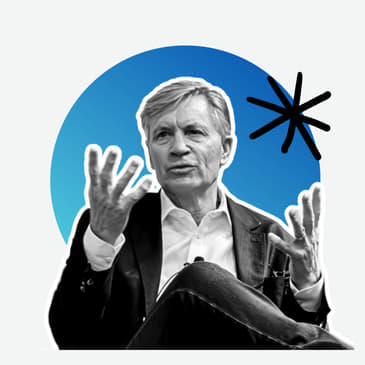
In this special live podcast event, David Tryba, founder and architect of Tryba Architects joins host Adam Wagoner in the Colorado Room at the History Colorado Center which was designed by David and his team. Other notable project from Tryba Architects include The Buell Media Public Media Center, Union Station, The Botanical Gardens amoung others. David & Adam explore themes of contextual architecture, adaptive reuse, the impact of urban design on community building.and resilience in the architectural profession. David reveals the formative experiences that shaped his architectural philosophy, including his childhood, education, varied job roles, and the challenges faced in a fluctuating economy.
Listen on Apple Podcasts | Spotify | Amazon Music | Pandora or wherever you get podcasts!
Watch this episode on YouTube & please subscribe!
This episode is sponsored by Modern in Denver Magazine, Signature Doors and Windows and Daniel Jenkins Photography
Check out Adam's architecture firm, High Low Buffalo!
Powered By The Plug Podcast Agency
See Privacy Policy at https://art19.com/privacy and California Privacy Notice at https://art19.com/privacy#do-not-sell-my-info.
[00:00:00] This episode is brought to you in part by Signature Doors and Windows,
[00:00:05] Modern and Denver Magazine, and Daniel Jenkins' photography.
[00:00:14] It's not just architecture, but there's an enormous amount of urban design that we're doing,
[00:00:18] and I think that's one of the great things I think about Denver.
[00:00:21] More architects are getting into thinking about their work in a larger context,
[00:00:26] which is making a better city.
[00:00:28] We've had this legacy of Ron Straka and Dick Farley who's here,
[00:00:32] and Grashers and Dennis all thinking outside a single building.
[00:00:39] How do we create a better community and how do we make Denver special?
[00:00:44] Hi! Hello!
[00:00:48] Hello!
[00:00:49] Hello!
[00:00:50] Hello and welcome to ARCHITECT-ING.
[00:00:52] Hey Rebecca.
[00:00:53] Hey Adam. Welcome home.
[00:00:55] Thanks.
[00:00:57] Another late night recording here.
[00:01:00] Just got off the airplane from a trip to Kansas City for one of our old architecture classmates.
[00:01:11] Wedding.
[00:01:13] Did I say wedding?
[00:01:14] No, I don't think so.
[00:01:15] For his wedding, for the famous Elvis Acklepole of the architect of Kansas City.
[00:01:23] But yeah, it was fun catching up with some of our old classmates after 15 years of graduating.
[00:01:33] We're so old.
[00:01:34] Yeah.
[00:01:35] Hey for any new listeners. Who are you again?
[00:01:39] Oh hi! I'm Adam Wagner.
[00:01:41] I go to weddings in Kansas City and just to talk with new architects
[00:01:47] and check out new architecture in different cities.
[00:01:50] Now Adam Wagner of Hilo Buffalo Architecture and Stuff.
[00:01:55] That's a tagline on him. I'm trying out.
[00:01:58] Hey, who are you?
[00:01:59] Oh, I'm Rebecca Wagner, architect at Gensler.
[00:02:04] Associate architect.
[00:02:06] Sure.
[00:02:09] All right. Okay. You need to say your thing.
[00:02:11] Oh hey! Who's on the podcast tonight?
[00:02:14] Hey, you know what? You know who's on the podcast because you were there for the recording.
[00:02:18] A live recording.
[00:02:19] Live recording. Yeah, this was a fun one with History Colorado Center where they invited me to come in
[00:02:30] and interview David Treiba in the building that he designed, the History Colorado Center.
[00:02:38] And yeah, this was, I had sort of set David aside to interview later, A, when I got better at doing this
[00:02:49] and B, to have like a nice live event and spread it out.
[00:02:55] And yeah, I think it worked really well.
[00:02:57] Yeah, it was great. It was really interesting.
[00:02:59] Yeah, it was fun.
[00:03:00] David Treiba is a giant of a figure here and done a lot of projects and has created, built up this big successful firm.
[00:03:12] And yeah, it was fun getting to know him and then better understanding just the process of the beginnings of starting that firm.
[00:03:25] Quite a process.
[00:03:26] Yeah, a lot of ups and downs but it was good.
[00:03:30] It was fun to see some of the Denver architecture royalty show up in person to support him too.
[00:03:36] Yeah, we had great handful of architects show up there and kind of he's able to, he's talking to some of them in the crowd
[00:03:46] and you can listen to this as a podcast or you'll be able to watch it on YouTube and see kind of more of the Q&A at the end
[00:03:55] and talking with Chris Shears and others in the crowd.
[00:04:00] Yeah, it was fun.
[00:04:01] It was fun.
[00:04:02] Speaking of ups and downs, this is going to be the last episode for a little bit.
[00:04:10] I'm going to take a break over the summer and so there won't be probably won't be new episodes, but we have some different happy hours scheduled
[00:04:23] and different social events going on.
[00:04:26] And so you can check that out on our Instagram page.
[00:04:32] And we're going to have a new email newsletter going out so you'll be able to, you can subscribe to the newsletter if you're into that sort of thing on Instagram, via Instagram.
[00:04:46] But yeah, I got at this wedding, I got a lot of like, oh, you're doing, you're doing so much.
[00:04:53] How are you doing so much?
[00:04:55] And I think I'm working on that to not do so much.
[00:04:59] And this break is part of that where I can keep pushing it and then I crash and have a mental crash.
[00:05:08] So I'm trying to take a break before I reach that point, but we'll be gearing up again in the fall with new people and new stuff.
[00:05:16] And so come back and listen.
[00:05:20] Keep connecting.
[00:05:23] Enjoy.
[00:06:26] I would like to also recognize our event team for their support, including the AV and the all-important refreshments.
[00:06:34] So a huge thank you to them.
[00:06:36] And tonight we are excited to partner with the architecting podcast to host a special live episode of the
[00:06:55] The Architecting Podcast serves as a platform to bring together Colorado architects and tell the stories behind their images.
[00:07:03] Tonight's special guest is David Tribba, FIA founder, lead design principal of Tribba Architects.
[00:07:10] As the founding principal of the architecture, urban design and planning firm, David's passion for cities directs the work of Tribba Architects.
[00:07:19] He is involved in each of the firm's projects and leads talented designers toward solutions that carefully integrate historic context, contemporary use, and future aspiration, and are in the best interest of the client, the community and the project.
[00:07:34] David's entrepreneurial spirit guides the firm's commitment to the development and transformation of urban buildings, sites and systems into active human-scaled and successful places.
[00:07:45] David possesses a deep understanding of the evolution of cities, past, present and future, and has completed projects across North America in an almost every sector.
[00:07:55] Some select experience includes the History Colorado Center here in Denver, the Denver Union Station and the Crawford Hotel, Denver Botanic Gardens Master Plan and Visitor Center, and the Rocky Mountain Public Media, Buell Public Media Center.
[00:08:10] Adam Wagner is the founder of the Denver-based architecture consulting and production firm High Low Buffalo and host of Colorado's Architect Interview Podcast Architecting.
[00:08:21] A graduate of Kansas State University in Yale, he previously worked for a dozen different firms in three different countries but has been rooted in Denver since 2016.
[00:08:30] Adam has a passion for connecting with other architects and learning from their experiences. Since moving to Colorado, he has worked to build an engaging network of local architects and designers.
[00:08:40] Amid the 2020 pandemic shutdown, Adam decided to record these conversations and broadcast the stories of Colorado's best designers with the goal of creating a stronger local community.
[00:08:52] That project became architecting, which has now expanded from remote interviews to also include live events and social meetups. And with that, I'm excited to introduce Adam to kick off tonight's inspiring conversation. Thank you.
[00:09:05] Thank you. Yeah, and big thank you to Samantha for the invitation here in History Colorado. It's funny when you like write those bios, they don't seem very long but then when someone's reading about you, it takes forever.
[00:09:19] And it's like, I don't want to talk about myself that long but you know, I think in general I'm a pretty big dreamer.
[00:09:29] When I started this, I told David when I started this podcast in 2020 in my 12 square foot pantry with looking at a zoom, I didn't think in a few years I'd be in History Colorado center with David Tribba.
[00:09:46] So this is a treat here. Just this project that I've started on, the idea of just trying to document people's stories, just a lot of the people who are building our cities and places that we don't necessarily know or see and especially people from 50 years ago or something.
[00:10:05] The idea was let's try to record this and in 50 years somebody, one few people can hear what was going on behind that.
[00:10:15] But I've been, and if nobody listened to it, that was fine but I've been really happy with the amount of community that's built here and we have a lot of the previous guests here who shared this project.
[00:10:27] But you know, I tried to interview a lot of well-known architects in the beginning to get some interest up but I purposely kind of put some well-known ones back and held them off for a little bit A so I could get better at this thing.
[00:10:41] And B so we could have a kind of live thing eventually like this and David was one of those so glad to finally get you on stage.
[00:10:49] I'll start off with the one set question and then we'll free flow from there. But who are you once there's a book written about you? What does it say on the back cover? David Triva is?
[00:11:01] Well I think that the bio kind of wrapped it up and I do have a passion for cities. I've always had that growing up from my earliest memories of an understanding of place even if it was elemental, it had nothing to do with architecture.
[00:11:17] It was just about sight and smell, the feeling of a place. And I grew up in Colorado Springs and it had back 50 years ago it had a completely different feeling than it certainly does today.
[00:11:30] And it had a feeling of safety and security and we left our doors open in the neighborhood and keys in the car and I don't ever remember any kind of crime.
[00:11:44] And it was in that security that you feel as a human that you can go out into the world and experience things in a way that I think is profoundly human.
[00:11:57] And so all that stuff in the biography of a passion for cities grew out of just a sense of security and family and community. And growing up in a small town at the time it was a small city. Everyone seemed to know each other and take care of each other.
[00:12:16] At least was my perception.
[00:12:19] It seems like a nice wrapped up explanation of the childhood. Painless picture of what did you grow up around? What were your parents doing? What were your worst friends?
[00:12:32] That idea of I have a sense of place and the touch and the smell of it. As a kid you're not thinking that right? So what were you bumping around doing in dams and waters?
[00:12:46] We were. I didn't know until even recently there was a park that was about half a block across the street that went north south the whole length of Colorado Springs that was designed by Olmsted and it was never really finished so it was just sort of this rough and ready patch and there were bike paths through and old growth cotton woods along Fountain Creek.
[00:13:11] We just would walk out the front door, go half a block, get into this wilderness. And so that we did exactly just that. Built dams and got into trouble, smoked cigarettes and all the kind of things that kids do.
[00:13:24] Just like architecture.
[00:13:25] Yeah.
[00:13:27] So was architecture a thing that you do about? It seems like most people or most kids, you don't really know what architecture is or the profession itself. Were you around architects?
[00:13:43] Well, there was this profound thing that was happening in Colorado Springs when I was growing up at the age of five and six they were building the Air Force Academy. We were in the middle of the Cold War and Colorado Springs all of a sudden became on the national map of hosting a place for a new military academy
[00:14:06] and had no idea about SOM or Walter Natch or but I got to see this thing get constructed up on the hillside up on the hillside and it was just mind boggling and my parents were very much into it.
[00:14:23] And it brought an enormous amount of pride to the city. And I think, you know, it was in that community benefit that came to the Colorado Springs through something new and groundbreaking that had a profound effect on the community and my family and therefore me.
[00:14:45] And the scope and the scale of these structures and their insertion into the landscape was so powerful that I think they just sort of took all that in.
[00:14:56] And that it sort of balanced out with the historic and the beauty of the Broadmoor and the mountains, Cheyenne Mountain and Pikes Peak and this park and all the trees. So that was just kind of I think just all wrapped up into a perspective of life.
[00:15:16] But that is unique, I think in middle of the country location, you know, like growing up in Kansas where I was right there's not these amazing pieces of international acclaimed architecture, right and to be next to that and see that have an impact.
[00:15:33] Then you're going through high school you hit that college stage. Did you know you wanted to be an architect? What was that sort of process?
[00:15:42] Well, I came from a family of five and we had a big basement and I kind of think about it now. You know, at Christmas we get the train set and when and I think back then it was really the birth of sort of what we would call contemporary American modernism.
[00:16:00] So I got these Kenner building sets for Christmas from Santa Claus and we started building skyscrapers and then, you know, it occupied my time and I set my younger brothers to work and we'd be building different things.
[00:16:15] And so my parents thought that was a great investment. They kept buying more and more of these Kenner sets until the whole basement was filled with all these buildings and cities and you didn't need the train.
[00:16:25] We didn't need the just at the building. Yeah.
[00:16:28] You know, I just was building things from a very young age.
[00:16:34] Did you start off in college for architecture at CU?
[00:16:40] I did. I originally thought that I was going to, well, I wanted to go to medical school but I didn't really have the academic talent and I was working at a hospital and it was a long story but I was terminated.
[00:16:55] I had been...
[00:16:56] That means something different at a hospital?
[00:16:58] Yeah.
[00:16:59] Right.
[00:17:00] Yeah. There was a hospital across the street so I scrubbed pots and pans after school but I was taking it in high school.
[00:17:08] I took a mechanical drawing class and it was just the funnest thing in the world.
[00:17:12] I had one electric elective and I just enjoyed drawing so much that I got through one year in a semester and two years in a full year.
[00:17:25] My instructor said, you know, you should really go try to find a job with an architect.
[00:17:31] It never occurred to me and there was an architect that had designed our brand new high school that was just a year old that we were occupying.
[00:17:39] His office was across the street and I went over with my drawings and I got a job when I was a senior first day of senior year
[00:17:50] and went to work at noon and worked till 8 and that was the rest of the story.
[00:17:56] I just loved being in an architect's office and felt a sense of empowerment and belonging
[00:18:02] and then went to the University of Colorado to study architecture
[00:18:06] and I was really disappointed to find out that when I got to Boulder
[00:18:11] they had stopped the architecture program that very year in 1973
[00:18:17] and they created this new program in environmental design
[00:18:20] and it really had very little or nothing to do with architecture
[00:18:24] and I thought, wow, this is just really unfortunate.
[00:18:29] But that was the first of a number of things that happened in my life that were exactly what I didn't think was going to happen
[00:18:37] and it taught me a way of thinking about problem solving differently than just being an architect designing buildings
[00:18:44] and we did everything but design buildings and for four years had these studios in problem solving.
[00:18:51] Right, yeah. Were you there about the same time as Harvey Heim?
[00:18:55] I don't remember him.
[00:18:57] No, okay, yeah. He was just talking about that, the same thing of they were sort of discouraging architects in a way.
[00:19:05] And so, you know, I think it's so funny when you first you had to find architecture as a profession
[00:19:13] and then you had to find a school but you know so little about what you're trying to look at in a school
[00:19:18] and you end up in a place and it can totally change your architectural trajectory, right?
[00:19:23] Right.
[00:19:24] But so for you, you just said okay, I'm going to go see you because it's here
[00:19:28] and then even after the environment design you didn't think about sort of going off in another school
[00:19:35] or that environment was so rich.
[00:19:37] So you know, you're surrounded by this beauty of Boulder and the architecture that is so one with the flat irons in the mountains
[00:19:46] and with itself that it was that sort of extension of home that was just coming from a small town going to Boulder
[00:19:54] like with all these attractive women and it was just like I forgot about architecture and just wanted to solve problems.
[00:20:02] Yeah, a lot of problems to be solved, yeah.
[00:20:04] So what was some of that?
[00:20:05] I mean, you know, it's interesting that you're working in an office before college, right?
[00:20:10] So you have a sense of the actual profession and then the school trying to break you,
[00:20:14] probably break you of a lot of those things.
[00:20:16] What was one of those things that really kind of surprised you in that environmental design class
[00:20:22] or one of those problems that you were solving that sort of sprung you off in another direction later on?
[00:20:31] Well, there were a couple of professors there that were that really specifically changed the way I was thinking.
[00:20:39] One guy's name was Jamie Short and he was one of the founders of communication arts with Henry Beer
[00:20:45] and he had just come from working on special effects
[00:20:51] and developing these sets for a movie called 2001 Space Odyssey.
[00:20:56] Yeah.
[00:20:57] And he developed all of these special effects and ways of using the camera in a different way than it had ever been done
[00:21:04] before to create these effects of zero gravity and all of the models they used.
[00:21:10] And he forced us to think about things, whatever it was, whatever perspective we had,
[00:21:17] he would challenge us to do think the opposite.
[00:21:20] And then we would do these field trips to fabricators where there was a place called Gardner Denver.
[00:21:26] It was a big, big steel fabrication place that fabricated stuff for the war.
[00:21:31] And it was in Denver and I don't think it's around anymore but it was a steel mill
[00:21:40] and they did everything from super refined kinds of things that would go into jet planes to big forged,
[00:21:51] you know anything from crude to super refined.
[00:21:54] We'd spend days in places like that just see how things got made
[00:21:59] and go on different field trips to just see, you know when you draw a line
[00:22:04] and you expect something to come out of a piece of paper in a drawing,
[00:22:09] how does it get translated into the real world?
[00:22:13] And we looked at all different kinds of materials, different processes
[00:22:17] and that was sort of the first year and then it just got more and more sophisticated.
[00:22:22] And it really did, you know by the time I was kind of a junior or senior
[00:22:28] I really was thinking in a different way but I still wanted to be an architect.
[00:22:32] Were you still working at that office in the spring?
[00:22:35] In the summer times and then I got a job with a residential architect in Boulder
[00:22:42] so I always had my hand in drawing and in architecture.
[00:22:48] I was going to say like each summer you went back did you just get weirder and weirder for them
[00:22:53] and they were like here draft this section and you're like what if you put the camera upside down, zoom in.
[00:23:00] I didn't have the confidence yet to start becoming a disrupter
[00:23:07] but I was so happy to have a job and the firm that I worked with was doing a lot of civil engineering as well
[00:23:14] and a lot of master planning. It certainly was an urban design, they were doing military bases
[00:23:20] So I learned how to, one summer I spent a complete summer as a surveyor
[00:23:26] on a, I just tell the rod all day long with a big hat and tried to stay out of the sun
[00:23:32] but it was in Wyoming doing a bunch of middle schools and high schools
[00:23:37] and flying home on the weekends in these little planes that the firm had
[00:23:41] and so I learned a different kind of, you know how to lay out a piece of ground
[00:23:46] and they were doing a lot of military base work around the country
[00:23:50] so I learned, you know, a different kind of thinking that was more of a large scale
[00:23:58] it certainly wasn't urban design but it was planning.
[00:24:02] Right and this was like early 70s?
[00:24:05] Yes, in 1973 through 77.
[00:24:09] They sort of like the oil kind of borrows and crashes
[00:24:13] and so you kind of graduated into that, right?
[00:24:17] I did.
[00:24:18] And so what's next?
[00:24:21] You just take your pole back up to Wyoming or are you a...
[00:24:24] No because I stayed working as a residential architect doing drafting
[00:24:30] I was able to get a job in a very small office with two other people
[00:24:36] you might remember William Heinzman but I worked for Bill Heinzman and Paul Saperito
[00:24:41] and there was really no work but they felt like they had to have a grunt in the office to do things
[00:24:48] and I could do red lines and I had a very nice hand of just being a draftsperson
[00:24:54] and I spent three years there.
[00:24:58] We did the renovation of the Table Mesa Shopping Center and the McGuckins Hardware
[00:25:06] I learned another way of thinking through Paul Saperito who was an incredible teacher
[00:25:14] gave me a new perspective he was a Cornell graduate
[00:25:19] and he studied under the Colin Rowe and the Texas Rangers up there
[00:25:25] and was Warner Seligman and all of the great minds that were modernist
[00:25:32] but really understood contextualism and the real disruptors.
[00:25:38] So I spent literally three years every day just talking about architecture
[00:25:45] and he also was a musician and he taught me a great deal about jazz and music
[00:25:51] and I got paid to red line or just do red lines for those three years.
[00:26:01] So then with that education you felt ready to move to New York City
[00:26:06] what happened? You knew enough about jazz you could move over there.
[00:26:11] Well I thought so but it wasn't really an introduction.
[00:26:15] We ran out of work there really wasn't a whole lot of work to do
[00:26:20] and so he urged me to go travel so I took three months and just went to travel
[00:26:26] I had never been to Europe I was not widely traveled
[00:26:29] that was the start of my love of travel and discovery of other places
[00:26:36] and went there for three months by myself and had a great time
[00:26:40] and came back and there wasn't any work
[00:26:46] but I went to work for a small firm of two other guys here in Denver
[00:26:52] and they were doing a reestablishment group
[00:26:55] and they were doing small additions to houses and stuff
[00:27:00] and I figured time was moving on I should probably get back to grad school
[00:27:04] I applied to Paul had encouraged me to go ahead and apply to some Ivy League schools
[00:27:10] I applied to Yale and Princeton and GSD and I was rejected by like five schools
[00:27:18] and I went to see you I got back in to see you
[00:27:22] and that was Denver at the time?
[00:27:24] finished my masters in Denver and then I got a job offer at Gensler
[00:27:31] that was another two and a half three years of fantastic education
[00:27:37] there was no work so I was doing all kinds of different things
[00:27:41] I had a chapter that I kind of didn't talk about was when I was at Boulder
[00:27:46] I became a photographer and so I did a lot of architectural photography for Gensler
[00:27:53] when there just wasn't any work to do
[00:27:55] and it was fun just being around Gensler and seeing how what was an emerging national firm
[00:28:03] they certainly weren't global at the time
[00:28:05] they had five offices in the United States
[00:28:08] and to watch how they operated and how they were fearless of getting work
[00:28:13] and going after projects
[00:28:16] there wasn't a lot of success at the time just because of the economy
[00:28:21] but it was through constant failure that they would get one or two projects
[00:28:28] and I became kind of fearless not at the time
[00:28:32] but through that experience I learned about not worrying about making mistakes
[00:28:38] or failing and seeing really great big things happen
[00:28:44] and probably just experiencing that larger structured firm
[00:28:49] and sort of how things could work
[00:28:51] and how they are able to really iron things out well
[00:28:57] what kind of project were you working on there?
[00:28:59] we did about I worked on three projects down in the tech center
[00:29:04] just sort of at the very very end of these projects
[00:29:07] and then I photographed them when they were finished and one of them won
[00:29:12] they were winning some awards
[00:29:14] and there was a project called Harlequin Plaza which I did not work on
[00:29:18] but I photographed and it was published by Architectural Record
[00:29:22] Gene Cohn came out for a jury from Cohn-Peterson Fox
[00:29:27] and selected it as one of the award winning projects
[00:29:31] and I got to meet him at the dinner
[00:29:33] and he said you ought to come to New York
[00:29:36] so I don't know if I can remember if it was in the spring
[00:29:39] but I decided to go to...
[00:29:42] oh, there was absolutely no work
[00:29:45] you could have been a store staff
[00:29:47] no so I said to Gensler we ought to look at housing
[00:29:50] should look at housing this was back in 1982
[00:29:54] or through 1982
[00:29:57] and they said well we don't do housing
[00:29:59] we do corporate interiors
[00:30:01] and we do corporate office buildings
[00:30:03] and retail and graphics
[00:30:06] so the managing principal that was here
[00:30:09] talked to art and I had gotten to know art
[00:30:12] through doing photography in San Francisco and stuff
[00:30:15] and they said why don't you just send him to New York
[00:30:18] for a week or two and have him learn about housing
[00:30:22] and so that was the...
[00:30:25] so I went to New York for Thanksgiving
[00:30:27] and I went over to K.P.F. and I talked to them
[00:30:30] and they said well we'll hire you
[00:30:32] we just got this new job in Chicago
[00:30:34] which was on Madison Avenue
[00:30:37] and it's a kind of high post-modern building
[00:30:41] with the 10 man hats on it
[00:30:43] there was four of those right across from one mag mile
[00:30:48] and they said well you know we're not going to get started on it
[00:30:51] until the spring and this was at Thanksgiving
[00:30:54] and so I went back to Gensler
[00:30:57] and we tried to get this housing thing going
[00:30:59] and it wasn't going and they could see I was frustrated
[00:31:02] and I said would you guys mind if I just moved to New York
[00:31:06] and they said well there's nothing for you to do
[00:31:08] so that'd be great
[00:31:09] and the managing principal of Gensler
[00:31:12] and Denver ended up moving to New York
[00:31:15] at the same time to take over the New York office
[00:31:18] his name was Walter Hunt and he was a legend
[00:31:20] just an incredibly great guy
[00:31:22] super fun
[00:31:24] we used to have these Gensler ski trips
[00:31:26] and you know we'd get a bus
[00:31:28] and I don't think there was anybody at the end of the ski trip
[00:31:31] that could actually stand up and walk off the bus
[00:31:33] but he was just a fun guy
[00:31:36] and then he went to run the New York office
[00:31:38] and we kind of moved there together
[00:31:40] and a couple of other people from the Gensler office
[00:31:44] moved to Gensler, New York
[00:31:46] and so we had sort of a little posse of people there
[00:31:51] and had a great time
[00:31:53] and when I got to New York
[00:31:55] the project had been put on hold
[00:31:57] so I didn't have any work
[00:32:00] the KPF project
[00:32:02] the KPF project so they said well why don't you just take the summer off
[00:32:05] and just go have some fun
[00:32:07] you get a lot don't you?
[00:32:09] yeah why don't you give me some money
[00:32:11] and I had no money
[00:32:13] and so they said no it's going to start in September
[00:32:17] and we just you know the financing wasn't coming together
[00:32:20] or whatever it was
[00:32:22] and they said we really would like you to join us
[00:32:25] and so I went and I thought well I had to get a job for the summer
[00:32:29] and I interviewed all the great firms
[00:32:33] I went to Richard Meyer's office
[00:32:35] and there was one guy there
[00:32:37] all the lights were out
[00:32:39] and he spent the whole day with me
[00:32:42] Mike Palladino who ended up going to work
[00:32:46] and starting the LA office
[00:32:48] and did the Getty
[00:32:50] and it was just amazing
[00:32:51] you know just to spend a whole day in the office
[00:32:54] as I said all the lights were off
[00:32:56] except in one room
[00:32:58] but I went to firm after firm
[00:33:01] and I got in the job
[00:33:03] offer after about three or four weeks at Polshack's office
[00:33:07] and they kept asking me to come back
[00:33:10] and I said come back on Friday
[00:33:12] and this was my third interview
[00:33:15] because I think we're going to need you to start on Monday
[00:33:19] and I went in on Friday
[00:33:21] and there was just this panic look at
[00:33:26] and everybody when I walked into the office
[00:33:29] and they said you should probably go across the street
[00:33:32] because we just lost this job that we thought for sure we had
[00:33:36] and it was the renovation and restoration of Ellis Island
[00:33:40] and they were going to need to hire like 20 people
[00:33:43] but they said the firm that got it is just
[00:33:45] it's like right out the window across the street on 14th
[00:33:48] and 5th and it was Byerbender Bell
[00:33:51] and it was a firm of about 25 people at the time
[00:33:54] and I walked in and they were hiring
[00:33:58] they had just found out an hour before
[00:34:01] that they got the job and I walked in
[00:34:04] I went to two interviews
[00:34:07] and they never worked on Ellis Island
[00:34:09] but there was a couple of other projects that they just got
[00:34:12] and I had this residential background
[00:34:14] and there was a new house
[00:34:16] that they were doing on 58th Street
[00:34:20] right in the East River
[00:34:22] and it's a famous little house
[00:34:25] that was going to get torn down and rebuilt
[00:34:28] and they wanted me to help them with that
[00:34:31] and I told them that I had this job at KPF
[00:34:34] and then I was going to just be there for the summer
[00:34:36] they promised it would start really soon
[00:34:39] and I stayed there
[00:34:41] and it was 100% different than ever
[00:34:43] I ever thought what kind of architecture
[00:34:46] I would practice because I wanted to
[00:34:48] I had this SOM Richard Meyer
[00:34:52] pure modernist thing in my mind
[00:34:55] me see an approach to architecture
[00:34:58] and I went to work at Byerblunder Bell
[00:35:00] and they were doing contextual adaptive reuse
[00:35:03] and I ended up staying there for five years
[00:35:07] and completely changed the way
[00:35:10] my perspective of what I wanted to do
[00:35:14] Do you feel almost like a little resentful in the beginning
[00:35:17] of like I'm having to do this work
[00:35:19] that I'm not interested in
[00:35:21] and it was kicking and fighting
[00:35:23] and then it slowly indoctrinated you
[00:35:26] from the dark side
[00:35:28] In fact I tried to convince them
[00:35:30] to come over to the light
[00:35:32] To the white
[00:35:34] Exactly, I tried to get them
[00:35:36] and I remember one night
[00:35:38] I was going to Harrisburg, Pennsylvania
[00:35:40] on a train out of New York
[00:35:42] to do an adaptive reuse of two city blocks
[00:35:45] that were up against a Michel Jurgler project
[00:35:48] right across the street
[00:35:50] from the Pennsylvania State Capitol
[00:35:52] I had this long conversation
[00:35:54] about trying to break them into
[00:35:56] they could be a great firm
[00:35:58] if they focused on modernism
[00:36:00] If they did what you said
[00:36:02] It didn't work
[00:36:04] So at what point were you saying
[00:36:08] I think I'm going to have my own architecture firm
[00:36:10] like was that a kind of thought throughout
[00:36:12] or
[00:36:13] No
[00:36:15] About three years into the gig
[00:36:19] with them
[00:36:22] A friend from Denver
[00:36:24] who was an acoustician
[00:36:25] Bob Mahoney gave me a call
[00:36:27] and he said they're going to convert
[00:36:29] the old auditorium arena
[00:36:32] into a concert hall
[00:36:34] and there's going to be adaptive reuse
[00:36:36] you should put together a team
[00:36:38] and go after it
[00:36:39] It's going to be a competition
[00:36:41] it's a huge job
[00:36:42] it's a 32 million dollar job
[00:36:44] at the time
[00:36:45] it was like huge
[00:36:47] and
[00:36:48] so we put together
[00:36:50] I put together a team
[00:36:52] I went to the partners
[00:36:53] and asked them if they'd be interested
[00:36:54] and they were like
[00:36:55] we don't do concert halls
[00:36:56] we don't know anything about that
[00:36:58] We don't do Denver
[00:37:00] We have no relationship in Denver
[00:37:03] and
[00:37:05] I just poked around the edges
[00:37:07] and we found out that we did have a relation
[00:37:09] in Denver
[00:37:11] through Ron Straka
[00:37:13] and Rudette projects
[00:37:14] that the guys had done
[00:37:16] at Byerblender Bell
[00:37:17] and Ron had suggested
[00:37:19] that we teamed with
[00:37:21] some guys in Cleveland
[00:37:23] who had just remodeled the Cleveland
[00:37:25] Orchestra's concert hall
[00:37:27] and had done three or four other
[00:37:29] major renovations
[00:37:31] of concert halls
[00:37:32] Van Dyke Johnson and partners
[00:37:34] and so it was through Ron
[00:37:37] that John Bell
[00:37:39] came to see these old friends
[00:37:42] and all of a sudden
[00:37:43] we had contacts in Denver
[00:37:45] and I just was
[00:37:47] in the back room
[00:37:48] stapling the proposal together and stuff
[00:37:51] and we ended up winning the commission
[00:37:54] and so I moved
[00:37:57] to spend half time in Denver
[00:38:00] and half time in New York
[00:38:02] and back and forth for a couple of years
[00:38:04] and this is kind of going off
[00:38:07] on a big looie
[00:38:09] but a real important part of my story
[00:38:11] Ron kept pushing us
[00:38:12] to think outside the box
[00:38:14] to not be focused on just this one building
[00:38:17] and not just the Galleria
[00:38:19] but how it connected to the whole city
[00:38:21] and so I was spending all my time doing that
[00:38:23] but then my partners were going like
[00:38:25] well that's not what we were hired to do
[00:38:27] we needed to just do this
[00:38:29] and after about a year and a half
[00:38:32] I think Ron called one of the partners
[00:38:34] and said you got to get rid of Triva
[00:38:36] because he's not listening
[00:38:38] and so I got taken off the job
[00:38:41] and I had to move back to New York
[00:38:43] and they put someone else on the project
[00:38:45] by that time we had to get
[00:38:47] focused on the project
[00:38:49] and finish it
[00:38:50] I was not the architect
[00:38:52] or not the final
[00:38:53] but I did a lot of the planning work
[00:38:55] and it was an interesting thing
[00:38:57] that during that time
[00:38:59] I was looking at all the possibilities
[00:39:01] of what could happen in Denver
[00:39:03] and developed Firebender Bell
[00:39:05] purchased some marketing software
[00:39:09] or something that was tracking leads
[00:39:11] which we don't do really
[00:39:14] but at the time we were doing that
[00:39:16] just to try to find something
[00:39:18] to keep this little tiny office going
[00:39:20] because we promised if they hired us
[00:39:22] we would open an office in Denver
[00:39:24] and at the time there were 300
[00:39:27] members of the AIA when I left
[00:39:30] Denver to go to New York
[00:39:32] and five years later there were only 100 left
[00:39:35] that's how bad the economy was
[00:39:38] in AIA Colorado
[00:39:40] I think it was Denver
[00:39:42] AIA Denver
[00:39:44] we lost 200 architects
[00:39:46] in those three or four years
[00:39:48] early 80s
[00:39:50] yes
[00:39:52] and
[00:39:54] gosh
[00:39:56] so did that kind of sense of independence
[00:39:58] I mean
[00:40:00] what you tasted it
[00:40:01] a little bit
[00:40:03] but I still wasn't thinking about having my own firm
[00:40:06] but we had all these prospects
[00:40:08] that were going off
[00:40:09] and we were invited to do a competition
[00:40:11] for a new high school
[00:40:14] and I'm not sure exactly how
[00:40:16] we would have to really think about that
[00:40:18] but we did a competition
[00:40:21] and we did a design
[00:40:24] for the new Regis Jesuit High School
[00:40:27] that was going to be in south Denver
[00:40:29] and
[00:40:31] we lost
[00:40:33] I thought this would be a big break
[00:40:35] and I was really getting tired of New York
[00:40:37] and I wanted to come home
[00:40:39] and my father was ill
[00:40:41] and I knew that he wasn't going to be around forever
[00:40:43] so I just kind of
[00:40:45] and I knew that I wasn't going to make it in New York
[00:40:47] I loved it, I enjoyed it
[00:40:49] but
[00:40:51] I was still living in my 300 square
[00:40:53] after five years
[00:40:55] my 330 square
[00:40:57] I had 330 square feet
[00:40:59] it was really nice
[00:41:01] and the clock was ticking
[00:41:03] and
[00:41:05] I thought for sure we were going to get this
[00:41:07] we came in second
[00:41:09] and I moved back to New York full time
[00:41:11] for that fifth year
[00:41:13] a year later
[00:41:15] I got a phone call on May 1
[00:41:17] from the president of Regis Jesuit High School
[00:41:19] and he said David
[00:41:21] we've been working with this architect
[00:41:23] and
[00:41:25] we can't get him to do your design
[00:41:27] and it was the weirdest thing
[00:41:29] and
[00:41:31] it was a great good architect
[00:41:33] but he wouldn't
[00:41:35] he had a different idea
[00:41:37] and it was kind of an early rendition
[00:41:39] of the line, it was a single bar building
[00:41:41] that was into the landscape
[00:41:43] and we had designed a courtyard
[00:41:45] building with several buildings
[00:41:47] that formed
[00:41:49] a courtyard
[00:41:51] and broke the program
[00:41:53] apart into
[00:41:55] easily identifiable pieces that represented
[00:41:57] the library or the gym or the cafeteria
[00:41:59] or the
[00:42:01] the science wing or classrooms
[00:42:03] and it was
[00:42:05] heavily articulated as
[00:42:07] a village on top of a hill
[00:42:09] and
[00:42:11] I just about dropped the phone
[00:42:13] and he said would you come
[00:42:15] and be our architect
[00:42:17] so I ran into the partners
[00:42:19] and I said like within
[00:42:21] two minutes and I said we got this job
[00:42:23] and the three of them
[00:42:25] looked at me and they said well we don't want to be in Denver
[00:42:27] and
[00:42:29] they knew about my father
[00:42:31] and they knew that it was kind of hard for me to move back
[00:42:33] and
[00:42:35] so they said well why don't you take the office
[00:42:37] why don't you have the people
[00:42:39] you just have a project
[00:42:41] why don't you start your own firm
[00:42:43] and we'll be behind you
[00:42:45] and that's what happened
[00:42:47] wow
[00:42:49] long story
[00:42:51] so then it was just gravy
[00:42:53] from then on, super easy
[00:42:55] and
[00:42:57] that started the office this big
[00:42:59] complex
[00:43:01] then it feels like from how your stories normally go
[00:43:03] did it crash or something
[00:43:05] or yeah
[00:43:07] we
[00:43:09] we did the high school
[00:43:11] and then that was it
[00:43:13] there's no work, there's no more line
[00:43:15] I'm excited about it
[00:43:17] I hired Bill and Moon
[00:43:19] I know Bill you're here
[00:43:21] right there
[00:43:23] gosh
[00:43:25] we had a couple of
[00:43:27] small projects but I remember
[00:43:29] one of the most
[00:43:31] the best
[00:43:33] nights of our lives was
[00:43:35] after I think we had
[00:43:37] three interviews for a
[00:43:39] one car garage edition
[00:43:41] to the
[00:43:43] the assistance league over at
[00:43:45] University
[00:43:47] or York and 13th street
[00:43:49] and we celebrated
[00:43:51] all night long with a party
[00:43:53] at my house that we had this
[00:43:55] there was a budget
[00:43:57] it was $90,000
[00:43:59] you spent your fee on the beer that night
[00:44:01] they did
[00:44:03] it was really
[00:44:05] Stephanie cooked a great dinner
[00:44:07] and we had a big
[00:44:09] party
[00:44:11] so I mean it was a challenge
[00:44:13] it was a challenge but coming from
[00:44:15] a perspective of being able to fix things
[00:44:17] and problem solve
[00:44:19] we were able to get a number
[00:44:21] of small projects like that that were
[00:44:23] adaptively reusing things
[00:44:25] and we were a part
[00:44:27] of a group of young architects
[00:44:29] Dennis Humphries here
[00:44:31] that got those library
[00:44:33] from the bond issue we got
[00:44:35] some of that library work
[00:44:37] there were a lot of small libraries
[00:44:39] around Denver you know we were able
[00:44:41] to pick up some renovation
[00:44:43] historic preservation work
[00:44:45] and I think that kept
[00:44:47] the remaining 100 of us that were around
[00:44:49] doing work
[00:44:51] through some of these bond issues
[00:44:53] because it seems like you hit
[00:44:55] a certain point where then you got really
[00:44:57] involved in renovating
[00:44:59] a lot of the downtown buildings
[00:45:01] and it seemed like those were a lot larger scale
[00:45:03] and kind of
[00:45:05] dominoes falling maybe
[00:45:07] how long into your firm did those kind of start
[00:45:09] I think it was probably about 5 years
[00:45:11] but we had to make
[00:45:13] the first 2 and a half years were
[00:45:15] high school and then
[00:45:17] we had a number of small
[00:45:19] projects that we did
[00:45:21] renovating golf club houses
[00:45:23] that were really double-wides out in Aurora
[00:45:25] for the city of Aurora
[00:45:27] and we got a big break
[00:45:29] doing a couple new little buildings
[00:45:31] that were stick built
[00:45:33] ground up double-wides
[00:45:35] at the Aurora Reservoir
[00:45:37] and so we started doing civic
[00:45:39] work so that was probably
[00:45:41] another 5 years
[00:45:43] but we were
[00:45:45] there were some other adaptive re-use
[00:45:47] the mercantile square project
[00:45:49] which was
[00:45:51] probably it was 1 to 25 year award
[00:45:53] about 5 years ago so it was about 30 years
[00:45:55] ago so we were 5 years into it
[00:45:57] and we competed
[00:45:59] for that
[00:46:01] we're really thinking about
[00:46:03] sort of curatorial management
[00:46:05] of what was in Lodo
[00:46:07] and just trying to make
[00:46:09] the best of whatever
[00:46:11] we did together which was some affordable housing
[00:46:13] and a little bit of retail
[00:46:15] the Tattered Cover
[00:46:17] it was one of the owners of the property
[00:46:19] along with John Heckenlooper
[00:46:21] and you know right when he was starting
[00:46:23] the brew pub and building
[00:46:25] were dollar square foot right Chris?
[00:46:27] Yeah Chris here's nose
[00:46:29] Dollar square foot you could buy a building
[00:46:31] downtown
[00:46:33] Nice
[00:46:35] And so now how large is the firm
[00:46:37] like at its most
[00:46:39] how many employees did you have
[00:46:41] have you had?
[00:46:43] We've never think been more than 65
[00:46:45] and we're right about now
[00:46:47] about 68 we have
[00:46:49] a small office in Dallas
[00:46:51] of four people
[00:46:53] and a small office
[00:46:55] in Fort Worth
[00:46:57] about 10 or 12
[00:46:59] and a couple of those people go back and forth
[00:47:01] Right
[00:47:03] and we're about 55
[00:47:05] or 56 here
[00:47:07] Yeah
[00:47:09] It seems like with firms
[00:47:11] you hit these certain magical threshold
[00:47:13] it seems like 5 people
[00:47:15] then 12 people
[00:47:17] then 22 and then 50
[00:47:19] or whatever and you have to
[00:47:21] there's kind of some growth pains
[00:47:23] at each of those steps
[00:47:25] it was you and Bill for a while
[00:47:27] and then
[00:47:29] grew did you feel those
[00:47:31] kind of growth pains
[00:47:33] at each step
[00:47:35] when you're 65 and you're like
[00:47:37] that's the good number that we're at
[00:47:39] Pain is never right I think with the growth
[00:47:41] the pain is when you have to constrict
[00:47:43] there was time
[00:47:45] in 2008
[00:47:47] that we were 60
[00:47:49] and we had to get down to 15
[00:47:51] and that was the worst
[00:47:53] the worst thing
[00:47:55] way worse than COVID
[00:47:57] when we were at 60
[00:47:59] and we had to get to 32
[00:48:01] and everything just stopped
[00:48:03] people kept working at home
[00:48:05] but we didn't
[00:48:07] everything stopped
[00:48:09] as you know
[00:48:11] we all know
[00:48:13] but now is the pain
[00:48:15] of really saying
[00:48:17] what is it that we really want to do next
[00:48:19] and trying to focus
[00:48:21] our firm on
[00:48:23] the talent that we have
[00:48:25] and then letting go of some things
[00:48:27] where we're not in alignment
[00:48:29] and choosing our work
[00:48:31] and making sure that
[00:48:33] it's for real
[00:48:35] and that we're in alignment with our clients
[00:48:37] it was sort of less
[00:48:39] like growing pains baby
[00:48:41] but more of you having to
[00:48:43] right like most of the
[00:48:45] architects didn't go to school for business
[00:48:47] but then you find yourself doing less
[00:48:49] and less daily architecture
[00:48:51] and more and more managing
[00:48:53] 60 people or whatever
[00:48:55] and moving into that
[00:48:57] into that role and maybe that has
[00:48:59] to do with
[00:49:01] right now you know figuring out the vision
[00:49:03] moving forward and sort of
[00:49:05] yeah
[00:49:07] corralling a bunch of
[00:49:09] from the very beginning of working with great people
[00:49:13] when we started
[00:49:15] Bill came in about 2 1 half
[00:49:17] 3 years into the practice
[00:49:21] and he managed projects
[00:49:23] I mean he
[00:49:25] we learned together how to do that
[00:49:27] I learned how to design
[00:49:29] and he learned how to manage and we made
[00:49:31] we had great success
[00:49:33] and failures together
[00:49:35] and we took care of each other and then we grew
[00:49:37] and we had
[00:49:39] you know I've always had really really great people
[00:49:41] so I mean all this work
[00:49:43] you see up here is just you know
[00:49:45] it's an enormous team effort
[00:49:47] I get to be
[00:49:49] you know out in front
[00:49:51] help the team
[00:49:53] stay focused
[00:49:55] and think of big ideas
[00:49:57] I care about details
[00:49:59] I haven't really
[00:50:01] had to fully manage
[00:50:03] a large firm
[00:50:05] we have a CFO
[00:50:07] that manages our business
[00:50:09] so I mean
[00:50:11] I meet with them probably an hour a day
[00:50:13] or in certainly 2 hours
[00:50:15] a day on the weekend
[00:50:17] and we spent a lot of time together
[00:50:19] and
[00:50:21] so I've been very blessed not to have to focus
[00:50:23] on the business
[00:50:25] in the early years
[00:50:27] Stephanie and I wrote all the checks
[00:50:29] for the first 10 or 15 years
[00:50:31] we had a bookkeeper ultimately
[00:50:33] but it's always been about
[00:50:35] the work and now it's really about the people
[00:50:37] in the firm
[00:50:39] and the folks
[00:50:41] that are designing
[00:50:43] in the firm and running the firm right now
[00:50:45] my job is to really take care of them
[00:50:49] so that they can take care of our clients
[00:50:51] and do great work and great design
[00:50:53] so that's been my focus
[00:50:55] and that's an interesting transition
[00:50:57] right and one that's very exciting
[00:50:59] for me
[00:51:01] to see the firm grow
[00:51:03] past just me
[00:51:05] and look at the incredible talent
[00:51:07] that we have that are doing
[00:51:11] this work and you see that it's
[00:51:13] not just architecture
[00:51:15] but there's an enormous amount of urban design
[00:51:17] that we're doing and I think
[00:51:19] that's one of the great things I think about Denver
[00:51:21] more architects are getting into
[00:51:23] thinking about their work in a larger context
[00:51:25] which is going to make
[00:51:27] it's making a better city
[00:51:29] we've had this legacy
[00:51:31] of Ron Straka
[00:51:33] and Dick Farley who was here
[00:51:35] and Trishares and Dennis
[00:51:37] all thinking outside
[00:51:39] a single building
[00:51:41] how do we create a better community
[00:51:43] and how do we make Denver
[00:51:45] special not try to import
[00:51:47] New York or LA
[00:51:49] or Austin
[00:51:51] or what is unique about Denver
[00:51:53] that we can
[00:51:55] celebrate
[00:51:57] so I think it's been exciting
[00:51:59] to see the next generation begin to take that on
[00:52:03] we've been going like
[00:52:05] almost
[00:52:07] 50 minutes now and I'm on
[00:52:09] page about one and a half of my notes here
[00:52:11] we've talked this long
[00:52:13] and we haven't even talked about a building yet
[00:52:15] and I think that's a good
[00:52:17] segue of
[00:52:19] okay so
[00:52:21] you
[00:52:23] went to school
[00:52:25] problem solving
[00:52:27] you're moving around
[00:52:29] then you're getting into more contextualism
[00:52:31] then you're coming here
[00:52:33] you're fighting for whatever you can kind of get
[00:52:35] and doing these renovations
[00:52:37] but I think
[00:52:39] your work has a real sense to it
[00:52:41] of a body of work
[00:52:43] and I'm curious sort of
[00:52:45] what are those sort of
[00:52:47] how did all that stuff kind of distill
[00:52:49] into architectural principles
[00:52:51] or ideas for you and then how did that
[00:52:53] how does that show in a building
[00:52:55] and I think since we're in this building
[00:52:57] it's a good opportunity to kind of speak about
[00:52:59] I think the concept and the idea
[00:53:01] of designing a
[00:53:03] building like you're saying for Colorado
[00:53:05] right, it's a big job
[00:53:07] and of what it is now
[00:53:09] projecting what it is to the future
[00:53:11] how did this come about
[00:53:13] great question
[00:53:15] like four of them in there so sorry
[00:53:17] I did hold on I think to
[00:53:19] what I loved about
[00:53:21] Meyer's work is the discipline
[00:53:23] and the rigor
[00:53:25] that he brought
[00:53:27] to his thinking about creating architecture
[00:53:29] how could we do that
[00:53:31] in a way that would be
[00:53:33] not white, how could we do that
[00:53:35] in a way that was Colorado
[00:53:37] we have different kinds of
[00:53:39] conditions here with being
[00:53:41] a mile high
[00:53:43] the air is thinner
[00:53:45] we don't have a sky dome
[00:53:47] is completely different than the east coast
[00:53:49] or even the west coast
[00:53:51] or Europe
[00:53:53] it's quite unique
[00:53:55] so how do we protect ourselves
[00:53:57] from the sun
[00:53:59] in terms of just
[00:54:01] glazing systems how do we
[00:54:03] create light and shadow that
[00:54:05] is meaningful and that doesn't
[00:54:07] look applied
[00:54:09] that has a purpose
[00:54:11] that is delightful
[00:54:13] so there's that
[00:54:15] I think we've hope
[00:54:17] we've tried to keep the discipline through all of our work
[00:54:19] that there's a clear diagram
[00:54:21] that you have a feeling
[00:54:23] you know how to enter a building
[00:54:25] that a building pulls
[00:54:27] the energy from
[00:54:29] its neighbors and gives back
[00:54:31] energy to its neighbors
[00:54:33] so we always try to look
[00:54:35] at who's around us
[00:54:37] what we're doing and not maybe not only
[00:54:39] just the building on either side
[00:54:41] up and down but if there isn't
[00:54:43] a context what is a
[00:54:45] context that we could create that would allow
[00:54:47] other people to draft off of
[00:54:49] whatever we might do
[00:54:51] Regis High School is a pretty good example
[00:54:53] we did a the boys
[00:54:55] school then they decided that
[00:54:57] after about ten years it would be good
[00:54:59] to have girls out there so
[00:55:01] the girls got the boys
[00:55:03] school and then the boys got a new school
[00:55:05] and then they decided they were going to build
[00:55:07] a performing arts center and a science center
[00:55:09] and the stadium
[00:55:11] and the notion of a village
[00:55:13] has carried through
[00:55:15] and there's 20 buildings out there now
[00:55:17] and it's all part of a language
[00:55:19] kind of like at University of Colorado
[00:55:21] Boulder where there's a continuity
[00:55:25] to the context
[00:55:27] in that case which started from nothing
[00:55:29] but our work in Denver
[00:55:31] has an enormous amount of context
[00:55:33] even if it's bad
[00:55:35] how do you make
[00:55:37] a series of unfortunate neighbors
[00:55:39] better
[00:55:41] and
[00:55:43] not be so proud
[00:55:45] to make them look
[00:55:47] bad so
[00:55:49] context
[00:55:51] is a real important thing
[00:55:53] continuity
[00:55:55] and then we'd like to think
[00:55:57] about change
[00:55:59] how do we make it better
[00:56:01] and first and foremost we talk about
[00:56:03] being professionals
[00:56:05] as architects
[00:56:07] it's often easy to think
[00:56:09] about what's in your mind
[00:56:11] but if you're really thinking about
[00:56:13] the city
[00:56:15] and thinking about being a professional
[00:56:17] take the Hippocratic oath and do no harm
[00:56:21] first do no harm
[00:56:23] so I think our practice has emerged
[00:56:25] into sort of more of a curatorial
[00:56:27] management of the built environment
[00:56:29] where we're adding
[00:56:31] filling in, subtracting a little bit
[00:56:33] here and there
[00:56:35] and trying to create a context
[00:56:37] which is relatively new
[00:56:39] I mean then
[00:56:41] 150 years old
[00:56:43] and the opportunity
[00:56:45] to carry that
[00:56:47] trajectory the early parts
[00:56:49] were absolutely fantastic
[00:56:51] the middle part was
[00:56:53] fantastic and then we had modernism
[00:56:55] that destroyed
[00:56:57] 65 blocks
[00:56:59] of the Auraria neighborhood
[00:57:01] and I think
[00:57:03] 53 blocks or 27 blocks
[00:57:05] of downtown
[00:57:07] so when you put it all together
[00:57:09] it's unimaginable the destruction
[00:57:11] because
[00:57:13] we thought we needed change
[00:57:15] and so what's a new way
[00:57:17] of thinking about change
[00:57:19] how can we change something that we've already got
[00:57:21] especially when we're trying to be sustainable
[00:57:23] I mean when you're wiping out
[00:57:25] the maps and the images
[00:57:27] of what happened to Denver
[00:57:29] in the 70's
[00:57:31] were just
[00:57:33] remarkable that anybody could think
[00:57:35] that was a good thing to do
[00:57:37] it's hard to have that crystal ball
[00:57:39] right?
[00:57:41] well now we're thinking about it again
[00:57:43] we think we're doing good
[00:57:45] and bringing about big change
[00:57:47] there is discussion
[00:57:49] amongst our peers
[00:57:51] not so much the architects
[00:57:53] but people that we respect
[00:57:55] in the development
[00:57:57] industry that suggests
[00:57:59] that maybe we need to take some of these
[00:58:01] towers down
[00:58:03] we can't figure it out
[00:58:05] so we need to let people know that we're open
[00:58:07] for business and that we should
[00:58:09] clear the land
[00:58:11] you know I mean it's
[00:58:13] hard to imagine that we haven't really learned
[00:58:15] that just doesn't work
[00:58:17] for our environment
[00:58:19] for our culture
[00:58:21] or just our human psyche
[00:58:23] to watch that
[00:58:25] go away
[00:58:27] but sort of this clash
[00:58:29] of our architect
[00:58:31] problem solving minds
[00:58:33] compared with the sort of
[00:58:35] sometimes need to
[00:58:37] sit back
[00:58:39] part of it is
[00:58:41] our architectural education
[00:58:43] and academia
[00:58:45] we're all taught to do that
[00:58:47] yeah
[00:58:49] you know think about things from a clean slate
[00:58:51] standpoint
[00:58:53] speaking of bright minds
[00:58:55] is there any good questions out here
[00:58:57] no there's some people
[00:58:59] who've known this man for a long time
[00:59:01] you have them on the record
[00:59:03] on a microphone right now
[00:59:05] any burning questions
[00:59:07] yeah thank you David
[00:59:09] and thank you Adam for this insightful hour
[00:59:11] it's a pretty special experience
[00:59:13] I get to hear about the life and career of an architect
[00:59:15] while standing in one of their creations
[00:59:17] we appreciate you coming out tonight
[00:59:19] and like Adam said we'd like to open it up
[00:59:21] in the audience to any questions that you might have
[00:59:23] I'm happy to walk the mic around
[00:59:25] hello
[00:59:27] I actually have two questions
[00:59:29] I think the first one
[00:59:31] is going off of what you just said about
[00:59:33] Denver's kind of having as a lot of cities are
[00:59:35] we're at
[00:59:37] a crossroads now where we're looking for
[00:59:39] that similar change and it can be seen
[00:59:41] as being kind of another phase of destruction
[00:59:43] in a lot of ways
[00:59:45] so what are some things you think Denver
[00:59:47] could really be doing better
[00:59:49] in terms of that forward architecture
[00:59:51] motion
[00:59:53] you spoke about community in Denver and how architecture
[00:59:55] can help support that community
[00:59:57] and clearly the work
[00:59:59] that you guys have done here in Denver
[01:00:01] shows that your buildings are truly everywhere
[01:00:03] from
[01:00:05] lots of different decades and times
[01:00:07] so what are some of the things that you really think
[01:00:09] we should be focusing on and looking towards
[01:00:11] well
[01:00:14] it's a great time to rediscover
[01:00:16] our community
[01:00:18] and the new generation of who our community is
[01:00:20] and it's really through the great work
[01:00:22] Adam that you're doing and others
[01:00:24] that have brought the community
[01:00:26] back into discussion again
[01:00:28] when I started
[01:00:30] my practice here in 1988
[01:00:32] there wasn't much else to do but talk
[01:00:36] and there were a group
[01:00:38] of several great minds
[01:00:40] that
[01:00:42] were working together
[01:00:44] from different sectors of the community
[01:00:46] we had this great leadership
[01:00:48] under Federico Pena
[01:00:50] just imagining us
[01:00:52] to take huge risks
[01:00:54] and to think differently
[01:00:56] that we could imagine this great city
[01:00:58] and he surrounded himself
[01:01:00] with people in finance
[01:01:02] and in development
[01:01:04] and in design
[01:01:06] and architecture to help him
[01:01:08] with that because he didn't have
[01:01:10] that kind of training
[01:01:12] and we began to think
[01:01:14] about the importance of the public realm
[01:01:16] and what we could do together
[01:01:18] and I think with the mayor's announcement
[01:01:20] just last week
[01:01:22] is a step in the right direction
[01:01:24] about that
[01:01:26] that's the beginning
[01:01:28] of the order of magnitude of scale
[01:01:30] that we need to talk about
[01:01:32] and many of the people in this room
[01:01:34] the importance of investing
[01:01:36] in the public realm
[01:01:38] public investment
[01:01:40] in helping to set
[01:01:42] the stage for private development
[01:01:44] the Platte Valley is a perfect example
[01:01:46] but even before that
[01:01:48] it was Coors Field
[01:01:50] and before that
[01:01:52] there was the mall
[01:01:54] and Skyline Park
[01:01:56] some of these things are successes
[01:01:58] and partial successes
[01:02:00] sometimes they're failures
[01:02:02] but it's important to try
[01:02:04] I think we're at the cusp of that right now
[01:02:07] there's so much land
[01:02:10] that's within the center core
[01:02:12] of our city that is owned by the public
[01:02:14] publicly owned lands
[01:02:16] of you know just think of
[01:02:18] I think we have
[01:02:20] if you actually do a figure ground
[01:02:22] study of all the streets
[01:02:24] and sidewalks
[01:02:26] that are in central Denver
[01:02:28] it's about a 50-50 relationship
[01:02:30] and the publicly owned property
[01:02:32] and the privately owned property
[01:02:34] so what are we doing with the public realm
[01:02:36] and how can we leverage the public realm
[01:02:38] to advance
[01:02:40] the private sector
[01:02:42] which is what happened in the Platte Valley
[01:02:44] what Chris has been working on
[01:02:48] at River Mile
[01:02:50] around the ball arena
[01:02:52] it's quasi-public
[01:02:54] because it's private
[01:02:56] but it's owned emotionally
[01:02:58] by the you know Mile High Stadium
[01:03:00] is owned by the citizens
[01:03:02] we paid for it
[01:03:04] there's an authority underneath there
[01:03:06] but we've made these public investments
[01:03:10] and their visions of what we could do
[01:03:12] to connect this
[01:03:14] these public investments
[01:03:16] to private development
[01:03:18] where we can provide housing
[01:03:20] and education
[01:03:22] and opportunities
[01:03:24] for people
[01:03:26] in neighborhoods
[01:03:28] that are underserved
[01:03:30] we've been working on a project
[01:03:32] along Spirit Boulevard
[01:03:34] from Colfax to the creek
[01:03:36] 72 acres
[01:03:38] of publicly owned land
[01:03:40] that could house 3,000 people
[01:03:42] in a mixed use
[01:03:44] affordable housing
[01:03:46] that would connect the Auraria campus
[01:03:48] right to downtown
[01:03:50] and create
[01:03:52] what is a spot
[01:03:54] that would house about 7.6 acres
[01:03:56] and create
[01:03:58] 14, 15 acres of a continuous park
[01:04:00] all the way along that
[01:04:02] and allow the downtown
[01:04:04] to come right to the creek
[01:04:06] at the convention center
[01:04:08] and the performing arts center
[01:04:10] in Larimer Square
[01:04:12] and the University of the Auraria campus
[01:04:14] to come right to the creek
[01:04:16] and to create a boulevard
[01:04:18] that we're proud of
[01:04:20] of a Spirit Boulevard
[01:04:22] that's truly worth being
[01:04:24] a landmark dedicated
[01:04:26] part of the park and parkway system
[01:04:28] of Denver
[01:04:30] and there are dozens of projects like that
[01:04:32] that architects are working on
[01:04:34] and I think the mayor is starting to take note
[01:04:36] he's essentially initiated
[01:04:38] that study right
[01:04:40] the Spirit Boulevard
[01:04:42] well it was initiated at the University of Colorado
[01:04:44] as a graduate student project
[01:04:46] my son was in one
[01:04:48] of the classes
[01:04:50] and the freshman was in that class
[01:04:52] who is here tonight
[01:04:54] and I think it's a semester project
[01:04:56] that has been ongoing
[01:04:58] as a conversation between the University
[01:05:00] and the city of what can we do
[01:05:02] with this wasteland
[01:05:04] and we can do great things
[01:05:06] with publicly owned land
[01:05:08] and it's just one example
[01:05:10] but
[01:05:12] we recently mapped
[01:05:14] all the city owned land
[01:05:16] throughout Denver
[01:05:18] and it's remarkable
[01:05:20] what we could do
[01:05:22] in terms of providing housing
[01:05:24] and the city can continue to own land
[01:05:26] and
[01:05:28] lease the land so it isn't about
[01:05:30] selling off the city property to developers
[01:05:32] and they can require
[01:05:34] a certain amount of affordable housing
[01:05:36] and require a higher level
[01:05:38] of design
[01:05:40] and construction
[01:05:42] because you don't have to
[01:05:44] pay for the land
[01:05:46] because it's
[01:05:48] the current building
[01:05:50] where your office is
[01:05:52] which my understanding is it's part home
[01:05:54] part office
[01:05:56] where did that come into play
[01:05:58] in your career with the
[01:06:00] with the tribal office
[01:06:02] great question
[01:06:04] I think one of the
[01:06:06] fortunate things that I've been able to
[01:06:08] experience as an architect is
[01:06:10] are the people that are around me
[01:06:12] that have allowed us
[01:06:14] confidence to be huge risk takers
[01:06:16] so we bought
[01:06:18] this building
[01:06:20] 25 years ago together
[01:06:22] when we couldn't
[01:06:24] find a place that we could afford
[01:06:26] either to live
[01:06:28] or to rent
[01:06:30] as an architect we were in the Daniels
[01:06:32] and Fisher tower
[01:06:34] clock tower for about 11 years
[01:06:36] I think
[01:06:40] and we just took a huge risk
[01:06:42] the guy that owned the building
[01:06:44] was getting near the end
[01:06:46] of his life and his kids didn't want it
[01:06:48] so
[01:06:50] we were persistent
[01:06:52] and stayed with it and if I told you
[01:06:54] what we paid for the property
[01:06:56] nobody would believe me because you couldn't buy
[01:06:58] a one bedroom
[01:07:00] townhouse for what we
[01:07:02] paid but we had to put our life into it
[01:07:04] and it was, you know, we were
[01:07:06] way out kind of
[01:07:08] in this new fantastically
[01:07:10] emerging neighborhood
[01:07:12] called no co
[01:07:14] which most people have never heard of
[01:07:16] north of Colfax
[01:07:18] but we made that up
[01:07:20] and
[01:07:22] raised our kids there
[01:07:24] and now
[01:07:26] we have recently moved
[01:07:28] just in the last 90 days
[01:07:30] after 25 years
[01:07:32] the idea was to expand
[01:07:34] the firm
[01:07:36] when we bought the building and that we would
[01:07:38] live there for a few years
[01:07:40] until we grew
[01:07:42] and that actually didn't happen
[01:07:44] it took 25 years and now
[01:07:46] we're kind of faced with the high interest
[01:07:48] rates in the different economy
[01:07:50] and
[01:07:52] that's the story a little bit of the story
[01:07:54] of that property, was that your question?
[01:07:56] Yeah.
[01:07:59] David this is a little bit like asking a father
[01:08:01] which of your children
[01:08:03] is your favorite
[01:08:05] among all the designs you've done over the years
[01:08:07] which one do you look at
[01:08:09] the closest to your design philosophy
[01:08:11] and accomplishment?
[01:08:13] Good question.
[01:08:15] It's a great question
[01:08:17] and I think
[01:08:19] there's a few but the Colorado Springs
[01:08:21] Fine Arts Center is one of our favorites
[01:08:23] I think it involved
[01:08:25] the energy of so many
[01:08:27] people in the office fully
[01:08:29] and there are moments
[01:08:31] in the life of a firm
[01:08:33] where everyone's working together
[01:08:35] and humming and
[01:08:37] fully engaged in every last detail
[01:08:39] and
[01:08:41] I think that
[01:08:43] probably as a kind of a father
[01:08:45] figure that you see
[01:08:47] your team and your staff
[01:08:49] and your family working
[01:08:51] at the highest level
[01:08:53] and that was one of them
[01:08:55] this project was really
[01:08:57] complicated here at History Colorado
[01:08:59] and that's
[01:09:01] a whole other story which we'd have
[01:09:03] to do another podcast on but
[01:09:05] that was
[01:09:07] this was in 2008
[01:09:09] that was
[01:09:11] one of the very, very worst times
[01:09:13] and we
[01:09:15] had a long story about how this project came to be
[01:09:17] but it was sort of
[01:09:19] problem solving 101
[01:09:21] and it turned into an architectural commission
[01:09:23] and
[01:09:25] we were lucky to be
[01:09:27] shovel ready for the American
[01:09:29] Recovery Act
[01:09:31] and we got some public financing
[01:09:33] because we had plans
[01:09:35] and we had a concept
[01:09:37] and we pushed it
[01:09:39] to the government that we could employ
[01:09:41] people whether they were architects
[01:09:43] or contractors or
[01:09:45] and that there was a need to clear the site
[01:09:47] for the future justice center
[01:09:49] but I think
[01:09:51] the Fine Art Center was one
[01:09:53] and we have done a number of small residential commissions
[01:09:55] a couple that
[01:09:57] have been on this slide
[01:09:59] show that
[01:10:01] whenever you get a chance to do a house
[01:10:03] it's so deeply personal
[01:10:05] and I think
[01:10:07] in my next life
[01:10:09] I would really like to be
[01:10:11] a full time residential architect
[01:10:13] because it's just so rewarding
[01:10:15] to touch people's lives
[01:10:17] and at such an intimate level
[01:10:19] and so
[01:10:21] I think the houses that we've done have been
[01:10:23] quite rewarding too
[01:10:25] All right, well thank you both
[01:10:27] so much and thank you everybody for coming out tonight
[01:10:29] this has been pretty inspiring
[01:10:31] so appreciate your time
[01:10:33] and come back and see us at another event
[01:10:35] Thank you
[01:10:37] You can visit
[01:10:42] architecting.com
[01:10:44] that's architect-ing.com
[01:10:46] to see images from this week's guest
[01:10:48] and please rate and review the show
[01:10:50] wherever you listen to podcasts
[01:10:52] have a great week and keep connecting
[01:10:54] Hi, I'm Eli
[01:10:58] This show is made by
[01:11:00] my mom and dad
[01:11:02] and these people
[01:11:04] Heidi Mendoza
[01:11:06] Emily Child
[01:11:08] Fernando Queiroz
[01:11:10] Zac Cough
[01:11:12] Trevor Nautzke
[01:11:14] Aaron Best
[01:11:16] Kyle Burner
[01:11:18] Rob Cleary
[01:11:32] I'm a big fan of
[01:11:34] the
[01:11:36] California Cryo Bank
[01:11:38] the number one SpurnBake in the US
[01:11:40] so wherever you are in the process
[01:11:42] this podcast provides some support
[01:11:44] humor and helpful information
[01:11:46] listen to you and me kit wherever you get your podcasts